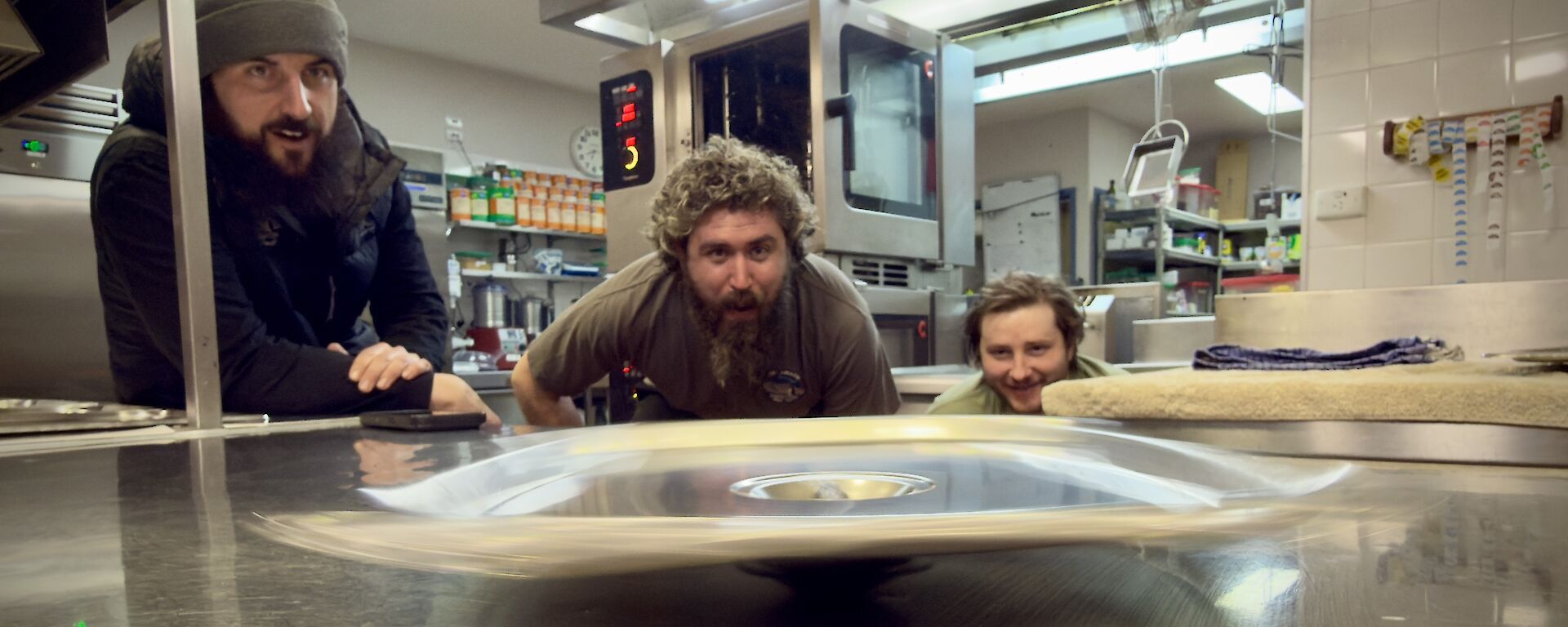

Lid Spinning – a station pastime steeped in tradition
The legendary Antarctic pastime of Lid-spinning is steeped in antiquity, but not many know that this activity’s history precedes the years of Shackleton, Mawson and Scott. Originally born from ancient Greece’s infatuation with the Olympic Games, Lid-spinning (or “strobilos pōmatos” as it was known back then) was adopted by the mageiros (or chefs) of that era – as a means of rivalling the popularity around discus throwing and bequeathing a new noble sport to the kitchen.
Many years later, Lid-spinning’s debut in Antarctica was attributed to Adrien de Gerlache and the crew of the ship Belgica in 1898. Considered by many as the first scientific expedition to the continent, the Belgica became trapped in pack ice off the Antarctic Peninsula. Lid-spinning was soon adopted in the ship’s galley as a means of maintaining morale, inspiring competitive spirit and passing time, while Belgica drifted aimlessly with the pack-ice.
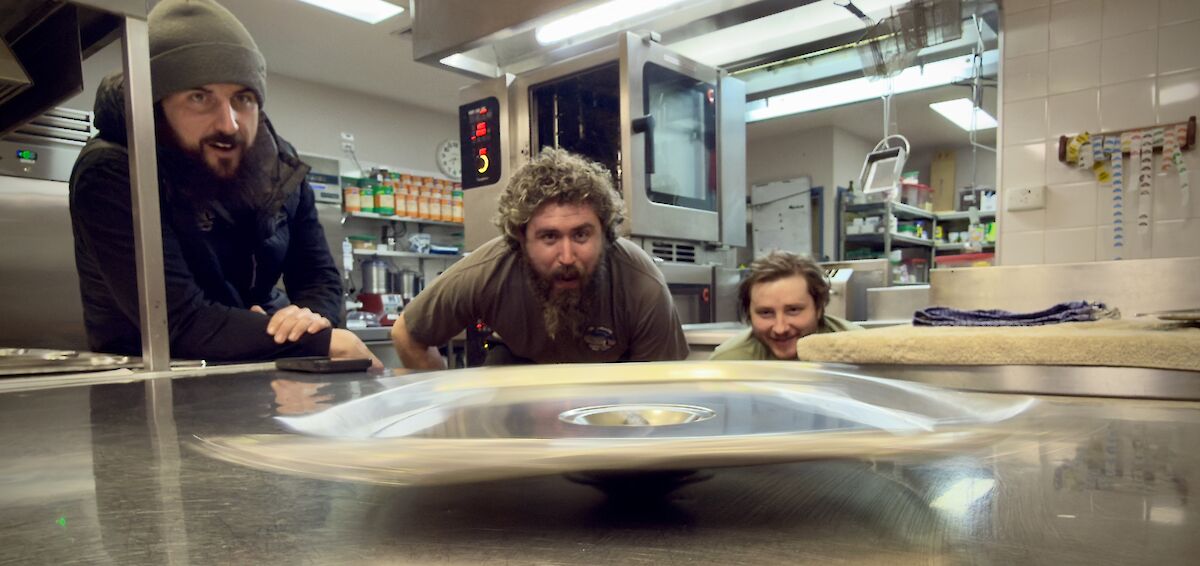
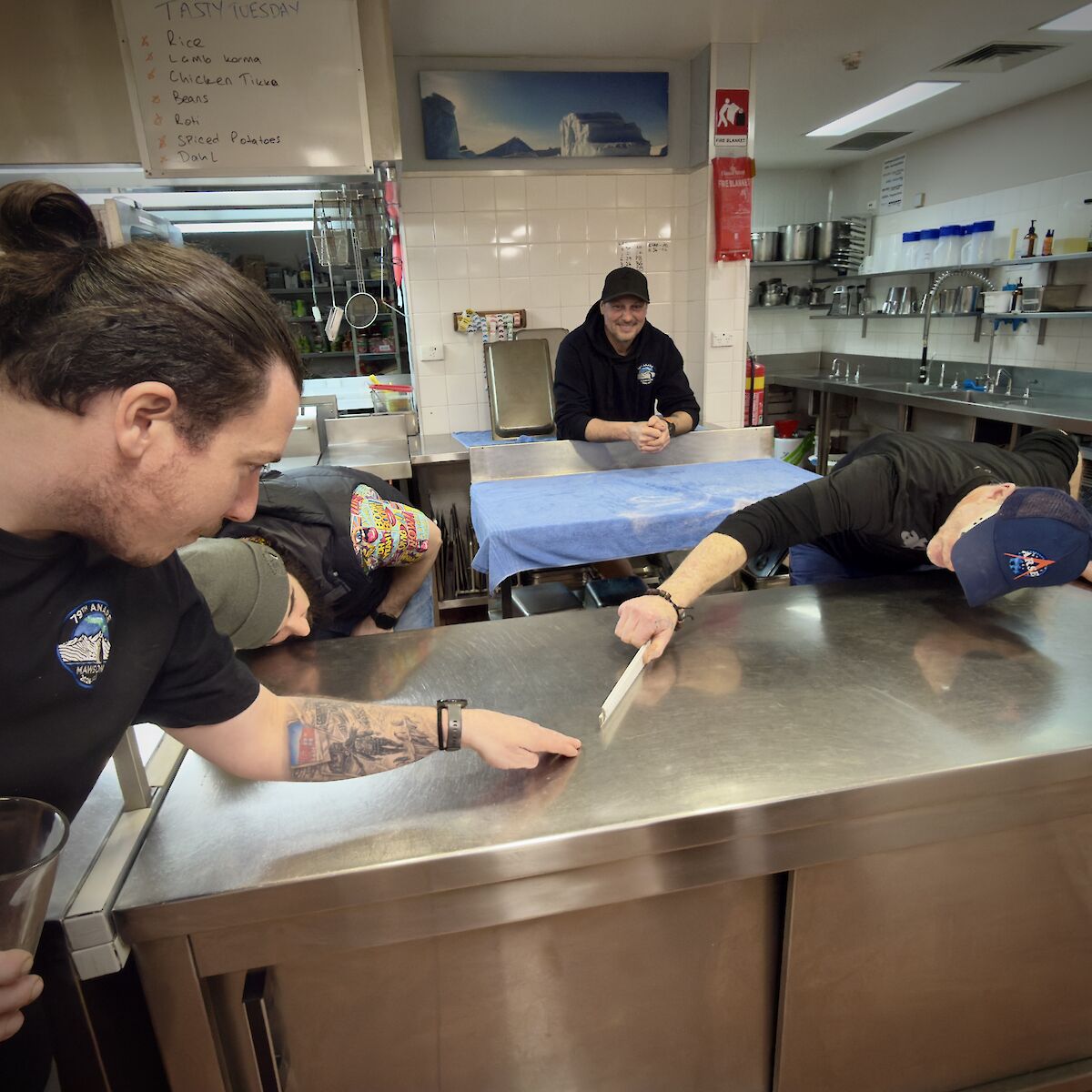
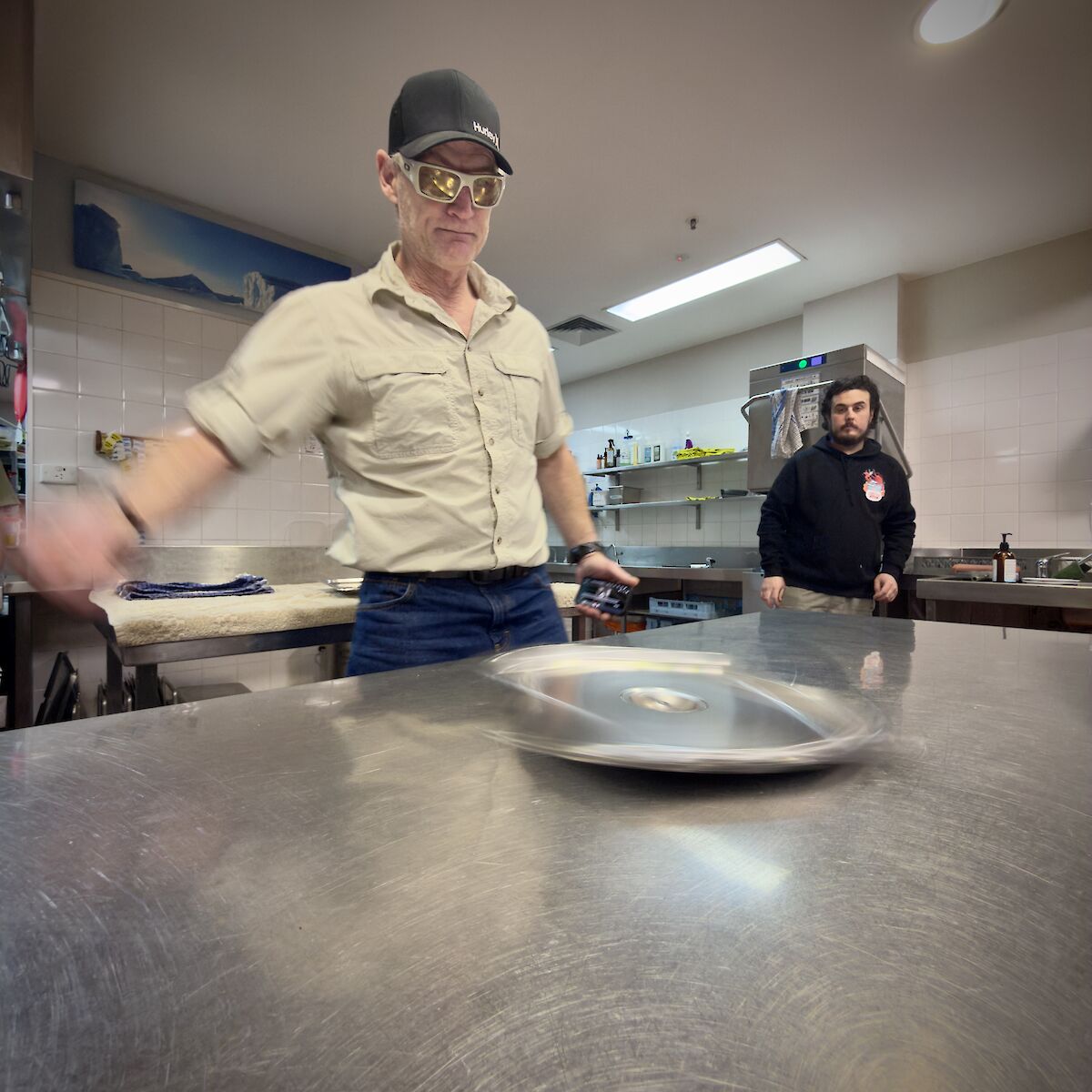
Moving to modern times, this ‘active adaption’ sport involves spinning a stainless-steel half-size Bain-marie tray lid on a flat surface until it stops. Success is determined by a competitor’s spin technique alongside minimizing the impacts of surface friction with a steel kitchen bench. Total spin time is the ultimate metric for winning – but there are various complexities associated with the sport that may not be apparent to the uninitiated.
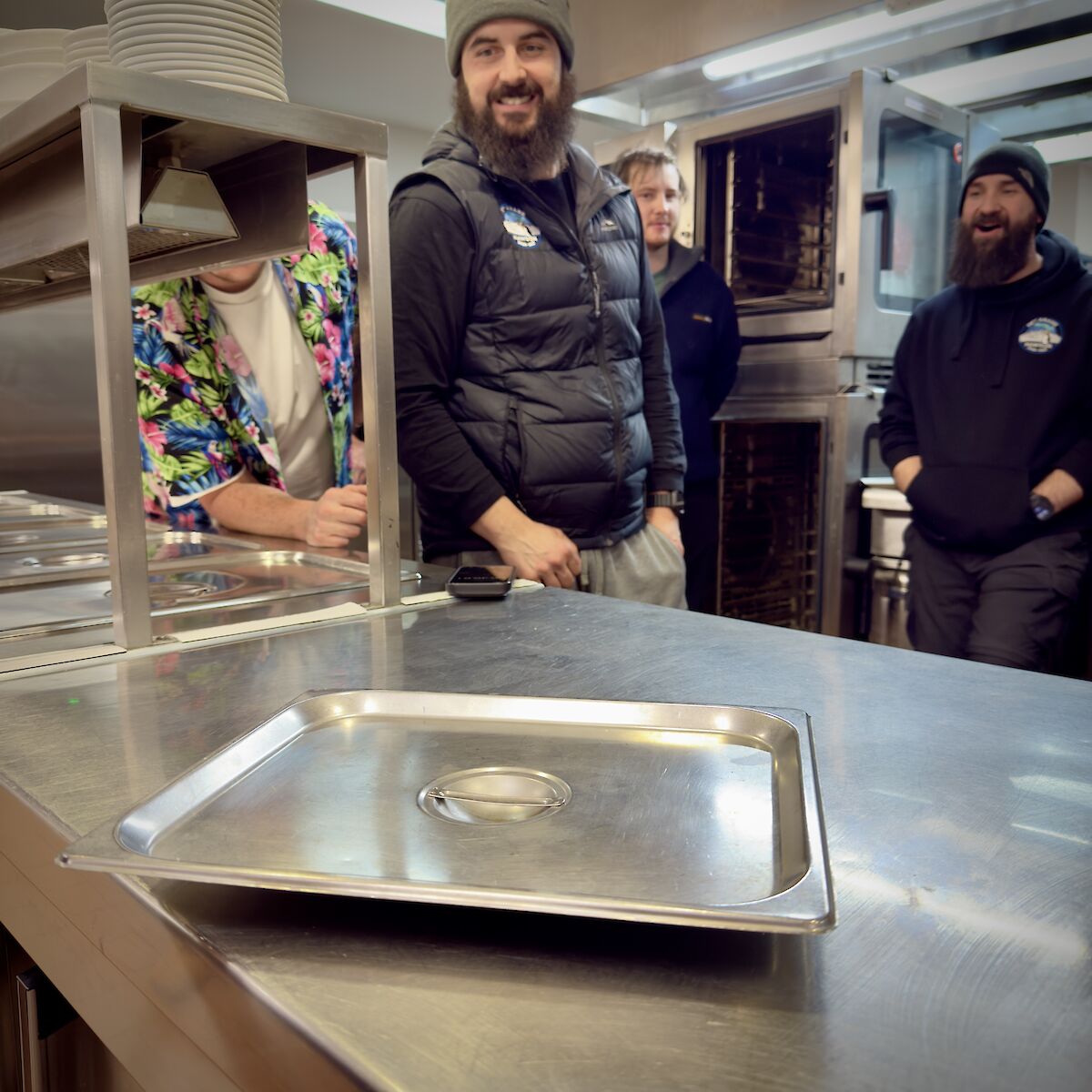
Because Bain-marie lids are rectangular, they generally wobble, rattle, and spin on a single pivot point. Often the lid will find the smallest of benchtop dents (known as ‘divots’ by aficionados), increasing the coefficient of friction between interacting surfaces and thus reducing spin time. If spun too enthusiastically, this 325mm long x 265mm wide x 0.6mm thick electro-polished lid may gyrate uncontrollably, falling to a quick demise as it wobbles off-balance onto the floor. Similarly, if the kitchen bench isn’t cleaned appropriately after mealtime, any food residue streaks or cleaning product residue can severely impede the lid’s angular momentum. Finally, community peer group pressure has also been the downfall of many an aspiring Lid-spinning expeditioner – with many succumbing to the melee and banter that spectators are known to bring to such an event. So, there are many factors to consider when committing to this elite sport.
How to play:
- Setting up: Find a clean, flat and smooth stainless steel kitchen table or a polished countertop. The spinner is responsible for ensuring all contact surfaces are clear of debris etc, including any attempts by others to sabotage the playing field with traces of spilt ice cream, crumbs, sauces etc.
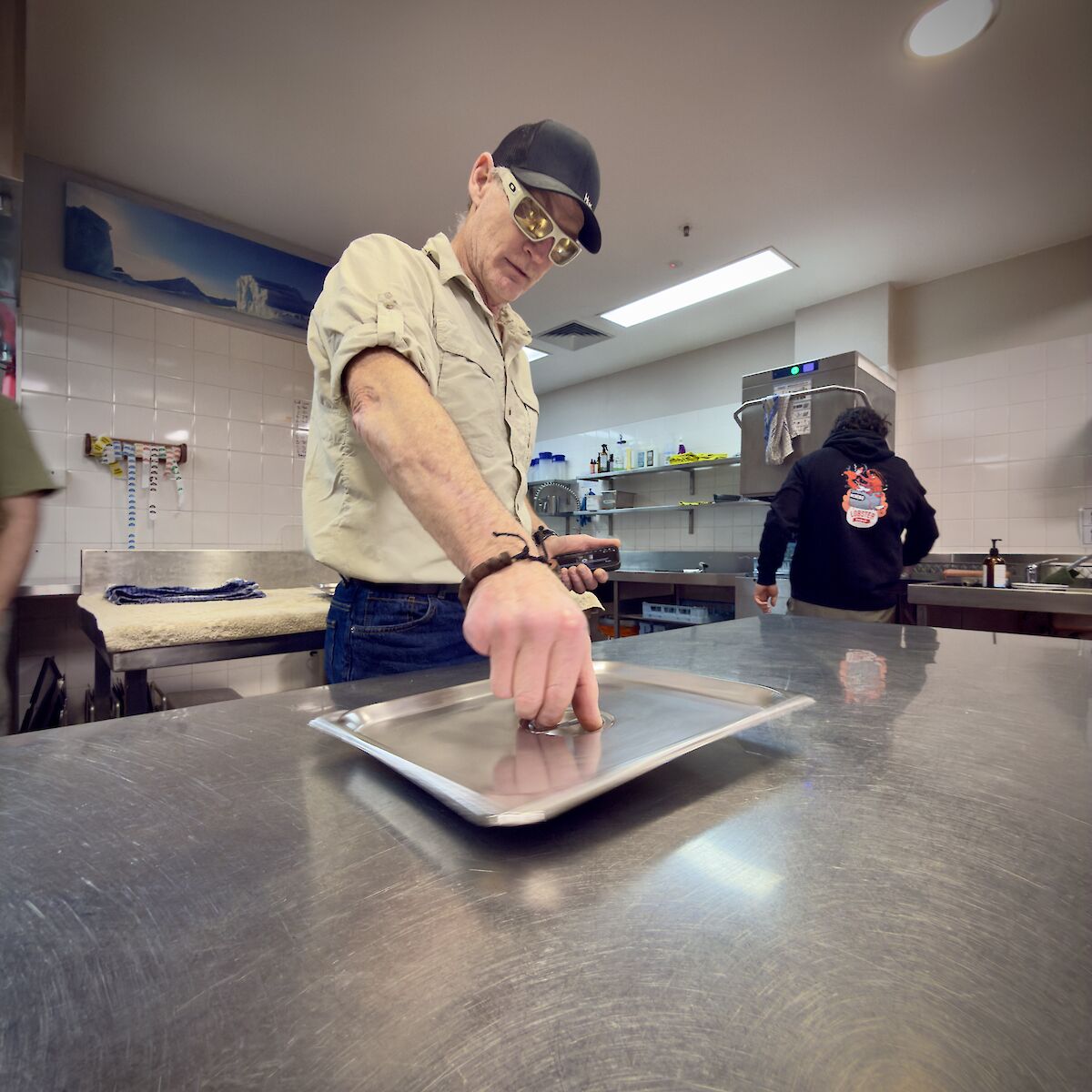
- Launching: Lay the half-size tray lid flat, pinch or grip the centre of the recessed handle, and give it a firm, balanced wrist-snap rotation. There is much debate around whether the lid should be spun clockwise or anticlockwise. Many seasoned players default to the Coriolis Effect Theory (known to explain the different directions that toilets flush in both southern and northern hemispheres).
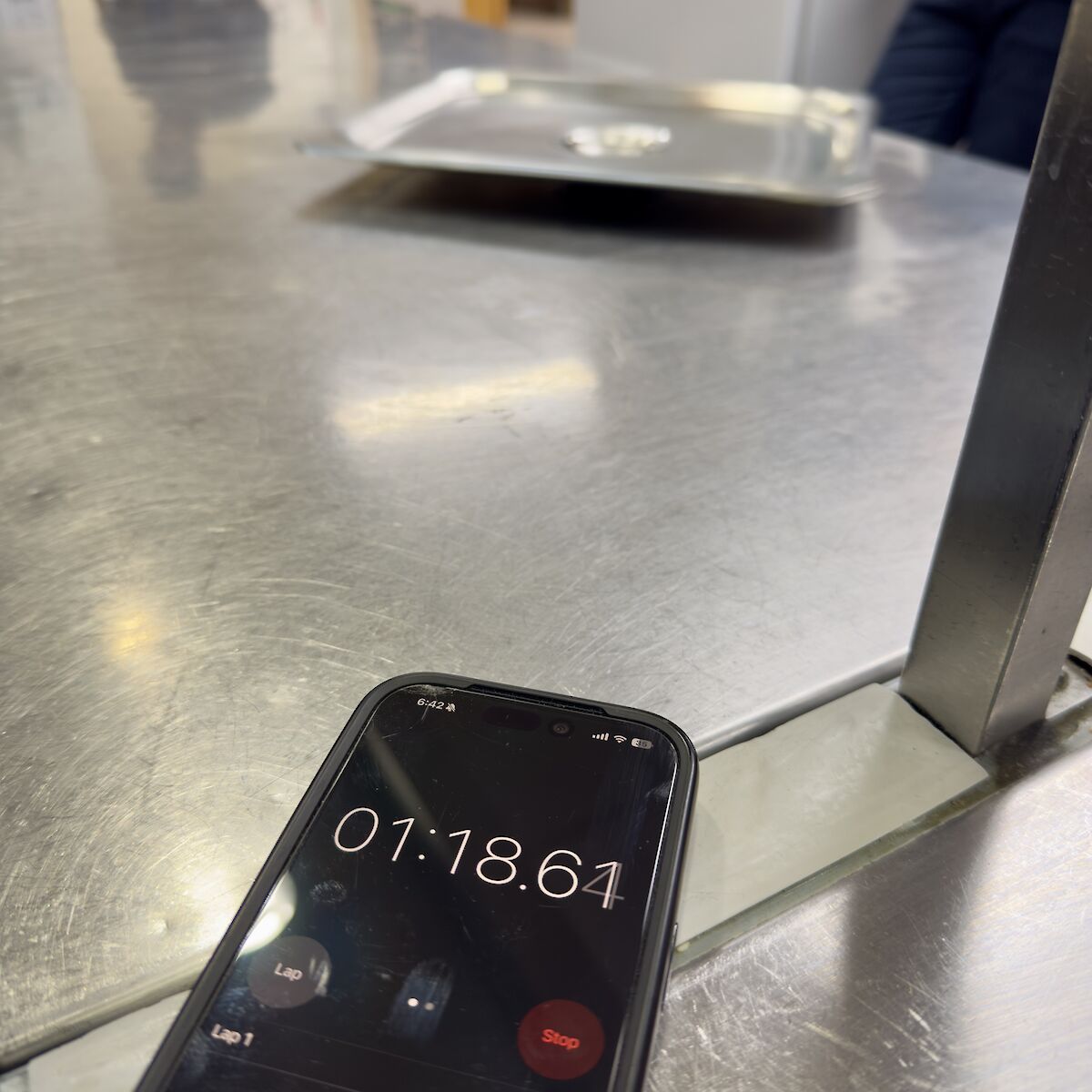
- Winning: Keep that rectangular lid spinning for as long as possible, until it completely flat-lines to a stop. The expo with the best time becomes the Lid-King!! If the lid falls off the kitchen bench, the competitor registers a "DNF"... or "did not finish".
Variations to the game:
- The timed race: Time-trial format by starting the stopwatch the moment the hand leaves the lid, stopping the exact micro-second the lid stops moving.
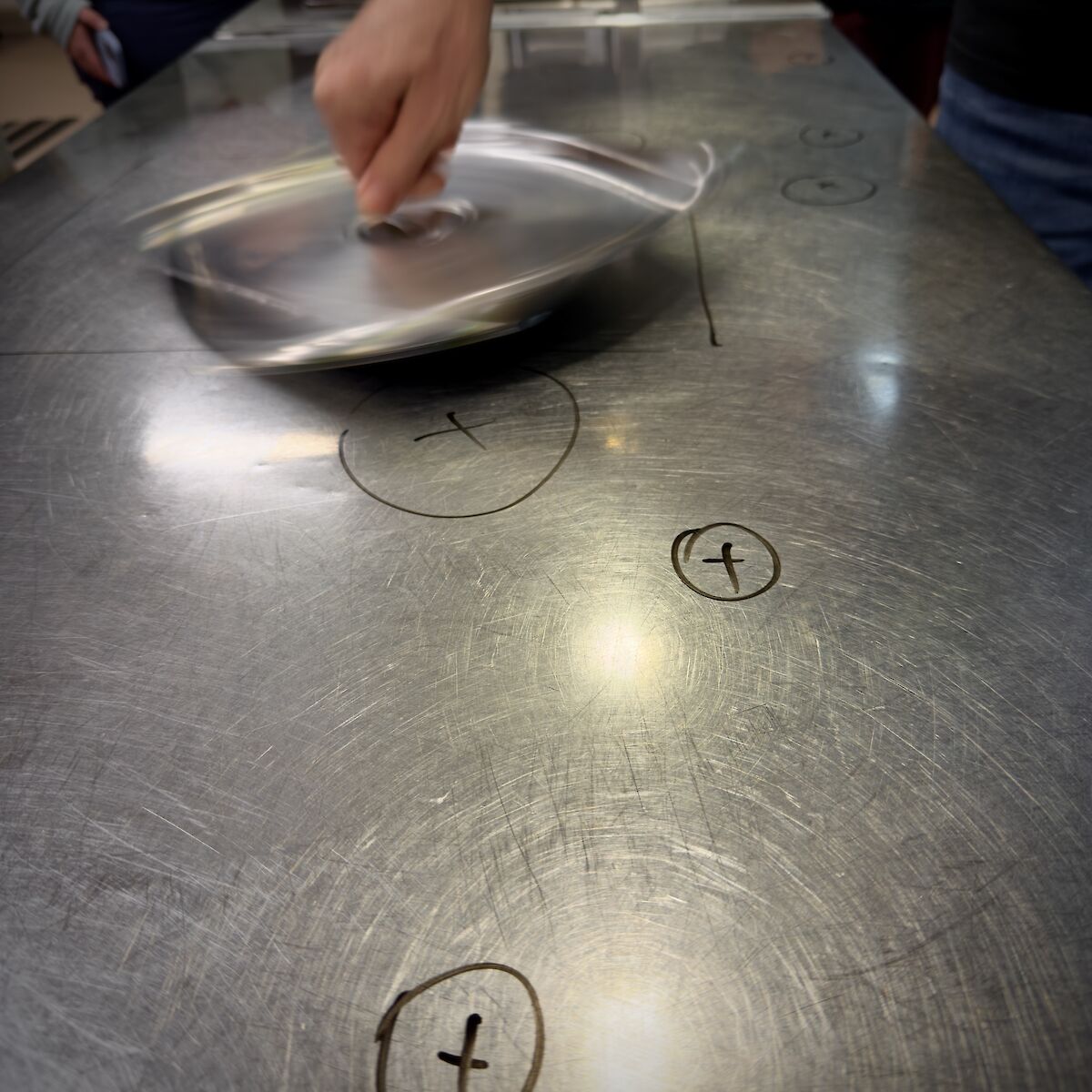
- Staying in the zone: The lesser-known additional variation to the above, starts by drawing a square grid or perimeter on the table with a whiteboard marker. The lid must then stay spinning within the allocated boundary. If it wanders out (or falls off the table) the spin is disqualified. The spinner with the longest time spent within the ‘playing field’ is deemed triumphant.
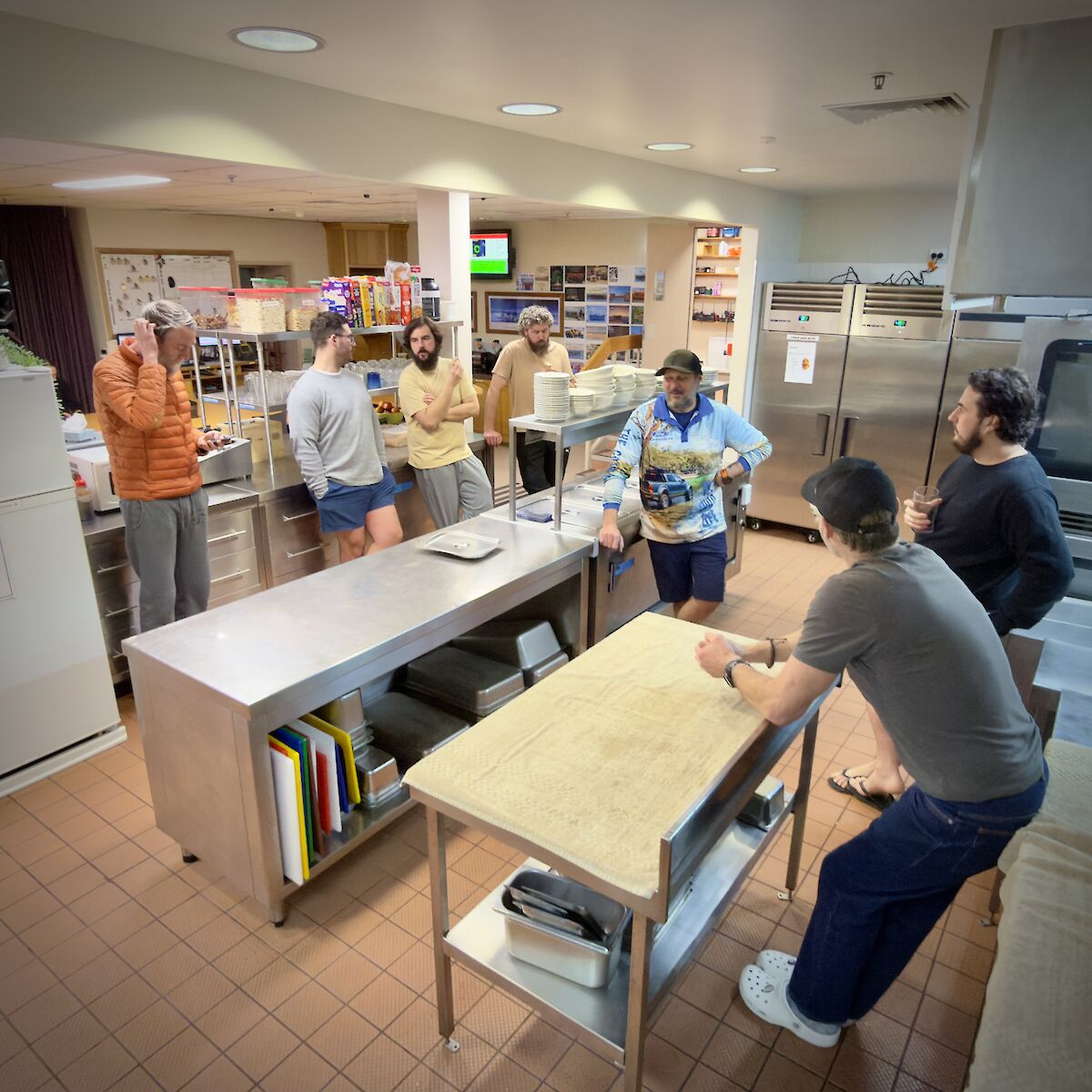
OK… all baloney aside, it is the simple things in life that keep us entertained after dinner here at Mawson!! (Dave Buller)