
Lest We Forget
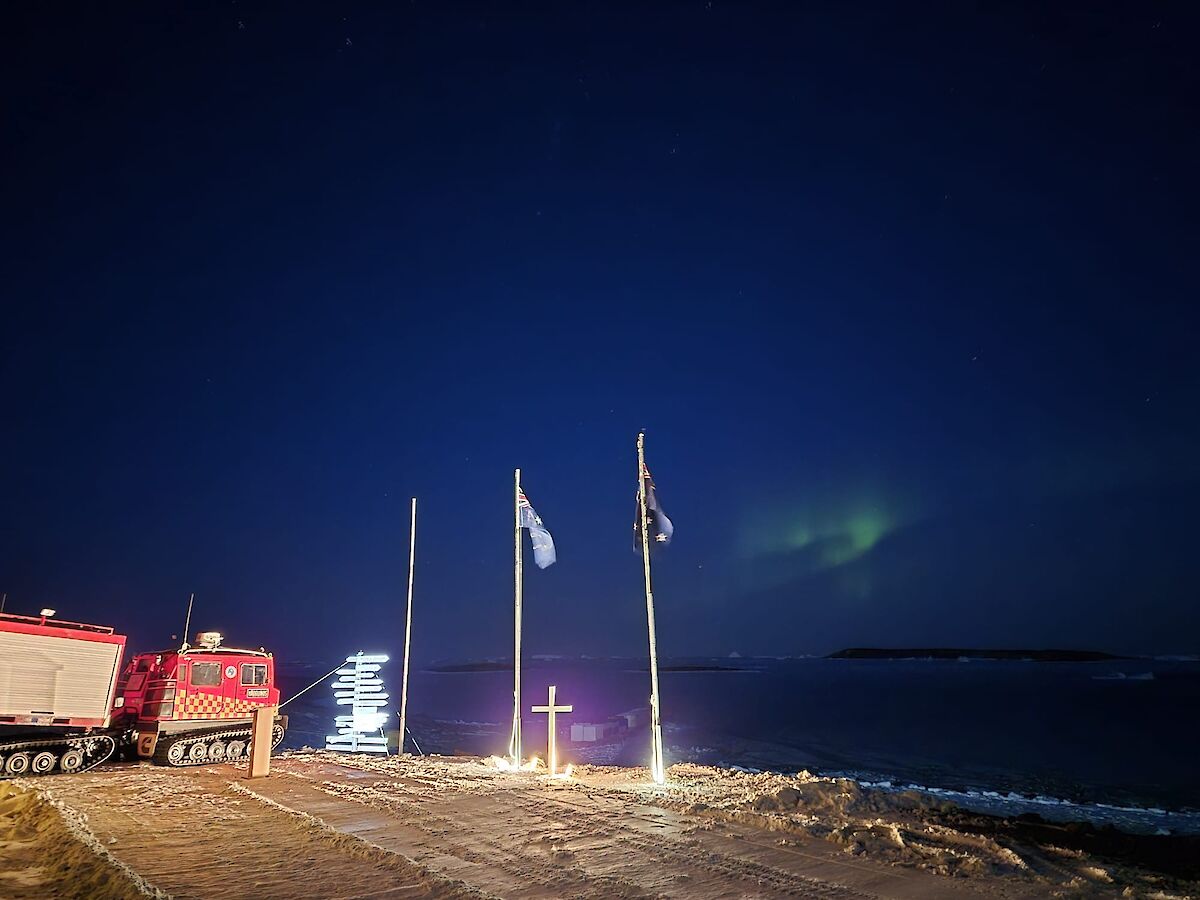
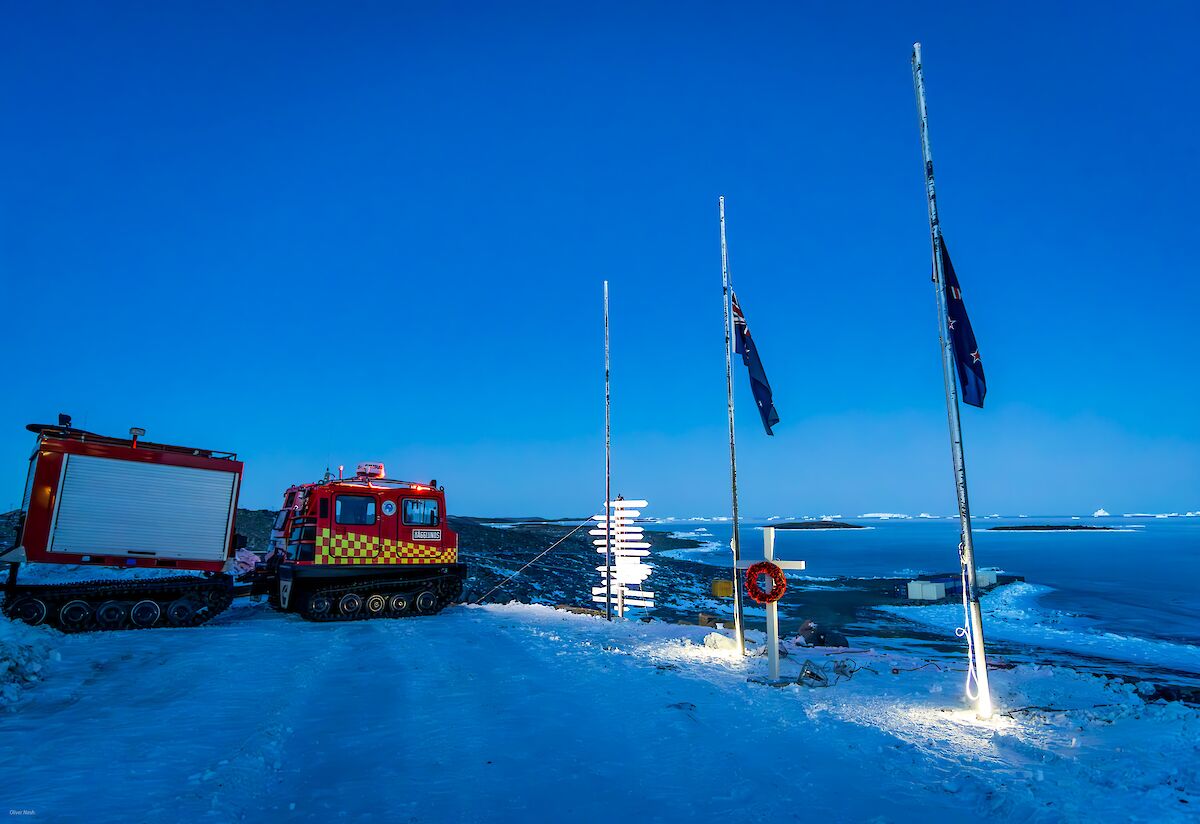
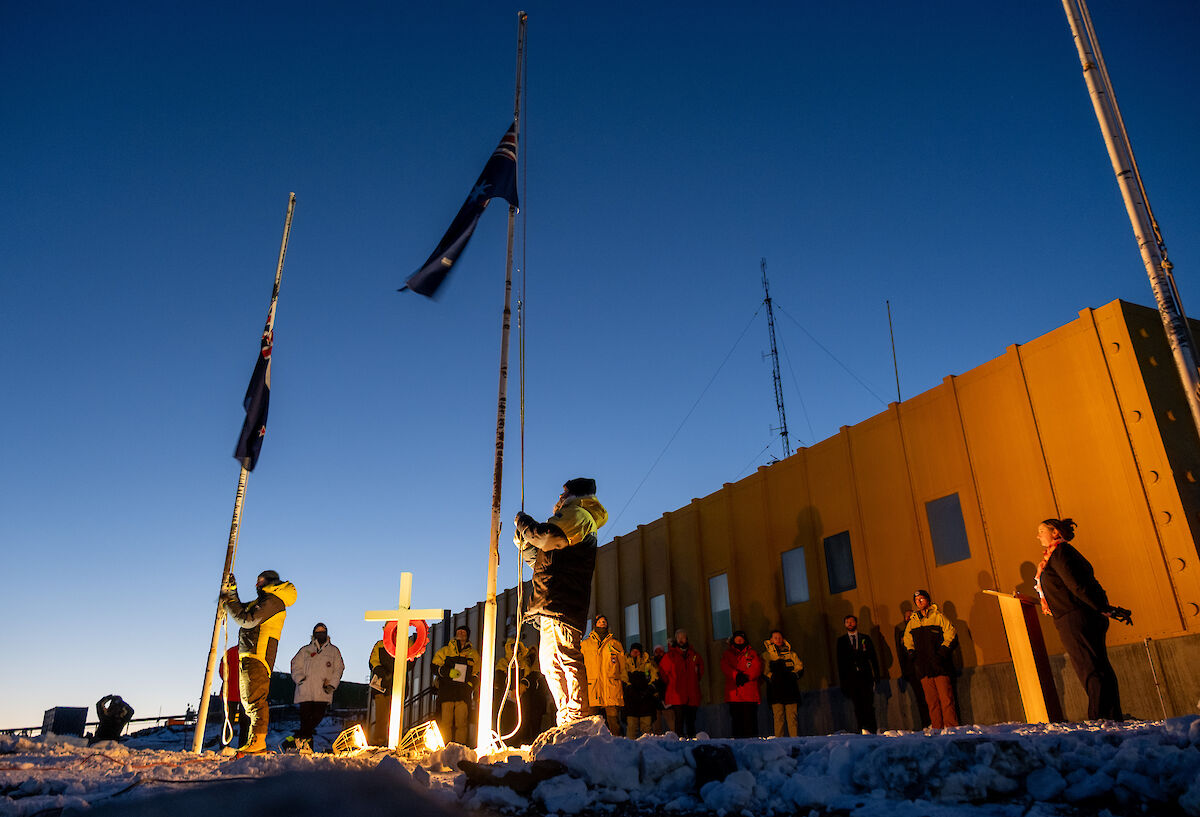
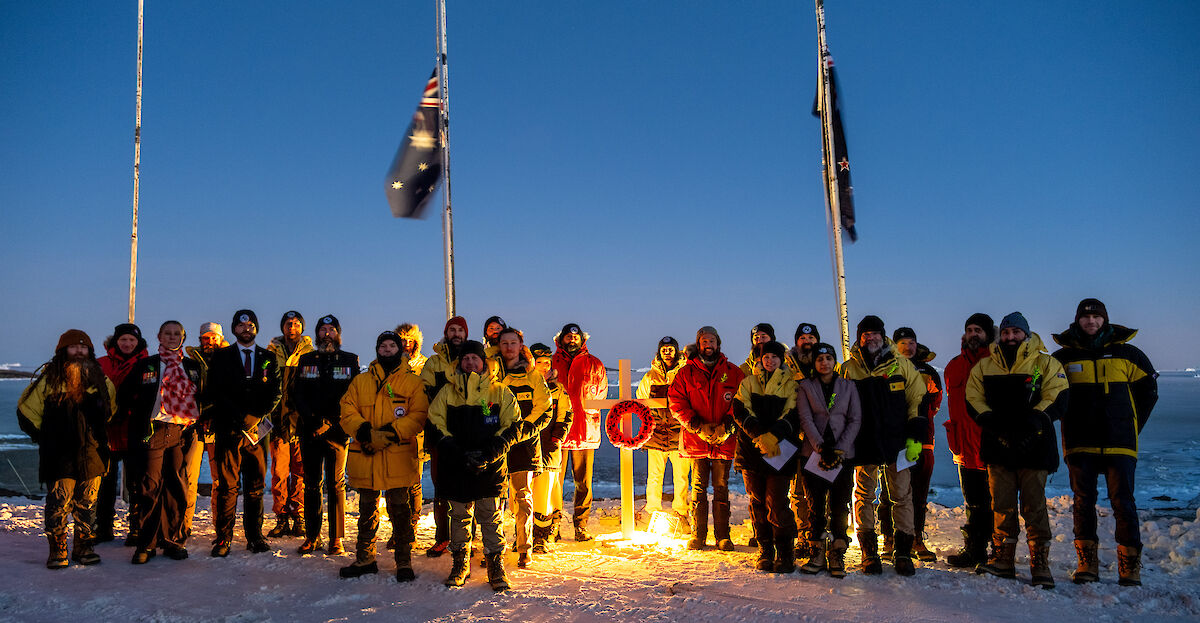
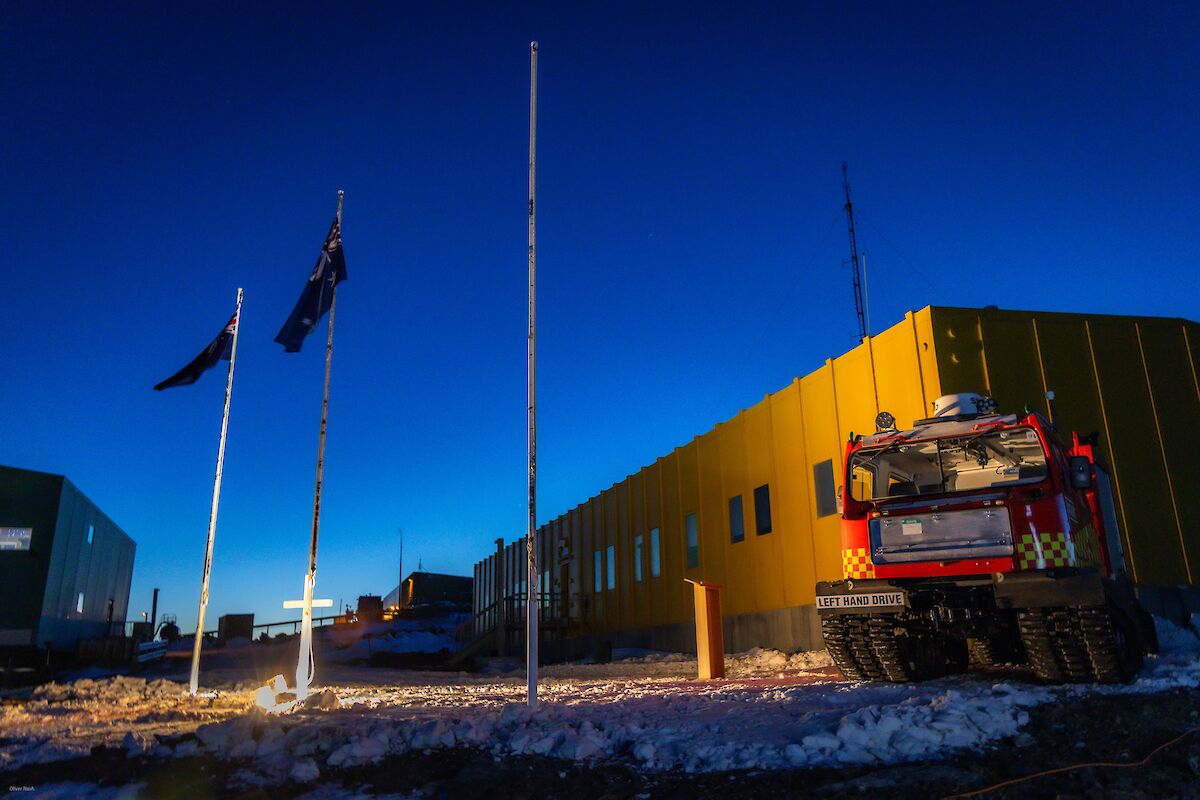
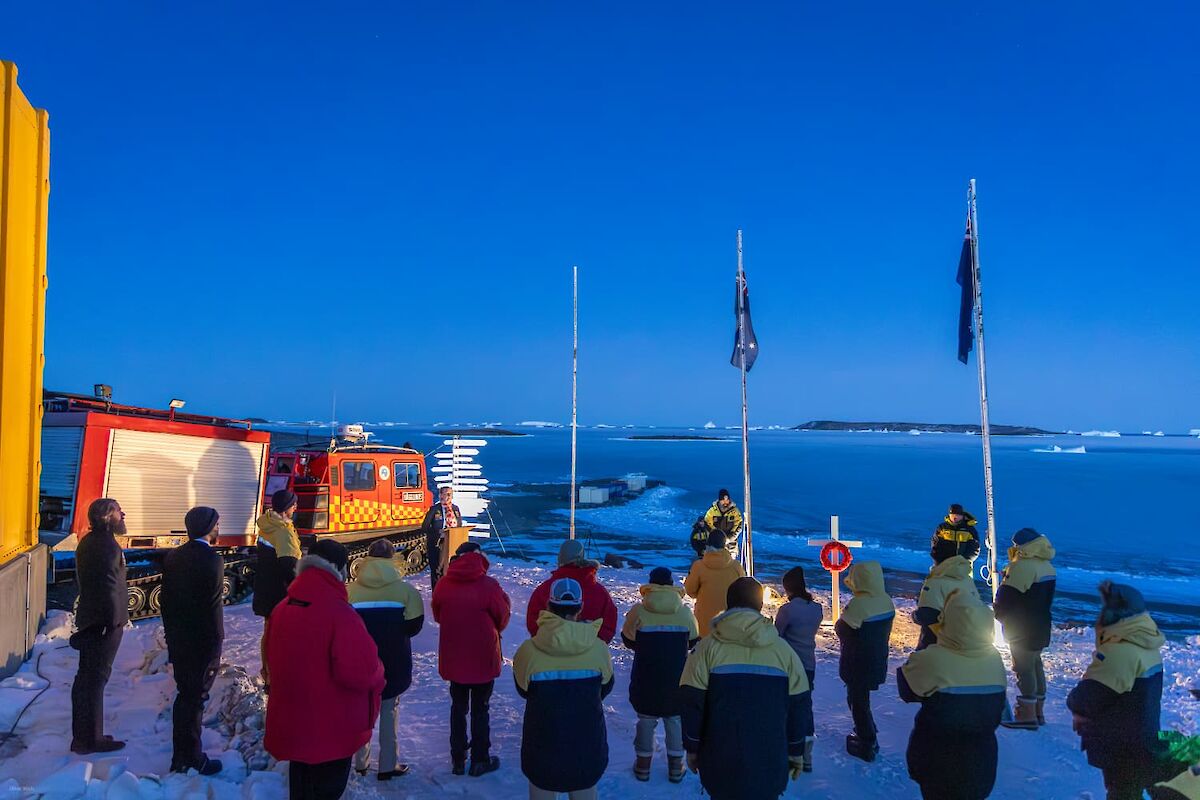
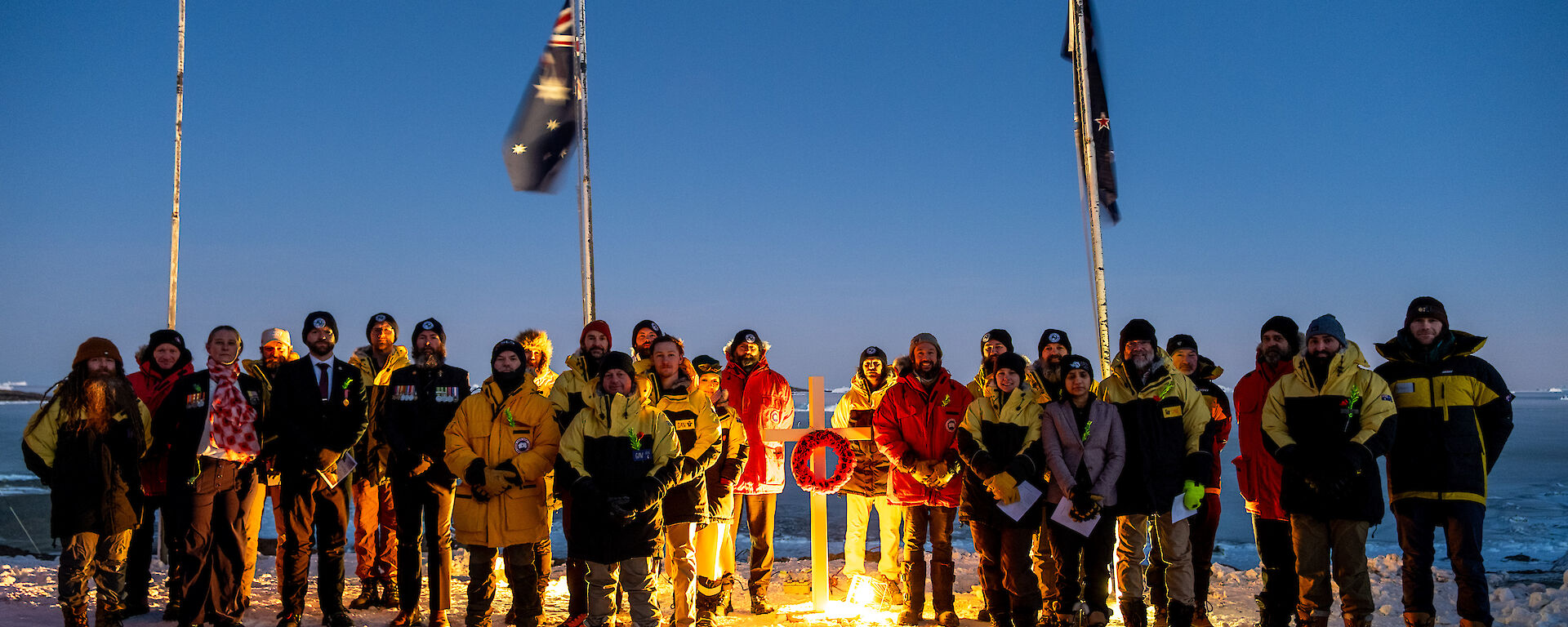
On April 25th just before dawn the Davis team observed a simple, yet poignant Dawn Service, with auroroa australis glowing overhead.
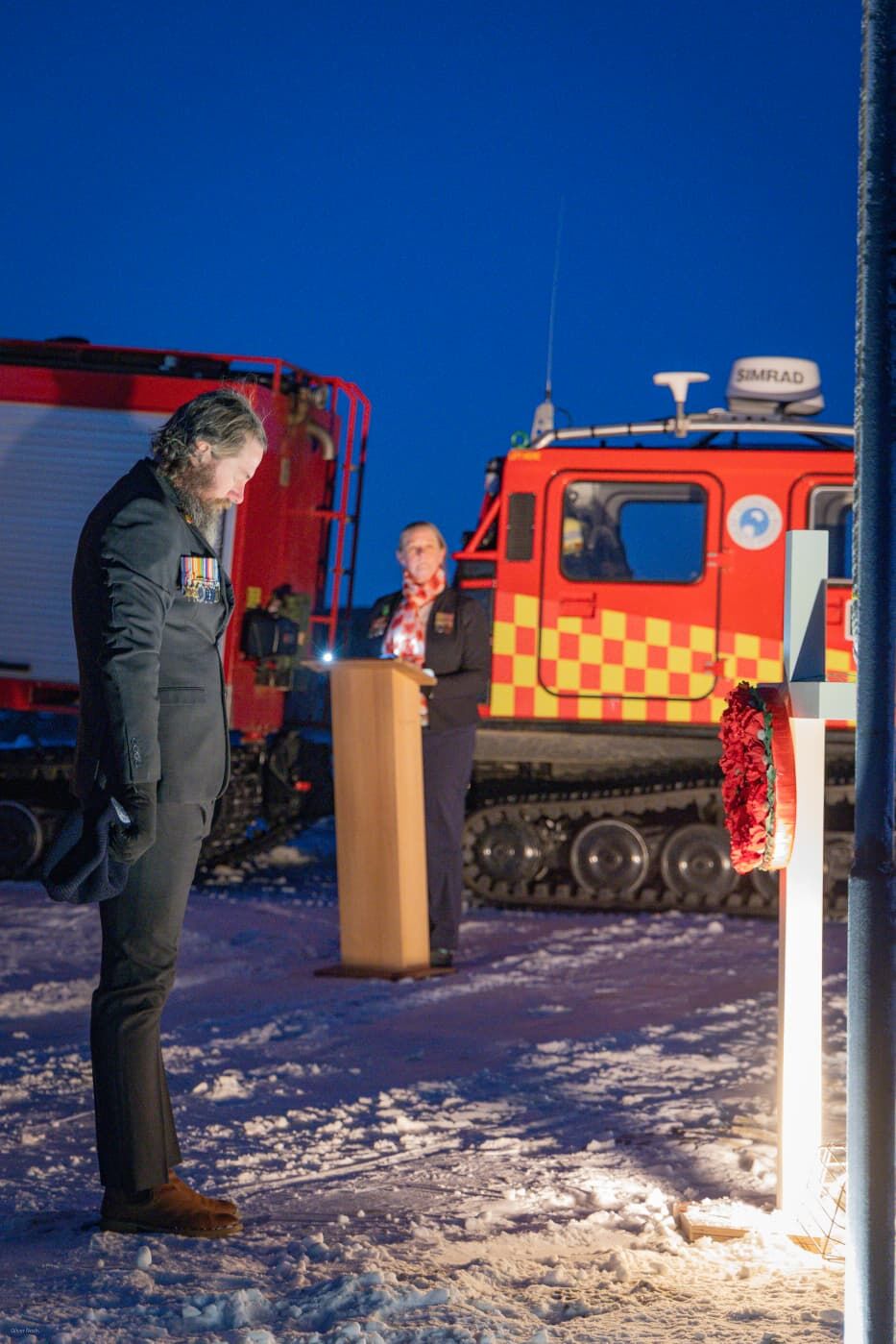
The service included a reading of John McCrea's poem, In Flanders Fields, by Adam Humphries, laying of a poppy wreath by veteran Peter Morris and a reading of the Ode of Rememberance by Shaun Gillies. Flag duties were performed by Adam Humphries (Australian Flag) and Mike Atkinson (New Zealand Flag).
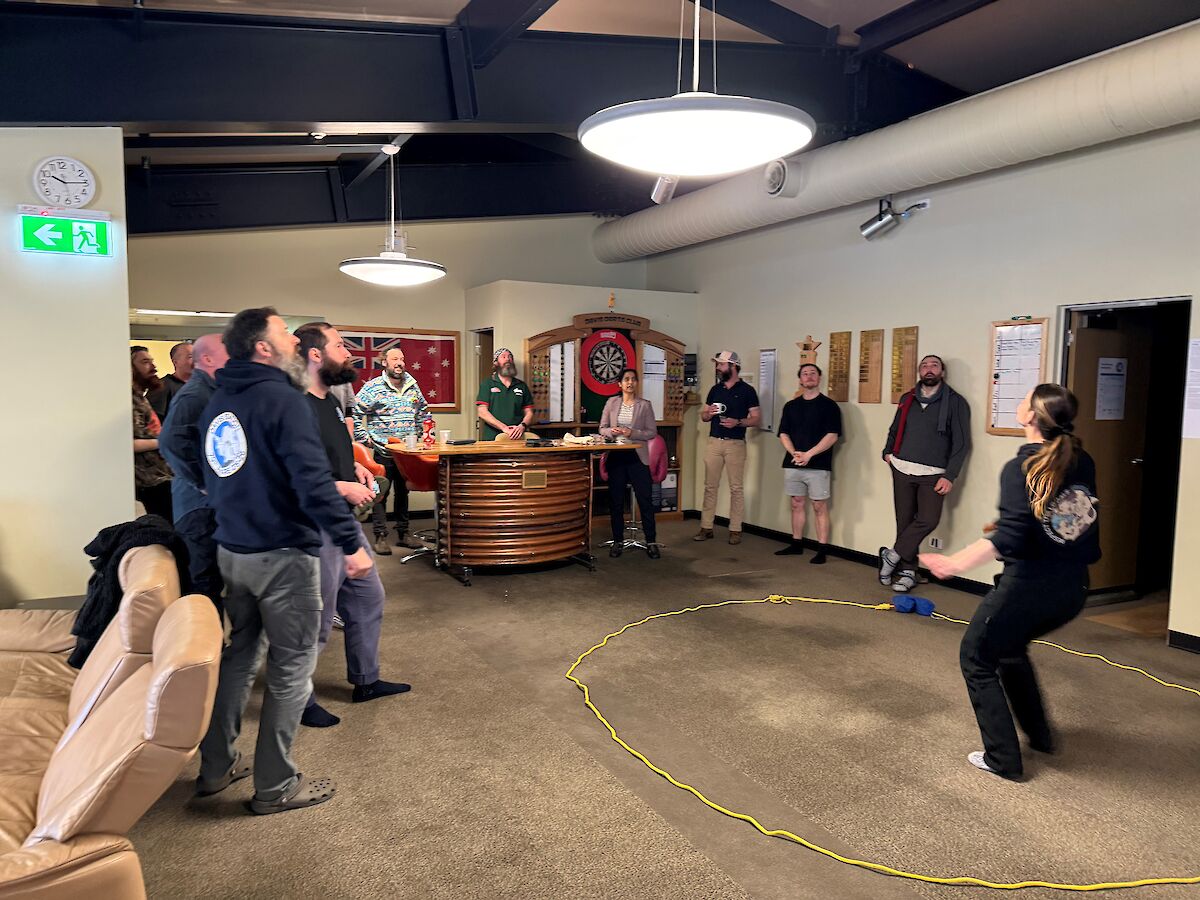
After the service the team enjoyed a gunfire breakfast and some spirited rounds of two-up.
In Flanders Fields, by John McCrea
In Flanders fields the poppies blow
Between the crosses, row on row,
That mark our place; and in the sky
The larks, still bravely singing, fly
Scarce heard amid the guns below.
We are the Dead. Short days ago
We lived, felt dawn, saw sunset glow,
Loved and were loved, and now we lie,
In Flanders fields.
Take up our quarrel with the foe:
To you from failing hands we throw
The torch; be yours to hold it high.
If ye break faith with us who die
We shall not sleep, though poppies grow
In Flanders fields.
Station Leader's Address
We gather here today in the quiet stillness of dawn, on this remote and remarkable continent, to mark ANZAC Day; a day that holds deep meaning for Australians and New Zealanders, wherever we may be in the world.
More than a century ago, on the morning of April 25th, 1915, young men from Australia and New Zealand landed on the shores of Gallipoli in one of the first major military actions fought by our forces during the First World War.
The ANZAC troops landed on rugged, unfamiliar terrain under heavy fire, facing extreme heat, disease, limited supplies, and constant danger. For eight months they endured stalemate conditions in narrow trenches, often just metres from the enemy. Despite the steep cliffs, fierce resistance, and conditions far beyond what they could have imagined they endured. Many did not return. Those who did carried with them stories of hardship, loss, and mateship that would help shape our national identity. Gallipoli became a defining moment, forging the ANZAC spirit and leaving a legacy of courage, resilience, and sacrifice that continues to resonate today.
But ANZAC Day is not just about a single campaign, or even a single war. It is about all those who have served, and continue to serve, in conflicts, peacekeeping missions, and humanitarian operations across the globe including Korea, Vietnam, East Timor, Iraq, and Afghanistan. It is a day to remember sacrifice, to honour courage, and to reflect on the cost of service.
The qualities we associate with the ANZACs link generations of service men and women through a shared commitment to something greater than themselves:
- Courage: not the absence of fear, but the strength to face it;
- Endurance: the ability to persevere in the harshest of conditions;
- Mateship: a deep and abiding commitment to one another, where no one is left behind; and
- A quiet humility: doing what must be done, without expectation of recognition.
These qualities are not confined to history. They are alive today, in our armed forces, in our communities, and, in many ways, here among us.
For many of us, being here today means reflecting from a long way from home; from family, from familiar places, from the cenotaphs and services we might usually attend. But perhaps there is something fitting about marking this day in a place as stark and powerful as Antarctica. It reminds us of the scale of the world, of the fragility of life, and of the strength that comes from standing together.
This morning, as the first light touches the horizon, we pause not only to remember those who served, but also to consider what their legacy asks of us. It asks us to value one another. To act with integrity. To support our communities. And to carry forward the spirit of service in every way we can.
In a moment, we will observe a period of silence. During that time, I invite you to reflect in your own way; on those who served, on those who were lost, and on the enduring values they have left with us.
Let us remember them.
Lest we forget.