
Training for emergencies in a remote isolated Antarctic Station
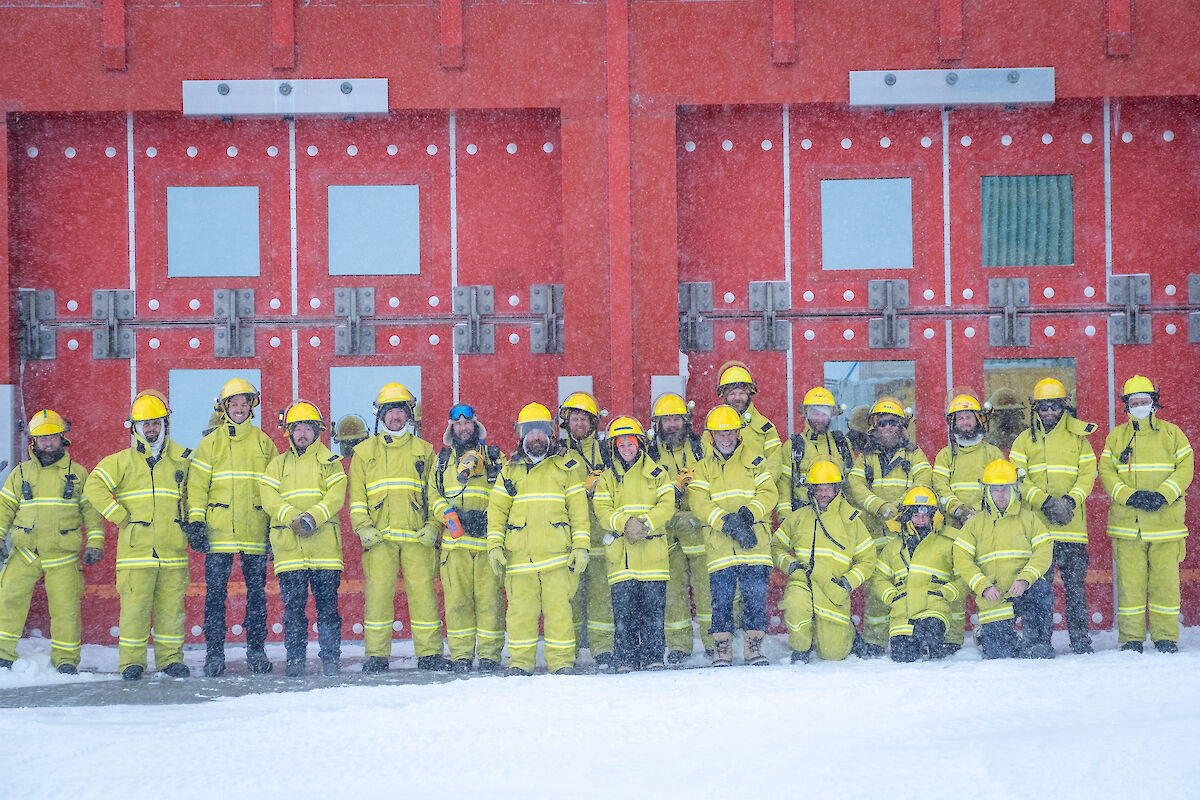
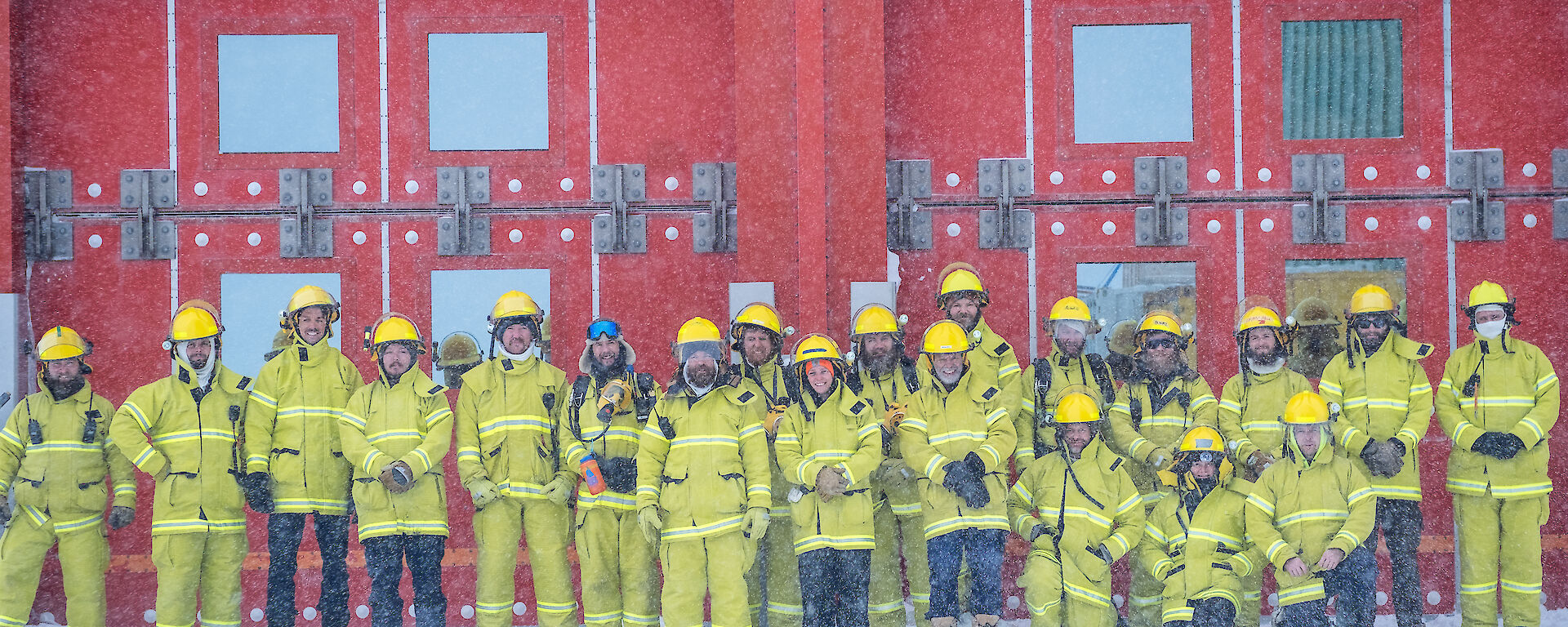
In a small isolated community there isn't enough space and resources to have dedicated emergency response and management teams, so everyone pitches in and takes on an emergency response role or two. In the Australian Antarctic Program, fire, search and rescue and medical response are combined into an overarching Emergency Response Team. This team has training, standard operating procedures, guidelines and equipment so that we can respond in a highly professional manner. In our predeparture training program in Hobart, each team member participates in fire and search and rescue training. Some expeditioners also volunteer to undertake training as Lay Surgical Assistants (LSAs) so that they can assist the station Doctor during any medical emergency.
Fire Team
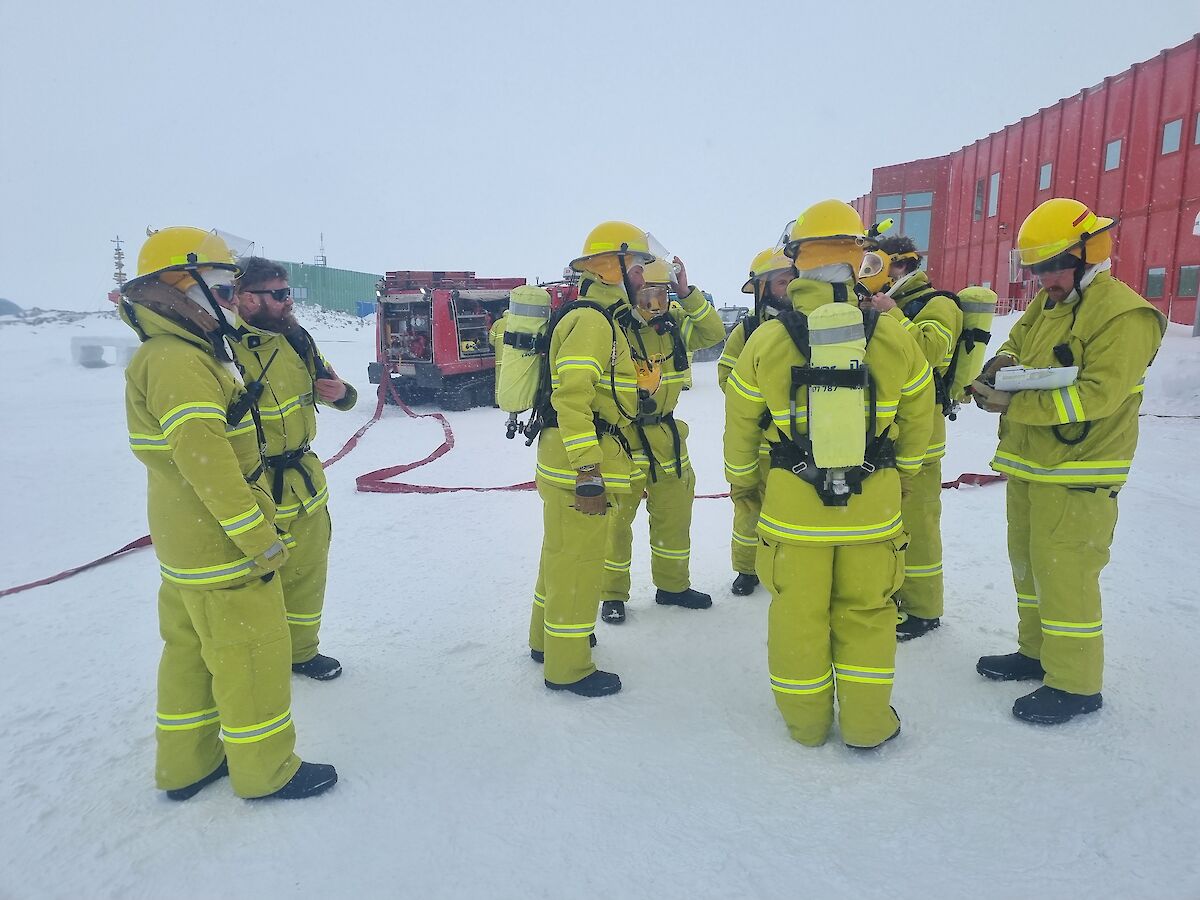
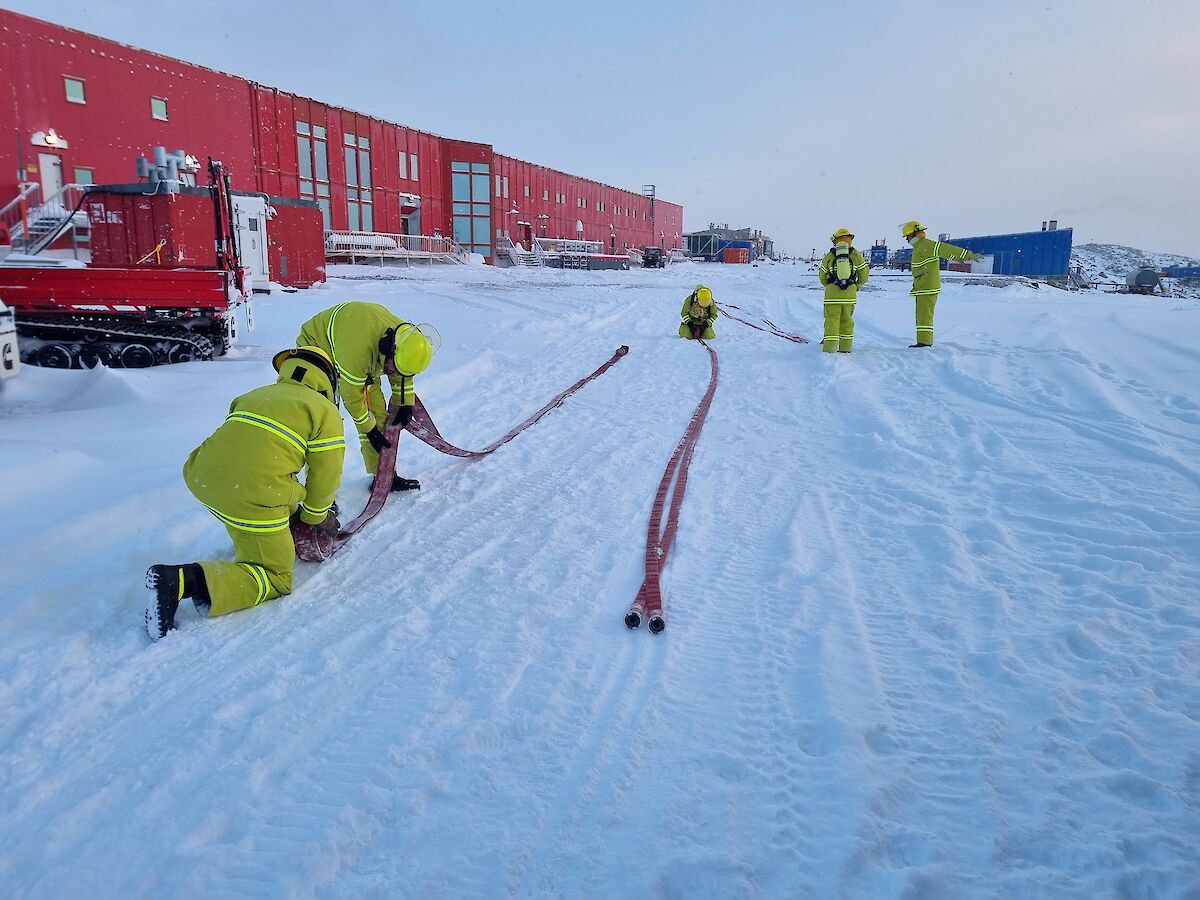
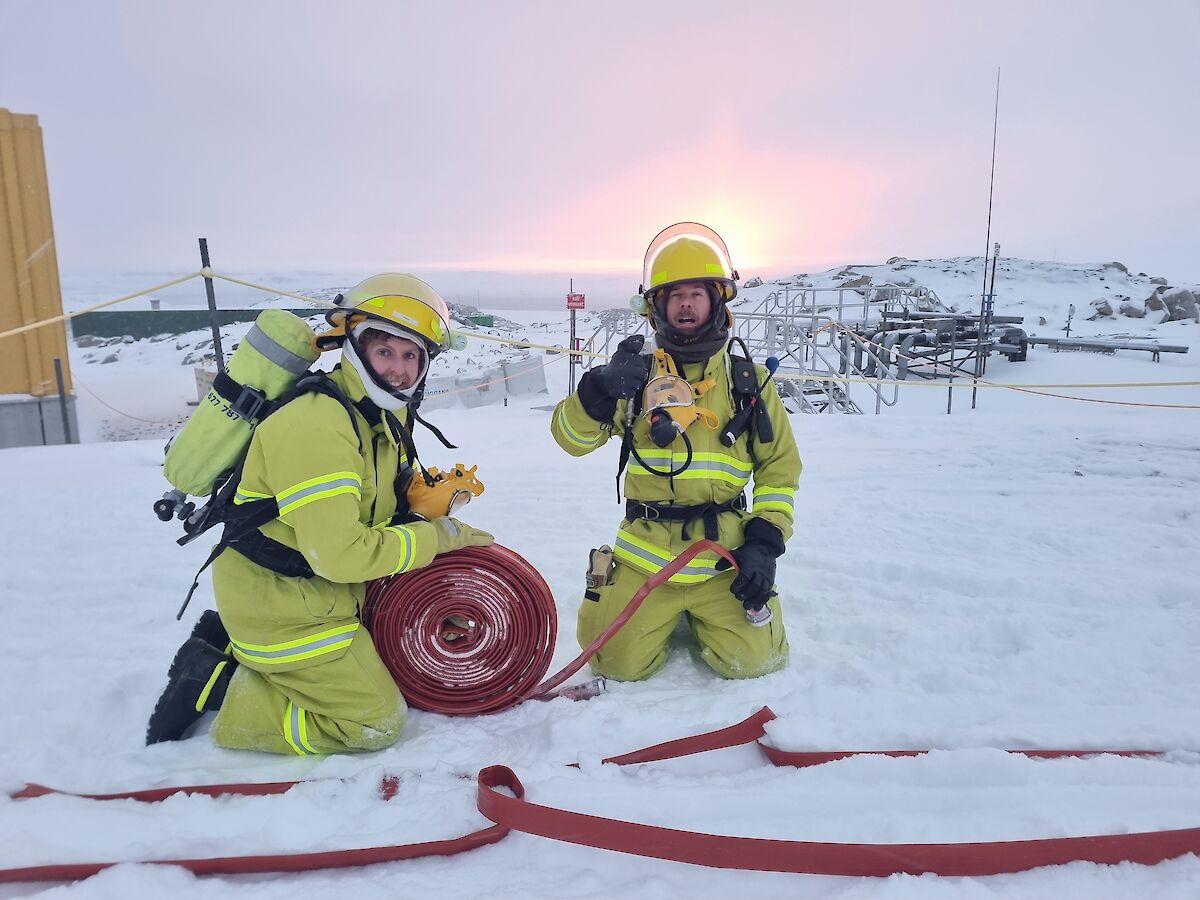
Fire training is conducted at the Tasmania Fire Service training centre in Cambridge, where each participant is trained and assessed in structural firefighting using self-contained breathing apparatus, similar to the equipment used by professional fire brigades when responding to fires in urban areas.
It's an intense week of training, commencing with classroom theory sessions and finishing with live-fire exercises, where you enter a burning building, conduct a primary search and rescue for missing people, and extinguish the fire. It's a great team- and community-building exercise, teaching you how to conduct high-risk activities safely alongside your new colleagues. It's also a great way to develop new skills, teamwork, and trust.
Search and Rescue (SAR) Team
The SAR team is a group of individuals chosen for their competent demonstration of rescue technique at ‘Station Week’, which is a week spent together by the whole Antarctic crew for team building exercises and bonding prior to departure.
Once in Antarctica, they engage in regular practice in all the types of rescues they could encounter. From ropes rescue, missing person exercises to vehicle rescue. As the station is far remote from any sort of help, this team is crucial to help any colleagues who may find themselves amongst one of Antarctica’s many hazards.
Medical Response Team
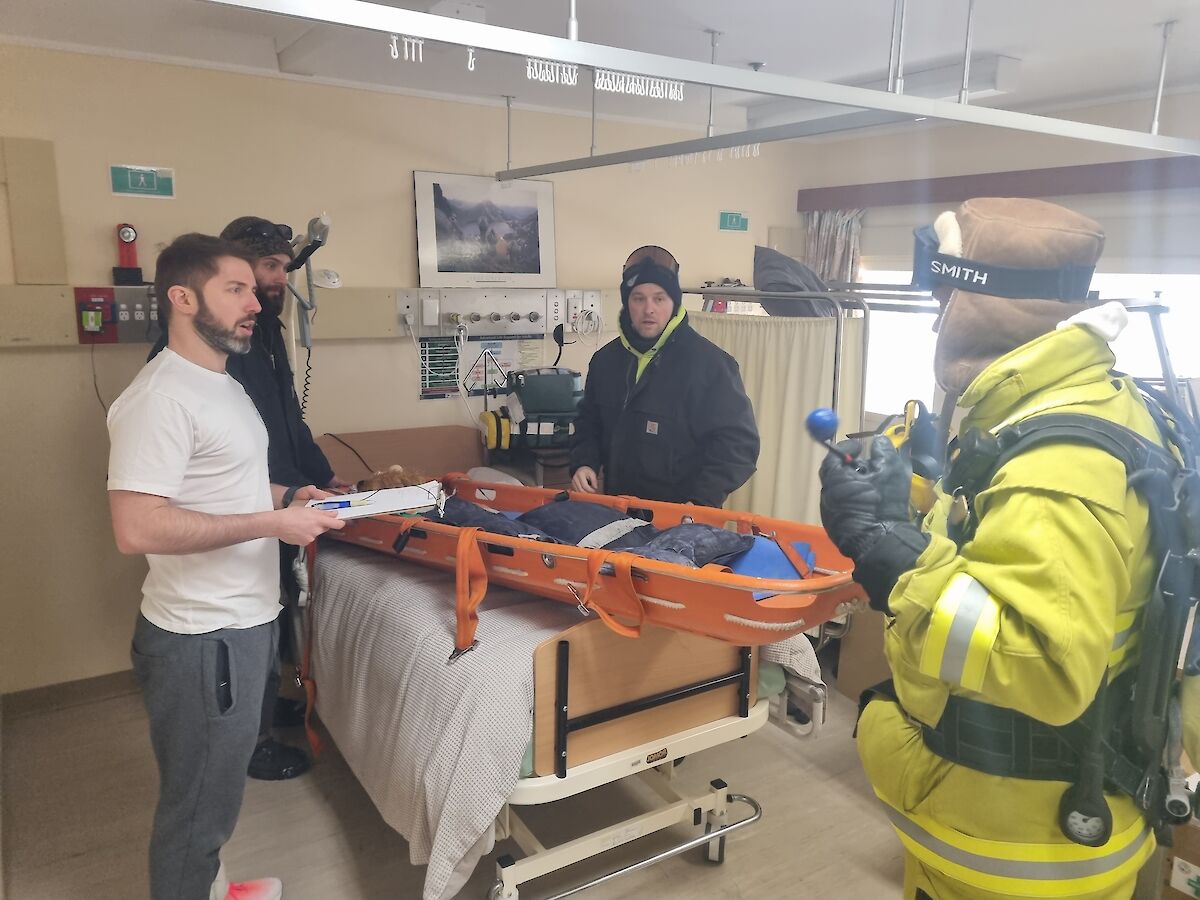
A functional medical clinic/surgery requires more than just a doctor, so before coming down to Antarctica, four volunteer expeditioners undergo additional surgical training. This team, known as the ‘lay-surgical assistants’ (LSAs) are always standing by to assist in event of a medical emergency.
Their training at the Royal Hobart Hospital exposes them to both anaesthetics and surgical assisting, being coached by experienced nurses in how to help medical staff navigate a variety of different surgeries.
Once in Antarctica, this training is followed upon with regular sessions to practice managing various emergency and surgical scenarios. If the doctor themselves becomes incapacitated, it is down to the LSA team to look after them in conjunction with remote support from the Polar Medicine Unit (PMU).
The final exercise
The Fire, SAR and Medical response teams conduct ongoing training and exercises once we've arrived on station. This helps us retain our skills and to learn additional skills to build on those skills that we learnt in our predeparture training in Hobart.
The training on station for each team is usually conducted in isolation of the other teams. But rarely does each team respond in isolation in a realistic incident. Think about a fire in an urban context; the firies locate and rescue the missing person-s from the burning house, the ambos take the injured casualties to the hospital and the medical team at the hospital treat the injured people.
So, this year we decided to conduct an exercise involving all three teams as one Emergency Response Team. But we added a little twist. Just to make it more interesting and challenging, (as if all these jobs aren't challenging enough when it's -25 ̊ C, windy and everything freezes rapidly). The objective of the exercise was to have a more complex, yet realistic scenario that would require:
- More firefighters than would normally respond to an initial call out.
- The SAR team to act as the Paramedics and provide initial treatment to any casualties and transport them to the medical facility
- The medical team to treat the casualties.
As there were three teams responding and some expeditioners are members of at least two of these teams, there needed to be a coordinated response, so an incident management team was set up with the Station Leader as Incident controller to coordinate.
And the twist?
The medical facility is in the building where the fire was; so was deemed off limits until the fire was extinguished and the facility could be assessed as safe to enter.
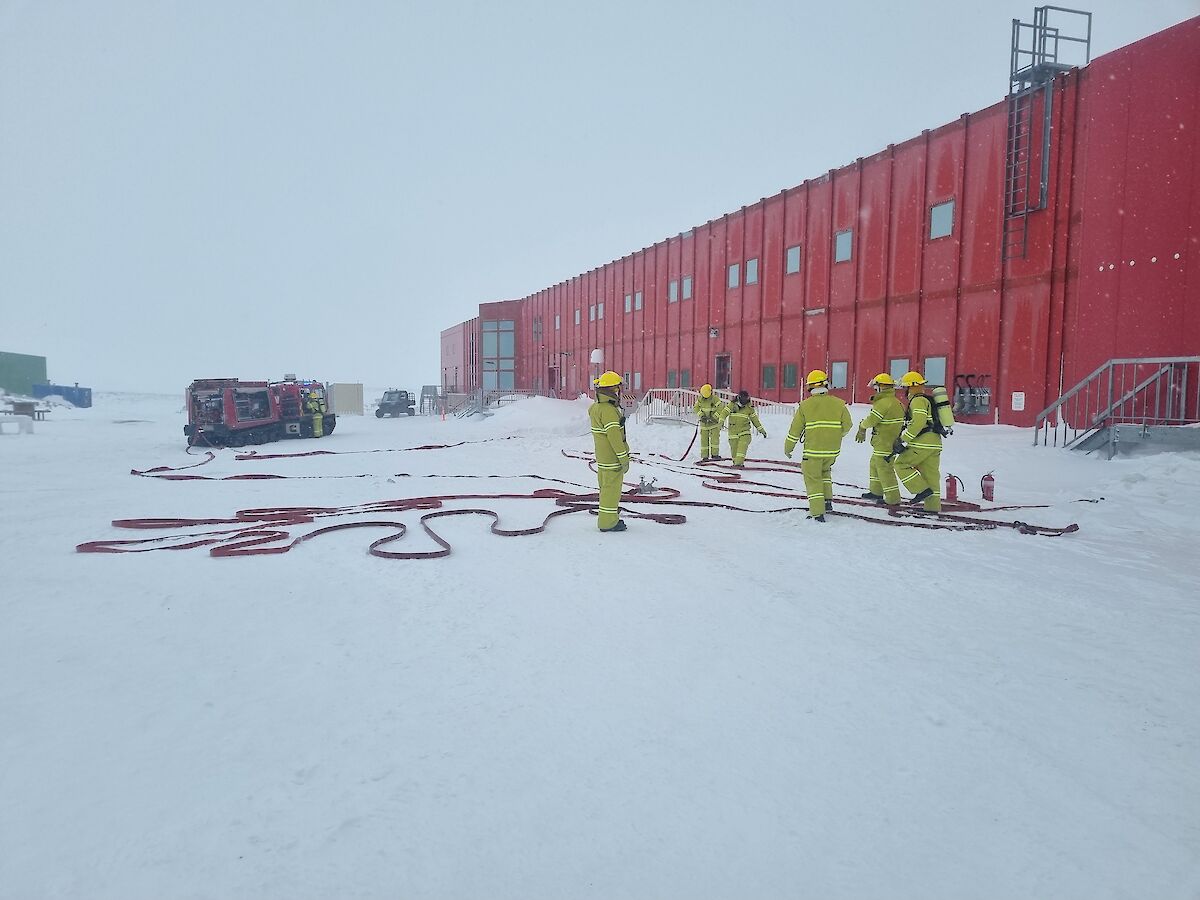
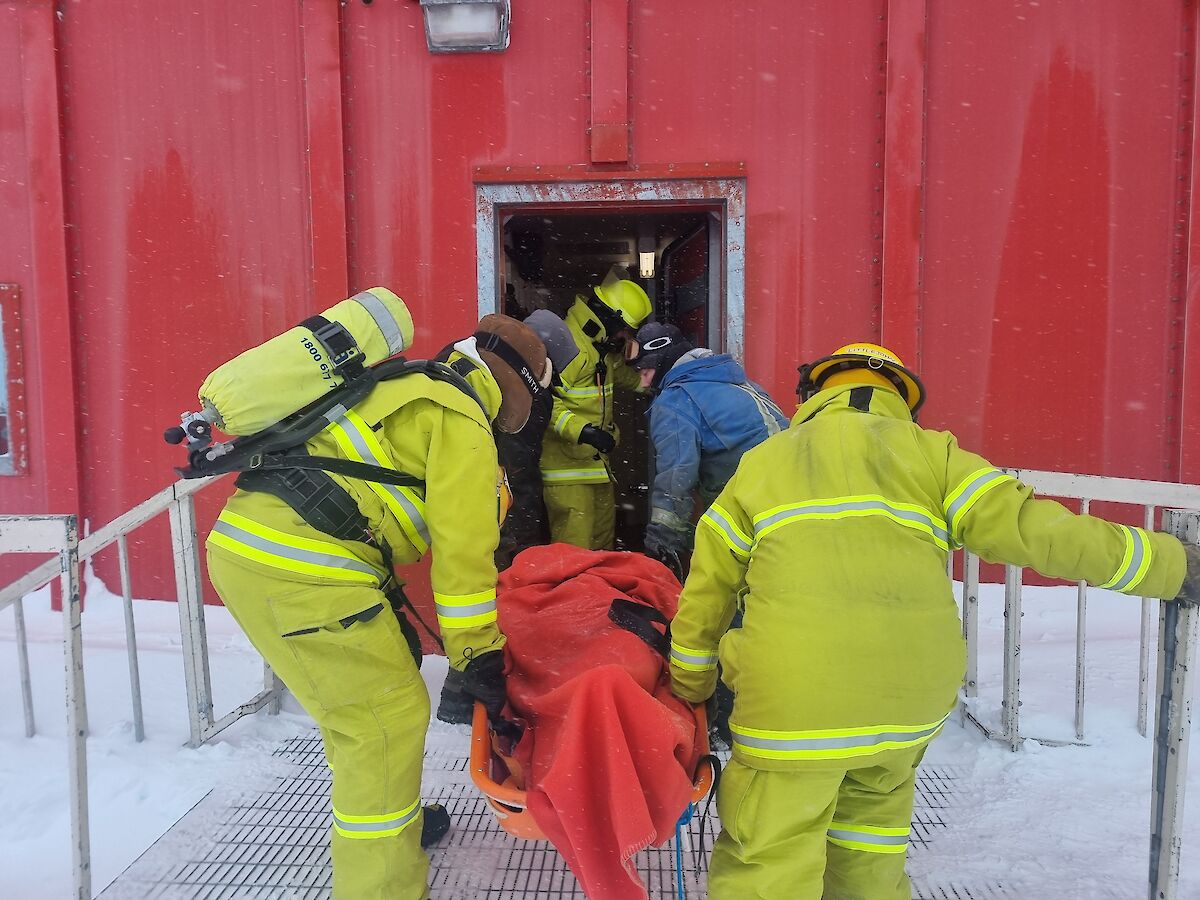
What resulted was an excellent example of teamwork, coordination, initiative, improvisation and quick thinking. There was a fire alarm in the west wing of the Red Shed our accommodation building that also houses our medical facility. Three staff members did not attend muster and were presumed in the fire affected area, and the on call fire chief had decided to go for a walk and wasn't available.
A potential disaster!
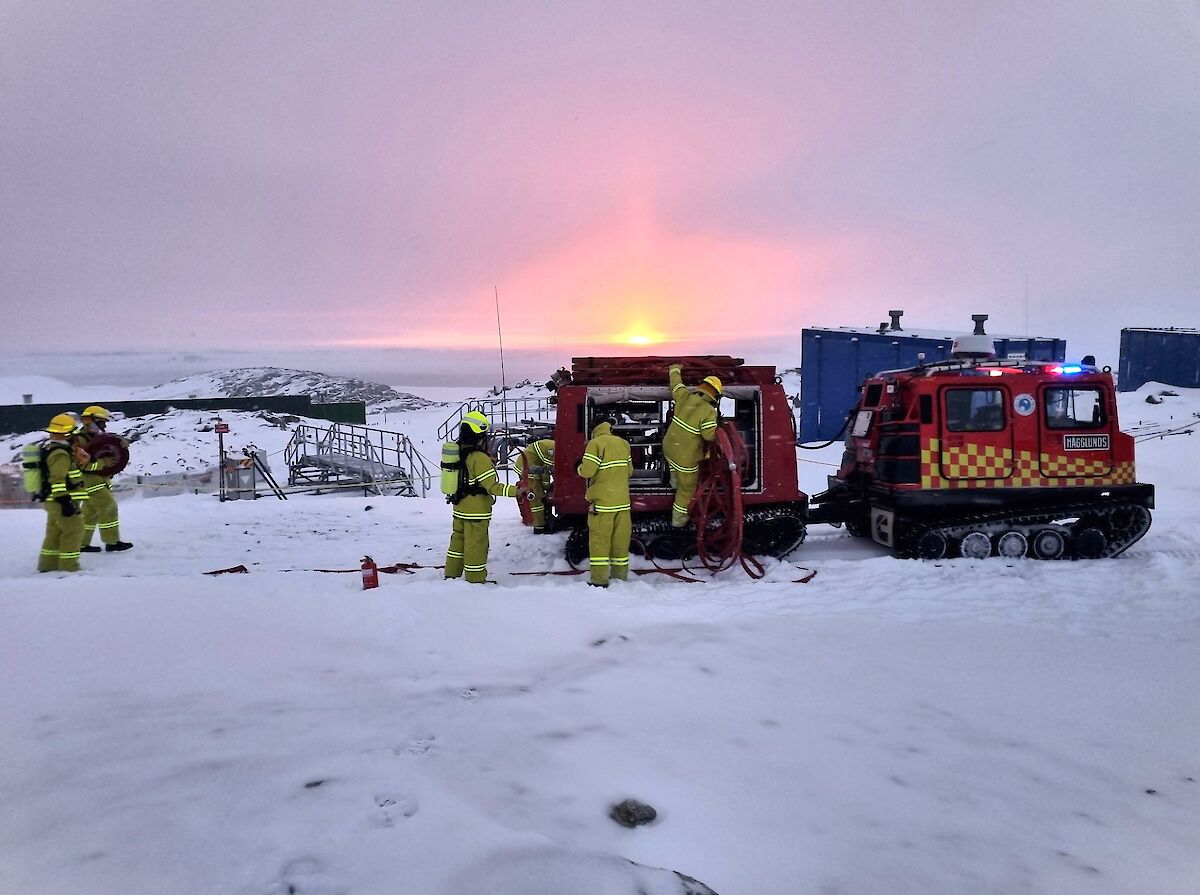
The firefighters quickly assessed the situation, with one stepping into the role of Fire Chief, and reporting to the Incident Controller that they required additional resources, including more firefighters and the SAR team to provide first aid and transport for casualties. They also advised that the medical facility was off limits. The Incident Controller, deployed additional fire fighters and two SAR team members to the incident and put the medical team on standby. The medical team then had to find an alternate location to use as a temporary field hospital and find alternate medical equipment and supplies to treat any injured people. The medical team quickly improvised a field hospital on the floor of the Field Training Store and located alternate equipment such as oxygen sets and Automatic Defibrillators from the workshop and the powerhouse.
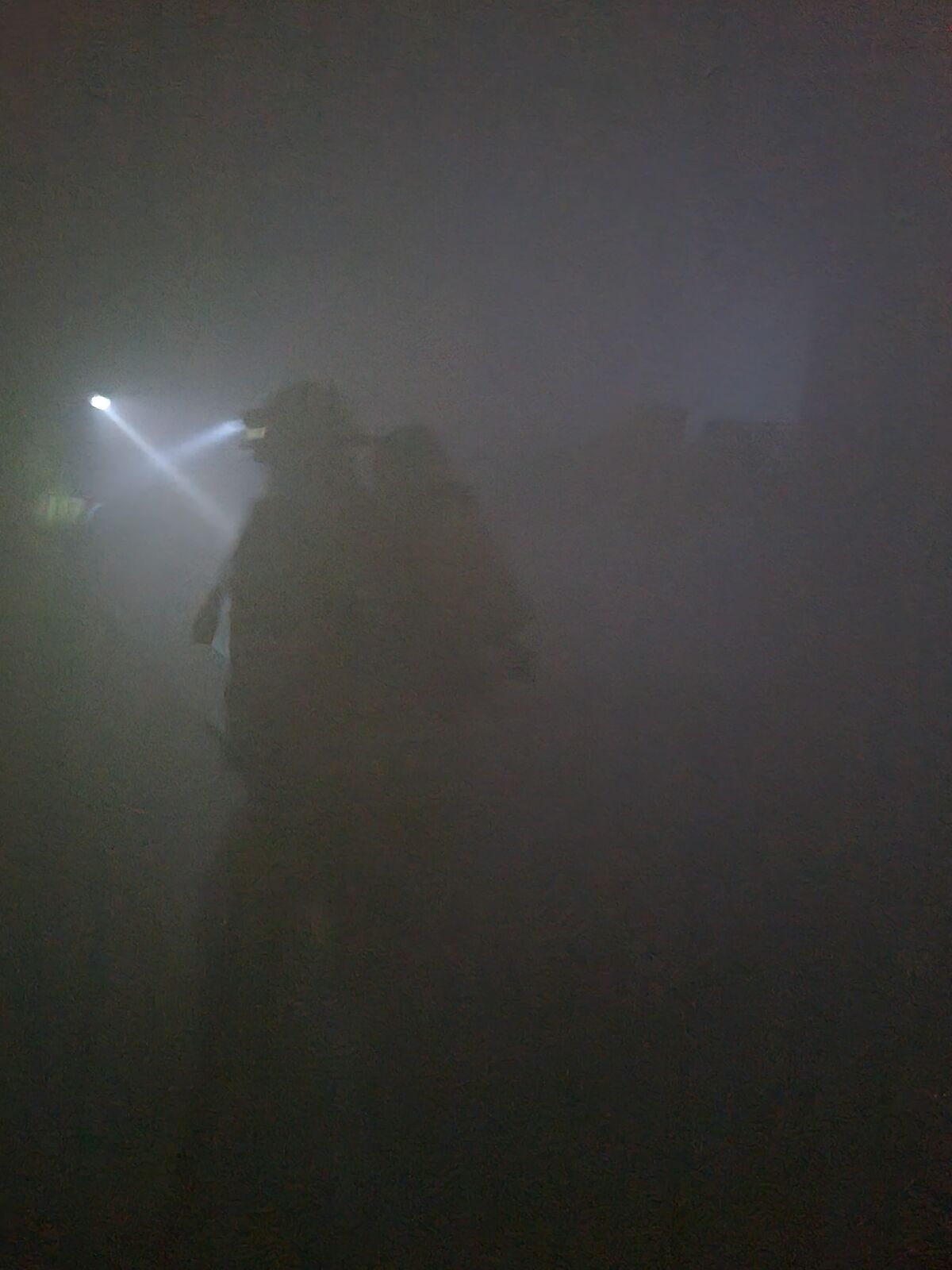
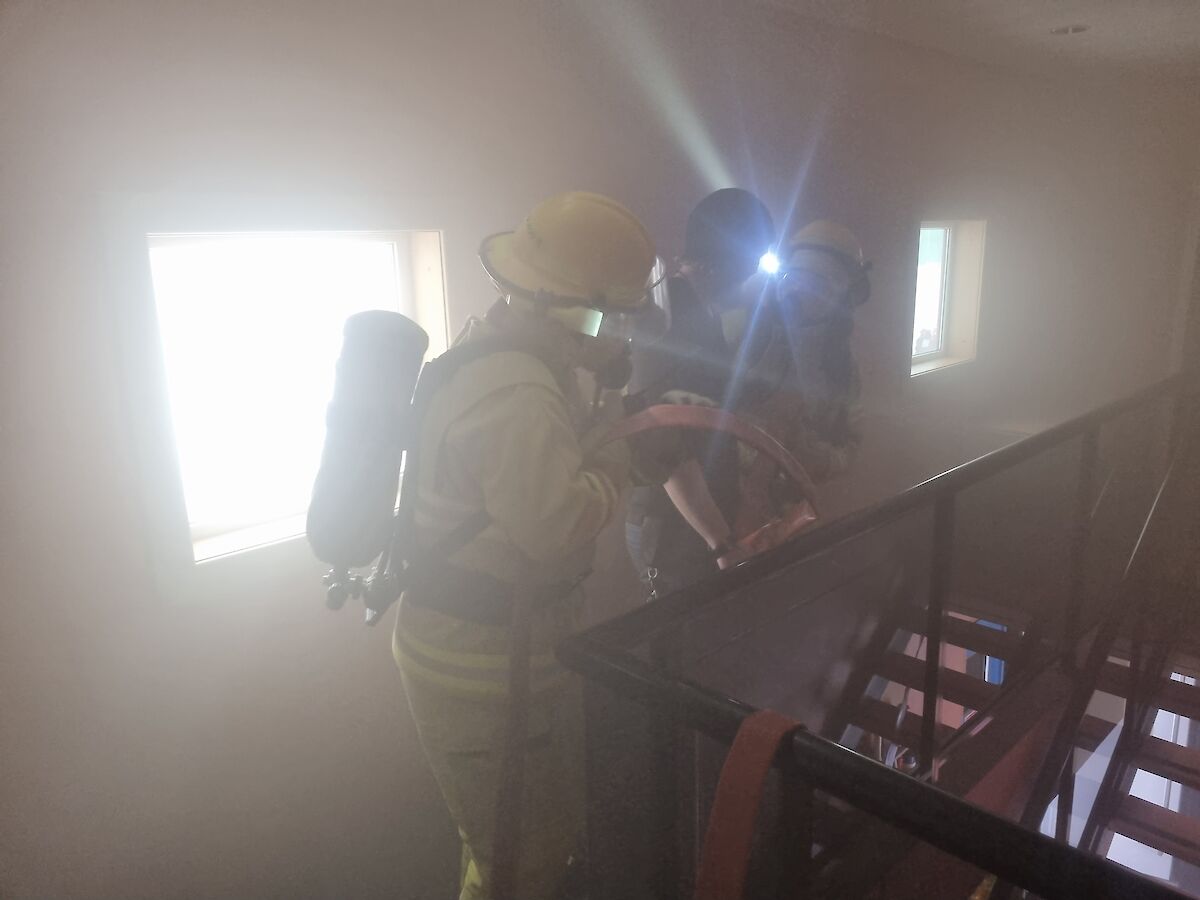
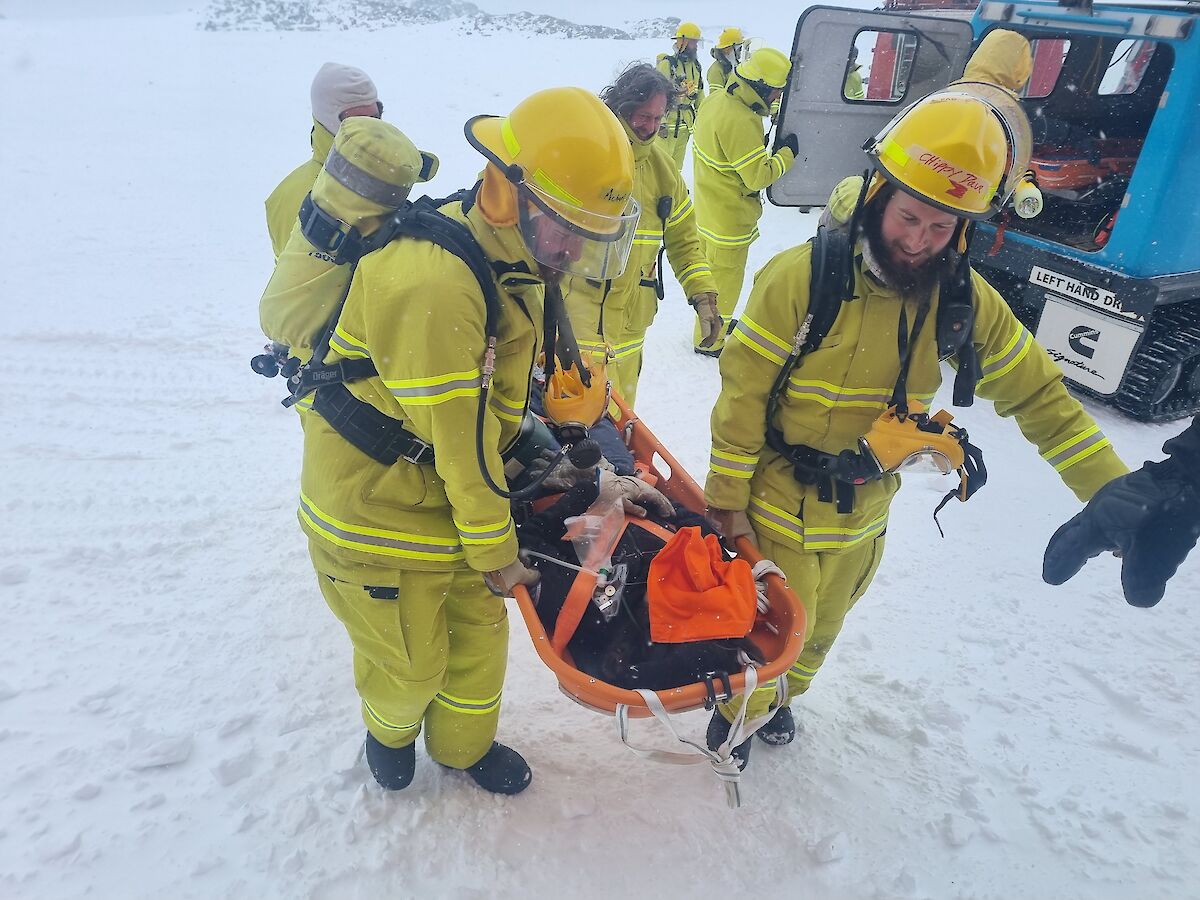
The firefighters entered the building which was full of smoke and quickly found one casualty using their standard primary search techniques. Once this team removed this casualty a second team entered the building and picked up where the first team had finished. The SAR team collected the casualty who had smoke inhalation and transported him to the temporary field hospital.
Meanwhile the second team had located another casualty who'd been asleep and not heard the fire alarm, she was responsive but as they were assisting her out of the building she fainted and became unresponsive and they had to practice casualty carrying techniques to get her safely out of the building. Once outside it was discovered that she'd sustained some burns. By now the SAR and Medical teams had two injured people to manage and the fire teams were beginning to run out of air cylinders for their breathing apparatus.
More air cylinders were requested from the Emergency Vehicle Shelter. The third firefighting team now entered the building and were working their way through the second floor of the building where they came across a third casualty. This casualty had located the fire and attempted to extinguish it with a fire extinguisher mounted in the hallway but had unfortunately been overcome by smoke. He'd successfully knocked the fire down but hadn't made it out of the room. The firefighters extinguished the fire and assisted him down the stair but in the process he started to faint and they had to carry him the final distance outside to the waiting SAR team. The SAR team transported this casualty to the temporary field hospital where the medical team assessed and stabilised him.
The fire had now been extinguished and the fire chief assessed the situation and deemed that the fire damage was minimal and the medical facility was safe to enter and use. Now the SAR team had to transport the three casualties individually to the medical facility where the LSAs managed each patient whilst the Doctor commenced treatment, managing the various patients for a combination of smoke inhalation, burns and trauma injuries. Three of the four readily available beds within the medical clinic were put to use and the LSAs each tended to a patient of their own under the instruction of the doctor.
Once the three casualties where safely receiving treatment in the medical facility the exercise was deemed complete. And then we packed up all the gear and cleaned up the mess that we'd just made just as the on-call Fire Chief returned from his walk.
We now have the training, skills, some experience and the confidence to have a crack at an incident and make the best of a potentially bad situation. A magnificent achievement by all.
Paul Black: Weather Observer and Fire Chief
Arno Payan: Field Training Officer and SAR Team Leader
Dr James Greenhalgh: Station Doctor and Medical Team Leader
Casey Station, October, 2026