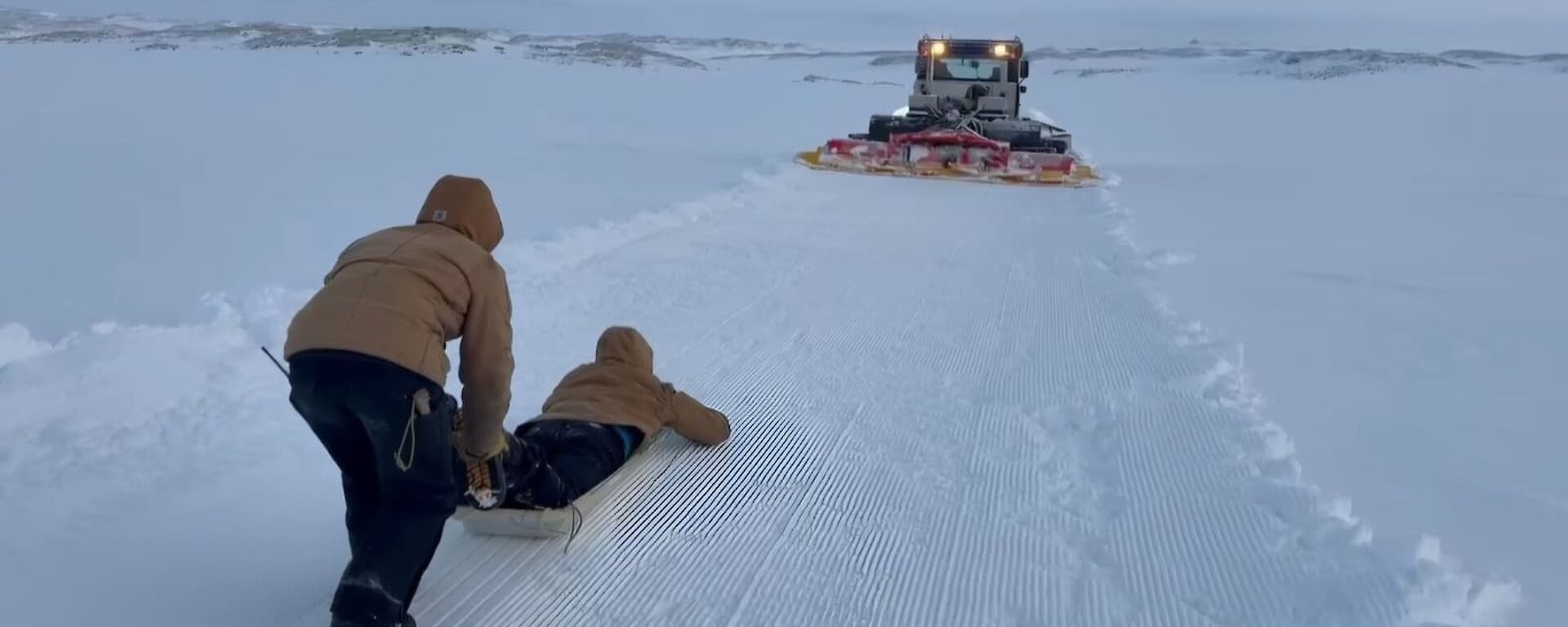

A WIFFA weekend at Casey
WIFFA (Winter International Film Festival of Antarctica) weekend at Casey was the culmination of weeks of planning, recording and occasionally wondering whether an idea I had dreamed up 10 months earlier in Hobart was actually going to work.
From the beginning, the film was to be about more than Antarctica itself. It is easy to point a camera outside here and come away with something spectacular. What interested me more was the sense of community that develops in such a remote and desolate place, and how a small group of people, each here to do very different jobs, come together to make this place work.
The film was built around an adaptation of Dylan Thomas's Do Not Go Gentle into That Good Night. The plan was to use the structure and famous refrains of the original poem as a framework, but rework the verses around the experience of an Antarctic winter. The disappearing sun, the wind and ice, the isolation, and ultimately the people who share it.
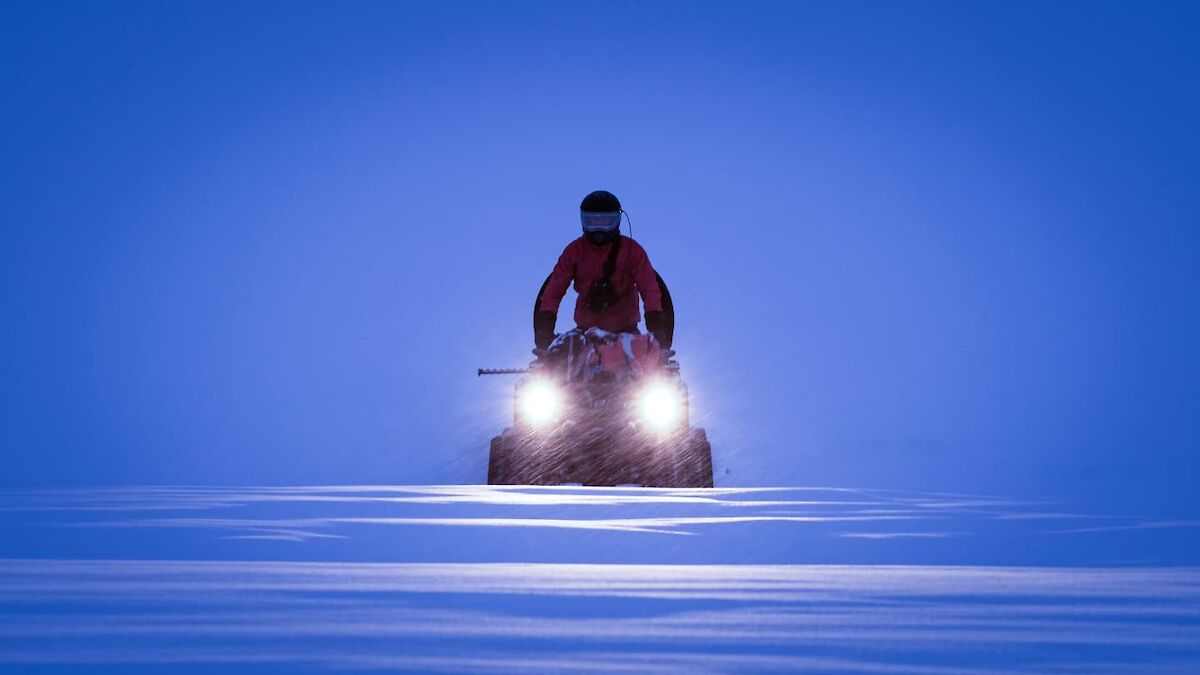
That became the backbone for planning the film. Rather than simply collecting nice shots around station, each sequence was planned around the poem and the different roles that make up Casey. The aim was to show people individually in their own environments, while gradually building the feeling that all of those separate roles contribute to something bigger.
A huge part of making that idea work was the music.
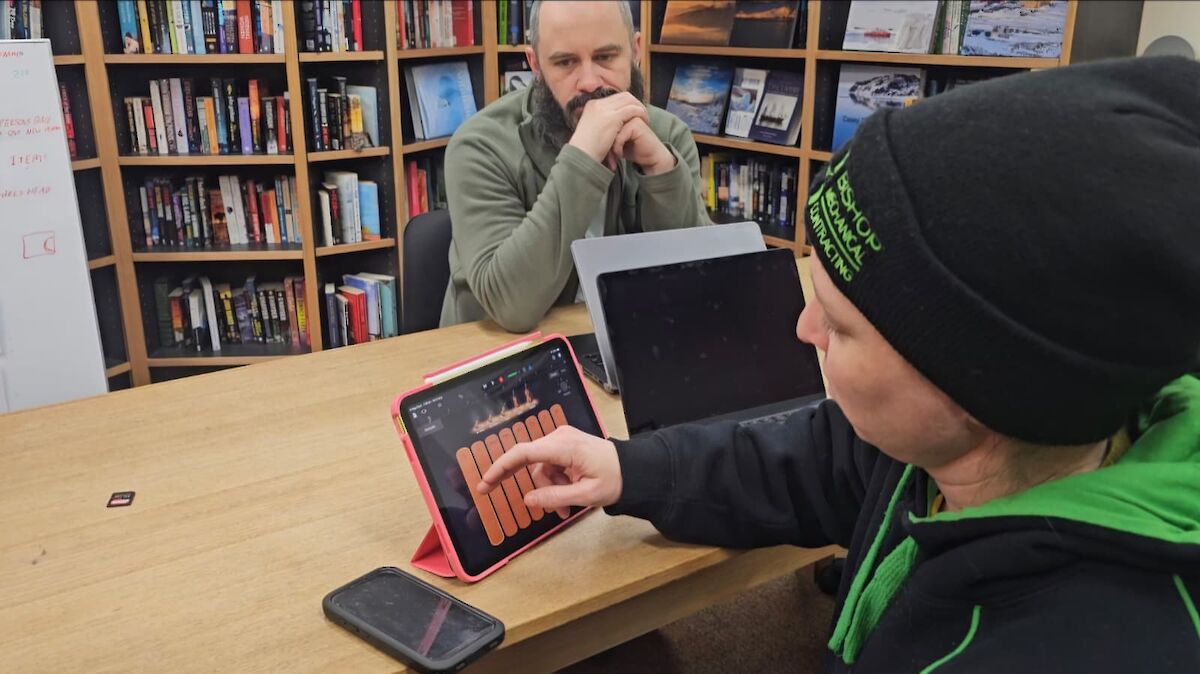
Cliffy McAuliffe took Edward Sharpe & The Magnetic Zeros Home and created an original orchestral arrangement for the film. Perhaps the most impressive part was how she did it. Cliffy listened to the song, worked out the different musical parts by ear and then built the arrangement from there. First stripping it back and putting the parts to sheet music, before recording the individual layers in GarageBand that would eventually become the soundtrack.
I have to thank her for patiently taking my very layman's-terms descriptions of what I wanted the music to do and somehow turning them into something truly spectacular. As if that wasn't enough, she also led Shaun and the Shangs, the Casey Station band, in developing a live cover of the original track to be performed at the end of the film.
Those recordings were then handed over to our comms tech, Tom, whose background in reality television and sound recording became incredibly useful. He recorded, edited and mixed the individual tracks Cliffy had created, taking a collection of separate performances and turning them into the finished piece heard in the film.
There is something quite fitting about that process. The soundtrack itself ended up reflecting the same idea as the film: individual parts that may seem small on their own, but when brought together create something much bigger.
Because it was a 48-hour film festival, we didn't know all of what we had to film until the festival officially began on Friday. Five compulsory elements were released that had to appear somewhere in the finished film: delivering a letter, a water tank, a failed magician, the sound of an Antarctic wildlife animal, and the quote, “It could be worse, it could be raining.”
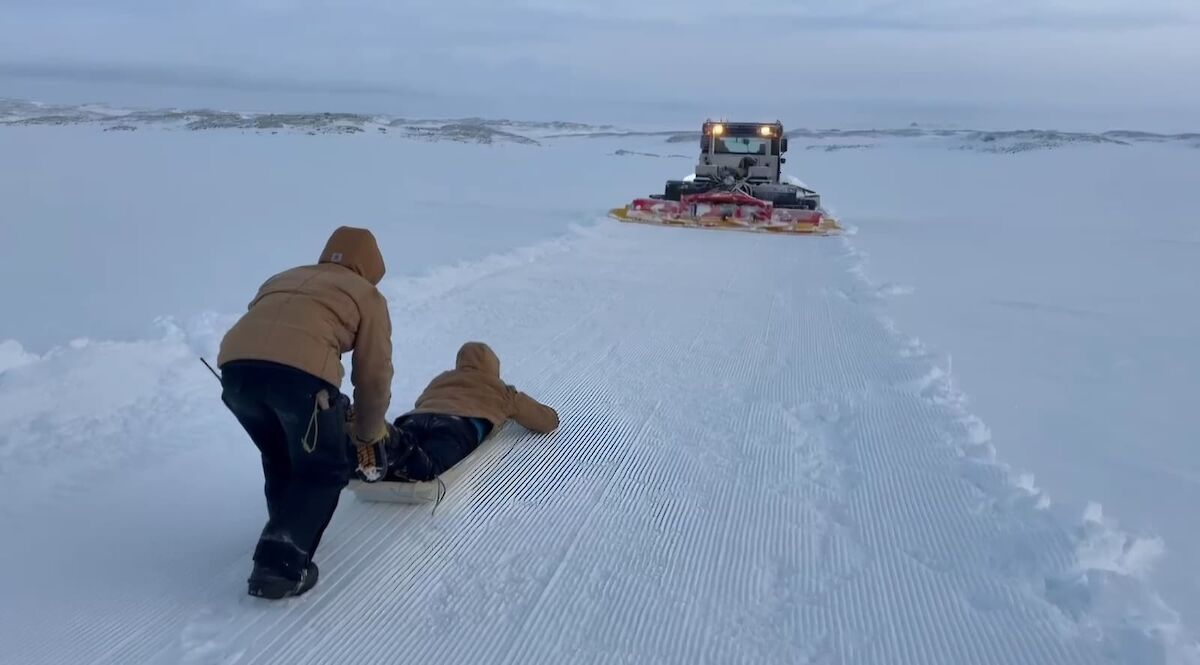
So, armed with a fairly ambitious shot list and five new problems to solve, WIFFA weekend was where everything finally had to come together. Every shot was filmed over the 48 hours before the final edit began, matching images, movement, music and the words of the poem into something that hopefully felt like one story rather than a collection of scenes.
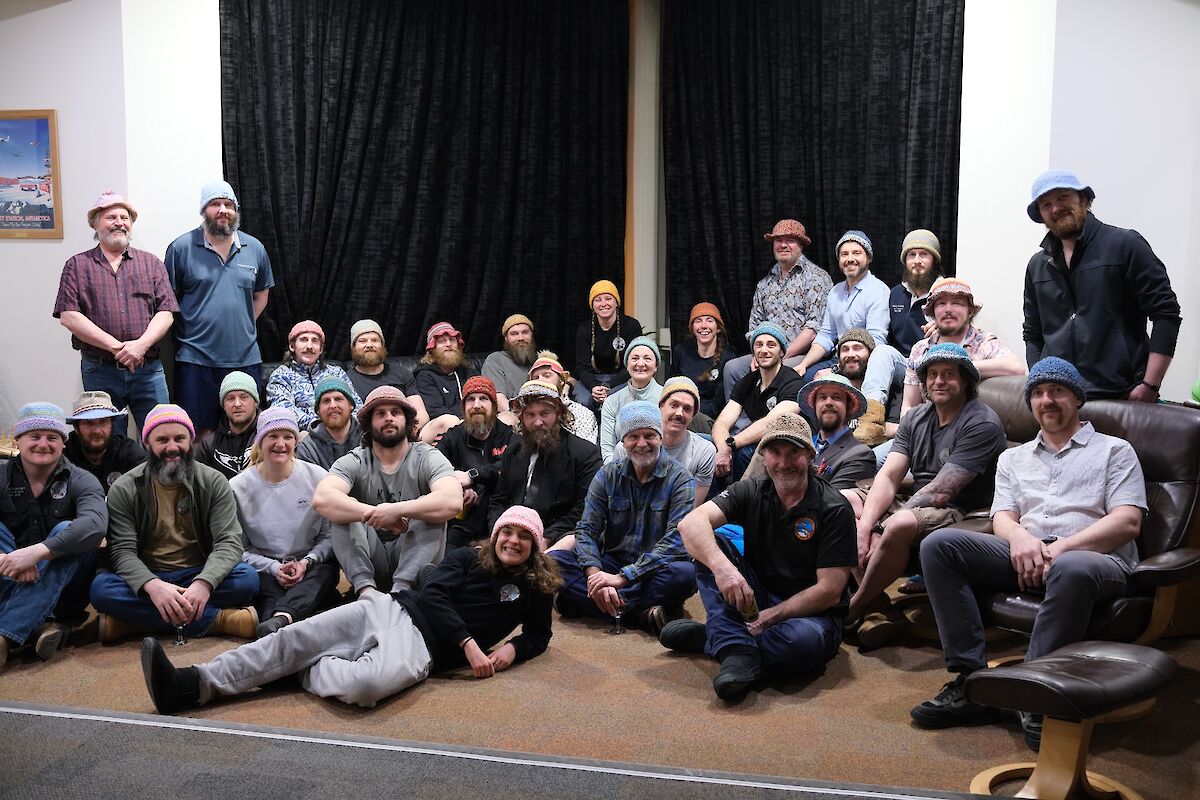
Antarctica provides the backdrop, but the film isn't really about the landscape. It's about the people living within it. In a place that can be incredibly unforgiving and isolated, everyone has their own job, their own skills and their own part to play. What makes Casey work is what happens when all of those individual contributions are brought together.
And in the end, that is what Home came to mean in the context of the film. Home doesn't necessarily have to be the place you came from. Sometimes, for a little while, it is the remarkable community you build together at Earth's far edge.