

World Albatross Day – 19th June 2026
World Albatross Day aims to increase awareness of the threats that albatrosses, petrels and shearwaters face globally. The event was established by the Agreement on the Conservation of Albatrosses and Petrels (ACAP; to which 13 countries have joined, including Australia). It is held annually on 19 June, the date the original Agreement was signed in 2001.
To celebrate World Albatross Day at Macquarie Island this year, Tasmania Parks and Wildlife Service rangers Karina and Gemma, together with AAD wildlife biologist Sarah-Lena, crafted a life-sized wandering albatross (Diomedea exulans). This became the centrepiece for an immersive experience in which expeditioners had to find their mate and perform a courtship dance – a very humorous sight. The albatross, later christened “Jiff” by popular vote, was hung in the station mess, where it doubled as the centrepiece decoration for the Midwinter dinner. Jiff was then ceremoniously burnt following the midwinter festivities, bringing the celebrations to a close.
Measured by wingspan, wandering albatross are the largest living bird in the world. Their wings span is between 2.5 and 3.5 metres, allowing them to dynamically soar above the oceans of the south. They typically forage by surface-seizing fish and cephalopods, such as squid, and only return to land to breed.
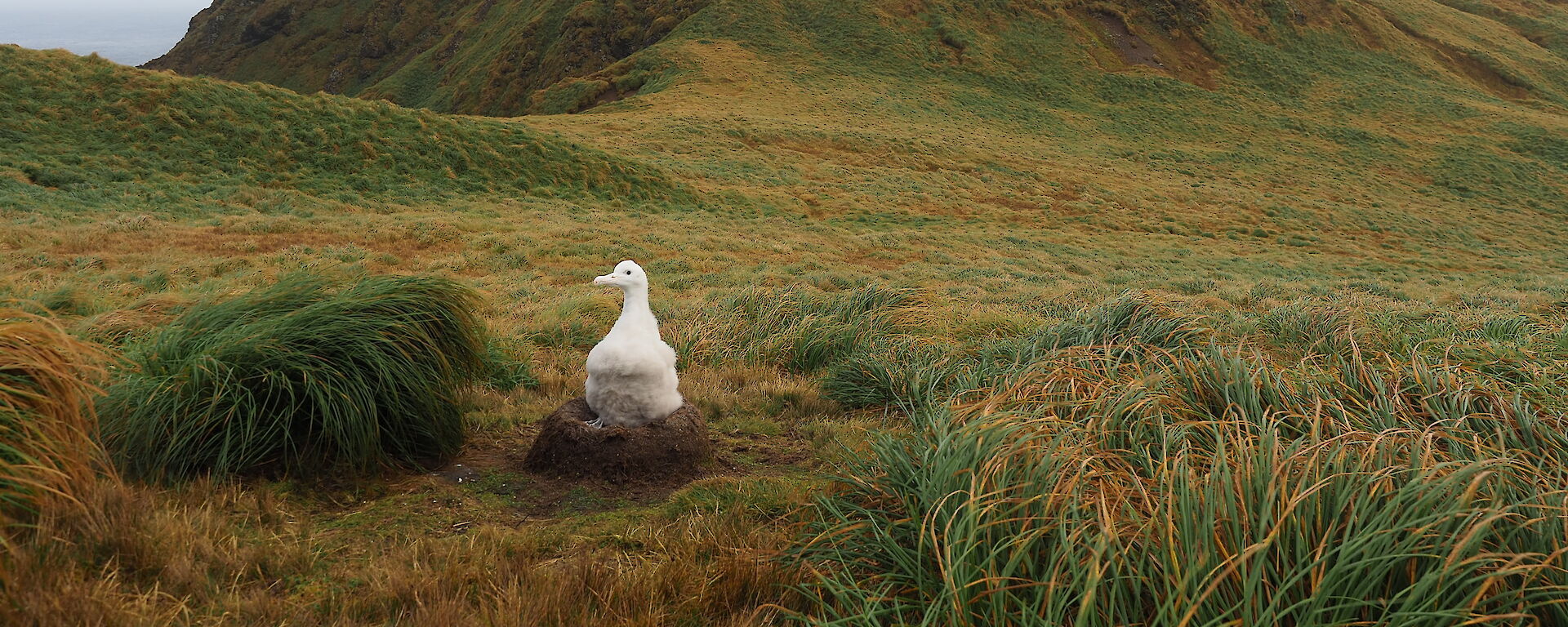
Macquarie Island provides critical breeding habitat for Australia’s extremely small wandering albatross population. This year, there are four wandering albatross chicks on the island. The nests are all located in very remote and spectacular locations in the rugged south‑west corner of the island. The chicks hatched at the start of the year and will live at their nest alone, including through the sub‑Antarctic winter, until it is time to fledge at the end of the year. Remote cameras are located at each nest to non-invasively monitor the breeding ecology of the birds.
Many seabird species continue to face significant conservation challenges. Bycatch in commercial fisheries is one of the greatest threats to albatrosses and petrels worldwide, where birds can become hooked or entangled while attempting to feed around fishing vessels. Other threats include climate change, marine pollution, and the impacts of introduced species at breeding sites.
The successful eradication of rabbits, rats and mice from Macquarie Island (the Macquarie Island Pest Eradication Project, declared a success in 2014) has helped restore the quality of albatross breeding habitat, most evident through the recovery of tussock vegetation. The removal of these invasive pests means there is no risk of them having an ongoing impact on breeding birds and chicks.
In addition to wandering albatross, Macquarie Island Nature Reserve and World Heritage Area is home to three other albatross species (light-mantled, black-browed, and grey-headed albatross) and many petrel species. The conservation of these species is of Tasmanian, Australian, and international significance.
Gemma Rushton (Ranger in Charge)
Karina Sorrell (Wildlife Ranger)


