

Davis Station: from melting snow to modern water systems
When Davis Station was established by Phil Law on 12 January 1957, water was one of the simplest problems for the small team of early expeditioners. With only a handful of people on station, they met their needs by melting snow. It was a straightforward but labour‑intensive process. In fact, to produce just one litre of water, around ten litres of dry‑packed snow had to be melted.
For the early crew, this method was more than adequate. But as the decades passed and the population of Davis grew, the limitations of snow‑melting became clear. More people meant more demand for drinking, cleaning, cooking, and scientific activity — all requiring far more water than snow melt alone could reliably provide.
A shift to seawater and modern infrastructure
Today, Davis Station relies on a far more advanced and efficient system to meet its water needs. Seawater is pumped from the ocean into a tarn dam, where it begins its journey through the station’s modern treatment network. From there, it enters the reverse osmosis plant, which converts the salty Antarctic seawater into clean, fresh drinking water.
The processed water is then stored in three major water tanks, each capable of holding 600,000 litres each. This storage isn’t simply a convenience — it’s a critical lifeline. In Antarctica, water isn’t used only for drinking, cooking, or showers. It also supports essential systems including:
- Fire‑fighting infrastructure
- Hydroponics, which help produce fresh food
- Heating systems, vital for keeping buildings and people safe
Every litre is accounted for, and every failure has consequences.
Tank One: a challenge from the 1990s
One of these key assets, Tank One, was constructed in the early 1990s. After decades of service, it has developed a persistent leak, gradually reducing its usable capacity over recent years. This has placed increasing pressure on the station’s overall water storage and resilience, especially during periods of high demand or challenging weather.
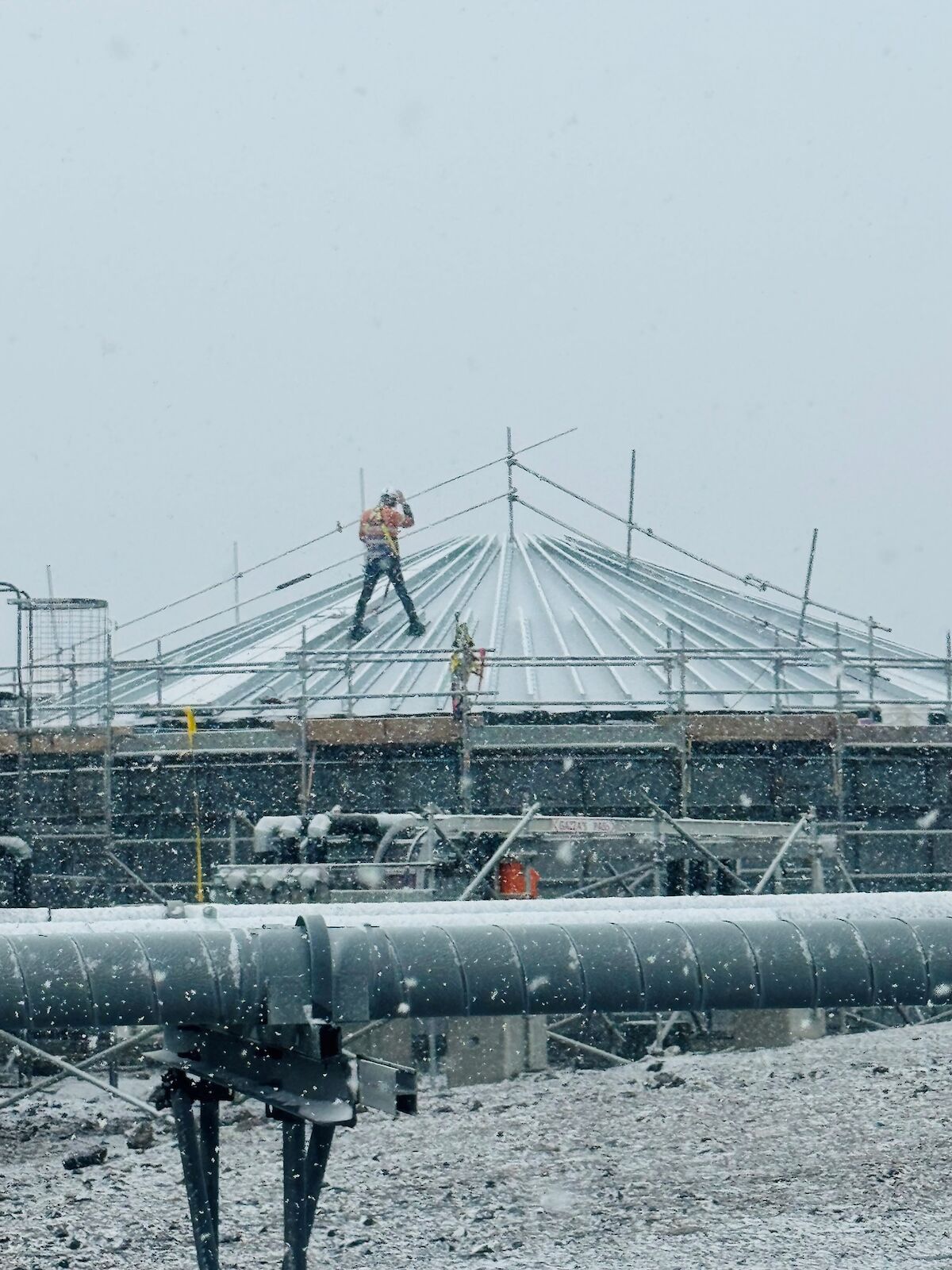
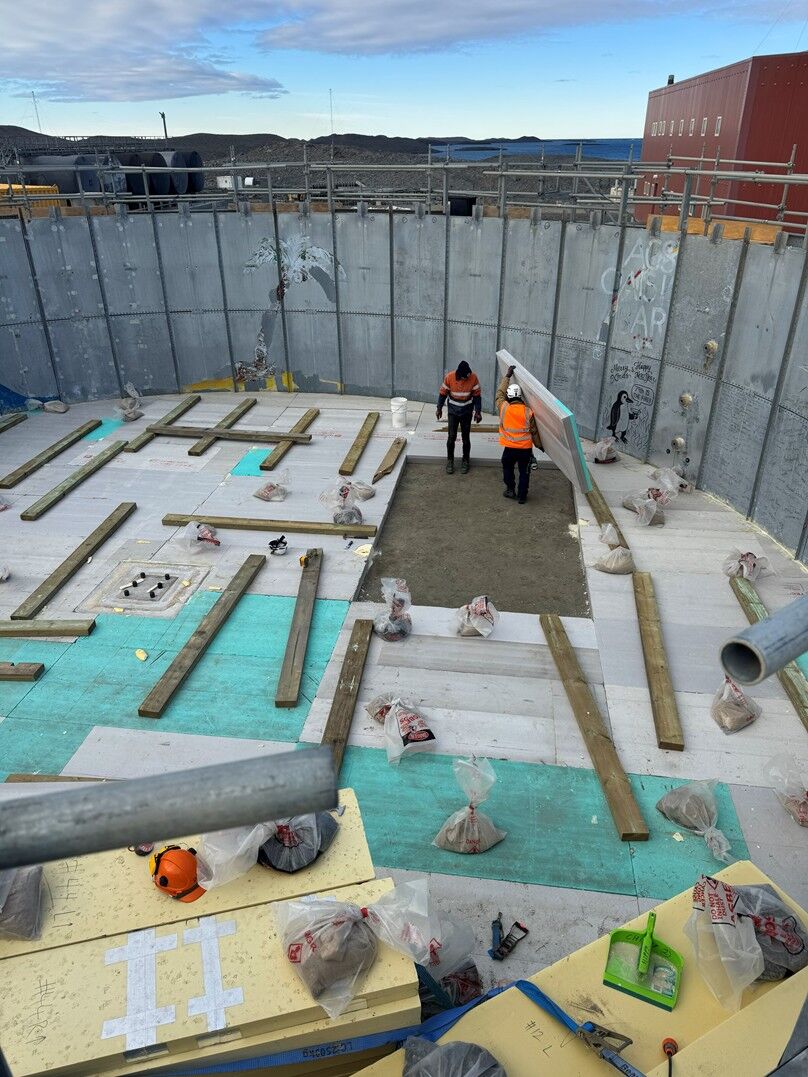
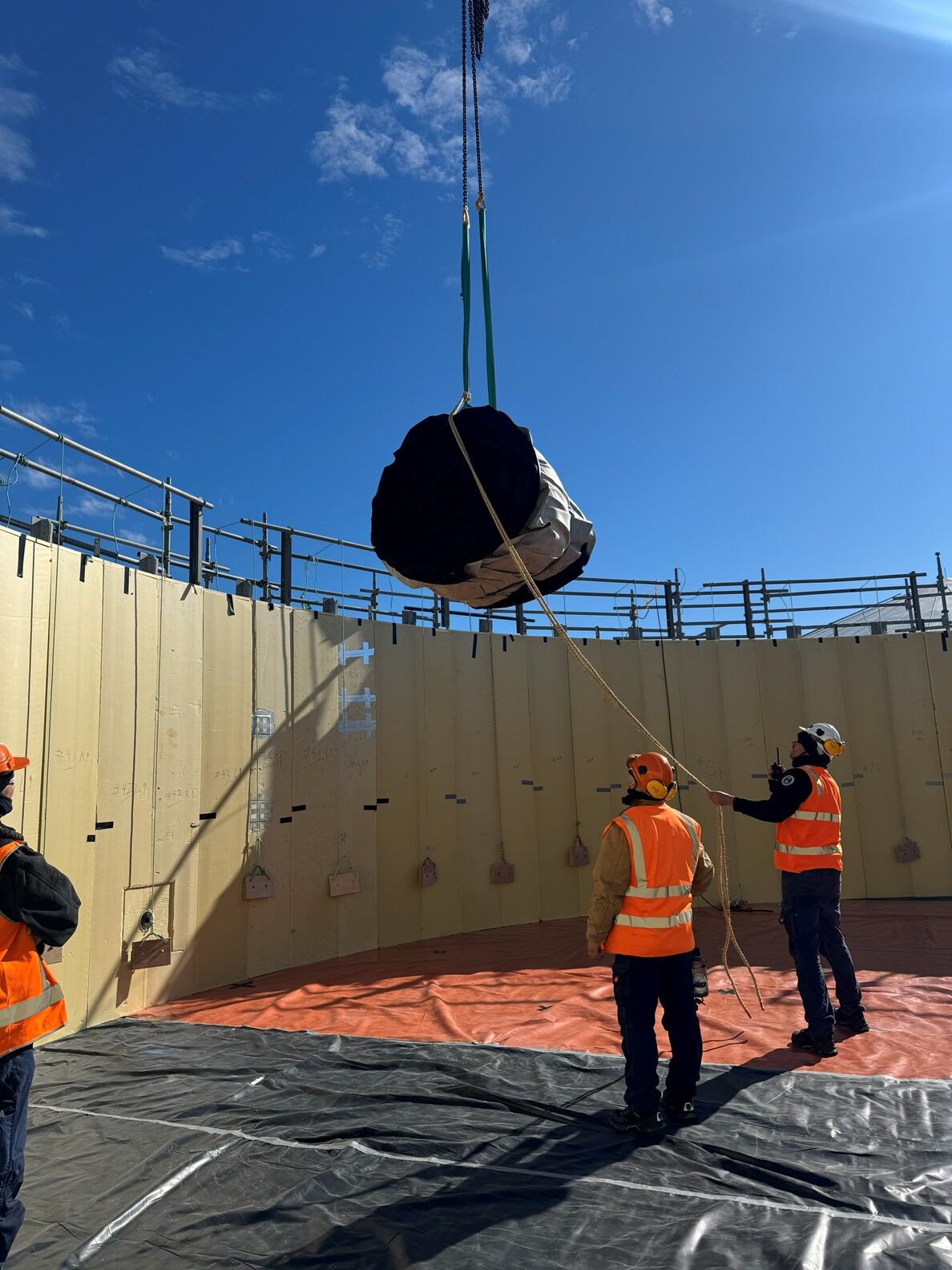
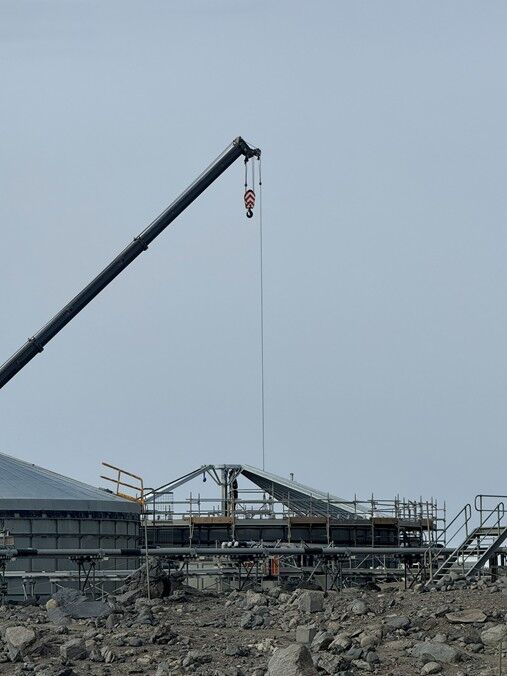
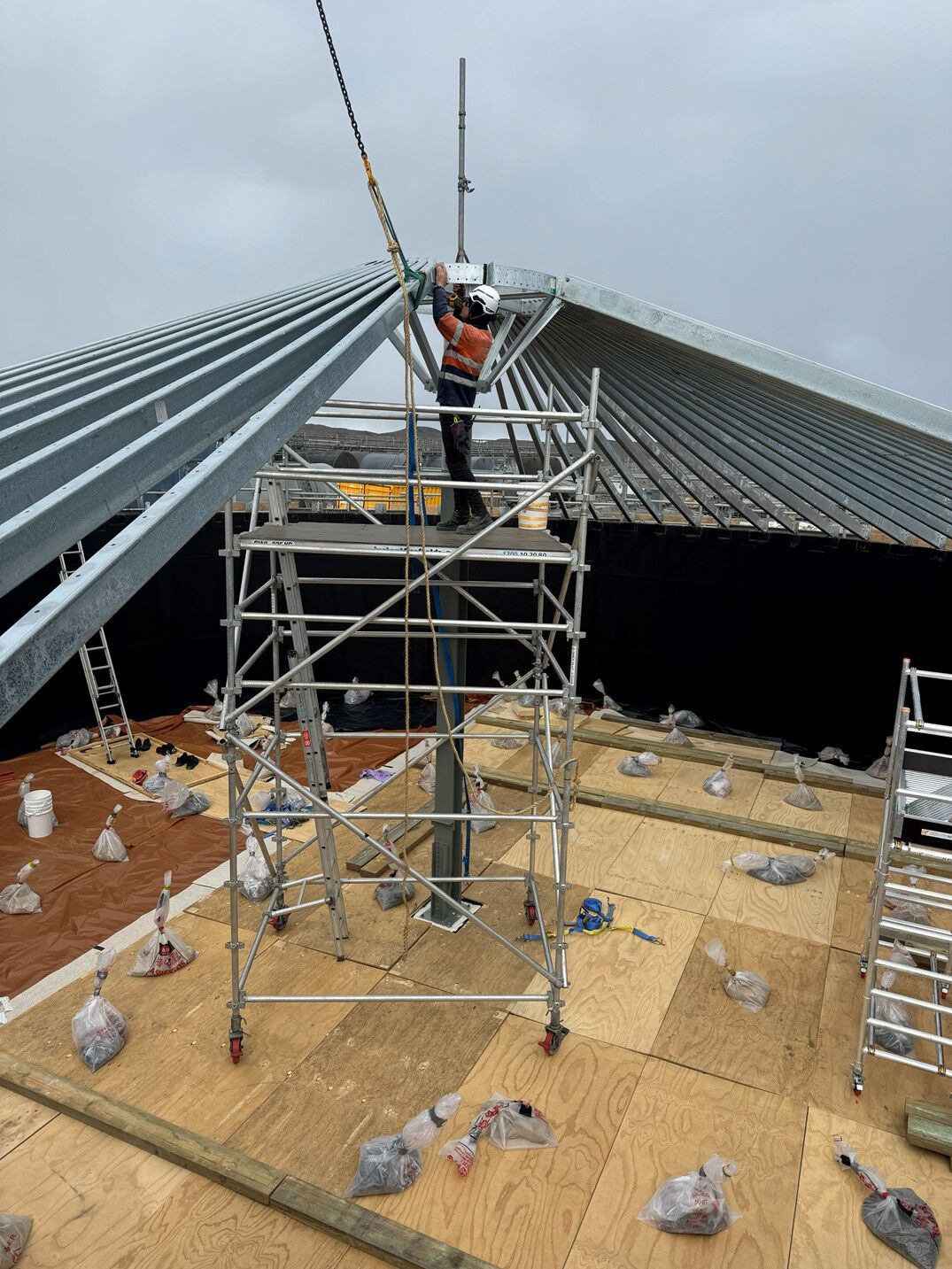
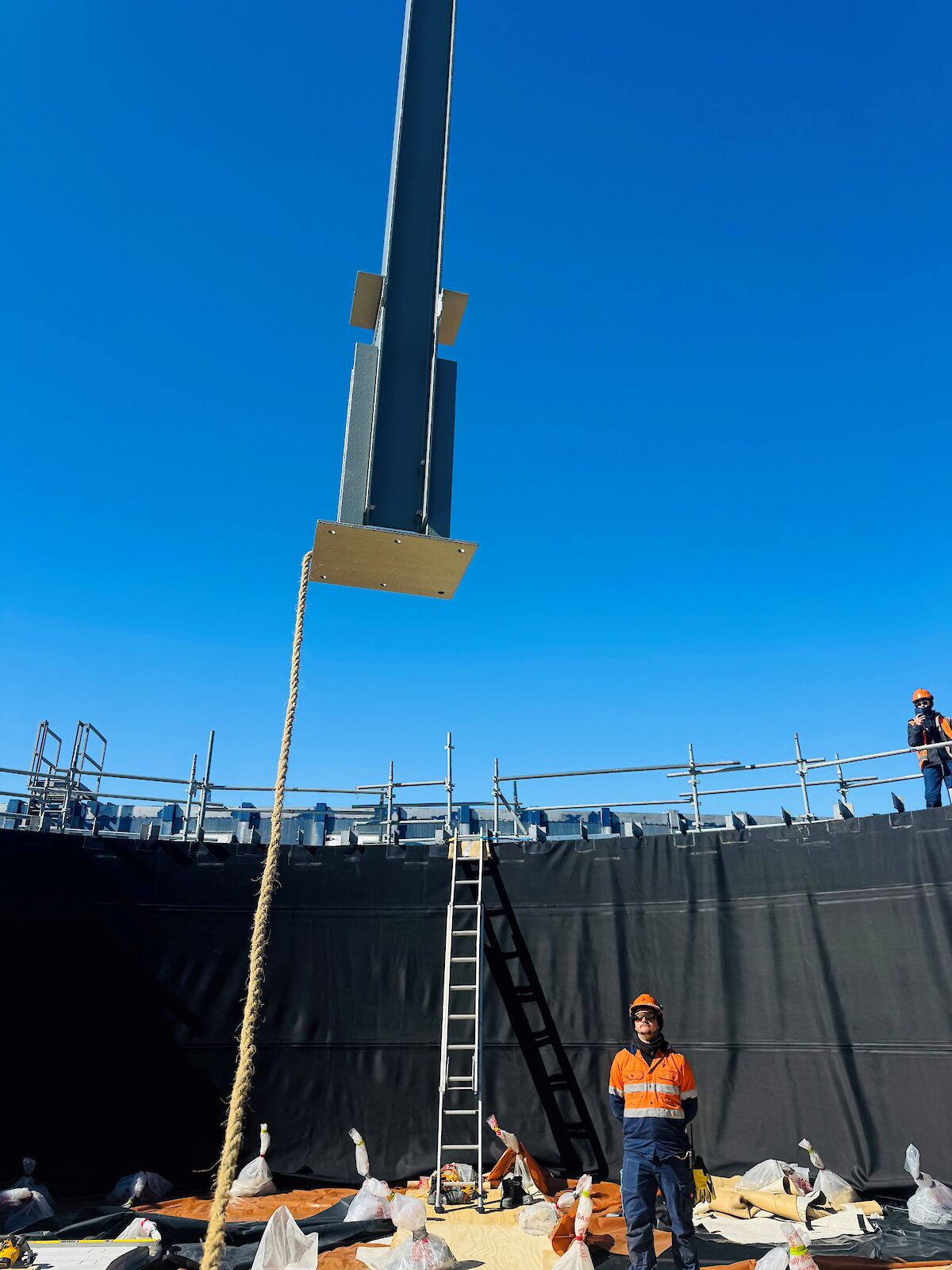
This season, our team has taken on the major task of replacing the roof structure, lining, and insulation of Tank One. It’s a large and detailed job, combining engineering skill, logistics, and plenty of teamwork.
Working against Antarctic weather — with a smile
As always, we work at the mercy of the Antarctic environment. The weather at Davis can shift quickly and dramatically, affecting schedules, access, and the way we work. But despite the cold conditions and the challenges of operating in such a remote place, the team has tackled the job with determination — and more importantly, with a smile.
What we’re achieving this season will help secure the station’s water supply for years to come, ensuring Davis continues to operate safely and sustainably.
See below for progress photos so far.