
Davis station is such a wonderful place
Rocky ranges, deep fjords, and spectacular scenery on land and out on the frozen ocean. Night and day, there is always something to observe and be amazed by.
It is this natural beauty that I enjoyed in 2023/2024 and have now returned to for this year.
It feels like I have only been gone a few months since I handed over the senior communications technical officer position to the incoming team back at the end of 2024. Since I left there have been many improvements in the telecommunications equipment, allowing greater internet bandwidth enhancing safety and wellbeing, science data, and Bureau of Meteorology data gathering and transfer.
The familiar sights and sounds of a busy Antarctic station are still the same as before, including the seals and penguins at the shoreline, the bright moon and the nightly auroral displays out over the bay.
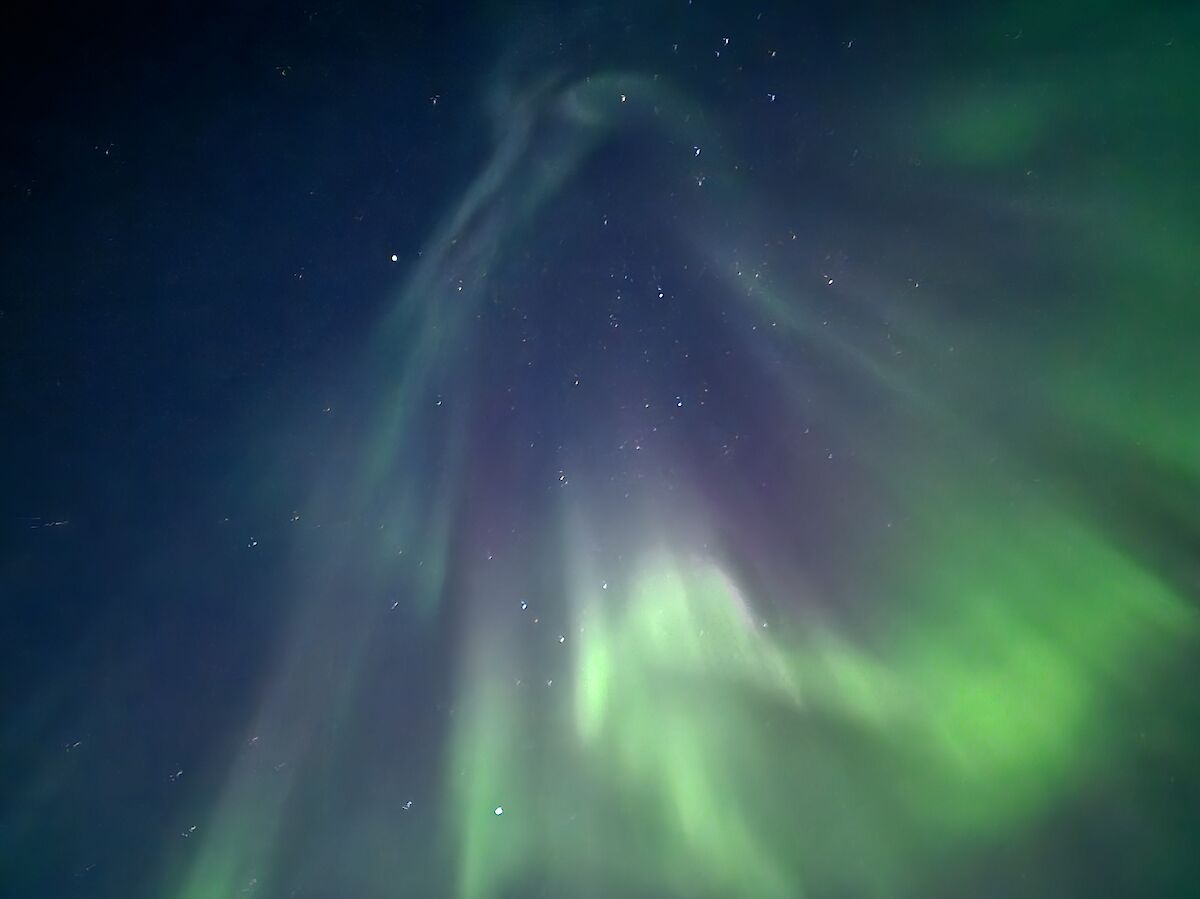
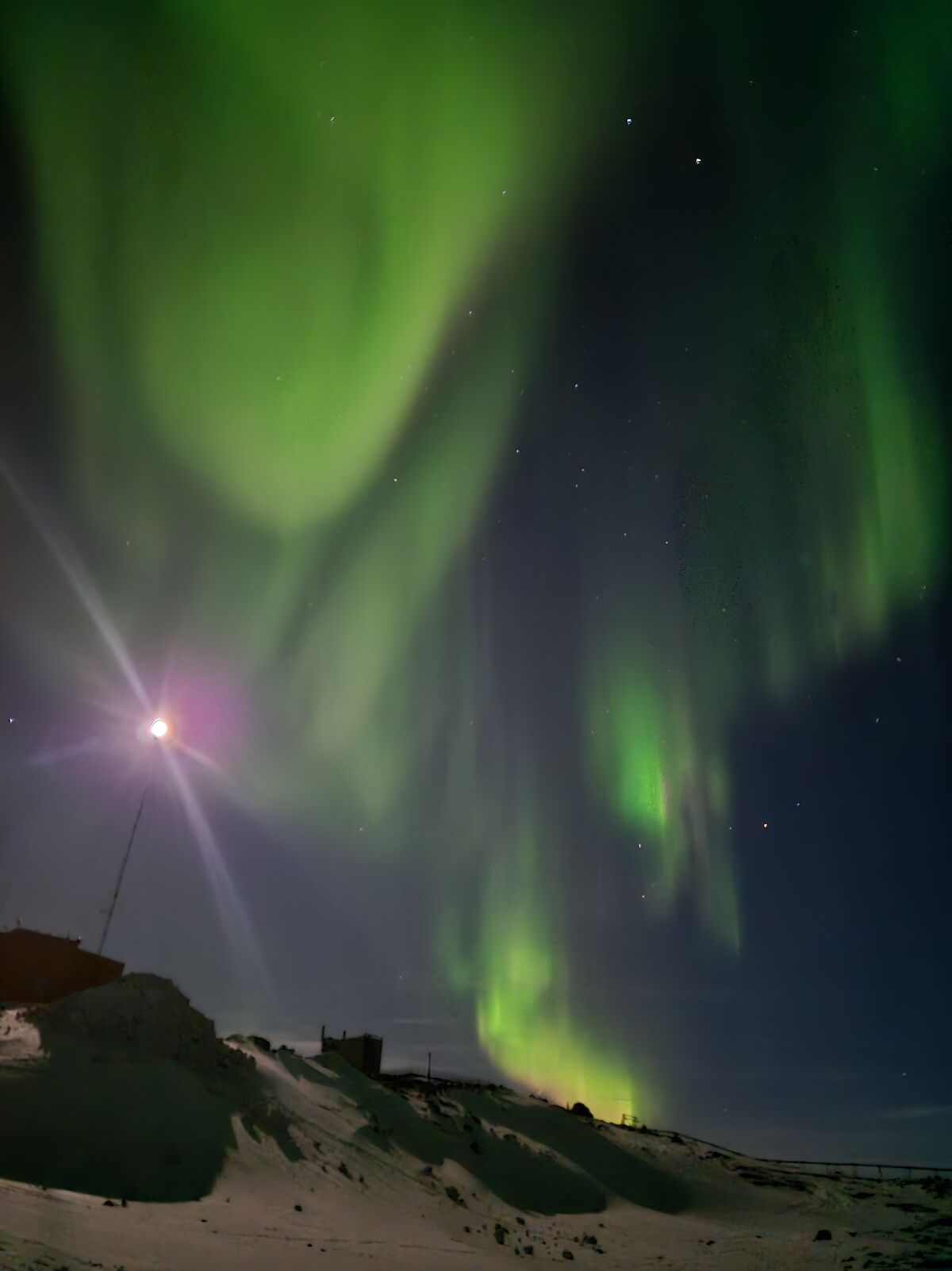
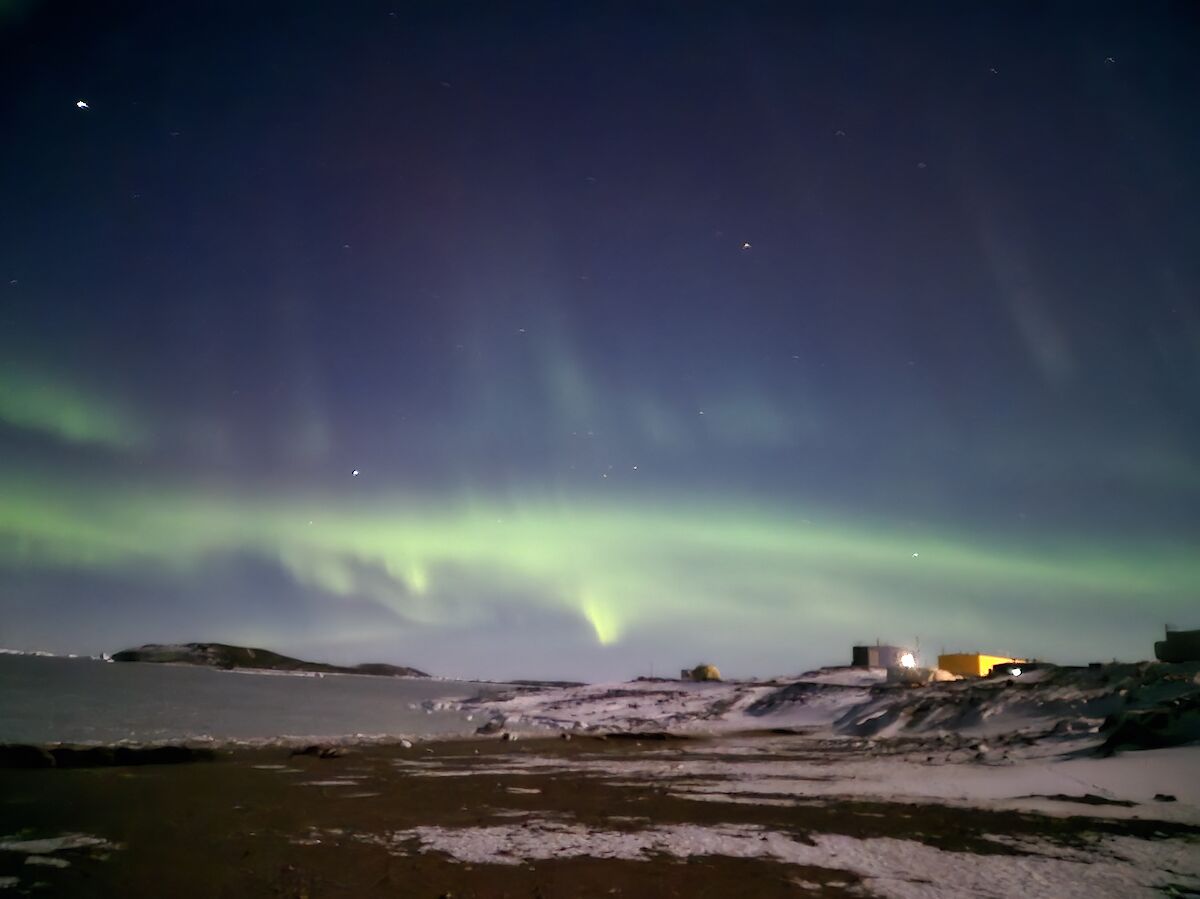
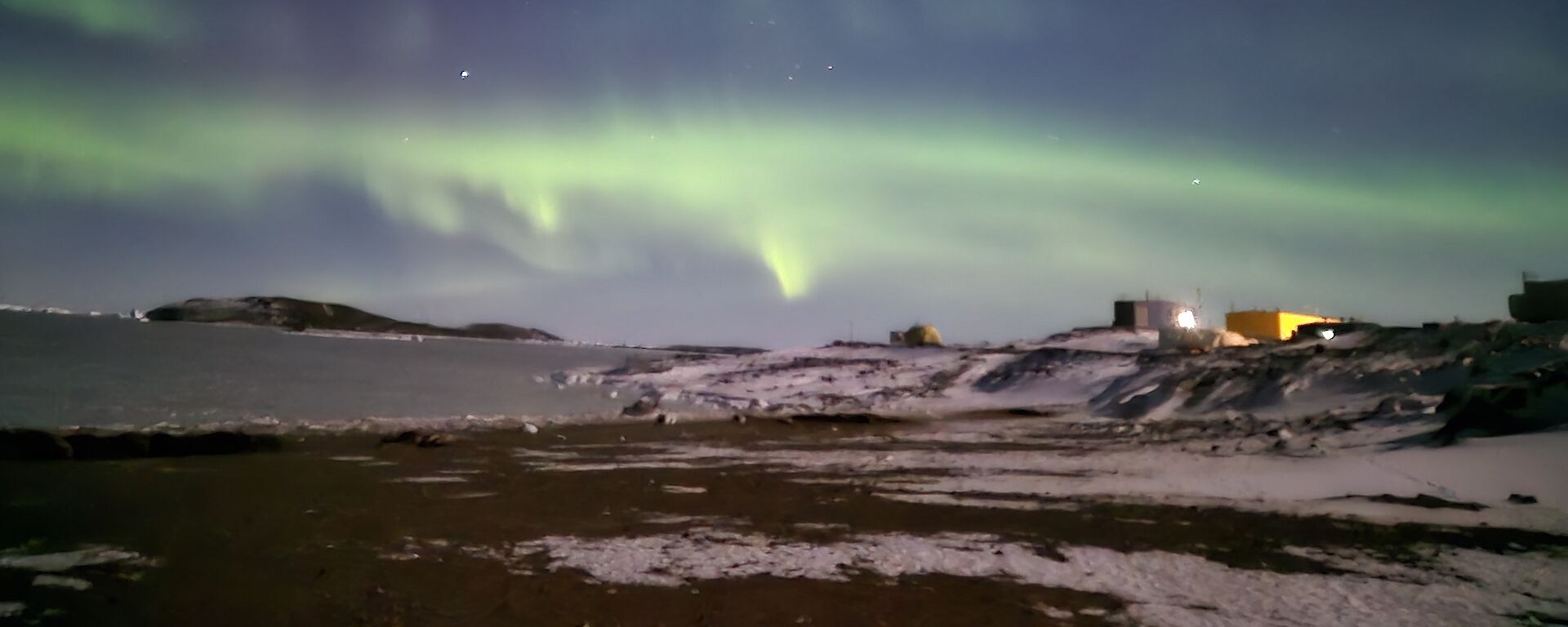
Last night was cloudless and cold and the full moon was quite high to the northeast and very bright. At 10 pm, looking to the western sky, a thin line of greenish white appeared, twisting and turning slowly, increasing in size and intensity, turning green and expanding upwards. It was so bright even the moon could not affect it.
The aurora occurs when charged particles from the sun enter the earth’s magnetic field and atmosphere, colliding with oxygen and nitrogen which results in colourful green, red and purple lights in the sky. The movement and shape of the display changes slowly, then will speed up and create different effects, like a picket fence, or directly overhead the green and purple colours stream down over us. The display covers most of the sky, varying in intensity.
A group of us walked down towards the beach, setting up cameras on tripods in the snow to take photographs of this amazing sight. Mobile phones these days have very good cameras in them too, and are able to take great photographs of the aurora. We used a variety of cameras, but the principle is the same for all; using manual mode, set the focus to manual infinity, white balance to ~5000, ISO up high, adjust the aperture to fully open, and then vary the amount of light gathered by the camera by setting the length of time the shutter stays open. Typically 1 to 5 seconds on high ISO with the aurora as bright as it was last night. Some cameras have a timelapse mode which will stack photos taken every few seconds to make a movie. This is a great way to observe the movement of the colourful display.
On mobile phones, use the night-mode setting on your camera app. Or better is to use expert-raw or similar enhanced app to be able to capture amazing photographs. High ISO, wide aperture (lowest F number) and a few seconds exposure time are the settings to experiment with.
By midnight the display was fading away and we were all pleased to head back inside from the freezing −16°C temperature out on the snowy beach. The elephant seals were the only inhabitants left there, all laying around snoring loudly or jostling their neighbour for some more space, probably having seen so many auroras in their lifetimes.
It’s such an experience to be here and enjoy these moments.
Dave Scott, SCTO Davis research station 79th ANARE
**These aurora photos were taken using a Samsung s23 hand-held mobile phone.