
Winter challenges for BOM when balloon launching
Winter seems to have truly arrived at Casey this past week. Temperatures plummeted to -28°C and windchill at times hit an icy -50°C!
The BOM team at Casey is spending the winter looking after the instruments that record these temperatures, taking manual readings to collaborate automated instruments, and releasing weather balloons to measure what is happening in the atmosphere. The data collected by these weather balloons is important for meteorologists around the world, and countries globally have been cooperating to share upper atmosphere weather data for over 75 years. Casey’s weather ballon data feeds into global weather models, assisting in forecasting and helping us understand Earth’s climate.
At Casey we release hydrogen filled weather balloons twice a day, at 7:15 am and 7:15 pm over winter. These releases are timed so that at 1300+ locations globally ballons are being released at the exact same time. The aim is to achieve a 5m/s ascent rate so that all the ballons travel through the atmosphere at the same speed, providing a snapshot of atmospheric conditions twice daily. Measurements are made by attaching a small radiosonde to the balloon via a 55m string which distances the radiosonde from air disturbances caused by the balloon. It then collects data on wind speed, temperature, pressure and humidity as it moves up through the troposphere and stratosphere.
Over summer the balloons can reach height of up to 33-35km. This reduces over winter to around 20km as extremely low temperatures in stratosphere cause the ballon to become weaker and burst sooner. As the balloons ascend, they continue to stretch as the pressure outside the balloon decreases. When we release our ballons they are about 1.5-2m in diameter. By the time they burst up in the stratosphere they can reach a diameter of 7-8 meters!
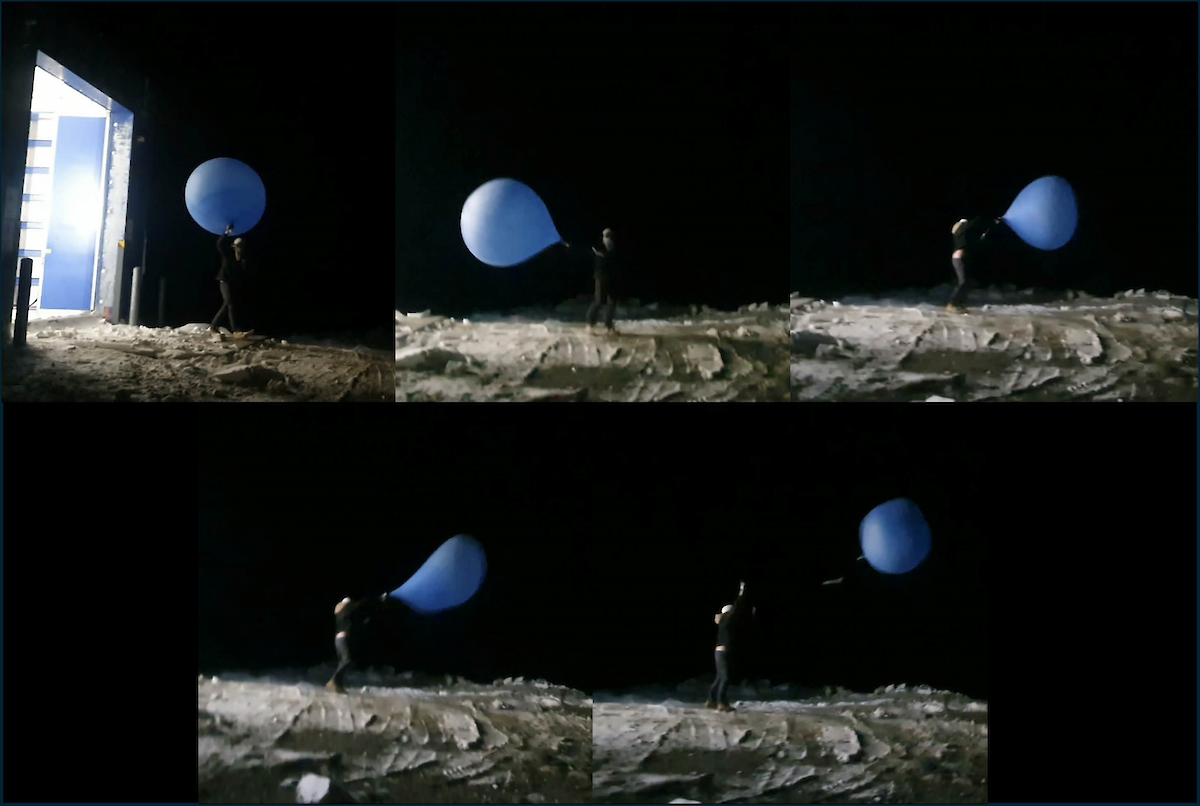
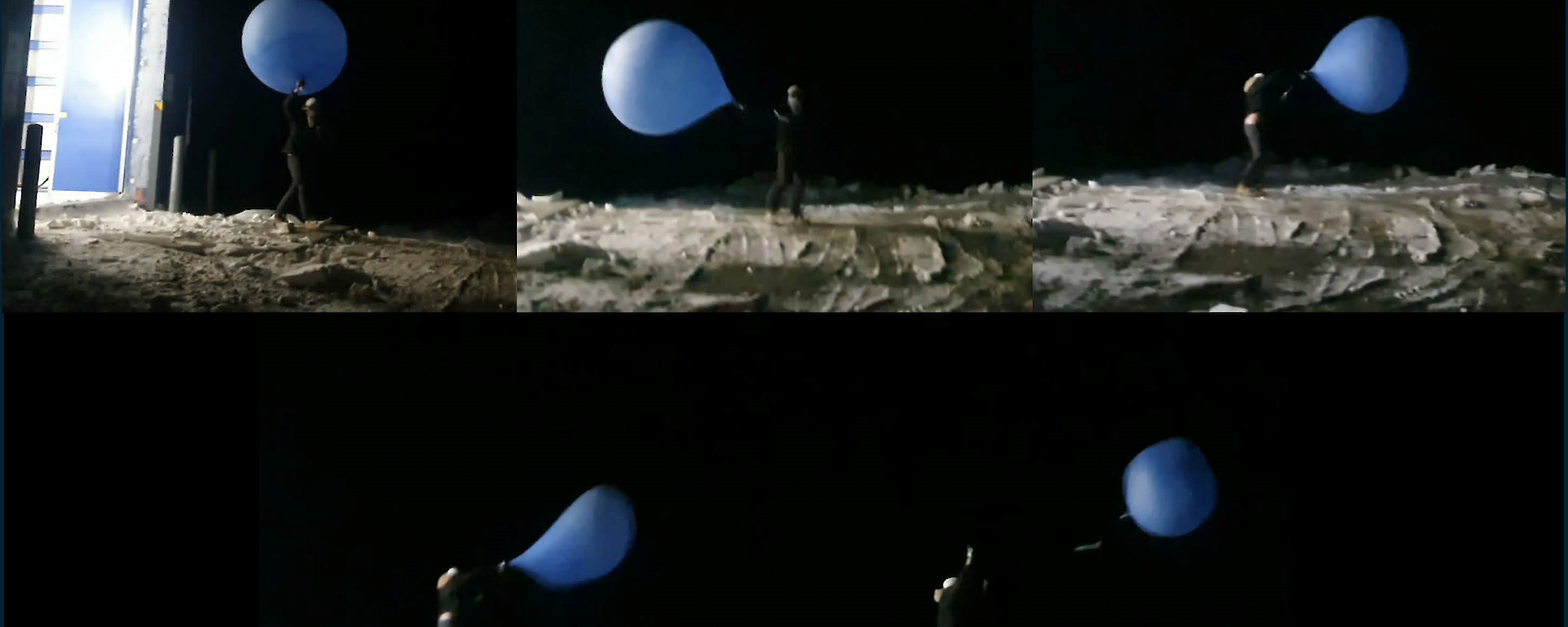
Releasing weather ballons in Antarctica can be exciting! Sometimes you just have to hold on and hope for the best!
Penny Pascoe
BOM Observer