
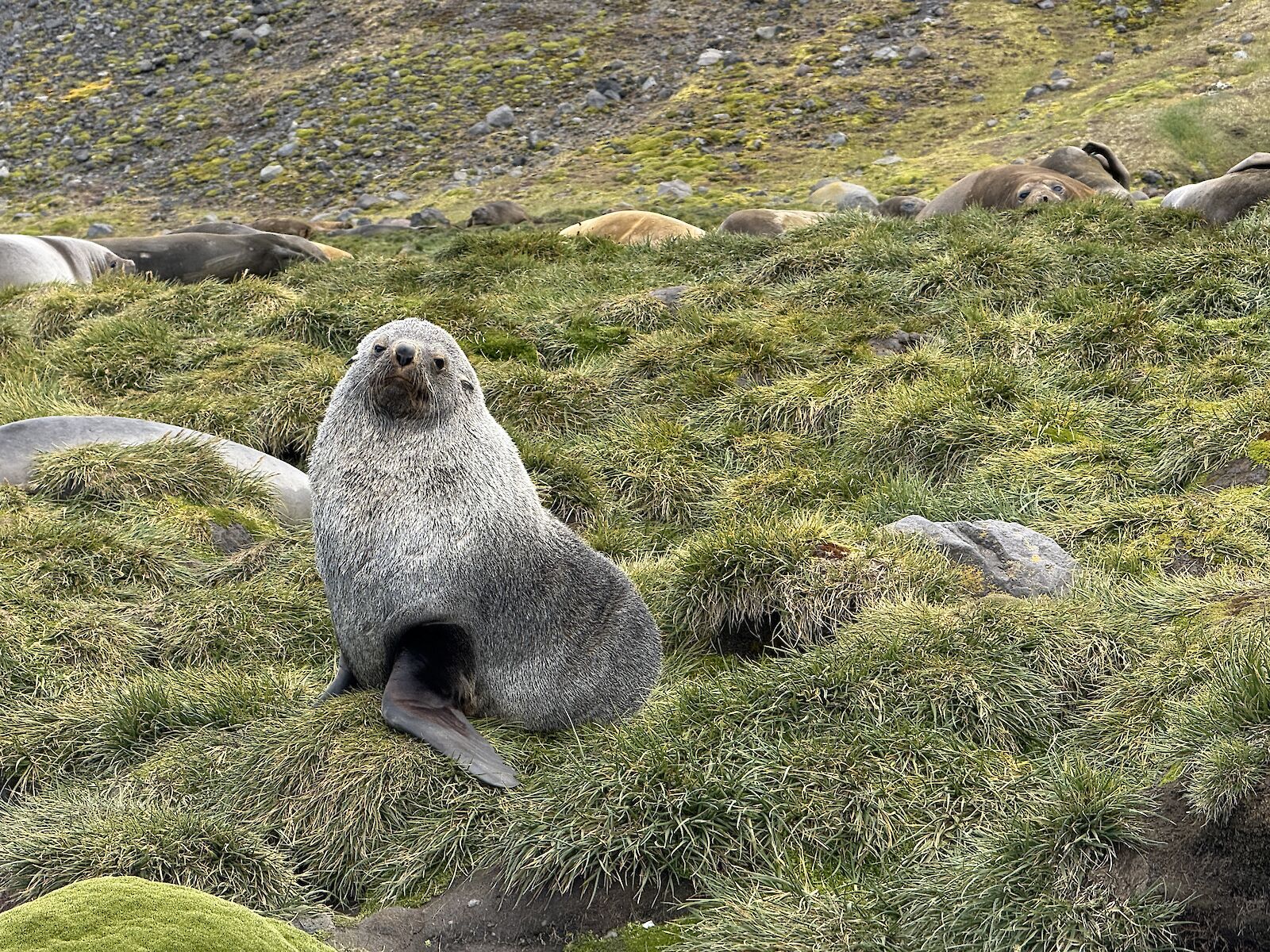
Heard Island and McDonald Islands are important breeding sites for large aggregations of seabirds and seals, with 19 seabird species and three seal species known to breed on the island. This includes two endemic species - the Heard Island shag and black-faced sheathbill - that are found no where else on earth. The islands are also considered globally significant sites of macaroni and king penguins, southern elephant seals and southern giant petrels.
Long-term monitoring of these populations is important to understand the threats that may be impacting species and allow us to mitigate these threats where possible. Furthermore, by understanding animal diet and movement we can get an indicator of food requirements, how they are using the Marine Reserve and information about ecosystem health and function. Population monitoring of seabird and seal species is a key management action identified by national conservation plans.
The locations of breeding sites and breeding populations of seabirds and seals have been recorded since the first modern visit to Heard Island in 1947. A combination of historical scientific records and early photographs have been used to understand population sizes and trends in specific breeding populations since the 1940s. The most recent field work was undertaken during two management voyages to the island in October 2025 and January 2026. The key aims for wildlife monitoring were to assess the population size, status and distribution of priority species, obtain dietary samples to identify current resource requirements, assess the impact of marine debris accumulation and undertake surveillance for signs of H5 bird flu.
A combination of drone and ground surveys were used to map seabird and seal populations and estimate population sizes of priority species. This included Beyond Visual Line of Sight (BVLOS) drone surveys operated both from the island and from RSV Nuyina to cover broad areas of coast.
H5 bird flu was detected on the island and had caused significant mortality in elephant seal pups and elevated mortality in king and gentoo penguins. The broader population data were promising though, with increases in king penguins, fur seals and elephant seal breeding numbers. Observations indicate that the locations of some bird and seal colonies have changed with time reflecting an increase in some breeding populations and the emergence of newly available habitat. Glacier retreat has enabled species such as king penguins, black-browed albatross and fur seals to establish nests and colonies in areas that were previously ice covered.
Analysis of all population data and processing of dietary samples is ongoing.