
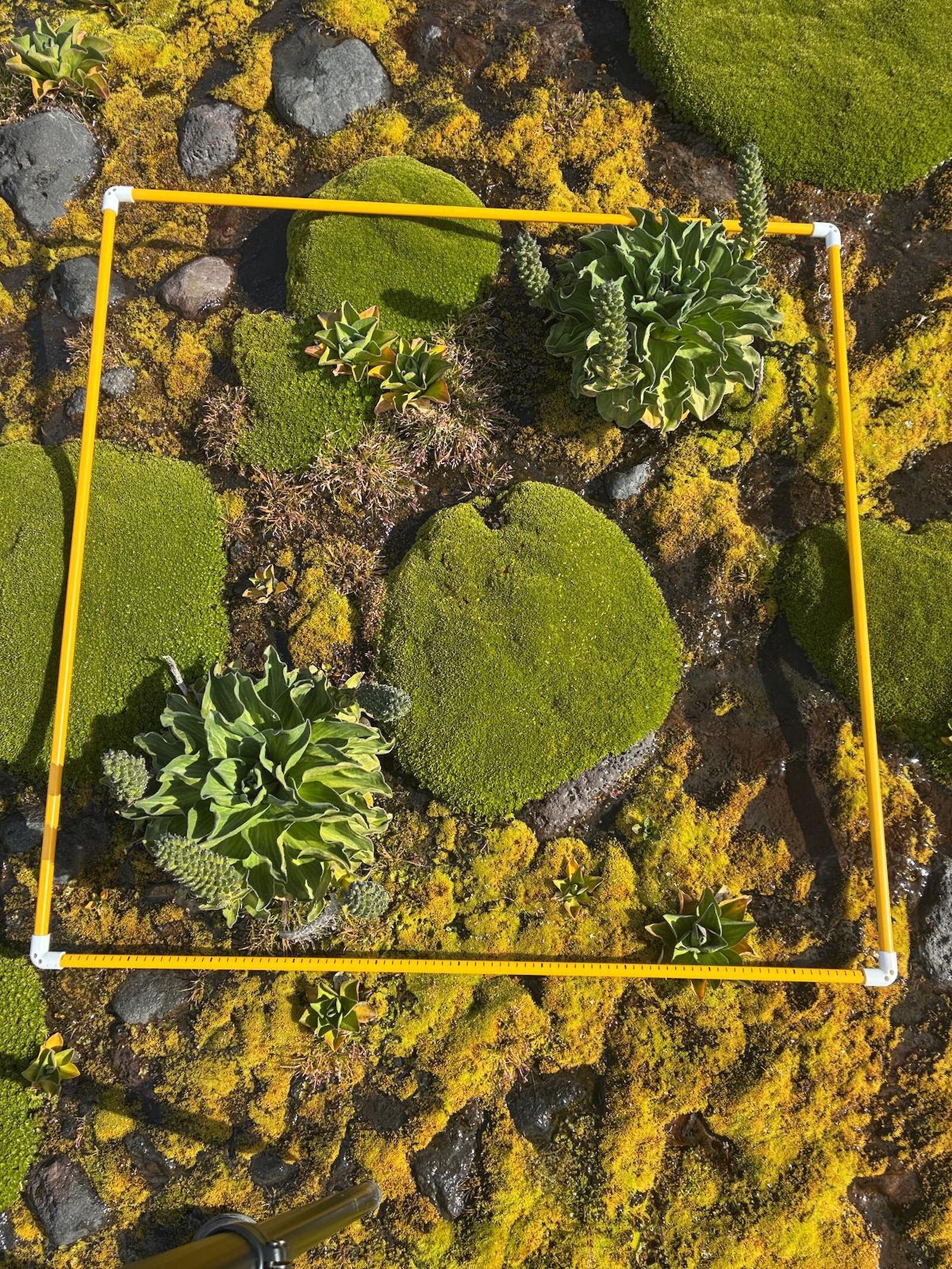
Heard Island's terrestrial ecosystems are largely unaffected by human impacts so the island is a unique ‘natural laboratory’ for measuring environmental changes.
Over the 2003/04 summer, Heard Island was one of three islands visited simultaneously by scientists in an attempt to determine the impact of temperature on species' performance and ecosystem structure.
Major components of this research included:
- Investigations of the form, structure and progression of flowering and seed development in four selected vascular plant species at different altitudes.
- Studies of the carbon uptake and loss of Pringlea antiscorubutica (the 'Kerguelen cabbage'), with the intention of determining how well the species would adapt to further climate warming. Early results indicate that slower growth may occur once the temperature reaches around 10–12°C .
- Collecting invertebrates from a range of locations and altitudes for further laboratory studies.
More recently, as part of the 2025-26 HIMI Campaign, researchers from Securing Antarctica’s Environmental Future (SAEF) undertook further surveys of invertebrates and terrestrial ecosystems, with a focus on identifying and understanding change since the last visit in 2003-04. These samples are currently being processed and analysis is underway.
The findings of this research will be used to understand past and current states of the HIMI environment and, where possible, identify change trajectories and support and inform ongoing management of the HIMI reserve.