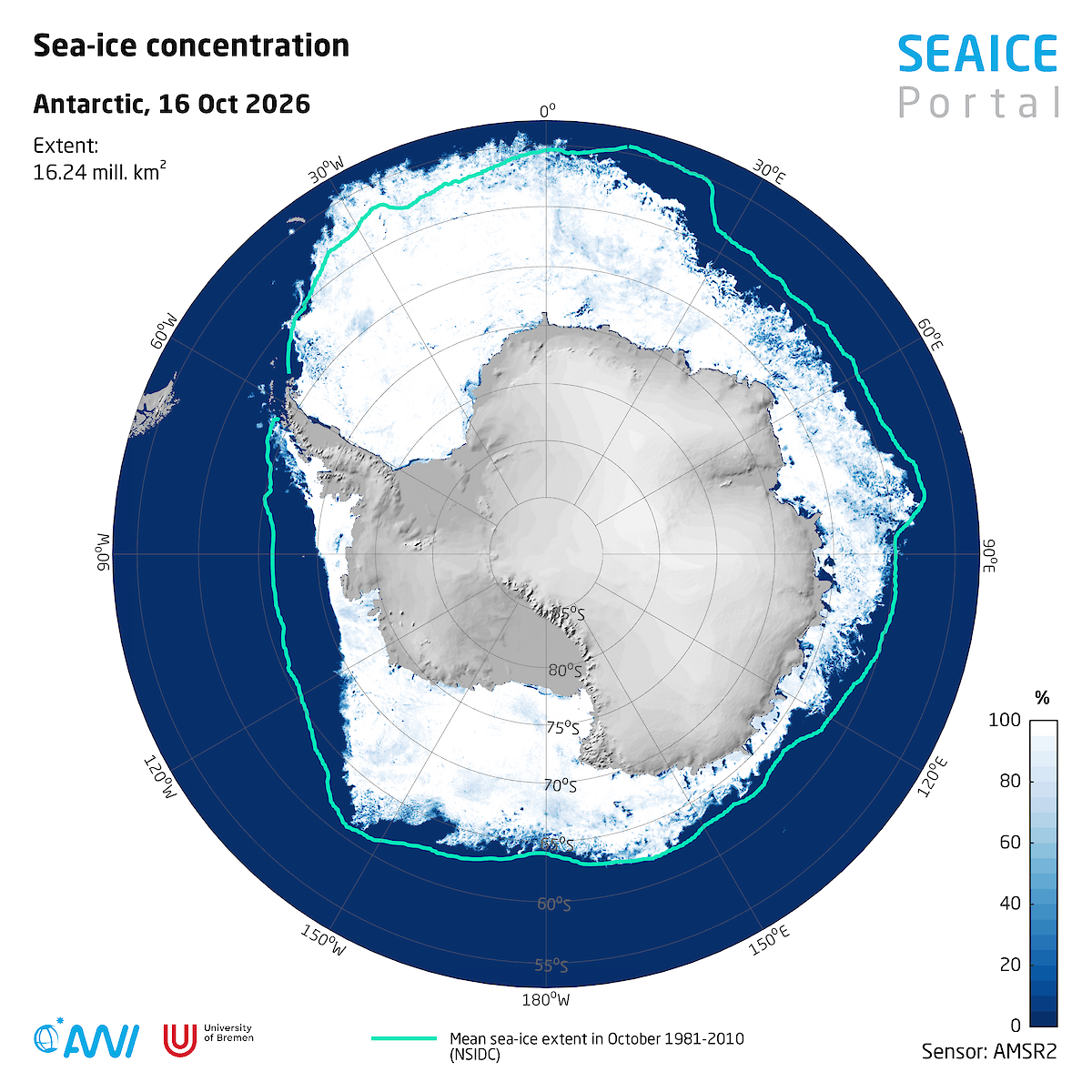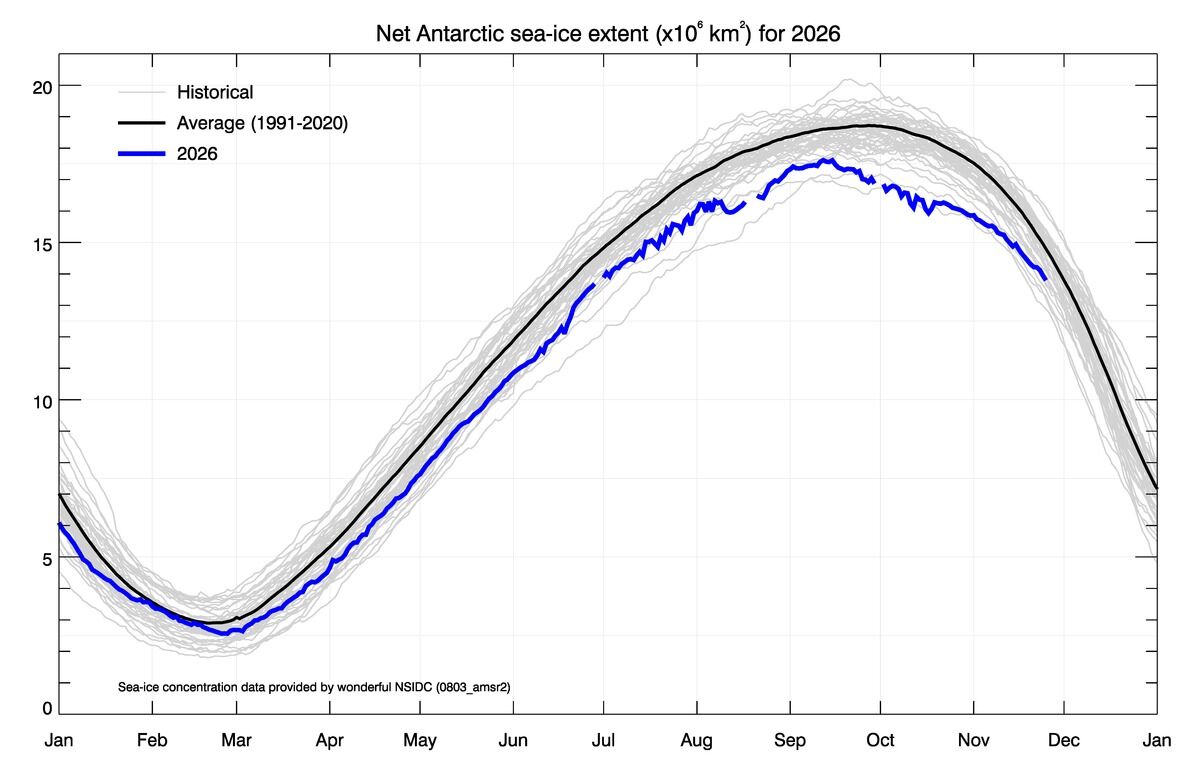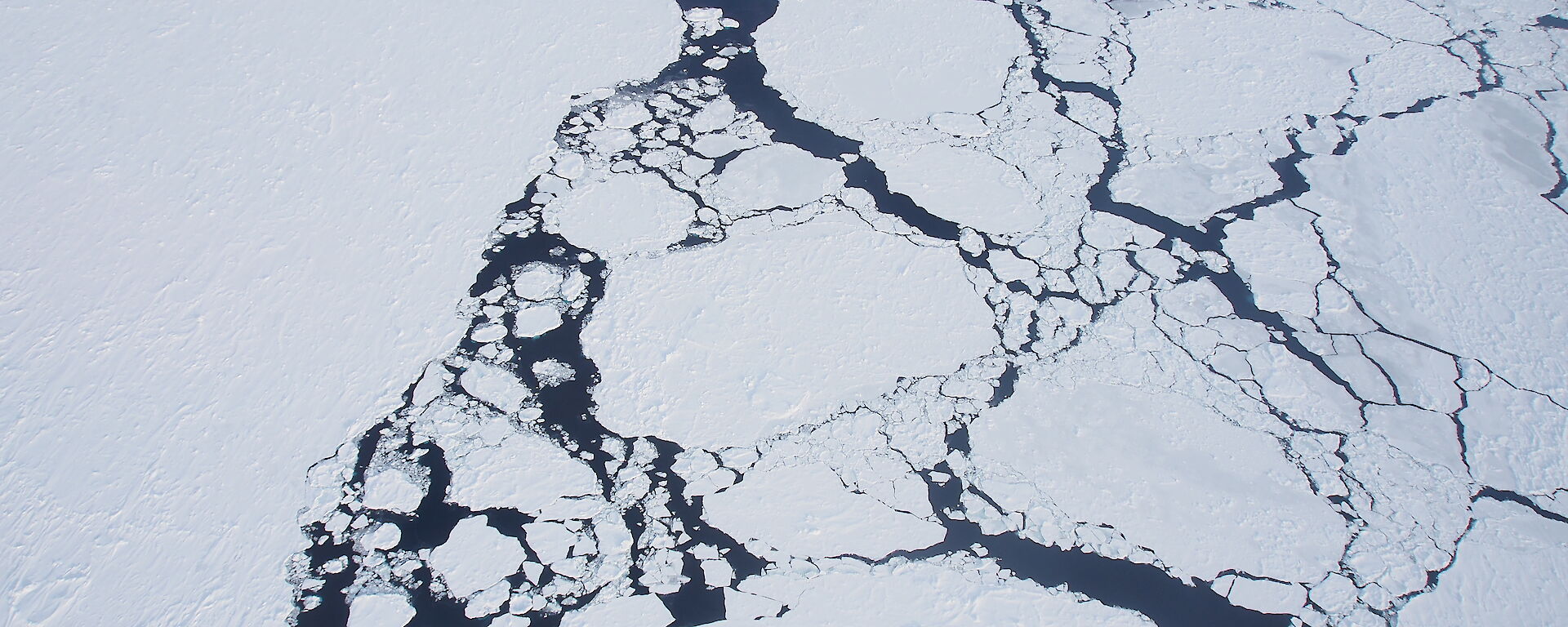

The rapid decline pushed the overall sea ice extent around Antarctica down to about 2.3 million km2 (or 12 per cent) below its long-term average for mid-October – the lowest on record for that time of year.
This pattern continues a trend of rapid Antarctic sea ice loss that began in 2015 and in 2023, shifted abruptly to record-low levels of sea-ice coverage in autumn through to winter.
“Unfortunately, Antarctic sea ice is now also declining at a time of year when the ocean should be freezing and the ice cover should be advancing,” Australian Antarctic Division (AAD) sea ice scientist Dr Rob Massom said.
“And the four lowest annual winter-maximum sea ice extents observed since 1979 have all occurred in the last four years.”
Each year, Antarctic sea ice expands and retreats in a dramatic seasonal cycle. At its winter peak it covers about 3.6 per cent of the Earth’s surface and 5.1 per cent of the global-ocean surface. This is one of the largest seasonal cycles on Earth’s surface.
This vast floating blanket of ice and snow reflects sunlight, insulates the ocean, supports marine ecosystems and helps regulate our weather and climate.
But the system is changing rapidly.
'Startling in its abruptness, rapidity and scale'
In previous decades, low sea ice extents generally occurred only in certain regions, such as west of the Antarctic Peninsula. Today, low sea ice extents occur all around Antarctica in both summer and winter.
The decline is not only apparent in the areal coverage of the sea ice but also in the duration of the annual sea ice season. The satellite data show later sea ice growth and earlier retreat, resulting in a shortening of the annual sea ice season by up to 3-4 months in many areas around Antarctica.
“What is happening to sea ice all around Antarctica is a remarkable departure from what has occurred before, apart from the region west of the Antarctic Peninsula. It is startling in its abruptness, rapidity and scale,” said AAD climate scientist Dr Krystyna Saunders.
“The patterns of recent Antarctic sea ice loss are unprecedented in the satellite time series dating back to 1979, and substantially exceed natural variability in Antarctic sea ice coverage over past centuries.”
Strong evidence is emerging of a 'regime shift' in Antarctica's ocean-sea ice-atmosphere system, with major ramifications for Antarctica, the Southern Ocean, the planet and its climate.
“The abrupt changes and continuing year-round losses represent a major disruption of the remarkable annual Antarctic sea ice cycle that forms a crucial beating heart of our planet’s environment and climate system,” Dr Massom said.
“The health of sea ice and its annual cycle is critical to the health of not only Antarctica but also our planet, but there are growing signs that the sea ice beating heart is faltering.
“Antarctic sea ice is in trouble.”
Why sea ice matters
Sea ice plays a vital role in the Antarctic and Southern Ocean environment, processes and ecosystems, as well as the global climate system. By covering the dark ocean surface with a highly reflective layer of snow and ice, it helps moderate global temperatures and regulates exchanges of heat, moisture, greenhouse gases and wind energy between the ocean and atmosphere.
It also acts as a protective buffer along Antarctica's coastline, absorbing the impact of ocean waves and shielding vulnerable ice shelves from damage. As sea ice declines, more wave energy reaches the coast, increasing the risk of iceberg calving and reducing the stability of ice shelves that restrain the Antarctic Ice Sheet and reduce its contribution to sea level rise. This has led in certain cases to catastrophic large-scale ice-shelf collapse.
The impacts extend well beyond physical processes.
Sea ice, in the form of both moving pack ice and coastal fast ice, provides habitat, shelter, a food source and a breeding platform for a diverse range of Antarctic life from microscopic algae and krill to penguins, seals and whales. These rich ecosystems are highly adapted to, and reliant on, its presence and seasonal rhythms.
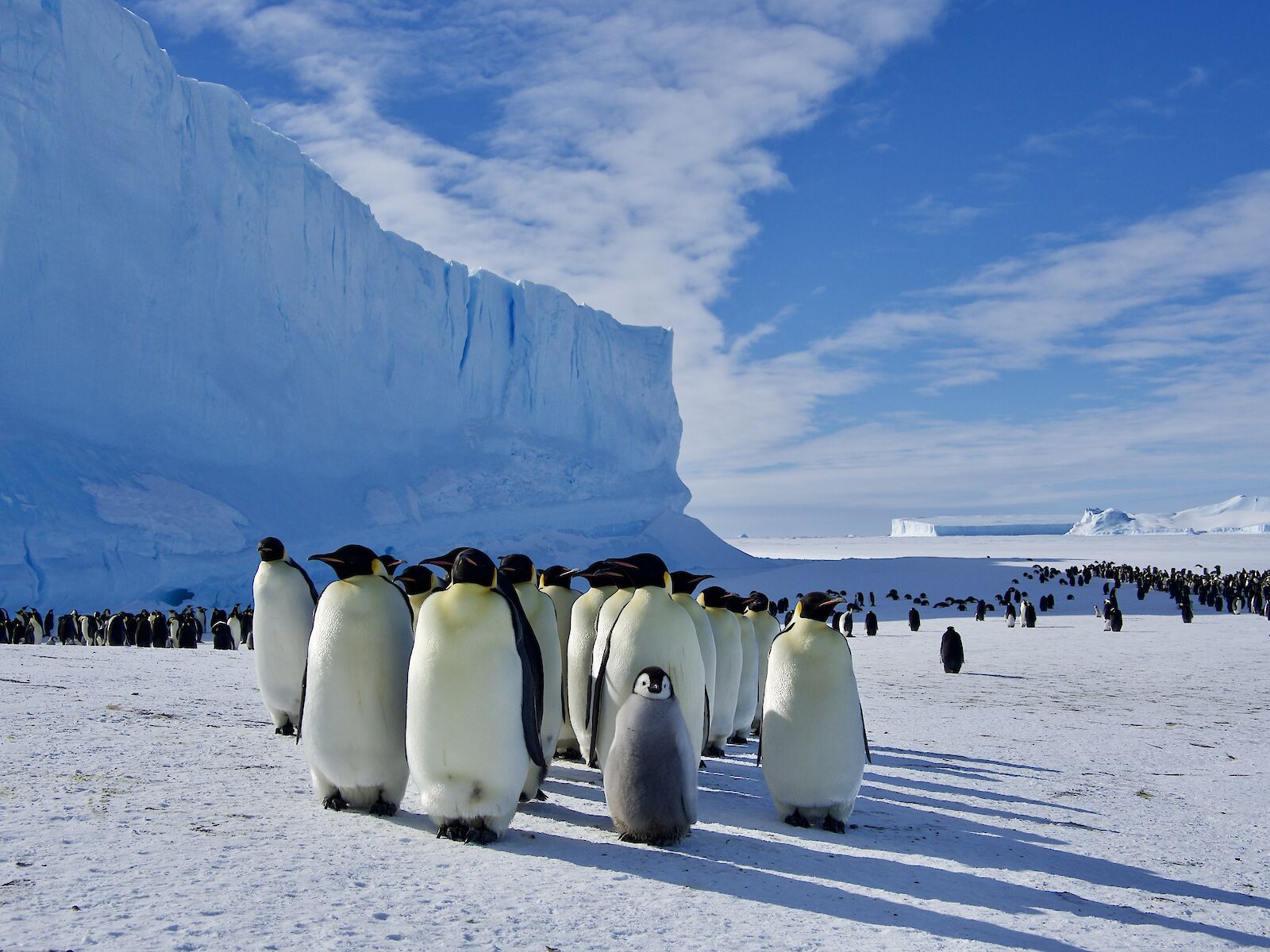
A major observed impact of recent sea ice loss has been on emperor penguins, which rely on stable coastal fast ice for breeding.
A study by British Antarctic Survey scientists found that record-low sea ice coverage in late 2023 caused fast-ice platforms to break up before chicks had fully developed their waterproof feathers. This led to catastrophic breeding failure in about 20 per cent of all emperor penguin colonies in Antarctica.
Antarctic krill, a key species in the Antarctic and Southern Ocean food web, also need sea ice to survive.
Larval krill shelter under and within the ice and feed on microscopic ice algae over winter.
“Phytoplankton get incorporated into the ice in autumn, where they continue growing and form a key food source for krill,” AAD sea ice ecologist Dr Klaus Meiners said.
“If you have reduced winter sea ice or ice overall, then there’s a lack of this critical early season food source – and this has a flow-on effect across food webs”.
Understanding a changing system
The major decline in Antarctic sea ice since 2015 has been broadly linked to increasing upper-ocean heat content, combined with changing wind and atmospheric temperature patterns.
“While substantial progress has been made, there’s still a lot that we don’t understand about how, where and why Antarctic sea ice is changing, and its impacts,” Dr Massom said.
To help answer these questions, the Australian Antarctic Program is planning a voyage in 2028 to the East Antarctic marginal ice zone – the highly-dynamic outer part of the sea ice zone that's an engine room of seasonal sea ice formation and melt and a hot spot of biological activity.
Scientists will investigate how waves, storms, ocean heat and atmospheric processes influence sea ice growth and melt. They will examine the consequences for ecosystems and the Southern Ocean's ability to absorb carbon dioxide.
“We want to understand the physical drivers of changing ice conditions including ocean physics and atmospheric processes that drive ice growth and melt,” Dr Meiners said.
“We will also investigate the consequences of changing sea ice conditions on important biogeochemical and ecological processes.”
Krill scientists will look at larval krill conditions under different types of ice.
“Phytoplankton need light, but they also need iron, and sea ice is an important source of iron,” Dr Meiners said.
“We’ll look at these drivers and how they affect ocean productivity during the winter-spring transition.”
The Australian-led marginal ice zone (MIZ) voyage will contribute to the Antarctica InSync program – a global initiative that seeks to coordinate international, high-resolution synchronised observations to detect, quantify and analyse rapid environmental and ecosystem change in Antarctica.
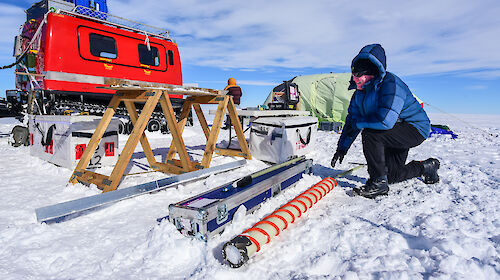
In the meantime, scientists will continue recording information on sea ice properties and thickness each time RSV Nuyina traverses the sea ice zone on research and resupply voyages, using a sophisticated camera system attached to the ship and operated in collaboration with scientists from the University of Melbourne.
“These data are key to understanding the processes that are underway – including the role of waves in decreasing sea ice albedo and increasing melt rates in the marginal ice zone – while also providing information to calibrate and validate important satellite data products such as sea ice and snow-cover thickness,” Dr Meiners said.
Long-term observations are critical for understanding the causes and consequences of the unprecedented changes that are occurring. They are essential to improving weather and sea ice forecasting and reducing uncertainties in climate-model simulations and predictions of future sea ice conditions and climate.
This research is particularly challenging given the scale and complexity of the Antarctic sea ice zone, its remoteness, and the often stormy conditions.
But the stakes for our world are high.