
Project information
Project aim
Australia is a leader in east Antarctica, yet we have only a very limited understanding of the biodiversity of terrestrial, lake and coastal ecosystems of this area. This project aims to expand and enhance knowledge of the biodiversity of AAT and to make this information highly visible and accessible. BEAUT will survey areas in AAT that have not been visited or sampled, extend knowledge of our station areas, and consolidate historical biodiversity information. Field campaigns will utilise Australia's icebreaker RSV Nuyina, as well as deploying teams to coastal oases in east Antarctica and subantarctic Islands. Knowledge of biodiversity in space and time is vital for area protection and management, and will be made available through IDEA (Integrated Digital East Antarctica), including identification guides, a biodiversity atlas and database, and will contribute baseline data to EAMP (East Antarctic Monitoring Program). BEAUT will also facilitate collaboration with the SAEF SRI.
Project milestones
Summary of the season 2024/25
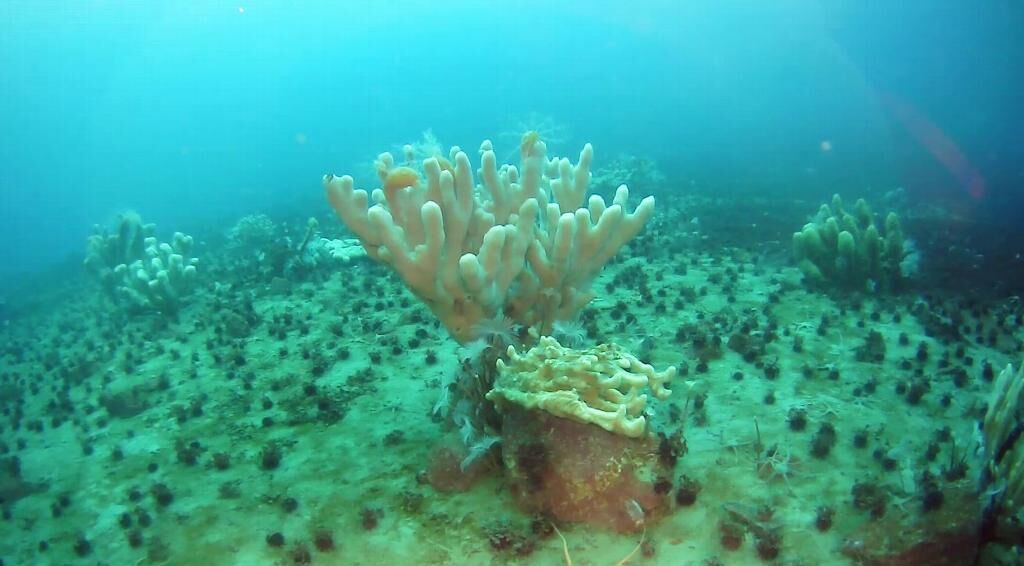
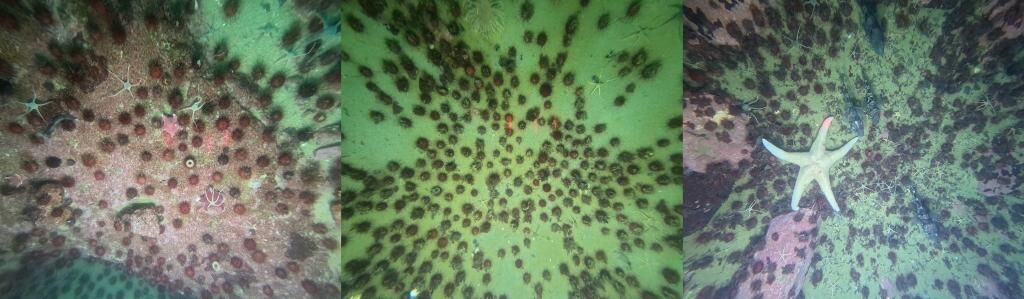
The BEAUT project conducted field research at 3 regions across east Antarctica in the past year: in the Bunger Hills, Casey and Mawson areas. The Bunger Hills work included terrestrial and marine biodiversity surveys by a team of four. The marine research was the first such work done in the Bunger Hills marine ecosystem and included a range of environmental and biological measurements at 13 sites across the marine environment. A thriving, diverse and abundant marine ecosystem was encountered which appears to be quite different to other areas of east Antarctica. The Bunger Hills terrestrial research included sampling of vegetation and microinvertebrate biodiversity at 43 lakes, 87 terrestrial sites and cryoconite samples from the Apfel Glacier outlet. High levels of terrestrial biodiversity were encountered, particularly for vegetation communities (lichen and moss). Terrestrial research at Casey focused on biodiversity surveys within the station operating area, of which surprisingly little has been previously documented. We were able to survey microinvertebrate and vegetation communities at many sites around the Casey area, including sites heavily impacted by human activity. Marine research at Casey included surveys at several new sites in the Windmill Islands including around Robinsons Ridge, as well as extending some long term monitoring at sites around Casey Station. The research at Mawson by a team of three, working on the A Cleaner Antarctica (ACA) project, focused on terrestrial biodiversity , with concentrated sampling around the Mawson station area but also as far west as the Colbeck Archipelago and east to Macey and Auster Island and south to the Frammes Mountains.
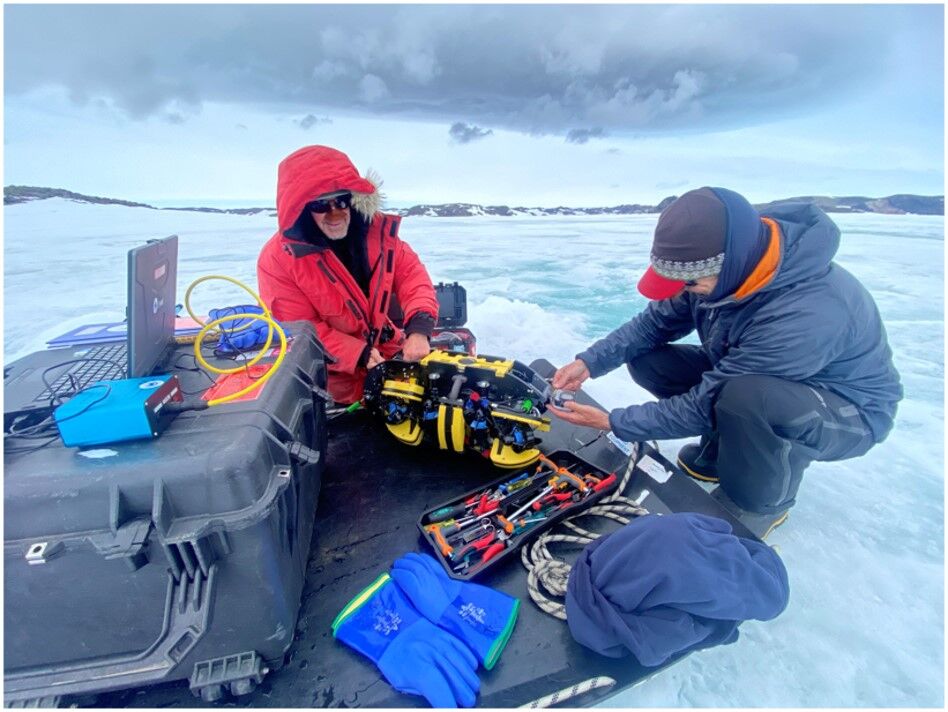
Other work in the past year included synthesising and analysing historic biodiversity data, scientific paper preparation and publication, project planning, and development of new sampling and survey capabilities and methodologies. One highlight includes the development of a customised sediment scoop and invertebrate sampler for our ROVs, which enables targeted, rapid and repeatable collection of seabed samples under sea ice.
Summary of the season 2023/24
The BEAUT project was unable to conduct field work in Antarctica as planned (in the Vestfold Hills and Mawson areas) due to AAD logistic constraints. Antarctic research in the past year was focused on obtaining, synthesising and analysing historic biodiversity data, scientific paper preparation, project planning, and development of new capabilities and methodologies.
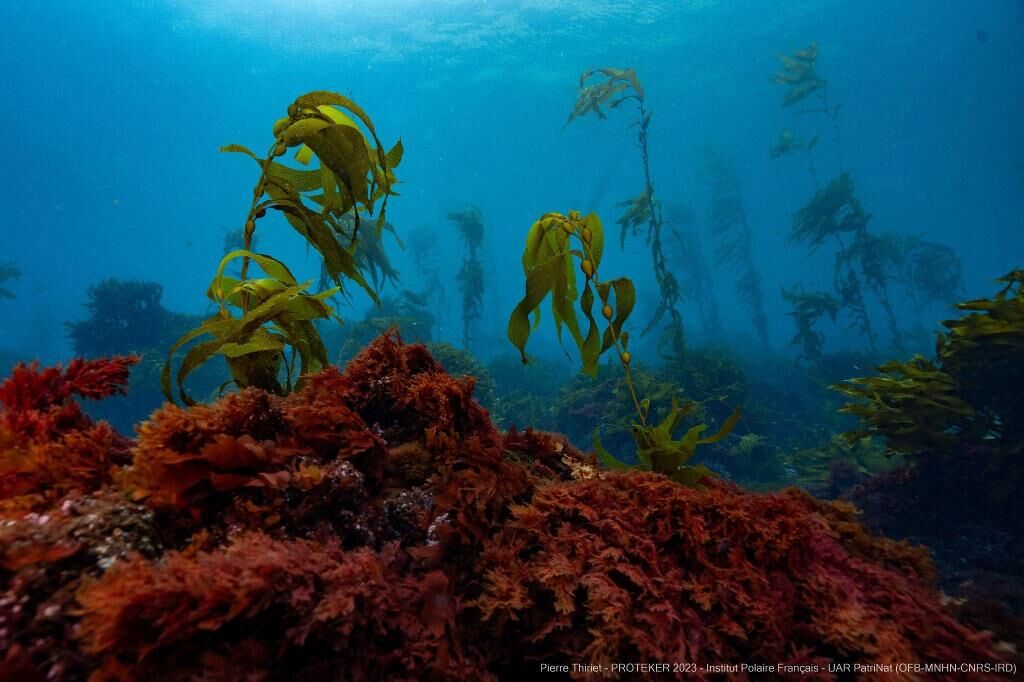
Coinvestigator Dr. Narissa Bax led a systematic eDNA sampling study in the giant kelp forests of the French sub-Antarctic territories (Kerguelen, Crozet, St Paul, and Amsterdam) in October - December 2023. This work was funded and supported in collaborations with the Université de Bourgogne, NatureMetrics, The Kelp Forest Foundation, the eDNACollaborative, Australian Antarctic Division (BEAUT project) and the French Polar Institute Paul-Émile Victor (IPEV) program PROTEKER. This collaboration is aiming to deliver: a baseline of biodiversity data and eDNA reference library from sub-Antarctic kelp forests; input to the eBioAtlas programme to update IUCN species distribution maps; and inform kelp forest restoration and long-term ecosystem monitoring capabilities including blue carbon research in Macrocystis pyrifera kelp forests (Fig. 1).
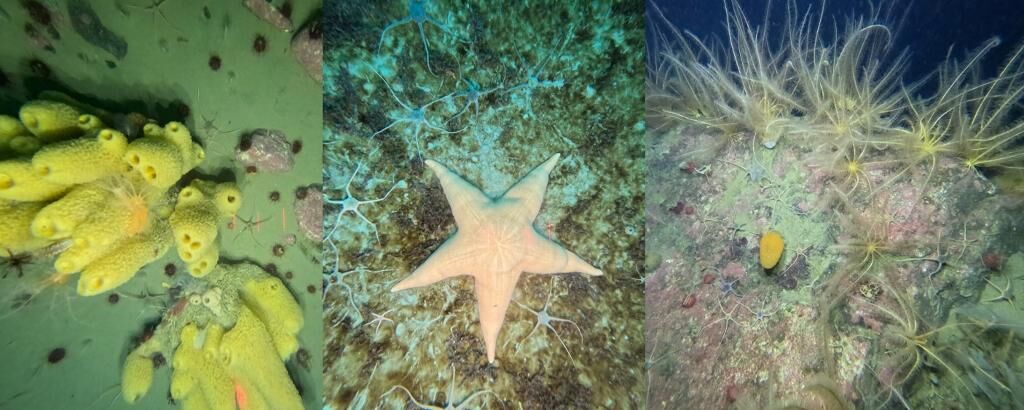
Benthic community data was analysed from historical seabed imagery from Ellis Fjord in 1985 and from four Ellis Fjord sites resurveyed in 2019. Ellis Fjord contains the world's only known massively extensive polychaete reef, estimated to be 8 km long, comprised of calcareous tubes built by the worm Serpula naronensis. Analysis indicates that this community of tube worms and the animals living on their biogenic reef structure has changed significantly over the past 40 years. The cause of this change is being investigated but may be related to changes in sea ice cover. Historical data on marine sediment communities in the Vestfold Hills was analysed including data from the 1980s alongside data from surveys in the past decade. This work highlighted several important biodiversity hotspots that are associated with ecosystem engineering species, such as ascidians and sea pens, that form complex habitat structure on the seabed. Understanding and identifying biodiversity hotspots, is important for environmental management and area protection. Biodiversity data from 2005 to 2015 on marine meiofaunal communities from the Windmill Islands was also captured and analysed, with results demonstrating significant impacts from pollution associated with human activities at Casey Station.
Further development of under-ice remotely operated vehicle (ROV) capabilities included modification of camera systems, new operating system software, and addition of a geolocation system to ROV Iceopod-1. Local (Tasmania) field ROV deployments were done to test equipment, train personnel and develop sampling methodologies. These are highly complex pieces of equipment that have been developed by the AAD alongside an external partner, Southern Ocean Submersibles, based in Kingston.
Summary of the season 2022/23
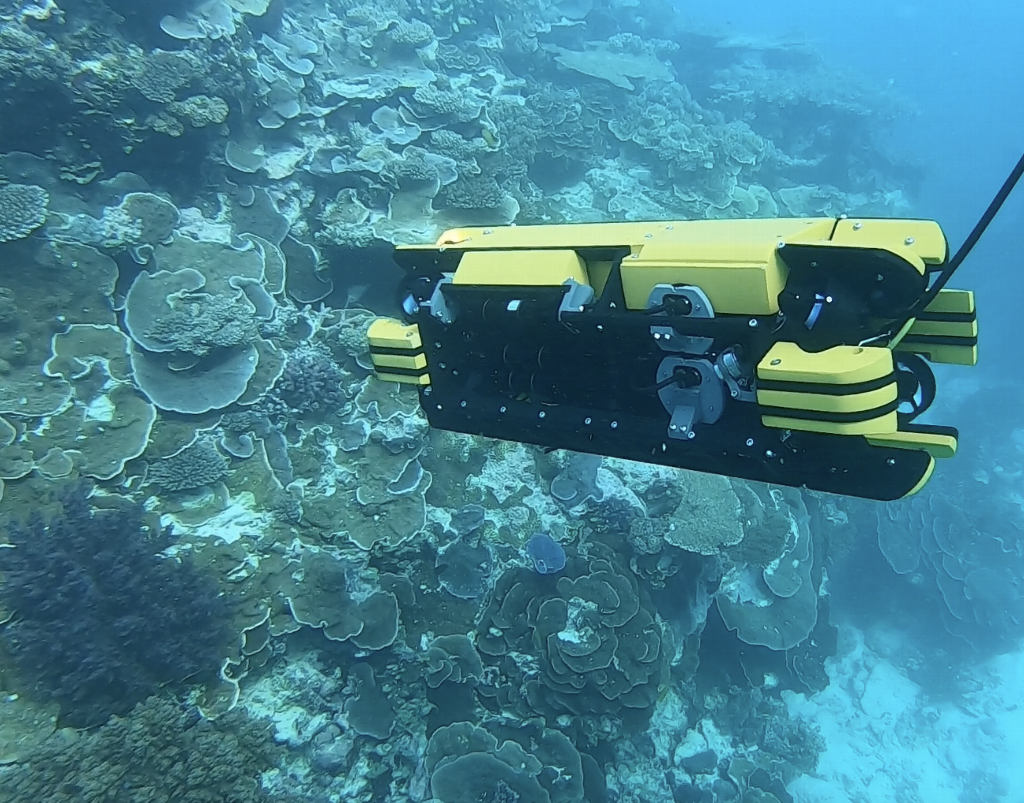
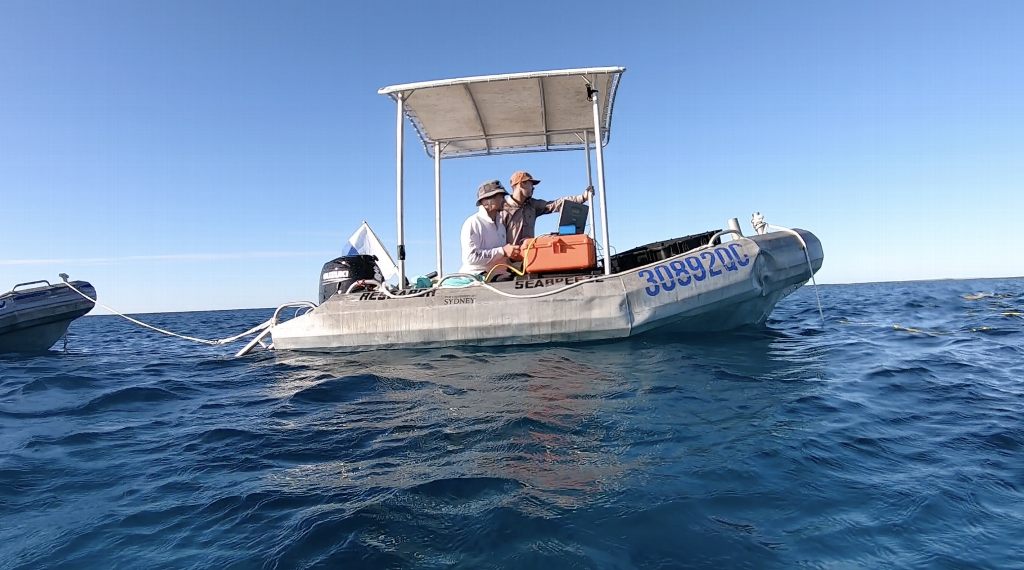
The BEAUT project was unable to conduct field work in Antarctica as planned (in the Windmill Islands) due to AAD logistic constraints, so activities in the past year were focused on project planning, development of new capabilities and methodologies, obtaining, synthesising and analysing historic biodiversity data sources, and scientific paper preparation. Development of remotely operate vehicle (ROV) capabilities has been a major focus, and we now have 2 customised ROVs (Iceopod-1 and -2) designed to operate under the sea ice. Iceopod-1 was modified to incorporate underwater geolocation capability, and improve image capture, quality and scaling. A new ROV, Iceopod-2, was commissioned and tested, with geolocation capability, manipulator arm, and updated camera systems. Some local testing of the ROVs was done but to properly field test the system and trial survey methods to use in Antarctica we conducted field tests on One Tree Island on the Great Barrier Reef in collaboration with investigators from the University of Sydney (G. Clark and team), with access provided by USYD collaborators. The GBR is an excellent field test location due to water clarity and complex benthic communities comparable to Antarctica. The trial were successful and indicated a number of areas where improvements to the system are required, which were not apparent in local trials. The trip was extremely valuable for the development of skills and experience in conducting photogrammetry surveys, including structure from motion (SfM) sea bed mapping, in which a highly detailed 3D orthomosaic model of the seabed is created from a series of overlapping photos. Another major accomplishment was the analysis of historical seabed imagery taken around the Vestfold Hills in the 1980s, from Ellis Fjord in 1985 (744 photos) and Long Fjord in 1989 (385 photos). The Ellis Fjord data set is particularly significant as it documents the world's only known extensive polychaete reef, comprised of calcareous tubes built by the serpulid worm Serpula naronensis, estimated to be 8 km long and spans from 3 to 35 m depth on the side of Ellis Fjord. Of 26 sites in Ellis Fjord, four were resurveyed in 2019 allowing us to examine how the communities of marine organisms living in and on these tube worm reefs and may have changed over the past almost 40 years. Data from these surveys has been added to the benthic biodiversity database, along with data on sediment macrofaunal communities collected from Davis station between 2017 and 2021, and important environmental information on sediment properties and currents. A terrestrial biodiversity database for east Antarctica has been developed which incorporates historical data, as well as records from the literature. Together these data comprise a substantial contribution to our understanding of marine benthic and terrestrial biodiversity in east Antarctic coastal ecosystems.
Related publications
-
Dynamics and influence of environmental processes on the coastal marine system of the Vestfold Hills, East Antarctica Antarctic Science, 2025
(Ref: 17470)
Authors:Category 1: Peer-reviewed literature
Antarctic ice-free coastal environments, like the Vestfold Hills (East Antarctica), are shaped by a complex interplay of physical processes. This study synthesizes new data and existing research from the Vestfold Hills across marine, terrestrial and cryosphere science, meteorology, geomorphology…
-
Environmental drivers of biodiversity and community structure in marine soft sediments of the Vestfold Hills, East Antarctica Antarctic Science, 2025
(Ref: 17406)
Authors:Category 1: Peer-reviewed literature
We present a synthesis of marine soft sediment macrofaunal communities from the Vestfold Hills, East Antarctica, spanning historical data (1978–1982) and recent surveys from 47 locations (2010–2021). We examined relationships between environmental conditions…
-
A framework for managing Antarctica's biofouling risks Marine Policy, 2025
(Ref: 17369)
Category 1: Peer-reviewed literature
Invasive species are a significant threat to marine ecosystems, contributing to biodiversity loss and ecosystem … changes. Biofouling, the accumulation of aquatic organisms on vessel hulls, is one of the main pathways for … invasive species worldwide…
-
Impact of different sources of anthropogenic pollution on the structure and distribution of Antarctic marine meiofauna communities Diversity, 2024
(Ref: 17322)
Category 1: Peer-reviewed literature
Human influence on Antarctic marine ecosystems is a growing concern, despite limited … information being available. This study investigated the coastal meiofauna and environmental … parameters of 10 locations, 4 of which served as reference points (OB1, OB2, OB3, and McGrady)…
-
Invasive species pose a threat to native species' abundances in
an East Antarctic coastal marine ecosystems Journal of Applied Ecology, 2025
(Ref: 17323)
Category 1: Peer-reviewed literature
1. Marine invasive species can cause irreparable change in new environments, though not all non-native … species inevitably cause negative impacts to recipient … ecosystems.