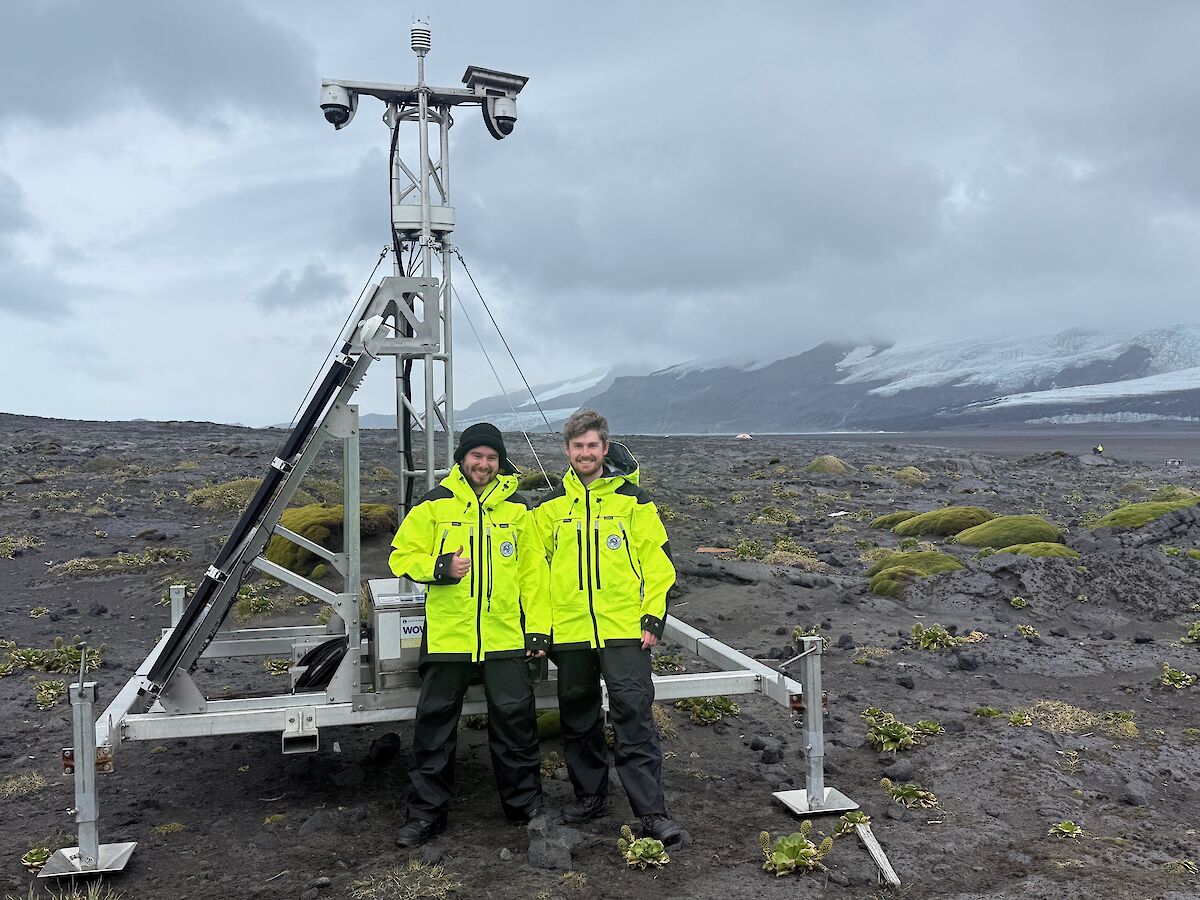



An ARTEMIS system was installed at Atlas Cove. This is an autonomous weather station equipped with a high-resolution camera that can provide real-time data and imagery back to Australia.
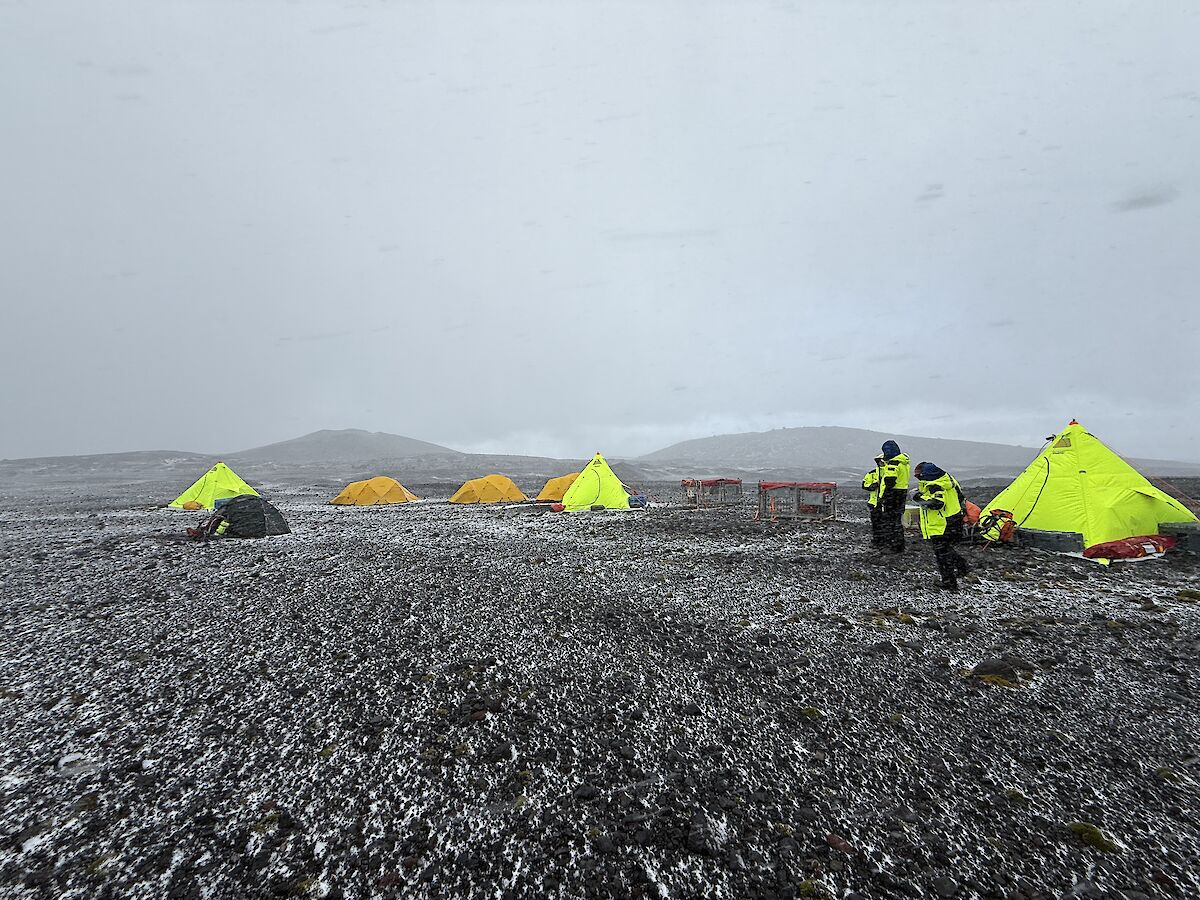
Four cage pallets of cargo were returned to the RSV Nuyina from Atlas Cove. This included a full cage of asbestos cleaned-up from the old station – an excellent result for the management of the island.
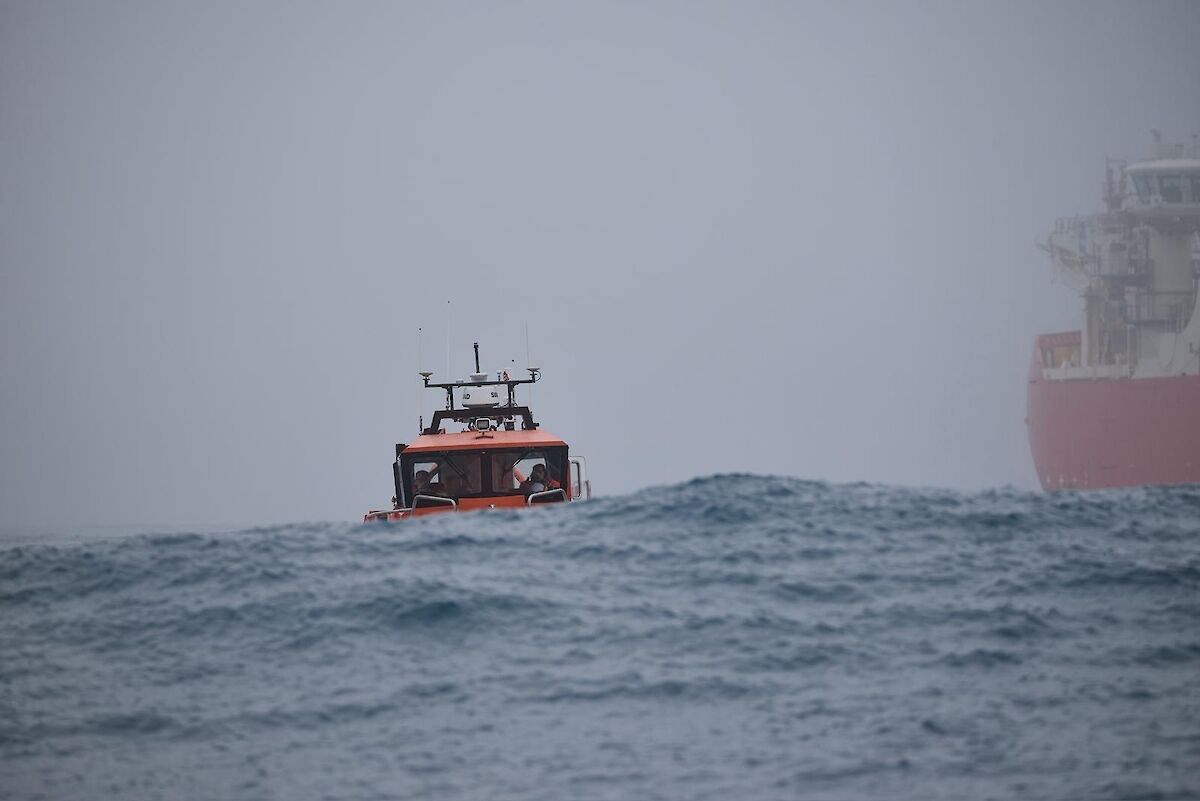
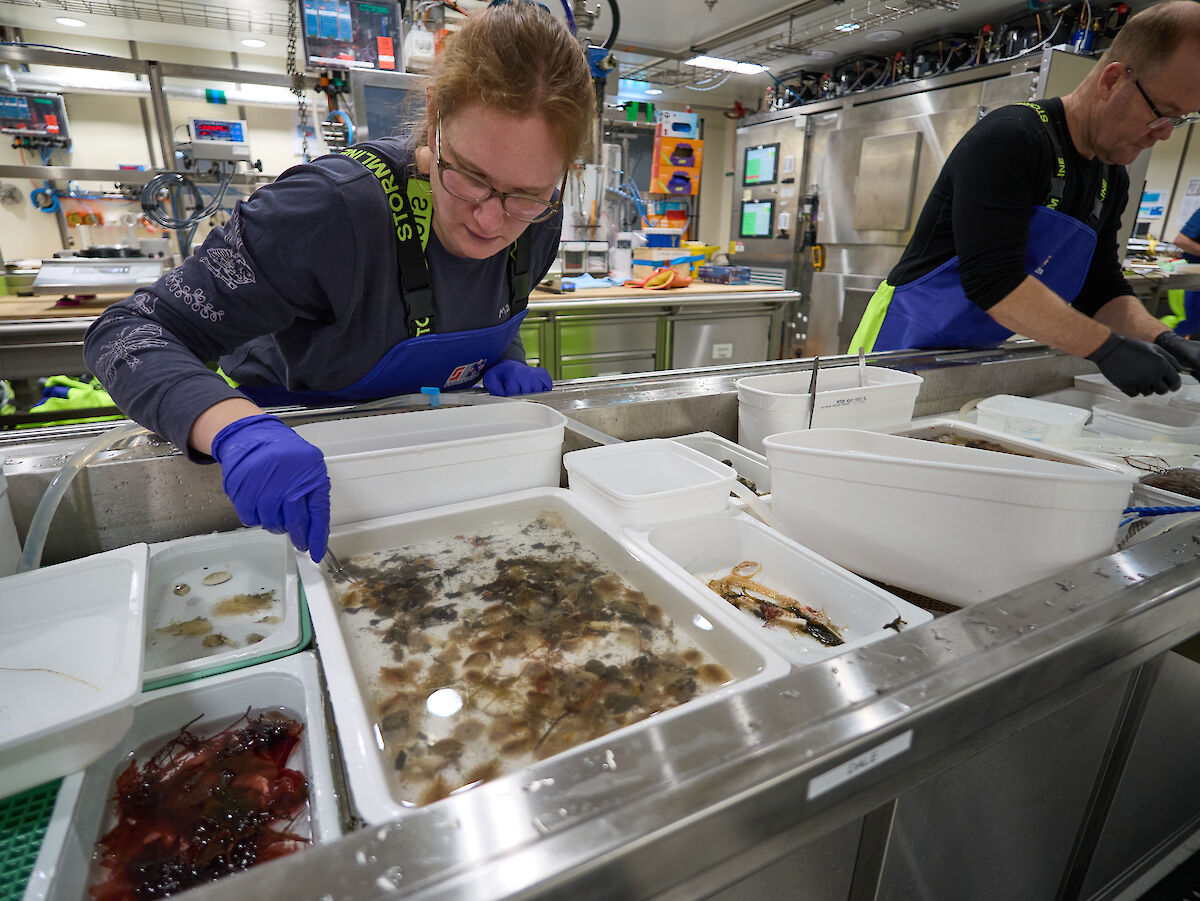
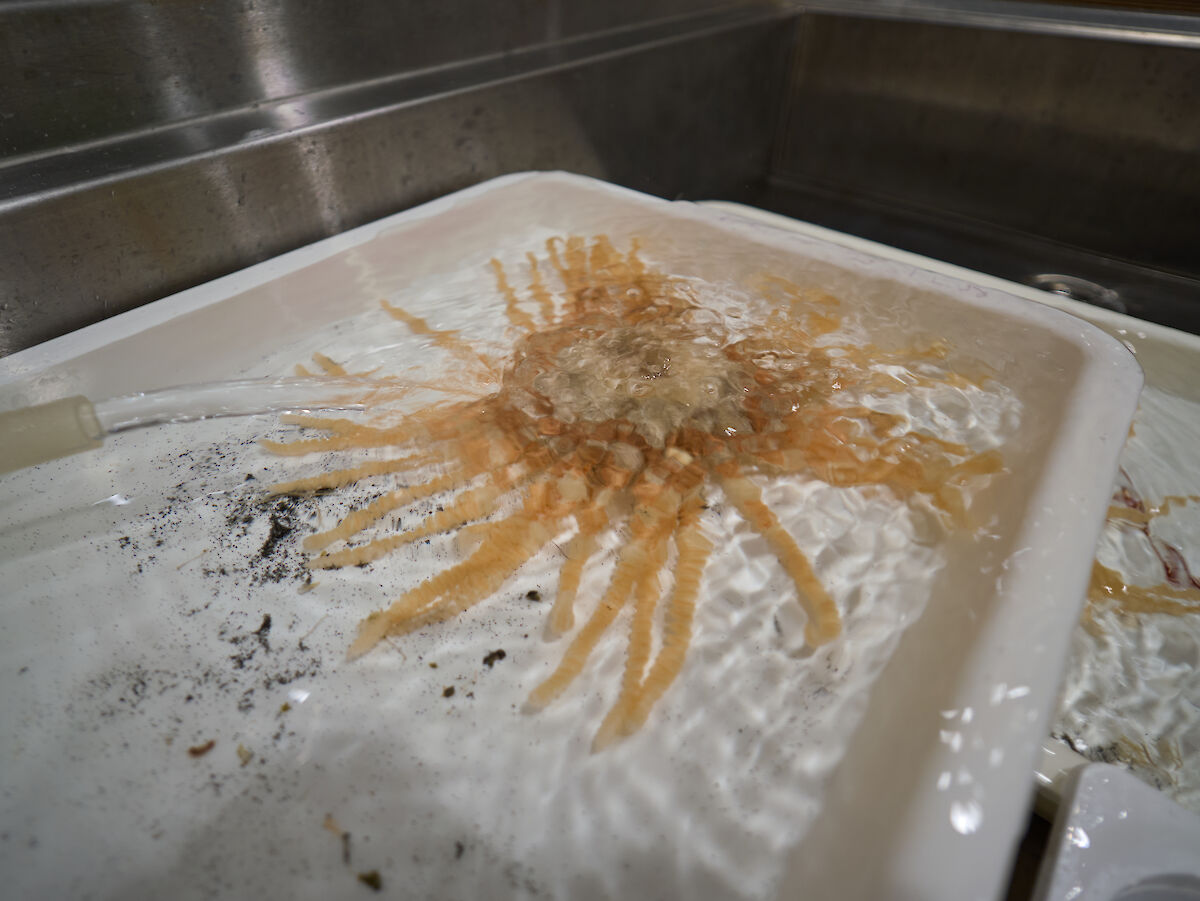
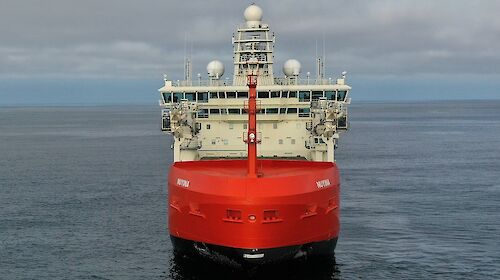
These science teams will stay ashore until Sunday, while the ship heads out to sea, southwest of the island, to conduct further marine science. This includes a planned midwater trawl, which samples sea life from six different depths within the water column.
Other work has continued during the bad weather days, despite strong winds. RSV Nuyina spent a day near the McDonald Islands, using drones to investigate wildlife populations. We found (and photographed) a huge macaroni penguin colony, king penguins, fur seals and elephant seals.
While scientists were remotely observing the island via drone, penguins, petrels and other birds came out to conduct their own investigation of our ship! They stayed at a comfortable distance, but gathered in significant numbers in the sky and on the water around us.
It will be fascinating to see what we achieve through the next phase of marine science, and hear from the terrestrial scientists on their return to the ship.
The HIMI Campaign is being delivered in collaboration with our partners including Securing Antarctica’s Environmental Future (SAEF), Serco, the Bureau of Meteorology (BoM), the University of Tasmania (UTAS), the Institute for Marine and Antarctic Studies (IMAS), Department of Defence, the Sydney Institute of Marine Science (SIMS), Australian Border Force (ABF) and the Australian Fisheries Management Authority (AFMA).