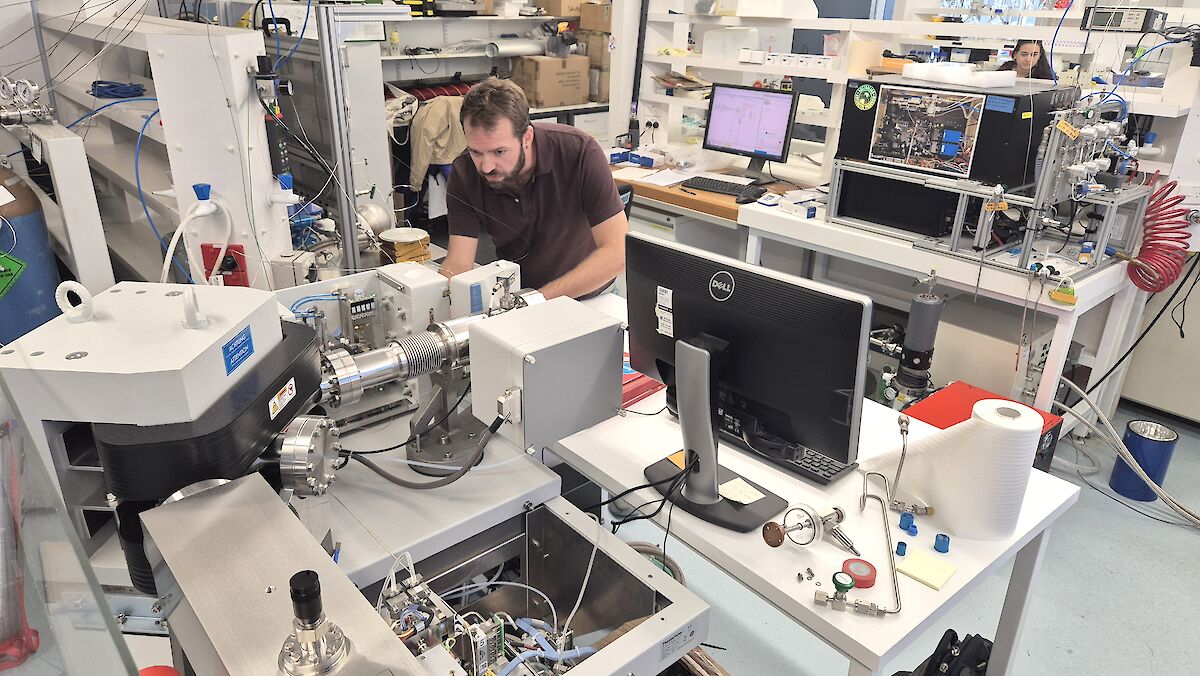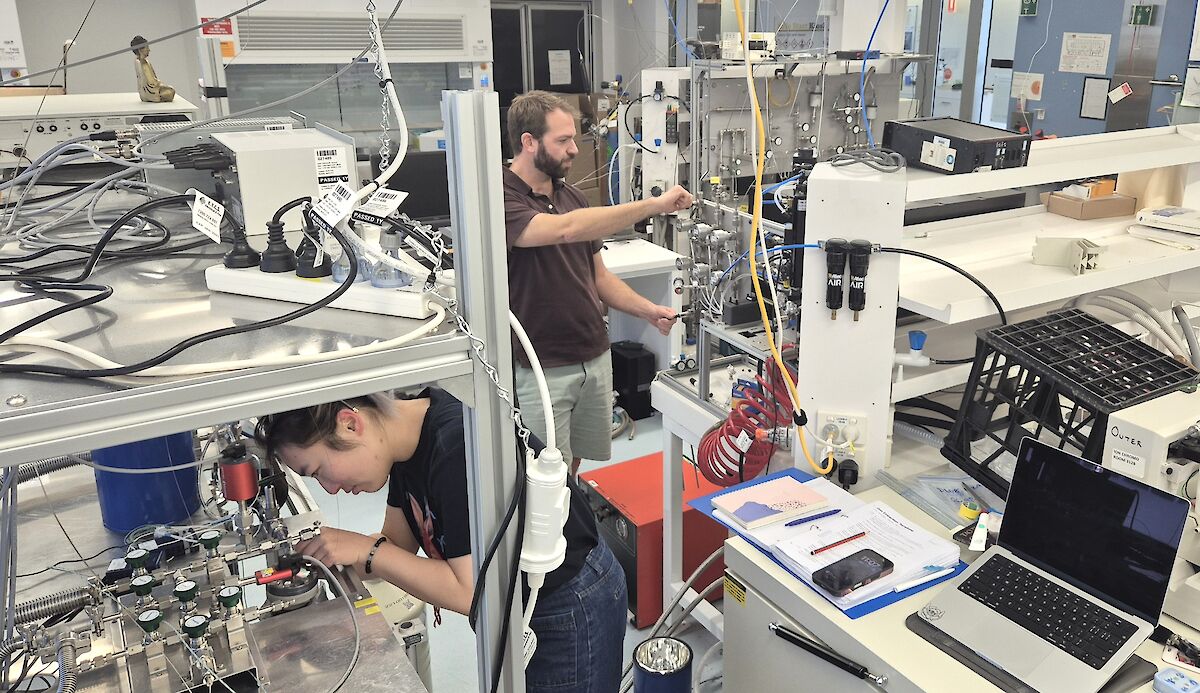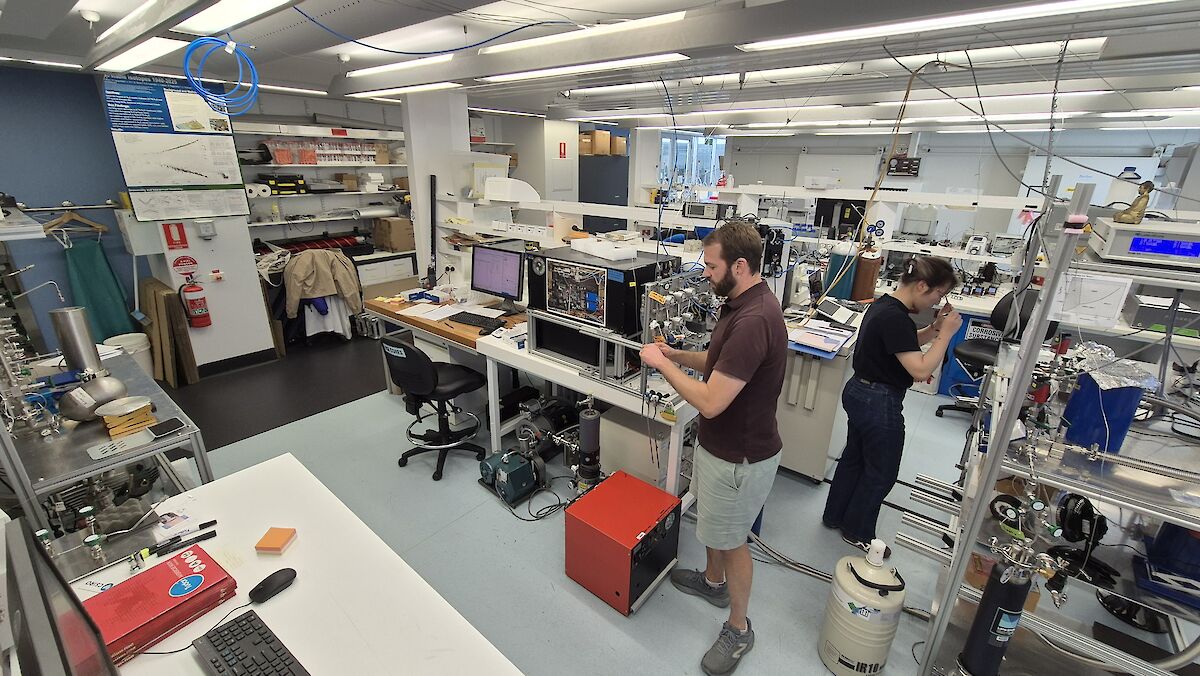

Gas analysts, Dr Daniel Baggenstos from the Australian Antarctic Division and Dr Andy Menking from the Australian Antarctic Program Partnership, are developing two methods to measure the gases in a purpose-built laboratory at the Institute for Marine and Antarctic Studies.
One method measures gas concentrations at discrete points in time, while the other measures it continuously through the ice cores.
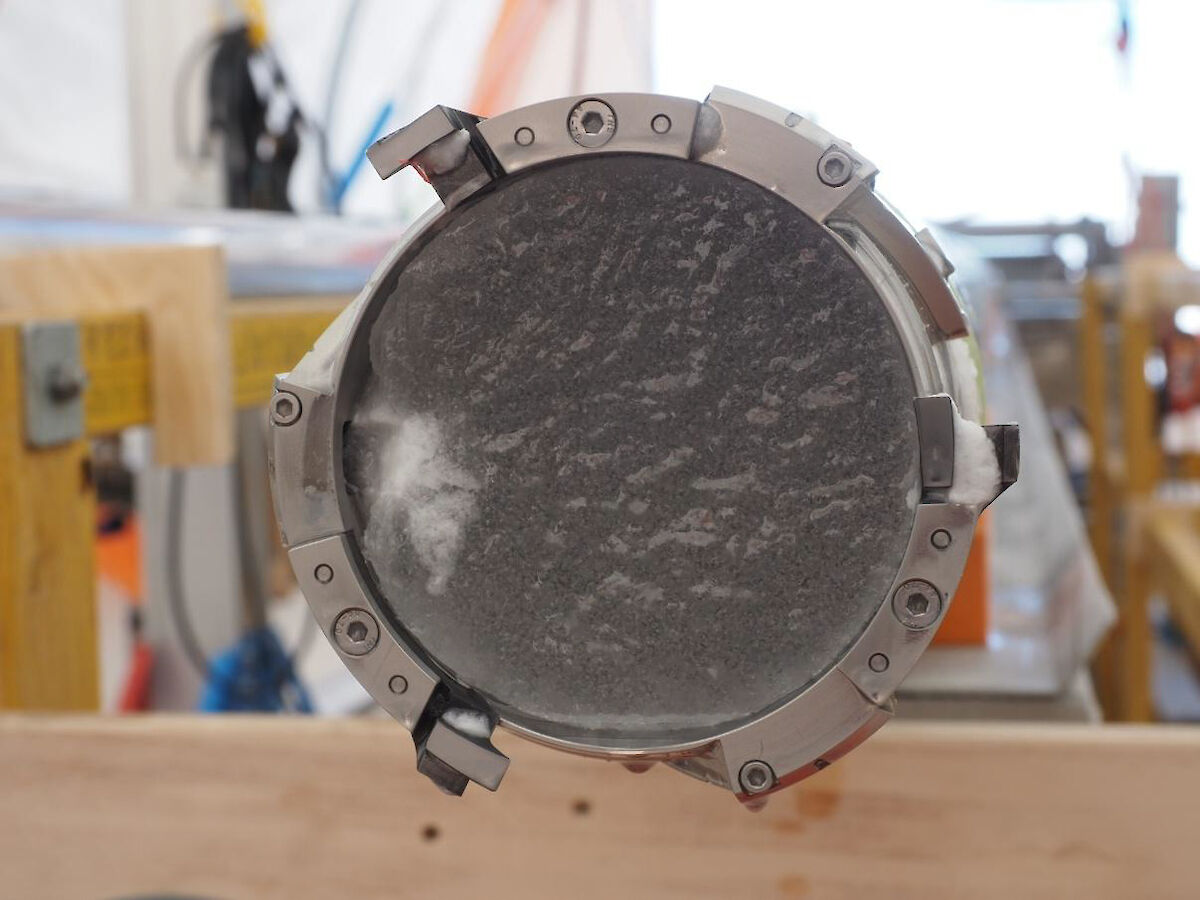
“Ice cores are amazing for studying greenhouse gases because they preserve the air so well in the bubbles, and this allows us to study the ancient atmosphere directly,” Dr Baggenstos said.
“We have a good idea of what we’ll see in the top 800,000 years, as this has been measured in other ice cores. But after that we are in uncharted waters.”
This extended climate record, inferred from trapped gases, chemicals, dust and other particles in the ice, will help solve a climate mystery involving a shift in the timing of ice-age cycles that occurred around one million years ago.
The record will help determine what role greenhouse gases may have played in this ice-age cycle shift, from once every 40,000 years to once every 100,000 years.
A leading theory is that declining atmospheric CO2 levels were the cause of the longer, colder ice ages lasting 100,000 years.
As well as helping to answer this, the Million Year Ice Core will place current changes in climate and greenhouse gas concentrations into a deeper context, providing important information to test climate models and better predict future climate.
Moments in time
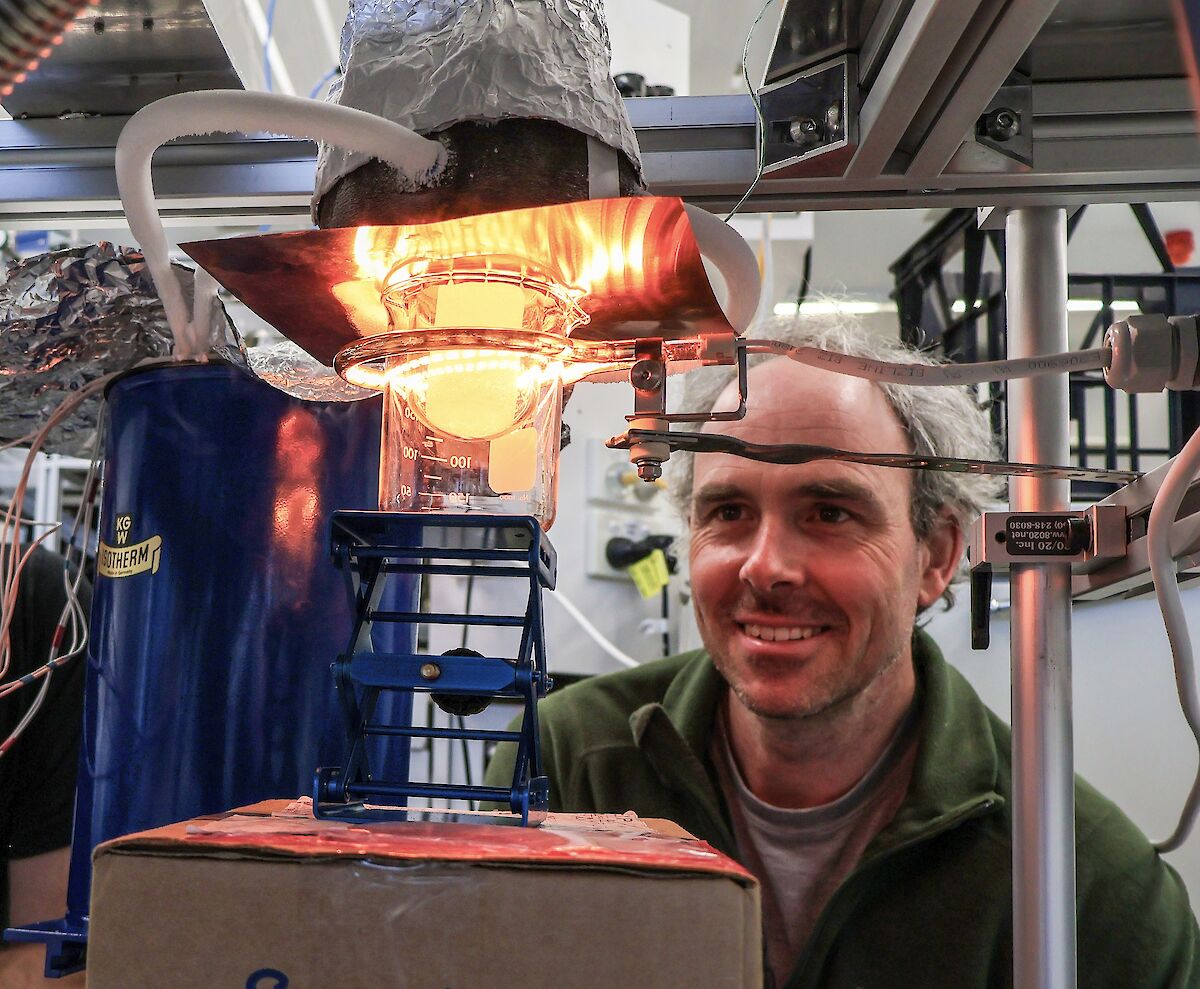
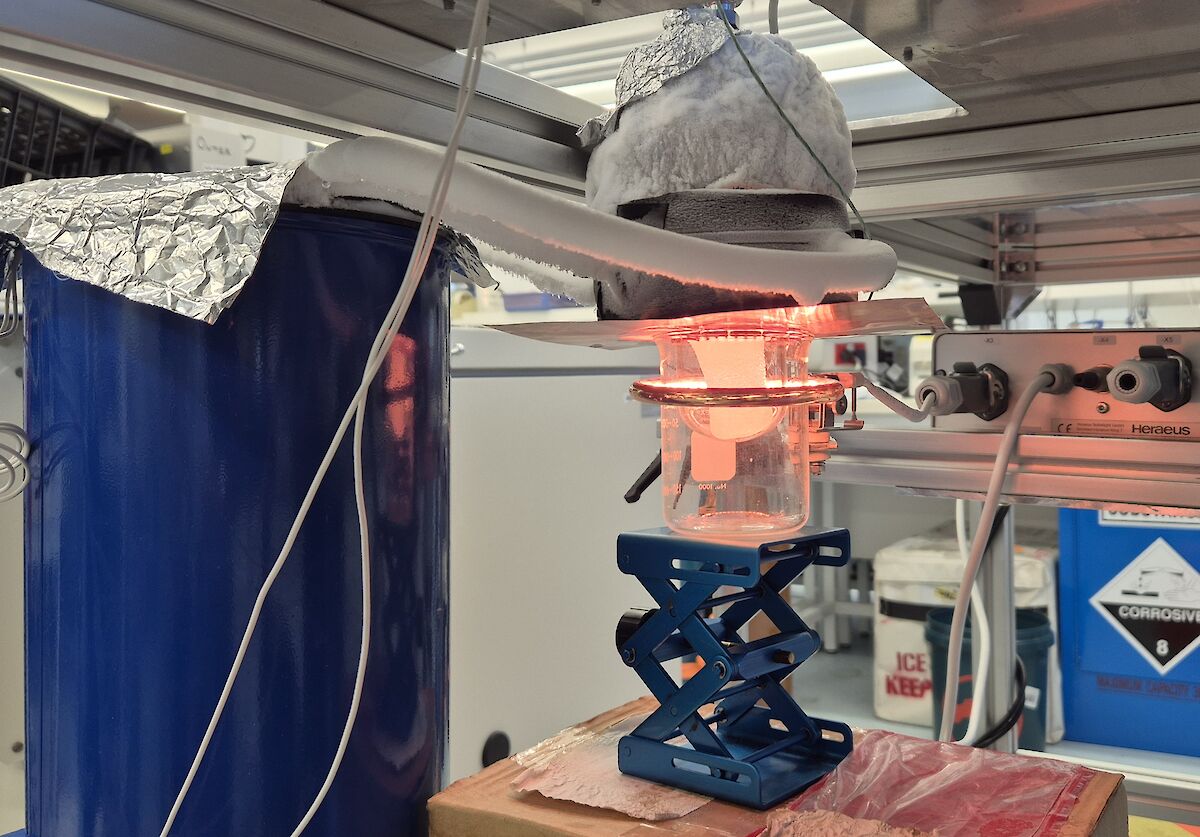
To measure gas concentrations at specific points in time, Dr Baggenstos uses a process called ‘sublimation’, which releases the gases without melting the ice.
To do this, he places a five centimetre piece of ice, weighing 50 grams, in a vacuum chamber and warms it with a heat lamp.
In these low pressure conditions the ice turns directly into water vapour, and the atmospheric gases, trapped in air bubbles, are released.
The water vapour rises into a cooling ring where it re-freezes. The other greenhouse gases, which freeze at lower temperatures, are captured in a thin metal tube.
“Over about 90 minutes, our 50 grams of ice will give us four to five millilitres of air, which is enough for all our analyses,” Dr Baggenstos said.
An absorption spectrometer is then used to measures the concentration of each gas, by detecting how much light each one absorbs at specific wavelengths.
The team hopes to analyse at least one ice sample for every 1,000 years. But as the ice cores get deeper, the yearly layers of ice get compressed into thinner bands. This means a five centimetre sample will represent hundreds of years of greenhouse gas history.
Continuous variation
Measuring the gas concentrations continuously through the ice could provide more accurate information at these greater depths and increase the speed of analysis.
“We hope the ‘continuous flow analysis’ method will let us measure about 20 metres of ice per day, and it may better resolve variations in gas concentrations, especially in the deeper ice where layers are very thin,” Dr Menking said.
The continuous flow method only measures methane, as other gases dissolve in water when the ice melts.
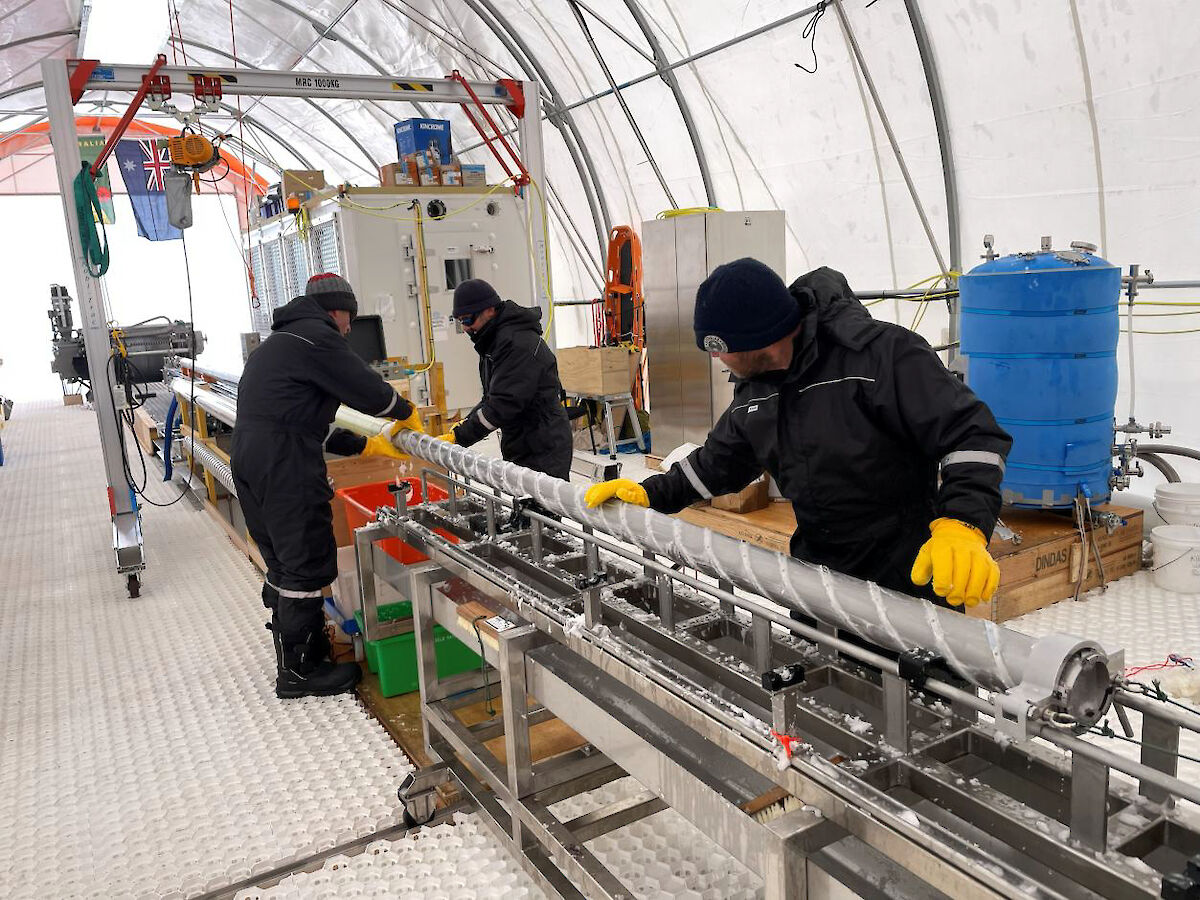
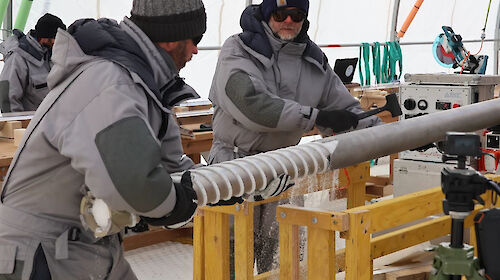
Thin, metre-long sticks of ice are melted in a way that ensures the ice melts vertically, in the order it formed, and the air is released in the order it became trapped.
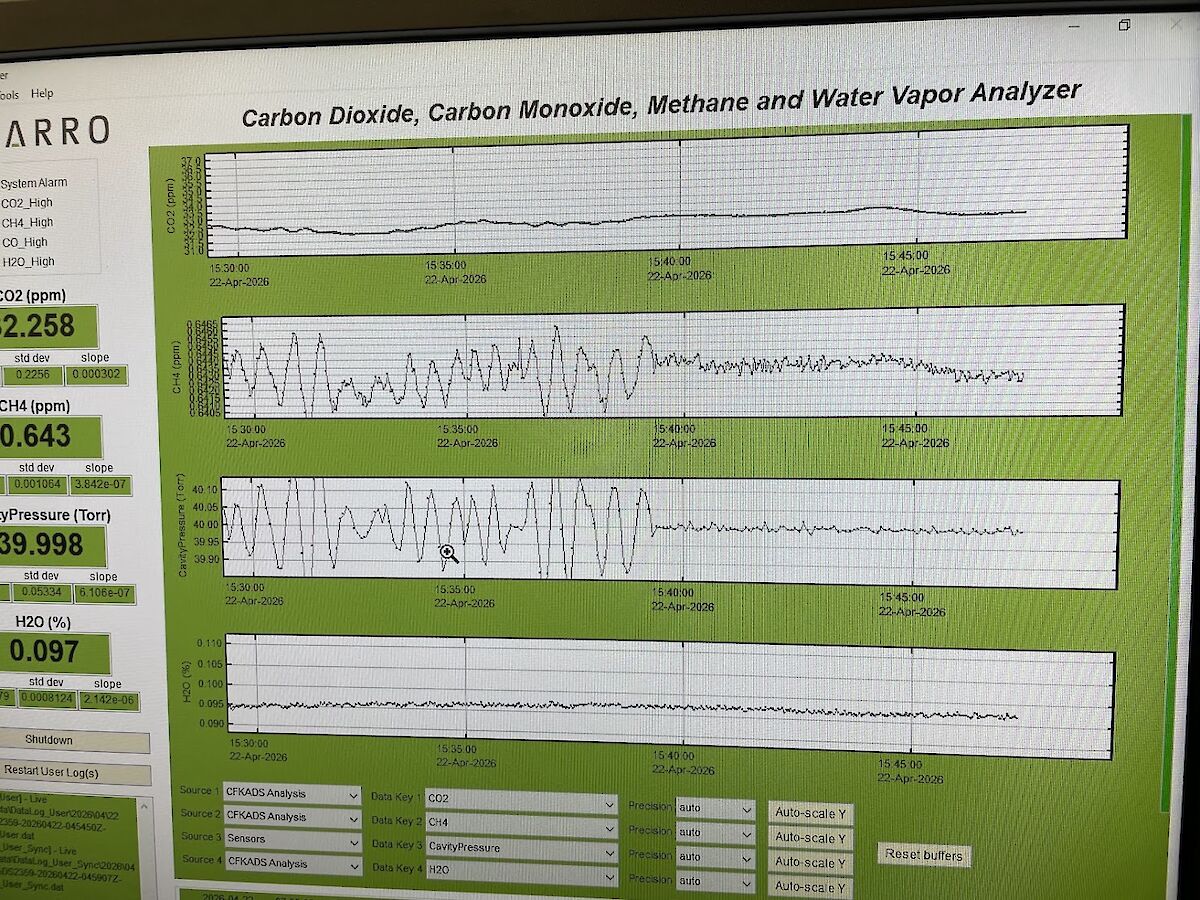
The water and air then flow through a series of tubes that separate the bubbles from the water and direct the gas stream to a laser spectrometer for analysis.
“We’re really curious about the relationship between climate and methane, and the natural fluctuations of the gas before humans had an impact,” Dr Menking said.
“When the cycle of ice-ages changed from once every 40,000 years to once every 100,000, did methane follow the ‘rules’? Did it continue to go up and down in regular ways or was there some kind of decoupling?
“It’s also important to measure methane because it’s one of the gases we could potentially remove from the atmosphere quite quickly, by changing our agricultural or industrial practices, because it has a relatively short lifespan.”
As methane mixes evenly through the Earth’s atmosphere, scientists can also use it to date the air bubbles in ice cores, by matching concentrations to other ice core records.
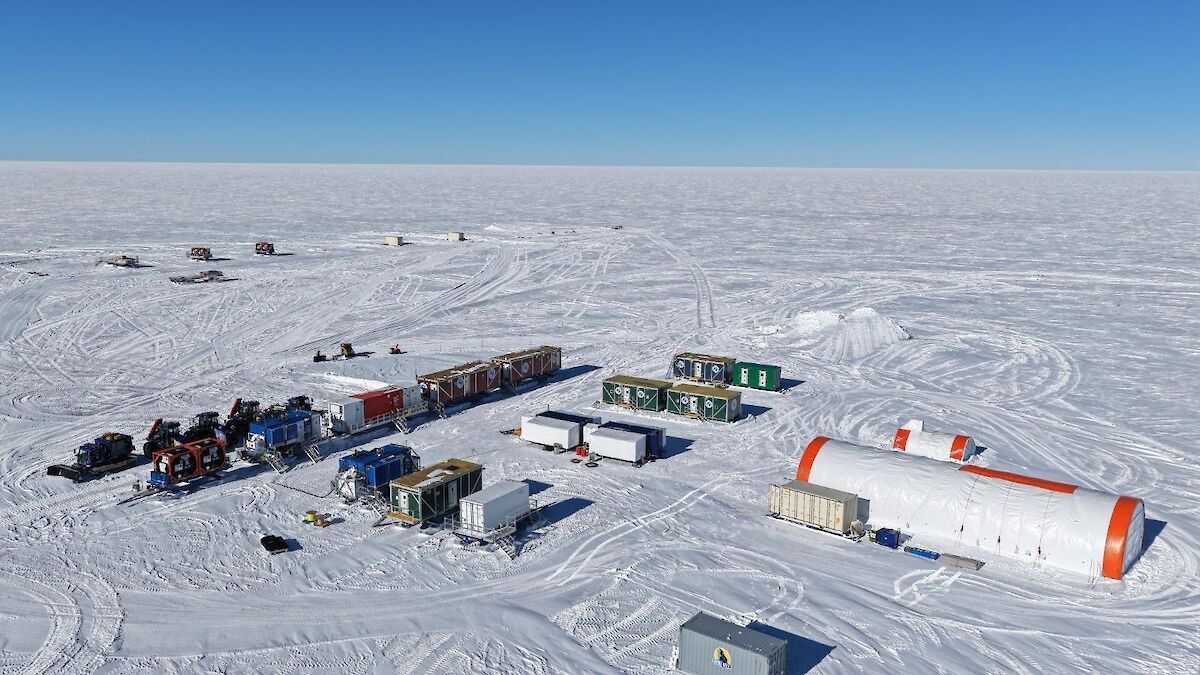
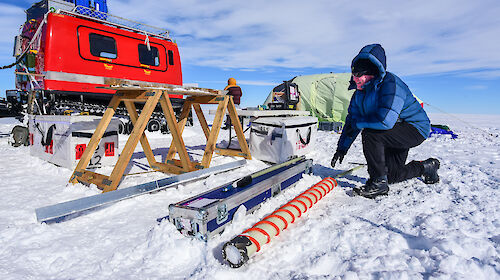
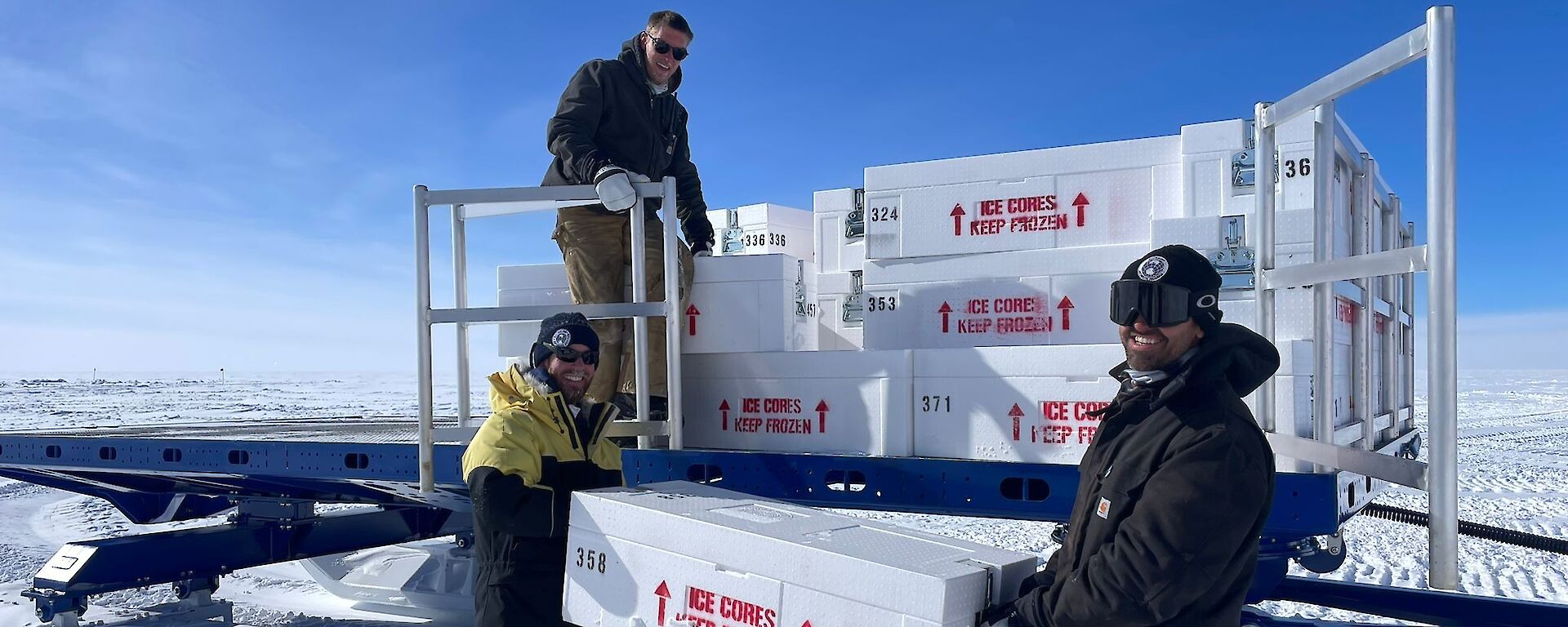
The team expects their gas processing to be fully underway before the next drilling season begins in December. Then, scientists hope to drill to a depth of 1,000 metres, recovering more ice from a core that will eventually reach the base of the ice sheet, at 3,000 metres depth, by 2029–30.
“It’s going to be really exciting to measure something that nobody has measured before and to produce some data that adds to our understanding of the climate system,” Dr Baggenstos said.