
Project information
Project aim
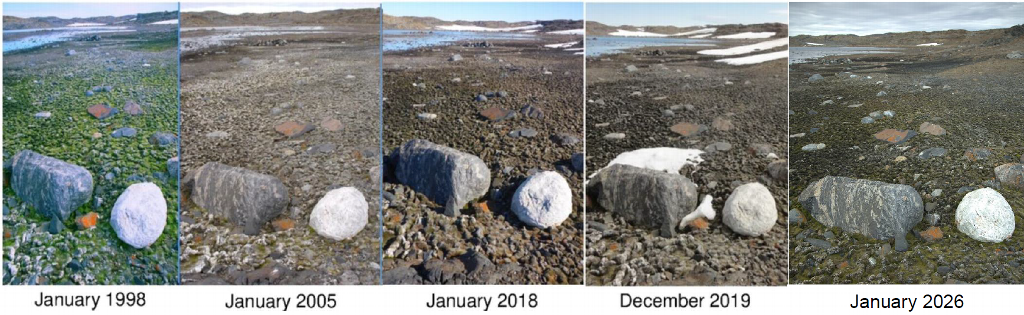
Australia is embarking on the establishment of the East Antarctic Monitoring Program. East-ANTOS will be an integral component of this exciting new initiative and links into whole of Antarctica monitoring network providing opportunities for collaborations with other Antarctic Nations. It will establish and support long-term monitoring of key terrestrial and nearshore areas in east Antarctica and Australian subantarctic islands, and also our research stations within those same areas. Monitoring of biota including diversity, abundance and health will be coupled with tracking of important environmental variables. East-ANTOS will contribute to an understanding of the impacts of multiple pressures, including climate change on Antarctic nearshore and terrestrial life in rare ice-free regions, and contribute to improved conservation management within the footprint of our research stations and areas of operation.
Project milestones
Summary of the season 2024/25
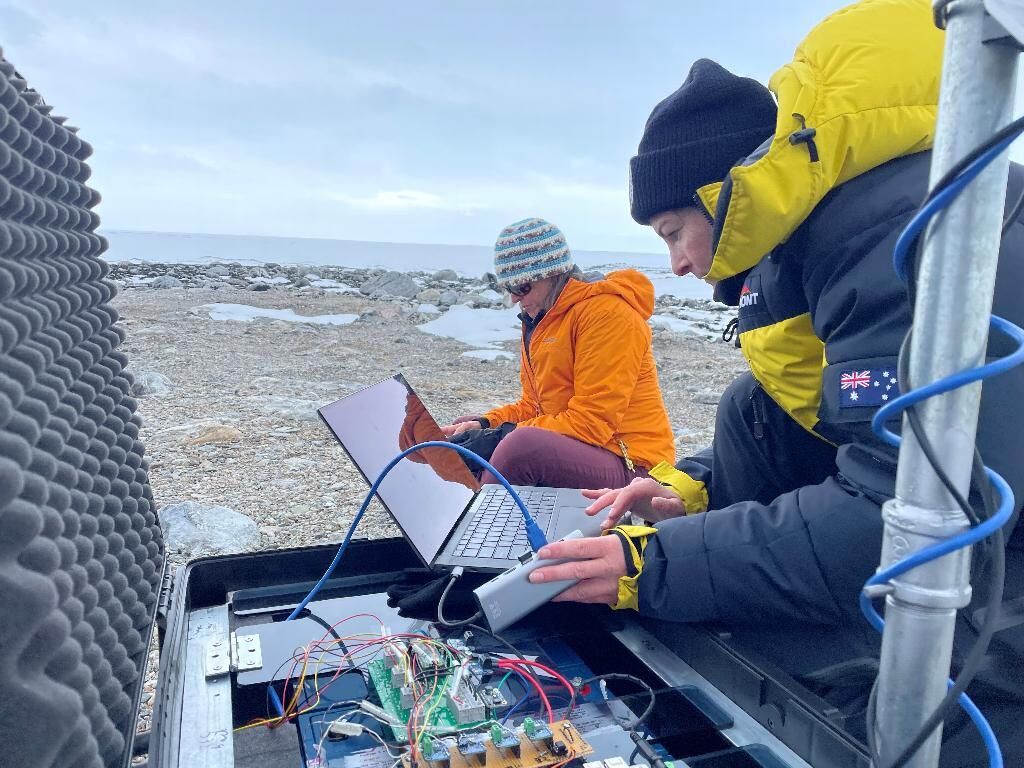
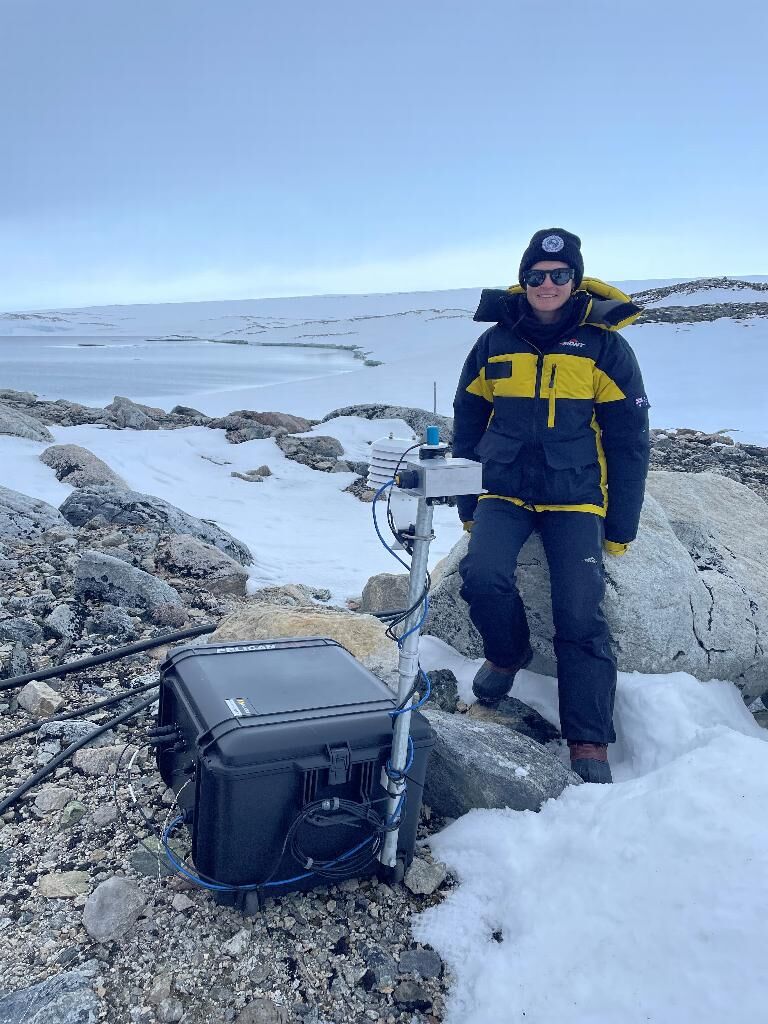
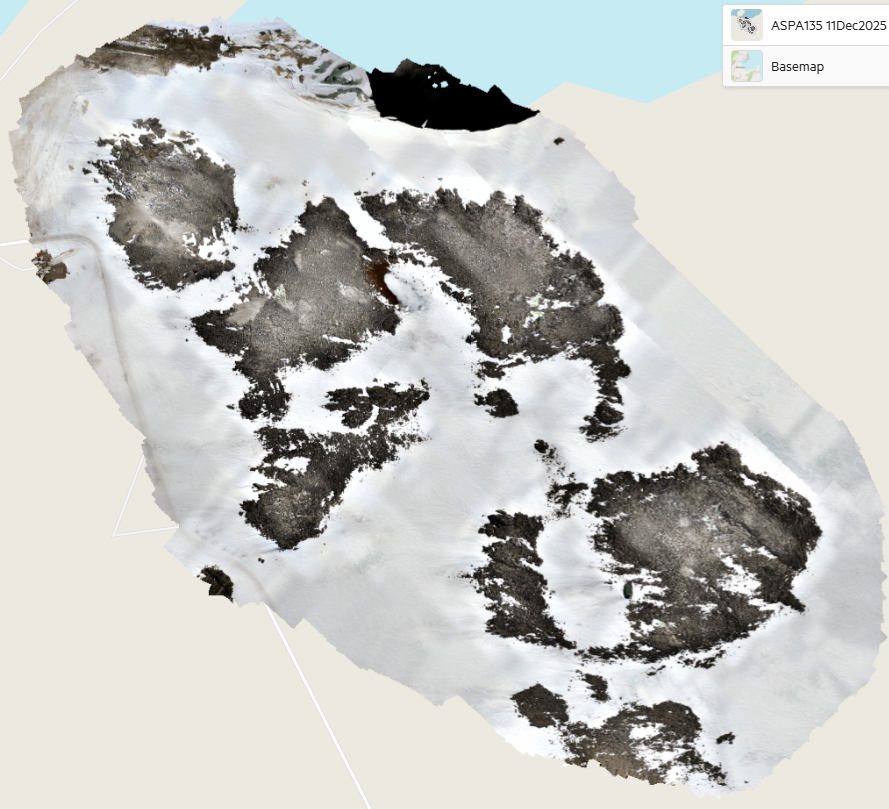
During the 24/25 summer season, the East-ANTOS project received partial logistic support via a sister project, BEAUT (AAS 4633), through shared personnel. While the BEAUT team were at Casey, in transit to/from Bunger Hills, team members completed preliminary site investigation works for East-ANTOS acquiring initial baseline environmental and biodiversity data and field-testing new, low-impact, smart sensing units developed by our team member and SAEF project CI Johan Barthelemy (Project: SR200100005). Over 2 months, two units were tested: AIoT Prototype 1.5 and a Net-Radiometer sensor. The units use advanced AI technology to collect, process and download environmental data. The field tests were successful, and the data from the summer will be used to quantify and understand environmental variability in ASPA 135 and assist in the deployment of our planned ANTOS advanced site, and to optimise sensor and power requirements prior to field installation. One AIoT Prototype 1.5 unit remained on station for the 2025 winter to monitor battery performance and technology function under winter conditions
In addition, in preparation for tower installation, a preferred ANTOS site and two alternative nearby sites were surveyed for engineering purposes during V2 resupply by an AAD surveyor, overseen by AAD an engineer; delivering site information to inform the tower installation and construction phase.
The team also completed a biodiversity survey of the Casey station area. Samples and data collected will inform environmental management of our operational zone and be used to ground truth biodiversity values assessed from previously acquired drone imagery.
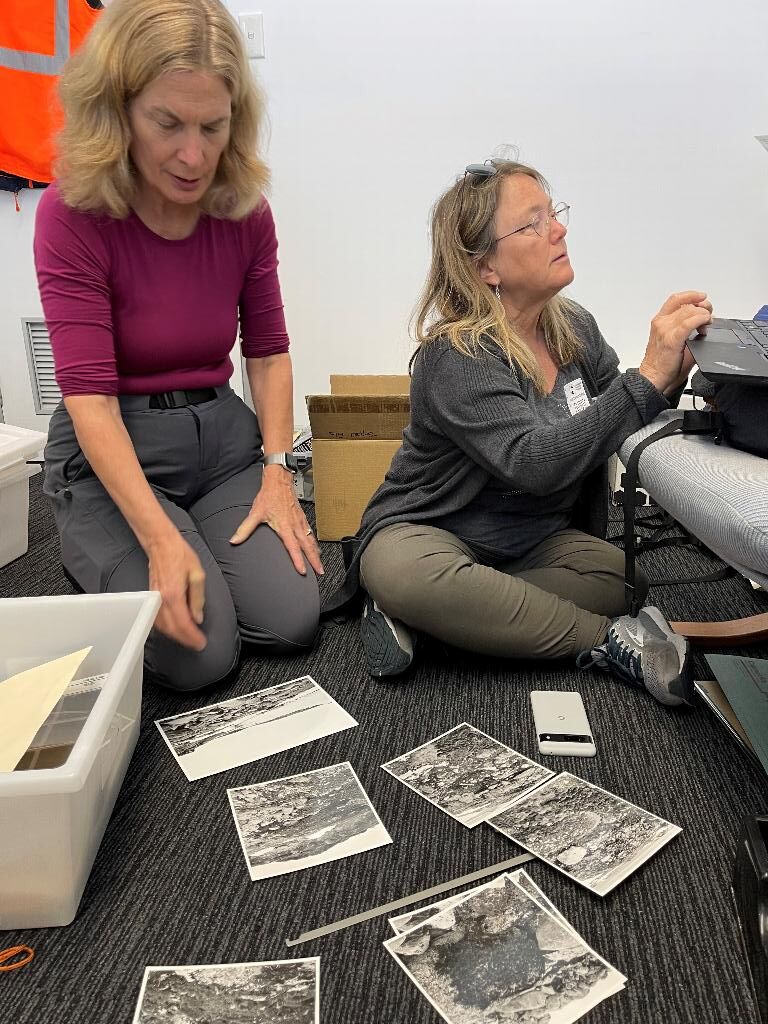
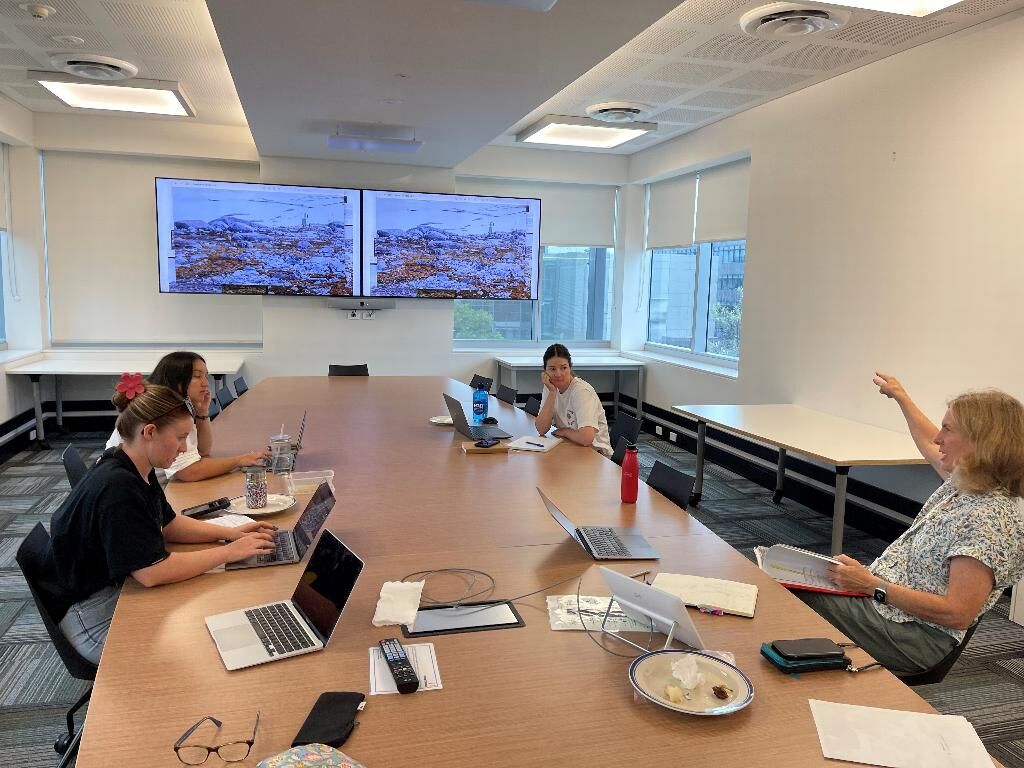
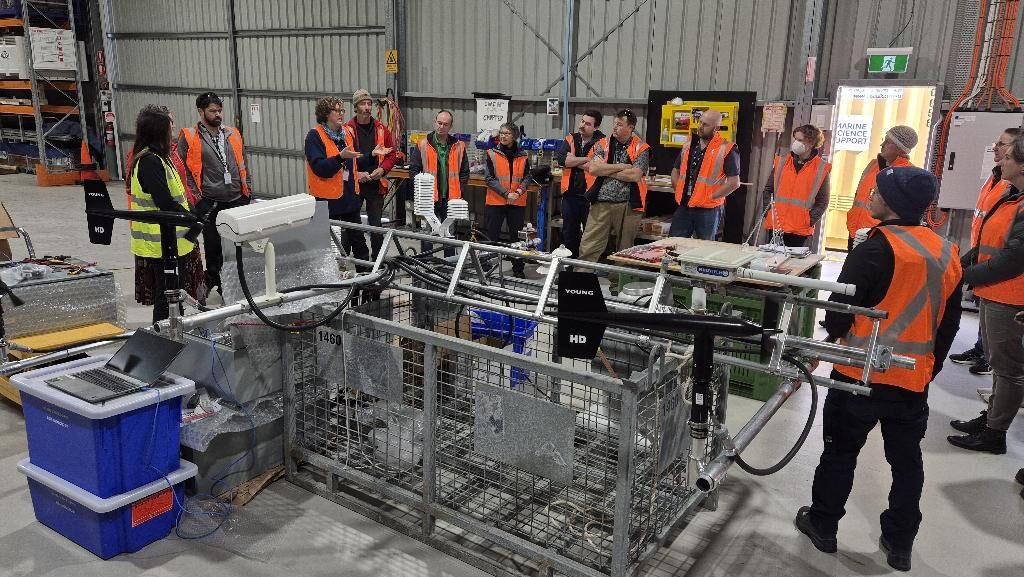
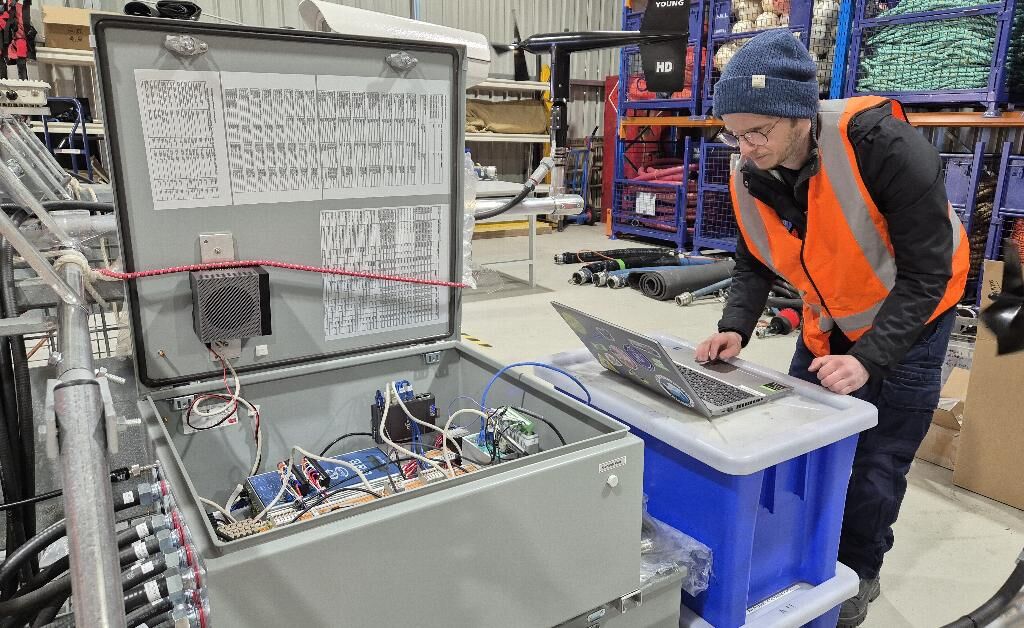
In Australia, the terrestrial team from the project held a workshop at AAD in July 2024 to prepare for the 24/25 season. We successfully configured the newly arrived ANTOS sensors and communication/computing components. During this process it was identified that the procured tower infrastructure would not meet Australian workplace standards and the rigours of the Antarctic environment. As such Dugald McLaren with support from the Pure Antarctic Foundation designed a new tower structure for the project. This ground-breaking design has been assessed by engineers to meet severe cyclonic wind speeds and other Antarctic conditions and requirements. An engineering firm is currently preparing fabrication specifications for the design. The design provides a minimal impact solution, including a non-guyed, self-ballasted structure with small surface touch points and meets World Meteorological Organisation WMO CyroNet Site standards.
Dr Jane Wasley, who has been appointed to the role of Antarctic Terrestrial Monitoring Research Scientist at the AAD, has taken over the role of CI for this project.
Summary of the season 2023/24
Sensors and communication equipment for the first of Australia's fleet of ANTOS towers have been acquired. The AAD recently hosted a tower assembly workshop with collaborators from the University of Wollongong in attendance. The workshop allowed the full array of sensors to be connected and tested and the main control box to be reconfigured to meet requirements to be remotely powered. Several other field deployment requirements were also established including site selection and data pipeline protocols. The workshop also provided team training and familiarisation with the equipment. Earlier in this reporting cycle substantial advances were made toward the development of a series of field manuals and protocols which are being jointly developed by the international ANTOS community. The project is yet to receive logistic support, so has not yet acquired field data.
Summary of the season 2022/23
This project aims to record and sense Antarctic biodiversity in East Antarctica. In preparation for field work, legacy data has collected, protocols developed and field sensing towers designed.
Related publications
-
Research Bias in Long-Term Monitoring of Antarctic Nearshore Marine and Terrestrial Biota Global Change Biology, 2025
(Ref: 17424)
Category 1: Peer-reviewed literature
Long-term observations are essential for ecological research, providing insights into species and ecosystem variability, processes, and responses to change. In a time of rapid global change, ecosystem modification, and emerging threats, such long-term monitoring (LTM) is increasingly important.