
Project information
Project aim
Sparse observations suggest that the surface waters in Prydz Bay are accumulating CO2 faster than the expected rate of increase in anthropogenic CO2 in the atmosphere. This unexpectedly large change may be due to a change in local biological production, a change in the characteristics of the source waters, or a combination of the two. This project will build a baseline record of observations in Prydz by using a novel combination of mooring, float, glider and shipboard sampling to quantify physical and biogeochemical variability on the shelf. This will provide the foundation for a largely autonomous monitoring program to be implemented over subsequent field seasons. Given the importance of ice shelves and sea ice in the delivery of nutrients to support phytoplankton production and ultimately carbon uptake in Antarctic coastal regions, Prydz Bay and the neighbouring Amery Ice Shelf are an ideal environment to investigate the impacts of a changing climate on marine environment.
Project milestones
Summary of the season 2024/25
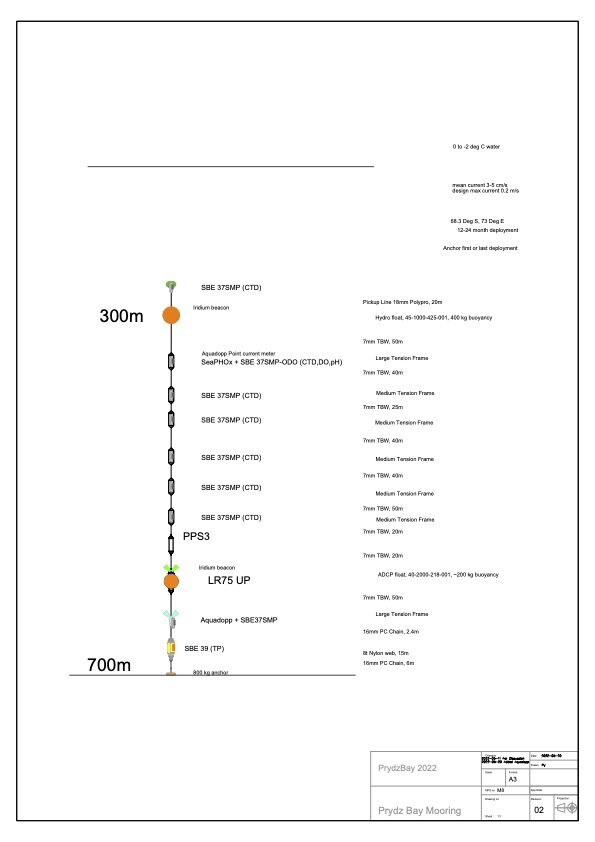
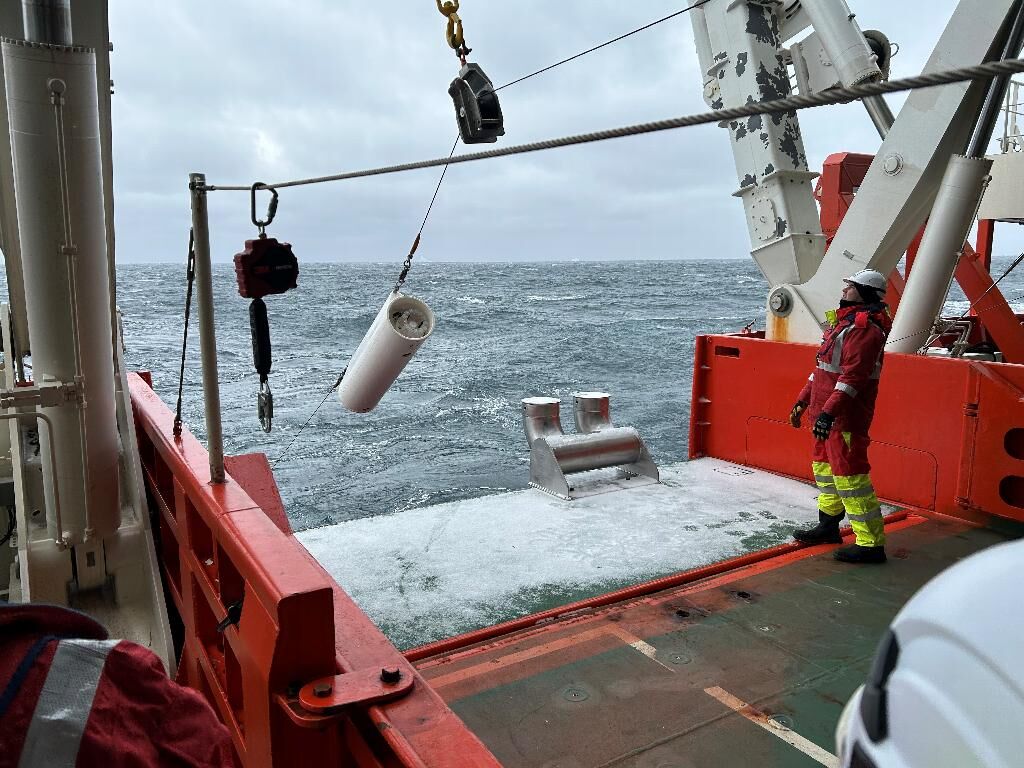
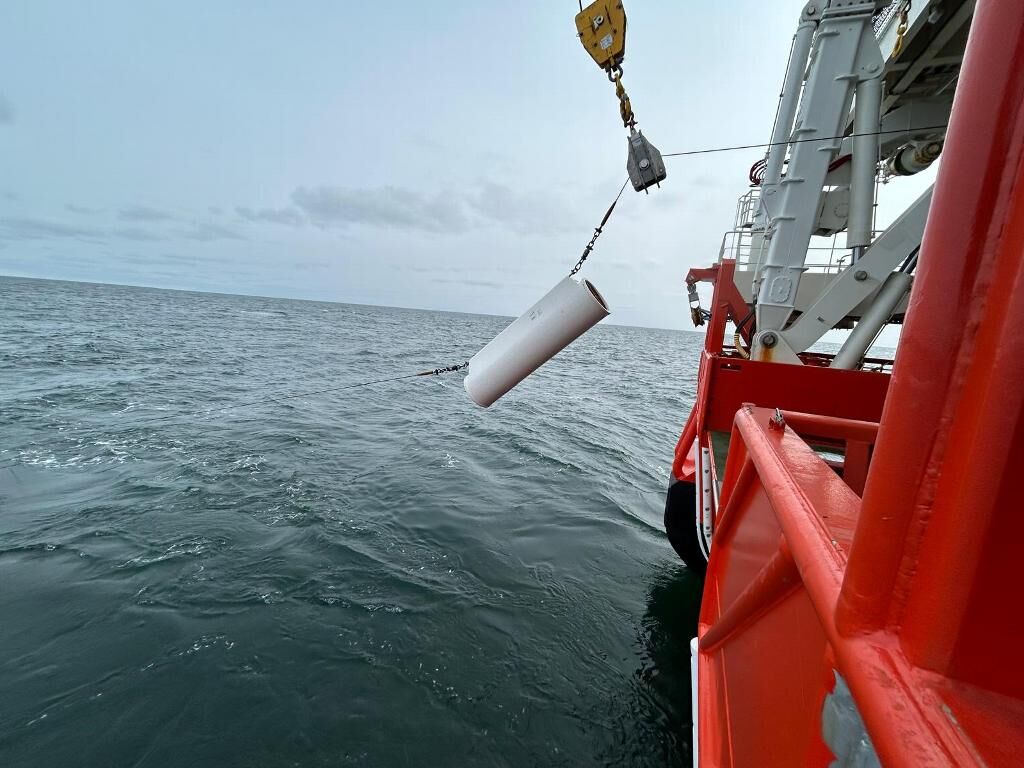
A mooring deployed as part of this project was successfully recovered this season. The instrumentation appears to have functioned without issue, and is likely to provide a nearly full year of in-ocean observations of physical and biogeochemical properties in Prydz Bay, near Davis Station. This project aimed to use autonomous platforms (moorings, and profiling floats) to acquire year-round observations and provide a proof-of-concept for the successful collaboration between the AAD and CSIRO for the annual deployment and recovery of these platforms. In both respects, this year has been successful.
Summary of the season 2023/24
Sparse observations suggest that the surface waters in Prydz Bay are accumulating carbon dioxide (CO2) faster than the expected rate of increase in anthropogenic CO2 in the atmosphere. This unexpectedly large change may be due to a change in local biological production, a change in the characteristics of the source waters, or a combination of the two. This project, part of the Australian Antarctic Program Partnership (AAPP), is building a baseline record of observations in Prydz Bay using a novel combination of a mooring (or a cabled observatory anchored to the seafloor) and a profiling float. In this first year, the two platforms were successfully deployed on RV Nuyina V3 near Davis Station by AAD personnel. These platforms will allow a full 12 months of data to be collected autonomously, including during the ice covered winter season.
Summary of the season 2022/23
The project has been supported with logistics in the 2023/24 field season, and as such this year has been dedicated to assembling instruments and mooring elements in preparation for deployment next year.