
Project information
Project aim
Antarctic krill are a fundamental component of Southern Ocean ecosystems and perturbations to krill populations have ramifications for the entire ecosystem. Krill are fished across the Southern Ocean and sustainable management of this fishery is a high priority for the Australian Government. This project will refine, design, develop and implement an integrated and comprehensive interdisciplinary program of scientific research and monitoring at a scale that will provide new and important insights into krill and the Southern Ocean krill-based ecosystem. Key components of this program will include interdisciplinary field surveys, novel and innovative data acquisition, cutting edge analysis of existing and new data, and syntheses that bring together ecosystem connections and drivers of change. These activities will culminate in outputs to inform the ecosystem-based sustainable management of the East Antarctic krill fishery and quantify the current and projected impacts of climate change.
Project milestones
Summary of the season 2024/25
Antarctic krill are a keystone species within the Southern Ocean ecosystem. Many species, such as seabirds, fish, whales and seals, depend upon Antarctic krill for their survival. Moreover, Antarctic krill play an important role in carbon capture and nutrient recycling. Consequently, perturbations to krill populations have ramifications for the entire ecosystem. Krill are fished across the Southern Ocean and managed by the Commission for the Conservation of Antarctic Marine Living Resources (CCAMLR). This project was specifically designed to address Australia's commitment to the sustainable management of this fishery, the protection of krill-centric ecosystems, and the conservation of wildlife, including krill predators. The project will provide scientific data to support management and conservation decisions in international fora such as CCAMLR, the International Whaling Commission (IWC) and the Agreement on the Conservation of Albatrosses and Petrels (ACAP).
The project's research goals are to:
1) Inform the sustainable and ecosystem-based management of the East Antarctic krill fishery.
2) Quantify the current and projected impacts of climate change on East Antarctica's krill-based ecosystem.
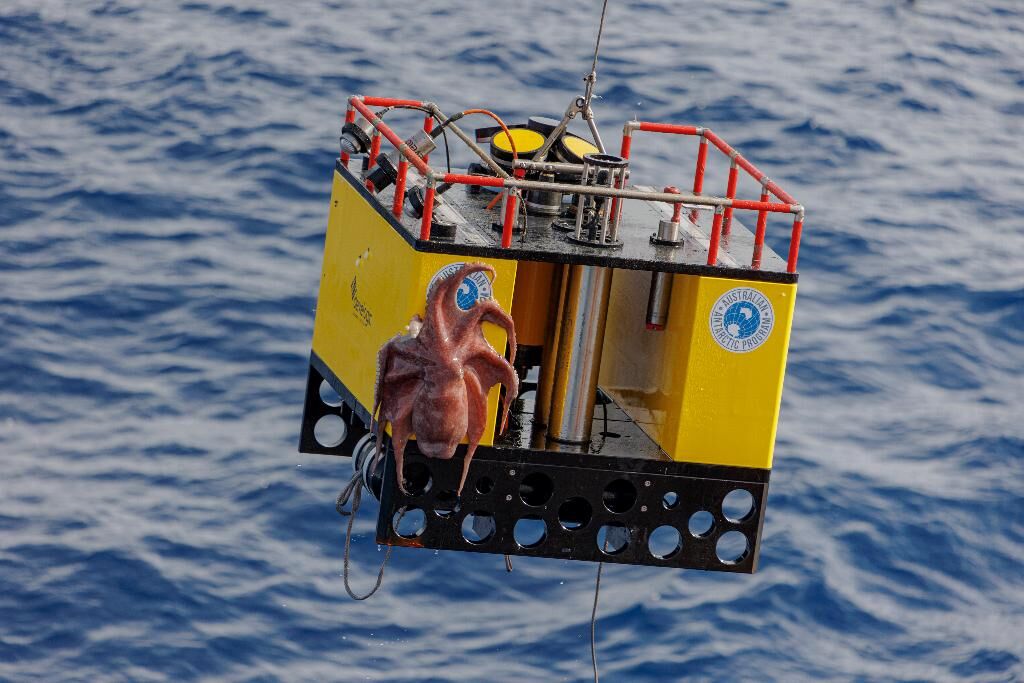
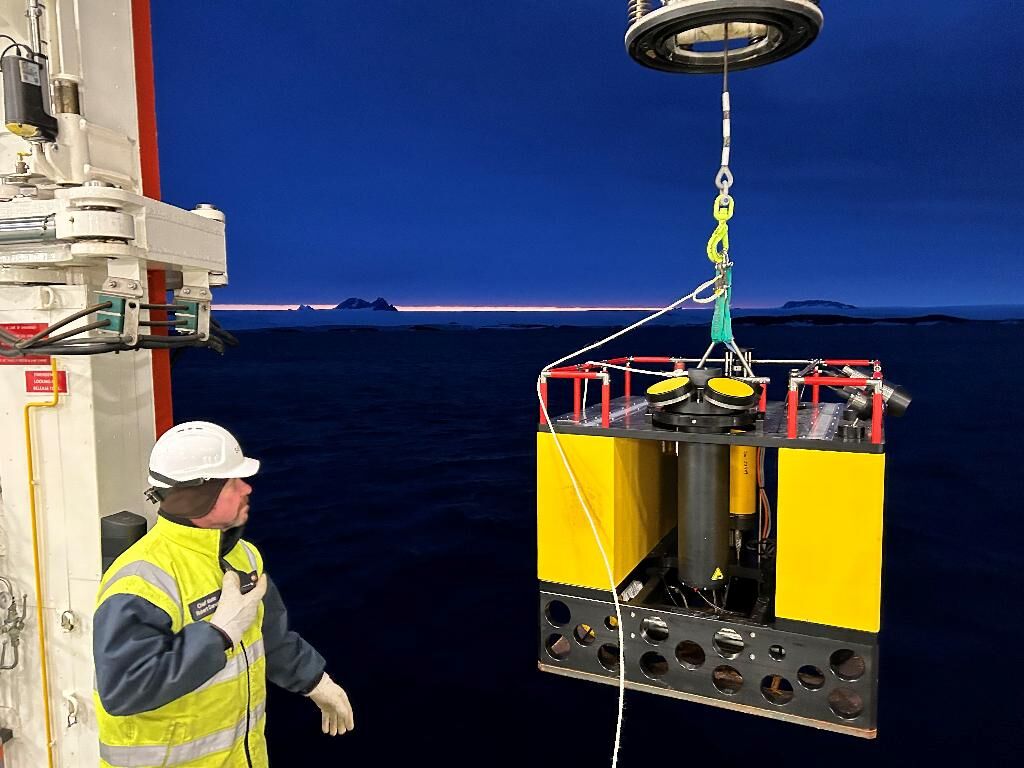
The third year of this decade-long project was subject to budget and operational constraints. However, we successfully completed 11 mooring operations in Antarctica during the 24/25 season. Our mooring fleet is designed to collect data on the local oceanographic conditions, krill biomass and the presence of marine mammals. Once deployed these moorings remain at their location for c. 12 months and are collected the following season. In 2024/2025 we recovered 6 moorings from the 23/24 season and deployed 5 moorings for collection in 25/26. Data from moorings informs year-to-year variability in krill population its ecosystem which is critical to CCAMLR's ecosystem-based management approach and to inform cetaceans management and conservation discussions within the IWC and ACAP.
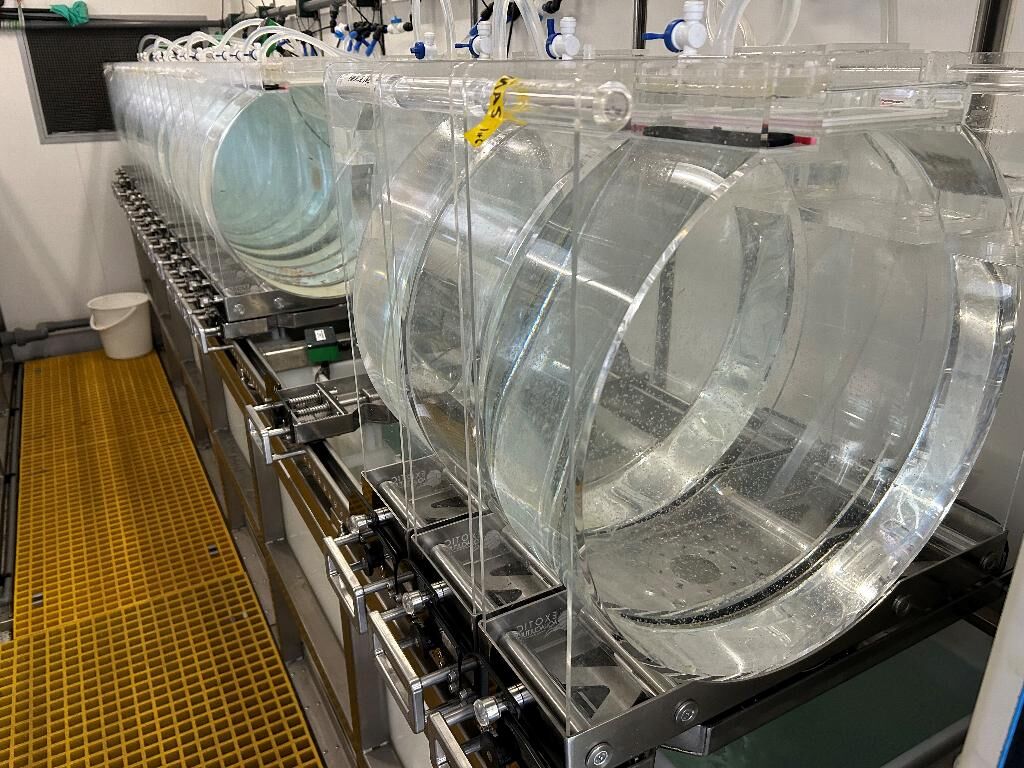
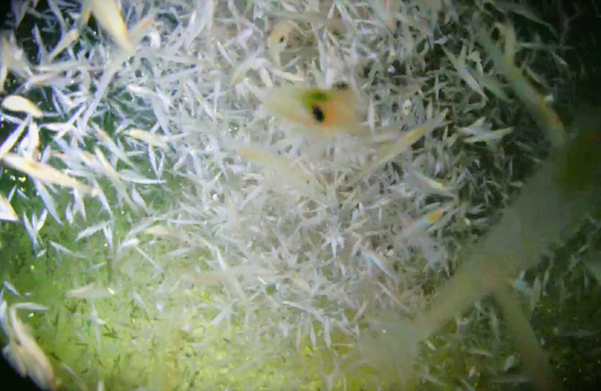
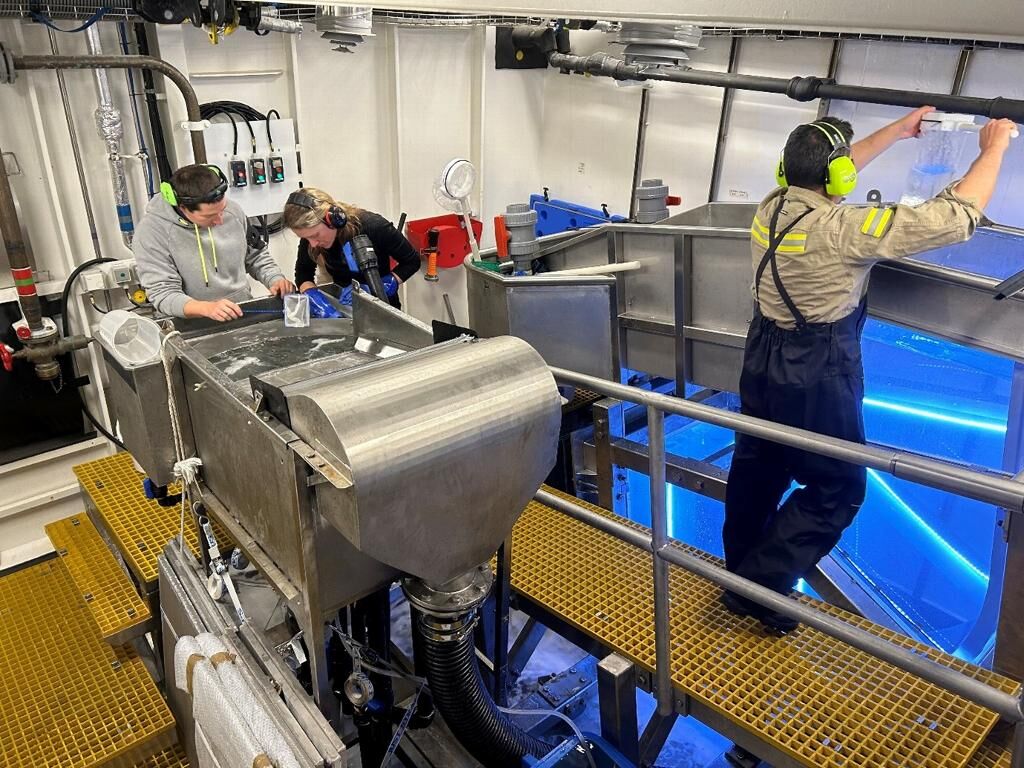
A new viewing tank was installed in Nuyina's wet well enabling us to catch fragile zooplankton with minimal impact. A range of invertebrates, including several fragile gelatinous species, were collected directly from the viewing tank. Around 2000 live krill were caught for live return to Australia, to support ongoing aquarium-based krill research into the impacts of climate change on the species and to contribute important life history, physiological and ecological data to CCAMLR.
Planned annual targeted krill and krill ecosystem surveys were not possible due to funding and logistical constraints.
Summary of the season 2023/24
Antarctic krill are a fundamental component of the Southern Ocean ecosystem, and perturbations to krill populations have ramifications for the entire ecosystem. Krill are fished across the Southern Ocean. Sustainable management of this fishery, the protection of their ecosystems, and conservation of wildlife, including krill predators, are high priorities for the Australian Government.
The project's research goals are to:
1) Inform the sustainable and ecosystem-based management of the East Antarctic krill fishery.
2) Quantify the current and projected impacts of climate change on East Antarctica's krill-based ecosystem.
The second year of this decadal-long project included budget and operational constraints. This meant that the annual targeted krill and krill ecosystem surveys (Krill Box survey), planned to start in the 2023/24 season, were not able to happen. A huge uncertainty in the resources and operational support available in the foreseeable future made planning for the year and beyond challenging.
Two project workshops were held, one in April 2024 and the other in June 2024, to bring Program Leaders together to discuss field activities under various scenarios with different logistical support levels and the project objectives that could be achieved.
2023/24 highlights include:
• Successful deployments of prototype MEEK mooring (Mawson shelf break), three KOMBI's deployed (one in Kista strait and two on Mawson shelf break), and recovery and replacement deployment with new MAR (South Kerguelen Plateau)
• Extensive bathymetric mapping of mooring sites, including a preliminary map of bathymetry for the MEEK002 mooring in the 2024/25 season in the Kerguelen region.
• Around 5000 live krill were caught for live return to Australia, and there is ongoing aquarium research on krill.
• A range of live zooplankton, such as jellyfish, sea butterflies, and copepods, were caught in excellent condition for physiological experiments and behavioural studies that have never been possible.
• A revised conservation measure for krill in the Australian Antarctic Territory, jointly proposed to the Commission for the Conservation of Antarctic Marine Living Resources (SC-CAMLR) with Japan, has been supported by its Scientific Committee.
Summary of the season 2022/23
Antarctic krill are a fundamental component of Southern Ocean ecosystems and perturbations to krill populations have ramifications for the entire ecosystem. Krill are fished across the Southern Ocean and sustainable management of this fishery, the protection of their ecosystems and conservation of wildlife, including krill predators, are high priorities for the Australian Government.
The project research goals are to:
1) Inform the sustainable and ecosystem-based management of the East Antarctic krill fishery
2) Quantify the current and projected impacts of climate change on East Antarctica's krill-based ecosystem
The first year of this decadal project was devoted to establishing a governance structure that provides opportunities for early- and mid- career researchers to co-lead units of work and encourages multidisciplinary collaboration. Two project workshops were held: one in September 2022 and the other in January 2023, to bring PIs together to discuss governance and establish a workplan. Sixteen work units have been identified and established.
2022/23 highlights include:
The successful recovery of two Krill Observational Moorings for Benthic Investigation (KOMBI). The KOMBI Moorings were deployed during the 2021 TEMPO voyage and successfully recovered from the sea floor at 835 and 1705 metres depth. Data are being analysed and will contribute to our understanding of krill seasonal abundance, a long-term monitoring program and will inform krill fishery management.
Moored acoustics recorders were also retrieved contributing data to a long-term database of sound from vocalising wildlife, in particular whales and seals, and the environment (ice and wave noise).
On the RSV Nuyina, the state-of-the-art Wet Well specimen separation equipment was successfully built into an engineered skid. The system will allow us to capture very fragile marine plankton not previously available to science in a condition suitable for behavioural or physiological research.
Research to refine species markers that can be employed on genetic samples collected during surveys has progressed.
Co-development of novel drone technology that will allow for the safe, ethical and efficient collection of biopsy samples from whales and, in future, satellite tagging, is underway in collaboration with EMPA, Switzerland and Imperial College, London, UK. This technology will advance project goals in future years.
Progress has been made in developing robust designs for ship-based surveys of East Antarctica's krill ecosystem. Initial surveys were designed for krill surveys off the Mawson Coast during early 2024. Budget pressures mean that these surveys, and closely aligned land-based seabird monitoring work, will not be possible and it is not clear when future surveys will be possible within a resource constrained environment. Alternative, opportunities for vessel time are being explored, e.g. an application for vessel time on RV Investigator has been submitted.