
Project information
Project aim
The aim of the Million Year Ice Core Project (MYIC) is to drill and recover an ice core that extends to well over a million years ago. An ice core covering this period will enable us to investigate climate links between temperature and carbon dioxide during the mid-Pleistocene Transition, when the Earth's ice age cycles changed pacing from 41,000 to 100,000 year period. Entry into, exit out from, and duration of ice ages, are evidence of non-linear behaviour of the Earth System that we do not fully understand. The project will improve our understanding of the processes involved, with implications for predicting the future climate response to anthropogenic carbon emissions. Recovery and interpretation of the million year ice core is a priority outcome of the Australian Antarctic Strategy and 20-year Action Plan.
Project milestones
Summary of the season 2023/24
BACKGROUND
The aim of the Million Year Ice Core Project (MYIC) is to drill and recover a continuous Antarctic ice core that extends to well over a million years in age. The key scientific objective is to help understand the processes involved in the mid-Pleistocene Transition (MPT), when the Earth's ice age cycles changed pacing from 41,000 to 100,000-year cycles. The records of past climate and atmospheric composition recovered by the project will aid in testing and refining projections of the future climate and ice sheet response to anthropogenic carbon emissions.
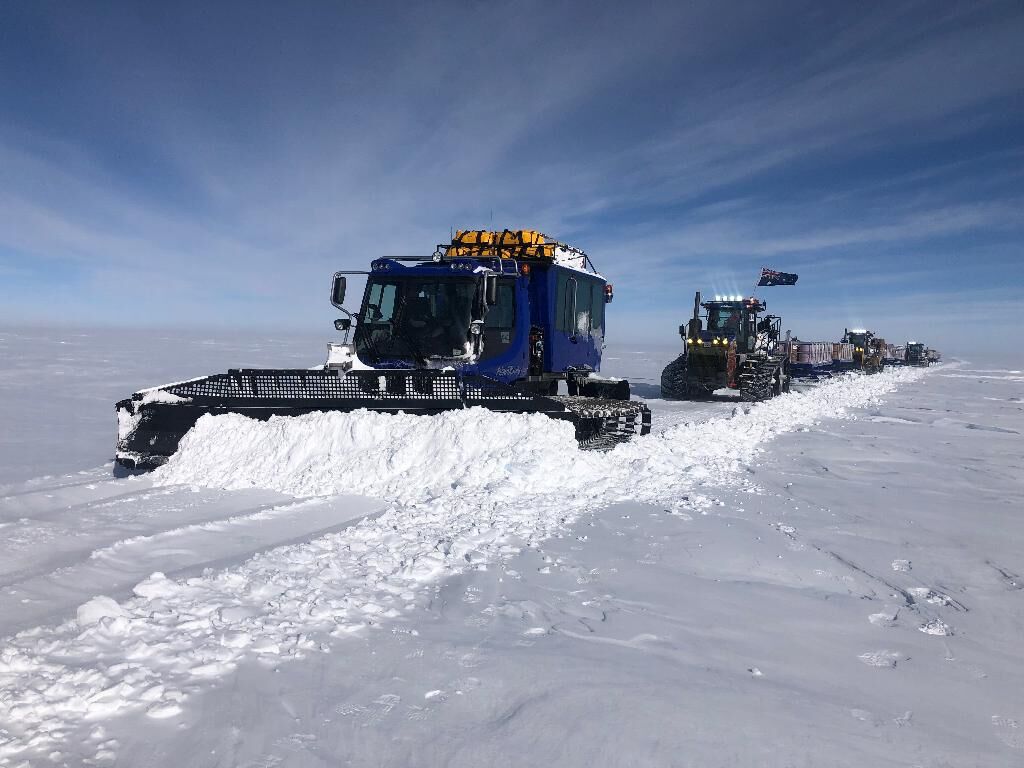
The project requires a 2300 km return tractor traverse from Casey Station to the drilling site near Dome Concordia. Drilling ca. 3000 m to the base of the ice sheet will be undertaken over multiple summer seasons, using an ice core drilling system built by the AAD.
2023-24 FIELD AND LABORATORY PROGRESS
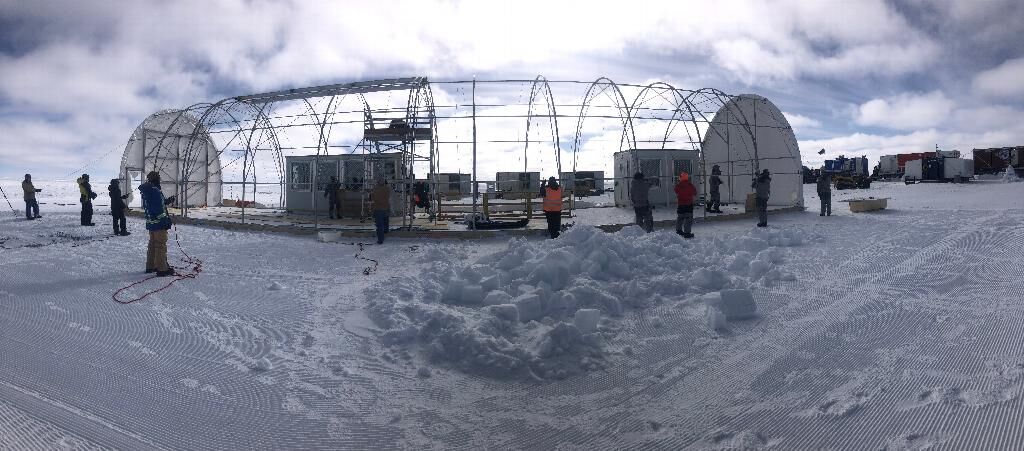
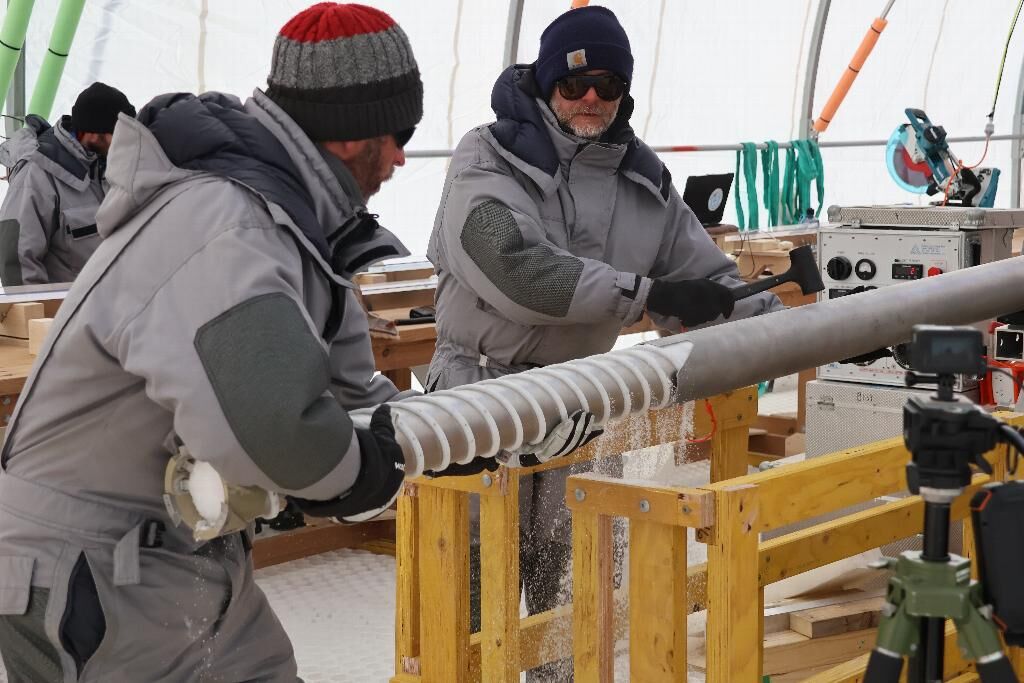
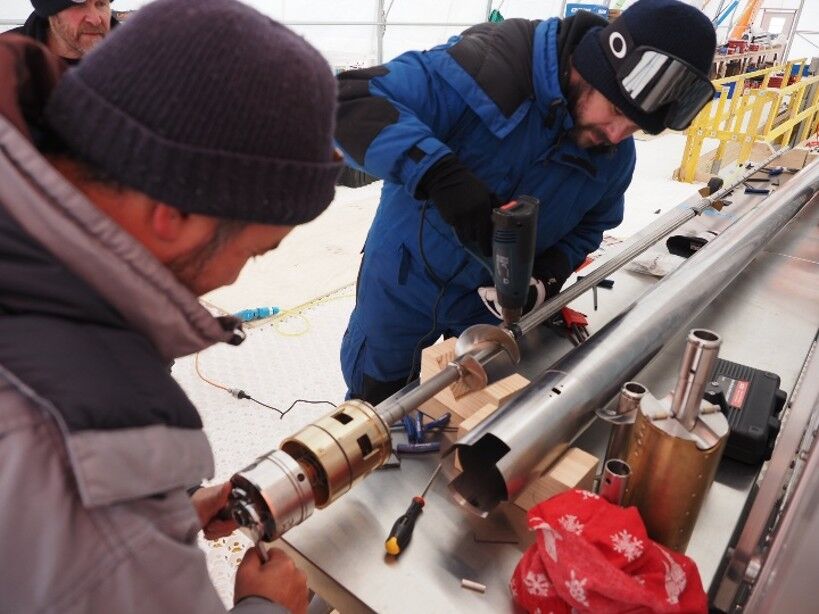
The 2023-24 MYIC field objectives were to traverse to the drilling site with infrastructure and equipment to add to that delivered in 2022-23, then to build the MYIC drilling shelter and support camp, and commence pilot drilling of the top 150 m of ice.
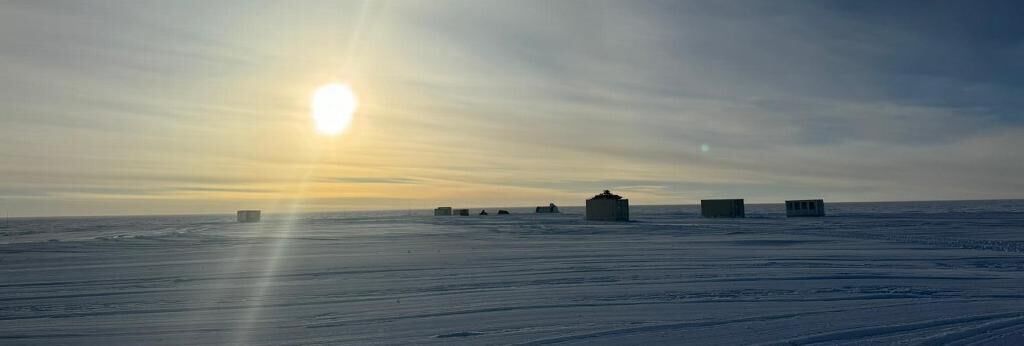
Unfortunately, Traverse departure from Casey was significantly delayed due to illness in the Traverse team and the need for repairs to storm-damaged equipment. Traverse departed Casey on 21 December and arrived at the site on the 7 January after 17 days travel. The team delivered 39 tonnes of cargo to MYIC, including the Drill Operators Cabin, MYIC drill shelter, and other camp support and drilling equipment. AAD Traverse continues to build depth of experience in the capabilities needed to support the multi-year MYIC project and future inland science projects.
The window to operate in field camps the Dome C region is short due to the extreme negative temperatures and logistical challenges to air and overland access. Following the delay to traverse departure, there was no time to complete the drill shelter build or start pilot drilling, therefore the AAD made the decision not to deploy the scientific drilling team, postponing the start of drilling to 2024-25 (https://www.antarctica.gov.au/news/2023/drilling-for-million-year-ice-core-project-cancelled/).
Research published in 2023 indicates that Dome Concordia North (DCN), which is close to the current site where MYIC cargo and drilling equipment is cached, preserves a highly-resolved record spanning up to 2 million years. MYIC collaborated with the AAD ICECAP-EAGLE (AAS 4511) project to obtain ice penetrating radar surveys over DCN to inform the opportunity to start drilling activities at this site in 2024-25.
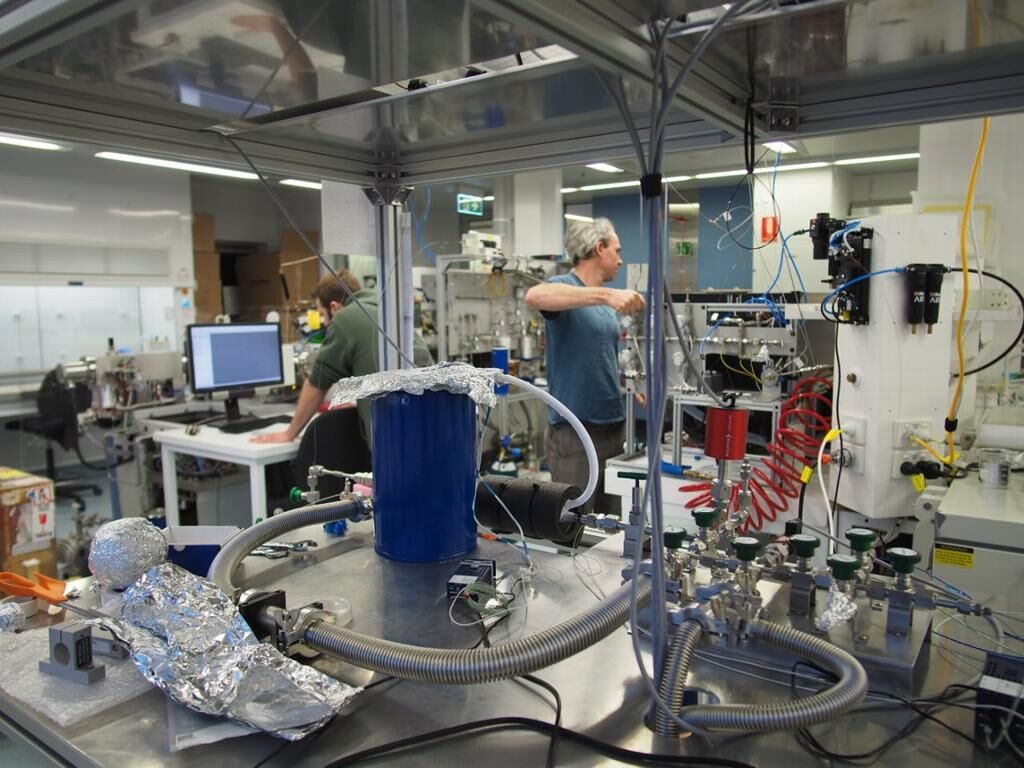
In 2023-24 the project continued build of a new ice core gas lab for MYIC analysis, including commissioning of a major instrument (Isotope Ratio Mass Spectrometer) for analysis of isotopic composition of ice core gases. The project has also completed build and successful testing of our new ice core continuous flow ice core analysis capability.
Summary of the season 2022/23
BACKGROUND
The aim of the Million Year Ice Core Project (MYIC) is to drill and recover a continuous Antarctic ice core that extends to well over a million years ago. The project will improve our understanding of the processes involved in long-term climate, Antarctic ice sheet and sea level changes. A particular focus is on resolving the causes of the mid-Pleistocene Transition (MPT), when the Earth's ice age cycles changed pacing from 41,000 to 100,000-year cycles. Records of climate and atmospheric composition from the MYIC will aid in testing and refining projections of the future climate and ice sheet response to anthropogenic carbon emissions.
Supporting the scientific ice core drilling operation requires a 2300 km return tractor traverse trip from Casey Station to the target drilling site at 'Little Dome C' (LDC), 3230 m elevation. The project requires set up at LDC of an AAD custom-built deep ice core drilling system and support camp. Drilling to bedrock will be undertaken over multiple summer seasons during this 10-year project. Scientific analysis of climate data stored in the ice cores will be undertaken at our ice core laboratories in Hobart and with collaborating external laboratories.
The Australian-led MYIC project, is an international collaboration that sits alongside similar established and prospective efforts by other nations, including a European consortium, China, Japan, USA and S. Korea. Multiple cores are required to verify the climate and atmospheric data from the oldest ice.
2022/23 FIELD AND LABORATORY PROGRESS
The primary objective of the MYIC project in season 2022/23 was to prove the new 2300-km return tractor traverse route from Casey to the site of the MYIC drilling location at Little Dome C (LDC).
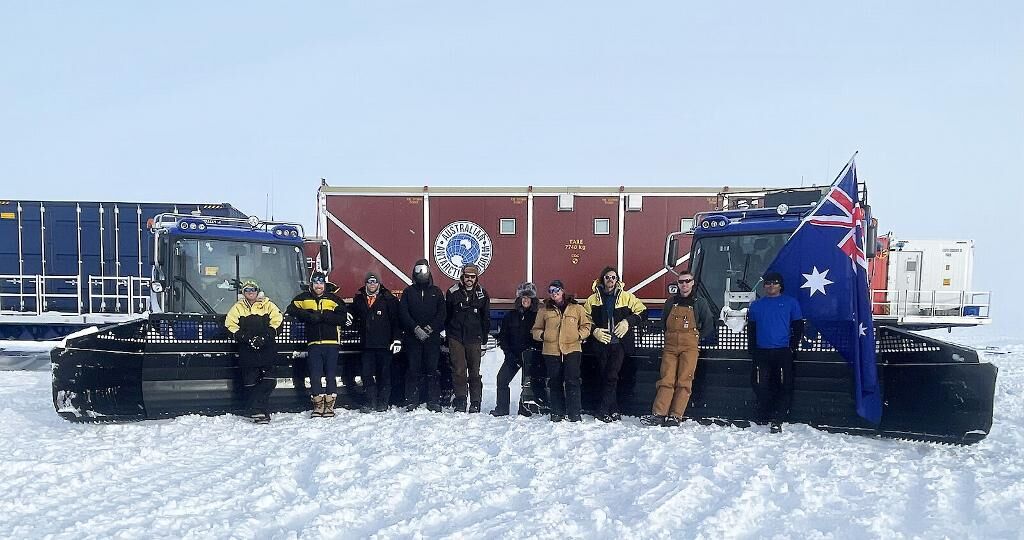
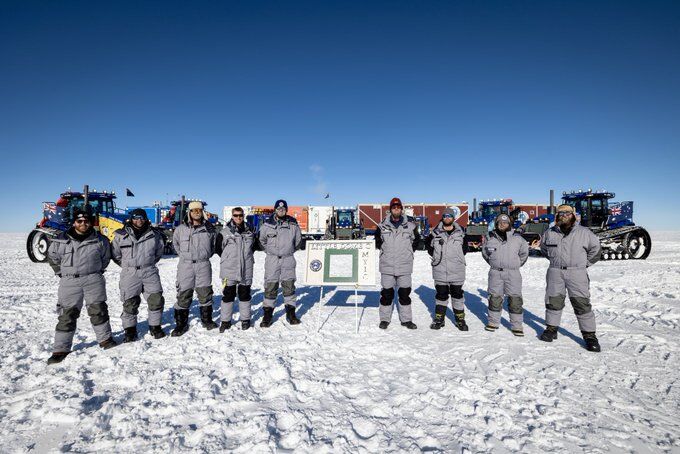
The 10-person MYIC traverse team departed Casey station on 23 December 2022 in 6 tractors pulling a convoy of sleds carrying equipment and fuel, following a path cleared by two snow groomers. The team completed the route to the MYIC drilling site to LDC in 19 days. At LDC they spent 10 days on initial site preparation work, shallow ice core drilling and set up of two polar tents. The return leg was completed in 21 days. This successful first traverse to LDC is the longest traverse by the Australian Antarctic Program since the 1960's.
Scientific work was commenced at the MYIC site, with 4 shallow ice cores drilled and returned to Hobart for analysis. Each core is expected to record approximately 200 years of climate information. Temperature logging of these cores in transport is providing information to help design safe transport systems for the deeper ice to come.
Analysis of the MYIC records requires major new ice core laboratory capabilities for the AAD. In 2022/23 the project has commenced build of a new ice core gas lab, completed primary build of a new ice core continuous flow ice core analysis capability and reconfigured our water isotope and ion chromatography labs in preparation for receiving MYIC samples.
Related publications
-
Seasonal variation of trifluoroacetic acid (TFA) in Antarctic ice cores analysed by direct injection non-suppressed ion chromatography-mass spectrometry (nsIC-MS), 988: Science of The Total Environment, 2025
(Ref: 17409)
Authors:Category 1: Peer-reviewed literature
This study presents the first record of trifluoroacetic acid (TFA) in Antarctic ice cores, offering valuable data on TFA and its precursors' long-range atmospheric transport and deposition in remote polar regions. TFA is an ultra-short chain perfluoroalkyl acid (PFAA)…
-
Multiple sources of atmospheric CO2 activated by AMOC recovery at the onset of interglacial MIS 9 Proceedings of the National Academy of Sciences of the United States of America, 2025
(Ref: 17321)
Authors:Category 1: Peer-reviewed literature
Using high-precision ice core measurements of CO2, ?13C-CO2, CH4, and N2O, this study provides carbon isotope constraints on a sizeable, centennial-scale CO2 jump at the onset of Marine Isotope Stage 9 (MIS 9). The very end of the Heinrich stadial (HS) characterizing Termination IV (T-IV, ca.
-
Coupled atmosphere-ocean response of the southwest Pacific to deglacial changes in Atlantic meridional overturning circulation. Earth and Planetary Science Letters, 2024
(Ref: 17084)
Authors:Category 1: Peer-reviewed literature
The last glacial termination was characterised by millennial-scale episodes of warming and cooling that appear offset between the hemispheres. It has been proposed that this bi-polar seesaw is the result of climate system feedbacks. A key debate, which remains unresolved…
-
AMOC Modulates Ocean Heat Content During Deglaciations Geophysical Research Letters, 2025
(Ref: 17241)
Category 1: Peer-reviewed literature
During deglaciations, Earth takes up vast amounts of energy, about half of which heats the global ocean. Thus, ocean heat content (OHC) is a key metric to assess Earth's energy budget.
-
Predicting trends in atmospheric CO2 across the Mid-Pleistocene Transition using existing climate archives Climate of the Past, 2024
(Ref: 17203)
Authors:Category 1: Peer-reviewed literature
During the Mid-Pleistocene Transition (MPT), ca. 1200–800?000 years ago (ka), the Earth's glacial cycles changed from 41 to 100?kyr periodicity.