
Project information
Project aim
The main atmospheric greenhouse gases, gas isotopes and aerosols will be measured at Casey, Mawson and Macquarie Island.
The data will continue the most extensive atmospheric composition observational network in the region, starting in the 1980s. They link to measurements from other locations including South Pole, the Cape Grim Station, the RV Investigator and RSV Nuyina. They quantify long term trends, year to year differences and seasonal variations. They help validate satellite retrievals and atmospheric composition measurements from ice cores.
The data are used in numerical models to infer gas sources and sinks. They are also used in climate model simulations of climate change across the region and the globe.
They are used by public databases and research groups and in policy reviews such the IPCC (UN) and the State of the Climate (CSIRO-BoM). They can track future emissions and mitigation, the impact of changing energy systems (e.g. hydrogen) and changes in the SO carbon sink.
Project milestones
Summary of the season 2024/25
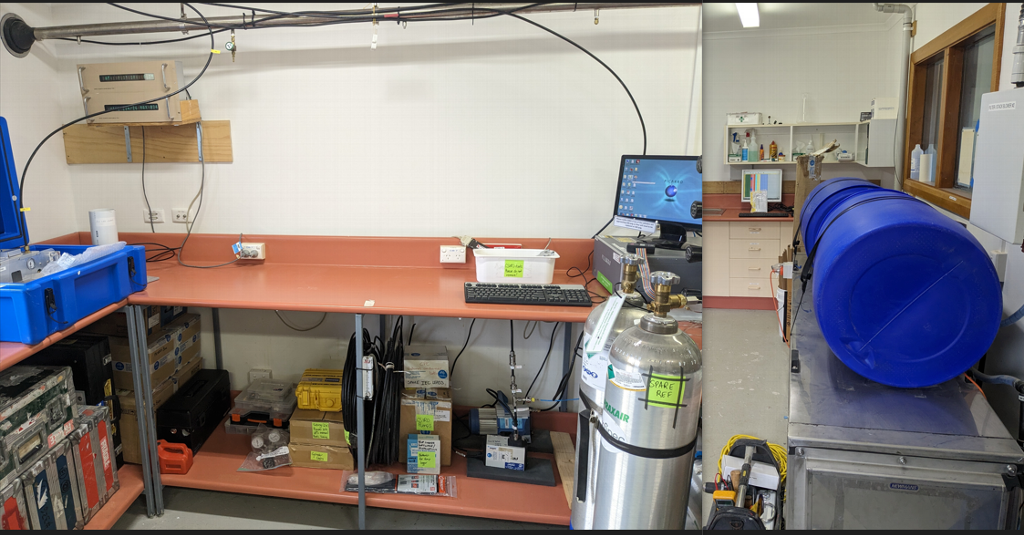
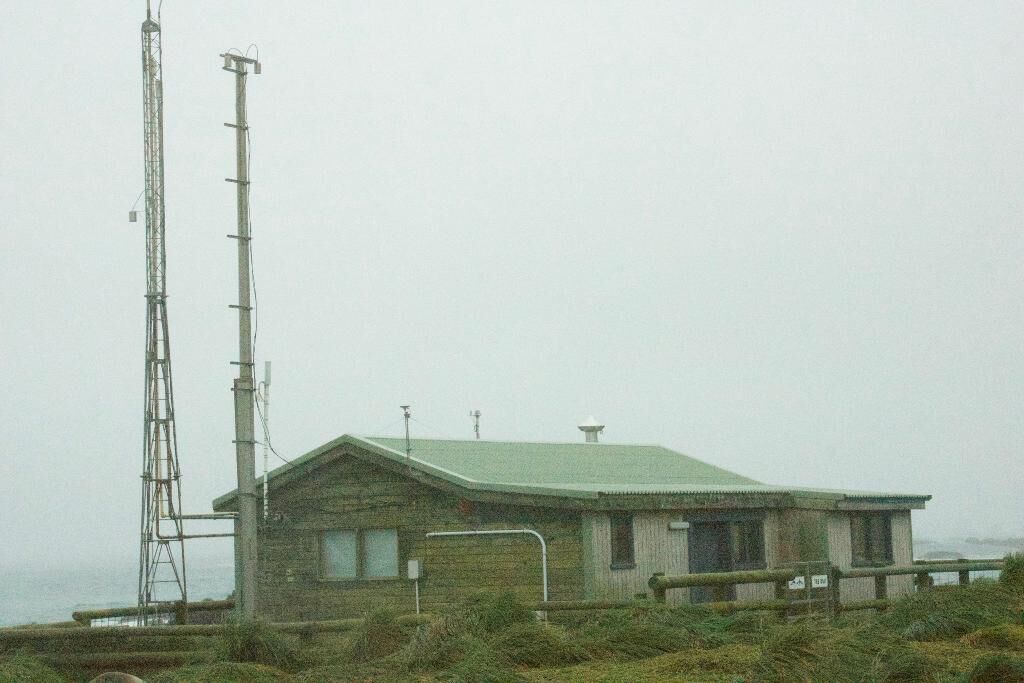
Measurements of the concentrations of greenhouse gases (CO2, CH4, N2O, SF6), the chemically-active gases (CO, H2) and the stable isotopes of carbon dioxide were continued at Casey, Mawson and Macquarie Island (MI), using flask samples collected biweekly and analysed at CSIRO. Measurements of carbon-14 in CO2 by GNS Science (New Zealand) were made in flask samples collected at MI. Continuous in situ measurements of CO2, CH4 and CO were made at Casey (CSIRO); CO2 and CH4 at MI (CSIRO); and of radon at MI (ANSTO). The monitoring program at the stations was supported by the Bureau of Meteorology and the Australian Antarctic Division.
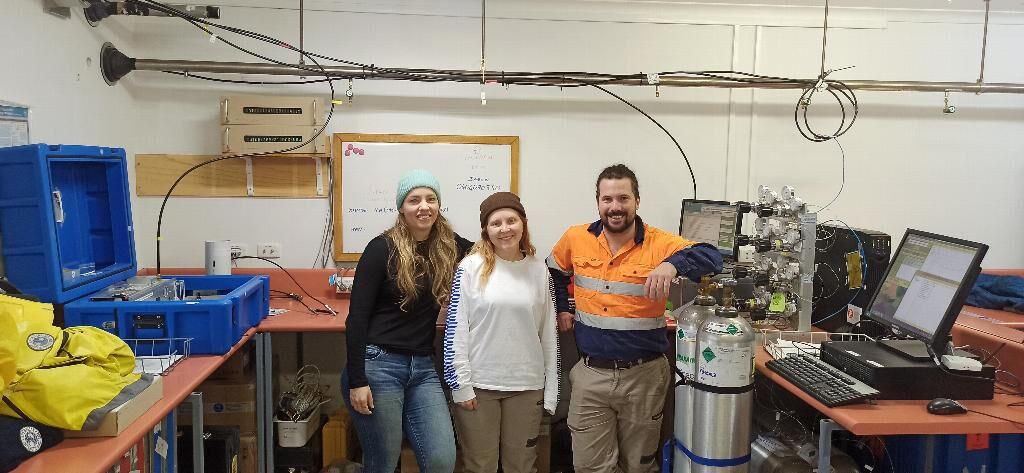
A station visit to MI to service and calibrate the sampling and monitoring instruments was carried out by Issy Borley (CSIRO) in May/June 2025. There were no visitors to Casey or Mawson in this season. Due to other station priorities, CSIRO did not receive its requested ticket allocations in both 2024 and 2025.
The measurements continue the 4th decade monitoring trends in these gases in the Southern Ocean and Antarctic region by this project and its predecessors. Data are available through the Australian Antarctic Data Centre and publicly-available research databases and can be provided on request. They are used in multiple modelling activities to infer sources and sinks of the gases, to drive climate models, and to link ice core measurements of past atmospheric composition to direct atmospheric observations. These in turn are used in policy documents of climate, greenhouse gases and the environment.
Summary of the season 2023/24
Measurements of the concentrations of greenhouse gases (CO2, CH4, N2O, SF6), the chemically-active gases (CO, H2) and the stable isotopes of carbon dioxide were continued at Casey, Mawson and Macquarie Island (MI), using flask samples collected biweekly and analysed at CSIRO. Measurements of carbon-14 in CO2 by GNS Science (New Zealand) were made in flask samples collected at MI. Continuous in situ measurements of CO2 and CH4 were made at Casey and MI (CSIRO) and of radon at Macquarie Island (ANSTO). Continuous CO measurement capability has now been added to Casey which will aid in screening local station emissions from the measurements. The monitoring program at the stations was supported by the Bureau of Meteorology and the Australian Antarctic Division.
Station visits to service and calibrate the sampling and monitoring instruments (and replace the Casey instrument with an upgraded one) were carried out in November 2023 (A. Stavert to Casey) and May 2024 (C. Roulston and S. Chambers to MI).
The measurements continue the 4th decade monitoring trends in these gases in the Southern Ocean and Antarctic region by this project and its predecessors. Data are available through the Australian Antarctic Data Centre and publicly-available research databases and can be provided on request. They are used in multiple modelling activities to infer sources and sinks of the gases, to drive climate models, and to link ice core measurements of past atmospheric composition to direct atmospheric observations. These in turn are used in policy documents of climate, greenhouse gases and the environment.
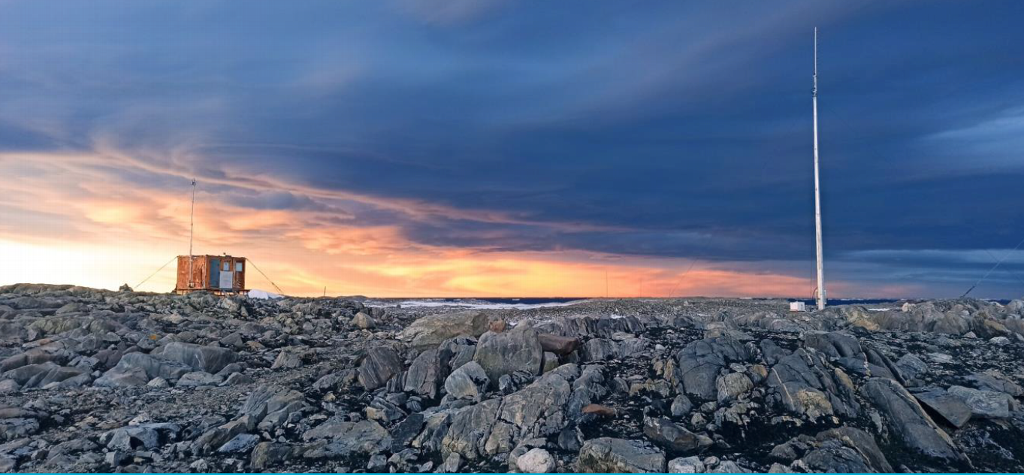
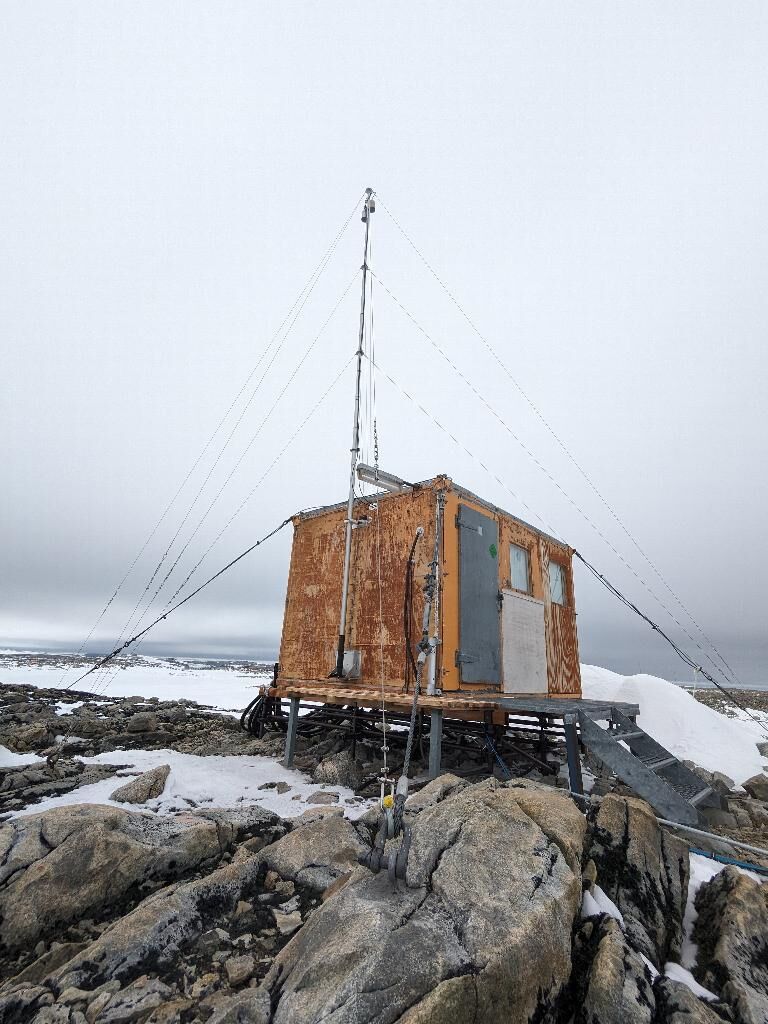
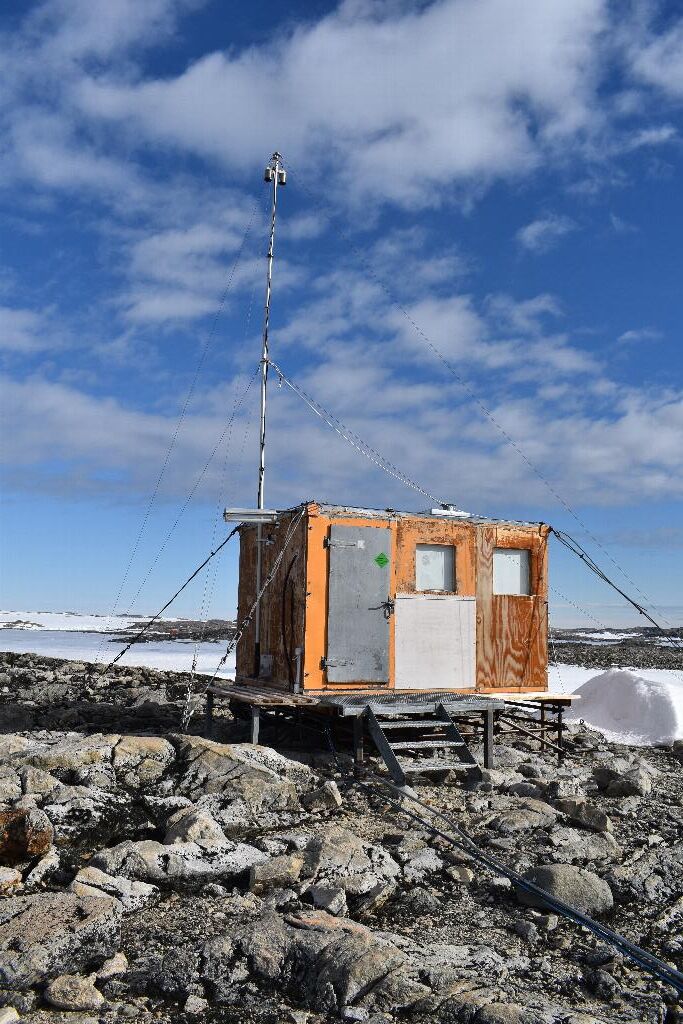
The visit to Casey in conjunction with AAD personnel helped repair damage to the "Mabel" monitoring hut and replace the damaged sample inlet mast. A new atmospheric monitoring facility is planned to replace the ageing Mabel hut and house instruments to monitor a wider range of atmospheric constituents.
Summary of the season 2022/23
Measurements of the concentrations of greenhouse gases (CO2, CH4, N2O, SF6) and related gases (CO, H2) and the stable isotopes of carbon dioxide were continued at Casey, Mawson and Macquarie Island (MI), using flask samples collected biweekly and analysed at CSIRO. Measurements of carbon-14 in CO2 by GNS Science (New Zealand) were made in flask samples collected at MI. Continuous in situ measurements of CO2 and CH4 were made at Casey and MI (CSIRO) and of radon at Macquarie Island (ANSTO). Sampling of aerosols began at MI (ANSTO). Measurements were supported by the Bureau of Meteorology and the Australian Antarctic Division.
Station visits to service and calibrate the sampling and monitoring instruments were carried out in February 2023 (Casey) and May 2023 (MI).
The measurements begin the 4th decade monitoring trends in these gases in the Southern Ocean and Antarctic region by this project and its predecessors. Data are available through public databases and can be provided on request. They are used in multiple modelling activities to infer sources and sinks of the gases, to drive climate models, and to link ice core measurements of past atmospheric composition to direct atmospheric observations. These in turn are used in policy documents of climate, greenhouse gases and the environment.
The visit to Casey in conjunction with AAD personnel identified a suitable location for a new atmospheric monitoring facility planned to replace the ageing Mabel hut and house instruments to monitor a wider range of atmospheric constituents.