
Project information
Project aim
Australia is a vocal advocate for the conservation of whales and dolphins and aims to end commercial and so-called ‘scientific whaling’. This project proposes a suite of research activities that will further Australia’s influence in the International Whaling Commission through leading the IWC’s non-lethal Southern Ocean Research Partnership, scientific scrutiny of so-called ‘scientific whaling’ programmes and the development of new, non-lethal and efficient methods to study whales in Australia and the Southern Ocean.
These new methods together with established approaches such as tagging, biopsy, photo-identification and passive acoustic detection will provide management-relevant information on the post-exploitation status, health, population dynamics, foraging ecology, environmental linkages, and threatening processes for many Southern Ocean cetaceans but especially humpback, blue, fin and minke whales.
Project milestones
Summary of the project achievements 2023/24
AAS 4600 was designed specifically to support the policy objectives of the Australian Government in regard to the domestic and international conservation and management of cetaceans and engagement in the International Whaling Commission (IWC) and the Commission for the Conservation of Antarctic Marine Living Resources (CCAMLR).
AAS 4600 has three principal objectives:
1. Conduct targeted research to inform and support Australia's policy, conservation and management objectives within the IWC and other international fora.
2. Describe the post-exploitation status, health, population dynamics, foraging ecology, environmental linkages, and threatening processes for Australian and Southern Ocean cetaceans.
3. Develop novel and ethical research technologies and approaches to efficiently and effectively deliver information on Australian and Southern Ocean cetaceans to inform conservation and management decisions
Over the 5-year duration of this project the research team published 53 peer-reviewed papers and a further 39 meeting papers were written specifically to drive Australia's scientific engagement in IWC and CCAMLR. All these papers focused on the conservation and management of whales but some also helped drive Australia's leadership role within these fora. The IWC Scientific Committee delegation contributed to whale stock assessment and modelling, the Revised Management Procedure, Aboriginal Subsistence Whaling, abundance estimates, bycatch, ship strike and ecosystem modelling, in addition to Committee budgets and the Communication Initiative. The project team also continued to lead and facilitate the IWC Southern Ocean Research Partnership, an international consortium coordinating cetacean research around Antarctica. Collectively this consortium has to date published over 310 peer-reviewed scientific papers.
Within Australia the research team and its outputs have contributed to the conservation management of cetaceans largely through 1) the development of methods to delineate Biologically Important Area 2) the update of EPBC Recovery Plans for blue and right whales 3) the management of the Australasian Right Whale Photoidentification Catalogue, 4) development of cetacean-related national guidelines, and 5) advice to regulators.
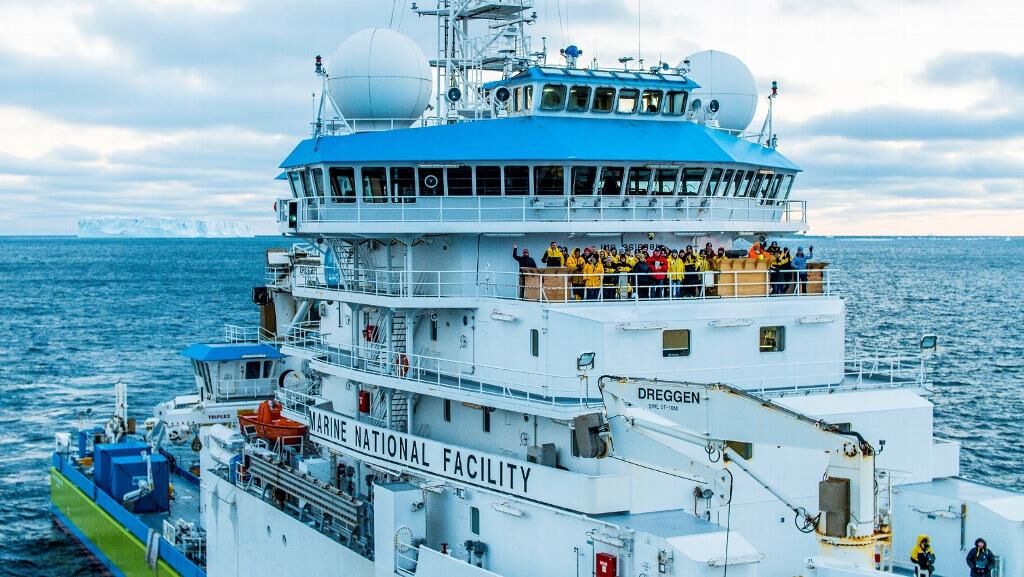
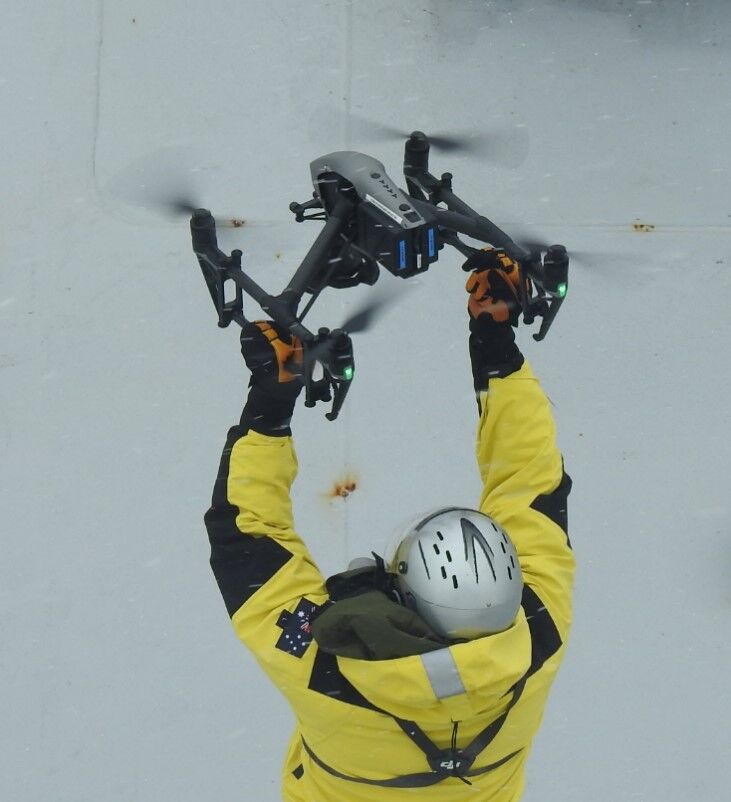
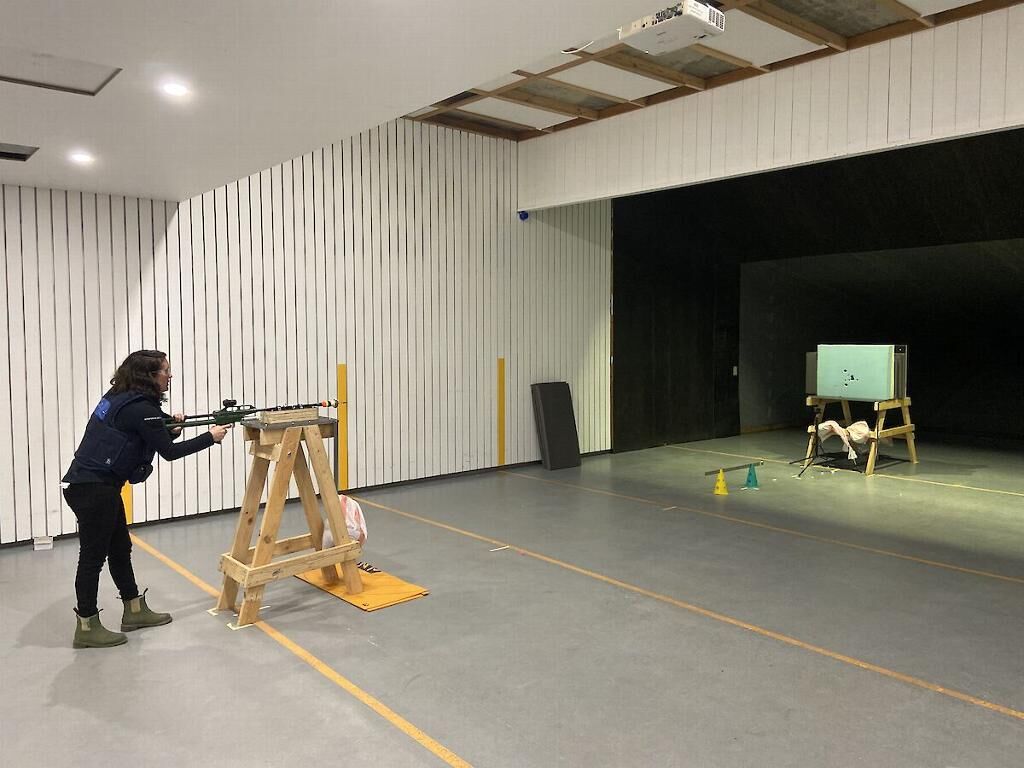
Finally, the team has driven the development of novel technologies including a drone-based platform for tag and biopsy deployment on large whales, modernisation of AAD's Moored Acoustic Recorder fleet, development of infrared camera detection system for whales, and new statistical and technical methods for long-range UAVs to assess and monitor cetacean populations in the Southern Ocean.
This project's objectives remain a priority and reporting against them will be delivered under AAD4636.
Summary of the season 2023/24
AAS 4600 was designed specifically to support the policy objectives of the Australian Government in regard to the domestic and international conservation and management of cetaceans and engagement in the International Whaling Commission (IWC) and the Commission for the Conservation of Antarctic Marine Living Resources (CCAMLR).
AAS 4600 has three principal objectives:
1. Conduct targeted research to inform and support Australia's policy, conservation and management objectives within the IWC and other international fora.
2. Describe the post-exploitation status, health, population dynamics, foraging ecology, environmental linkages, and threatening processes for Australian and Southern Ocean cetaceans.
3. Develop novel and ethical research technologies and approaches to efficiently and effectively deliver information on Australian and Southern Ocean cetaceans to inform conservation and management decisions
In 2023/24, 17 project-related, peer-reviewed papers were published/submitted and a further 11 papers were written specifically to drive Australia's scientific engagement in IWC and CCAMLR. These papers focused on the conservation and management of whales but some also reflect Australia's leadership role within these fora. The IWC Scientific Committee delegation contributed to whale stock assessment and modelling, the Revised Management Procedure, Aboriginal Subsistence Whaling, abundance estimates, bycatch, ship strike and ecosystem modelling, in addition to Committee budgets and the Communication Initiative. We continued to lead and facilitate the IWC Southern Ocean Research Partnership, an international consortium coordinating cetacean research around Antarctica. Collectively this consortium published over 20 peer-reviewed scientific papers in 2023/24.
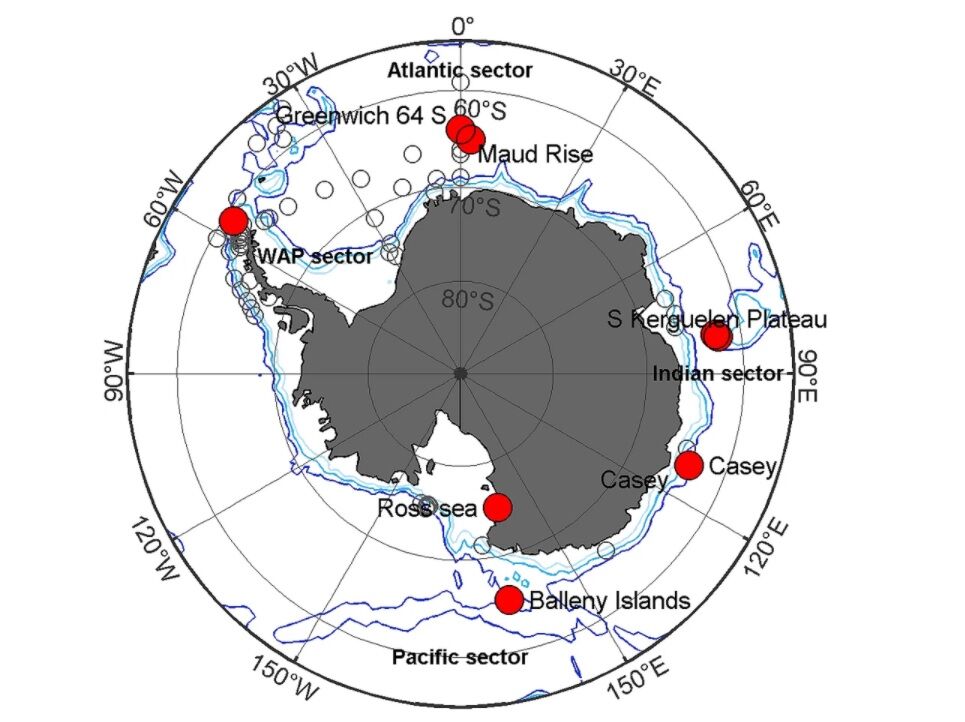
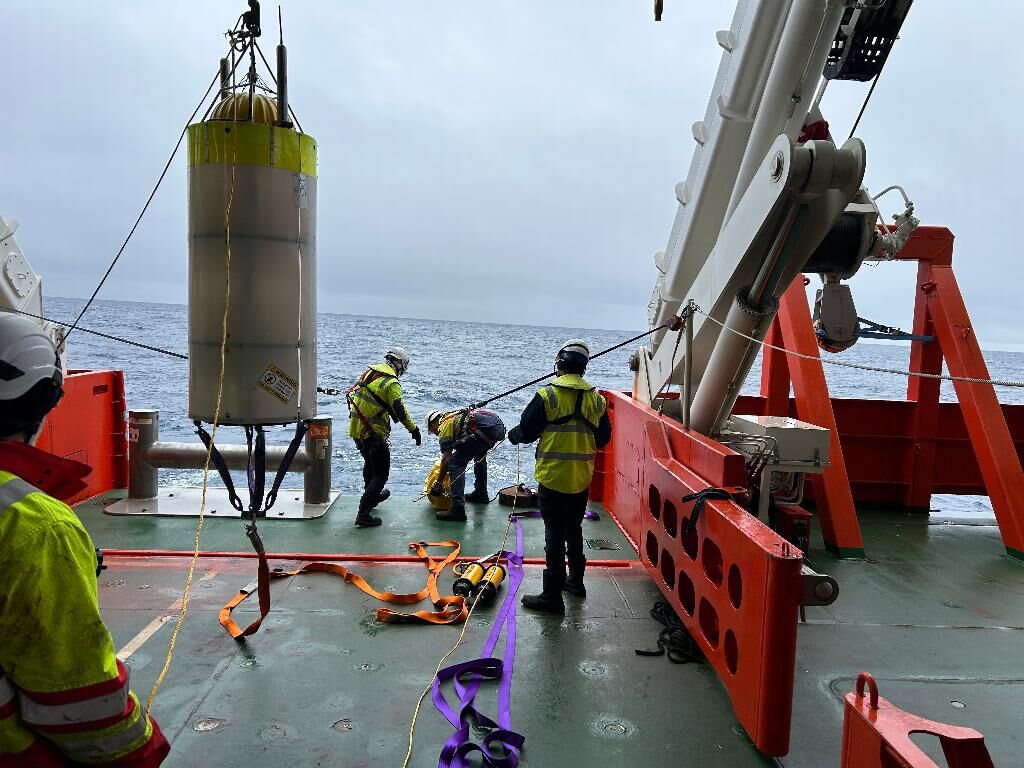
In 2023/24 two stand-alone moored acoustic recorders (MAR) were deployed and recovered off Casey station and at the Southern Kerguelen Plateau. Three AAD MARs were deployed inside three benthic krill landers (KOMBIs) at locations near Mawson Station off East Antarctica.
Through 2023/24 this project continued to drive innovation.
• Through modernisation of AADs MAR fleet and progress toward the purchase and implementation of an infrared camera detection system for whales from vessels.
• Via collaborative projects aiming to develop new statistical and technical methods to long-range UAV use to assess and monitor cetacean populations in the Southern Ocean and for development of a drone-based system to deploy biopsy darts and satellite tags on large whales.
Summary of the season 2022/23
AAS 4600 was designed specifically to support the policy objectives of the Australian Government in regards to the domestic and international conservation and management of cetaceans and its engagement in the International Whaling Commission (IWC) and the Commission for the Conservation of Antarctic Marine Living Resources (CCAMLR).
The project has three principal objectives:
1 Conduct targeted research to inform and support Australia's policy, conservation and management objectives within the International Whaling Commission and other international fora.
2 Describe the post-exploitation status, health, population dynamics, foraging ecology, environmental linkages, and threatening processes for Australian and Southern Ocean cetaceans.
3 Develop novel and ethical research technologies and approaches to efficiently and effectively deliver information on Australian and Southern Ocean cetaceans to inform conservation and management decisions
In 2022/23, 19 project-related, peer-reviewed papers were published and a further 19 papers were written specifically to drive Australia's scientific engagement in IWC and CCAMLR. These papers focused on the conservation and management of whales but some also promoted Australia's agenda in guiding leadership, budget and communication issues. The delegation also contributed to decisions related to setting catch limits, stock assessments, Aboriginal subsistence whaling, bycatch, ship strike and ecosystem modelling. We also continued to lead and facilitate the IWC Southern Ocean Research Partnership, an international consortium coordinating cetacean research around Antarctica. Collectively this consortium published over 43 peer-reviewed scientific papers in 2022/23.
In 2022/23 one stand-alone moored acoustic recorder (MAR) and two recorders integrated into a KOMBI mooring were recovered from deepwater deployment in Antarctic waters in 2022. Two stand-alone MARs were deployed in early 2023 at long-term recording sites on the South Kerguelen Plateau and off Casey station.
Through 2022/23 this project continued to drive innovation.
•With engineers from Swiss Materials Science and Technology Labs (EMPA) there has continued progress and a new project established to further develop a drone-based platform to biopsy and tag whales from RSV Nuyina.
•Through the Department of Industry's Business Research and Innovation Initiative challenge, an AAD/NOPSEMA partnership proposed and guided the development of new visual/infra-red systems to automate whale detection and data collation/transmission technology.
•In collaborations with Murdoch University, Queensland University of Technology, James Cook University and CSIRO there was continued development of new statistical and technical methods to support the support the use of long-range UAVs to assess and monitor cetacean populations in the Southern Ocean.
Summary of the season 2021/22
AAS 4600 was designed specifically to support the policy objectives of the Australian Government in regards to the conservation and management of cetaceans and its engagement in the International Whaling Commission (IWC).
The project has three principal objectives:
1 Conduct targeted research to inform and support Australia's policy, conservation and management objectives within the International Whaling Commission and other international fora.
2 Describe the post-exploitation status, health, population dynamics, foraging ecology, environmental linkages, and threatening processes for Australian and Southern Ocean cetaceans.
3 Develop novel and ethical research technologies and approaches to efficiently and effectively deliver information on Australian and Southern Ocean cetaceans to inform conservation and management decisions
In 2021/22 we presented ten papers on the conservation and management of whales to the Scientific Committee of the IWC. We also promoted Australia's agenda in this forum through leadership roles and participation is discussions related to setting catch limits, whale stock assessment and modelling, the Revised Management Procedure, Aboriginal subsistence whaling, abundance estimates, bycatch, ship strike and ecosystem modelling. We continue to lead and facilitate the IWC Southern Ocean Research Partnership, an international consortium coordinating cetacean research around Antarctica. Collectively this consortium published over 40 peer-reviewed scientific papers in 2021/22.
This project also continued to focus on analysing and publishing existing data from past voyages, the collection and publication of long-term acoustic data and the development of new tools and methods to efficiently and safely deliver informative cetacean data.
Thirteen project-related, peer-reviewed papers were published in 2021/22, 10 were presented to the IWC or CCAMLR and a further 15 manuscripts are being finalised or have already been submitted for publication.
Three moored acoustic recorders were successfully retrieved and one moored acoustic recorder deployed.
Through 2021/22 this project continued to drive innovation.
•In collaboration with engineers from Imperial College London and the Swiss Materials Science and Technology Labs there has been significant progress in developing of a drone-based platform to biopsy and tag whales from RSV Nuyina.
•Through the Department of Industry's Business Research and Innovation Initiative challenge, an AAD/NOPSEMA partnership proposed and guided the development of new visual/infra-red systems to automate whale detection and data collation/transmission technology.
•In collaborations with Murdoch University, Queensland University of Technology, James Cook University and CSIRO there was continued development of new statistical and technical methods to support the support the use of long-range UAVs to assess and monitor cetacean populations in the Southern Ocean.
Summary of the season 2020/21
The large programme of research and research coordination undertaken by AAS 4600 is designed specifically to support the policy objectives of the Australian Government in regards to the conservation and management of cetaceans and its engagement in the International Whaling Commission (IWC).
Participation in the virtual meetings of the IWC Scientific Committee in April and May 2021 involved attendance at a large number of sessions including those related to stock assessment and modelling, the RMP, Aboriginal subsistence whaling, abundance estimates, bycatch, ship strike and ecosystem modelling. IWC-SORP continues to be well respected and highly productive with at least 41 peer-reviewed scientific papers in 2020/21, bringing the total number of peer-reviewed publications related to IWC-SORP produced since the start of the initiative to ca. 206. Moreover, 163 IWC-SORP related papers have been submitted to the Scientific Committee, 18 of them this year.
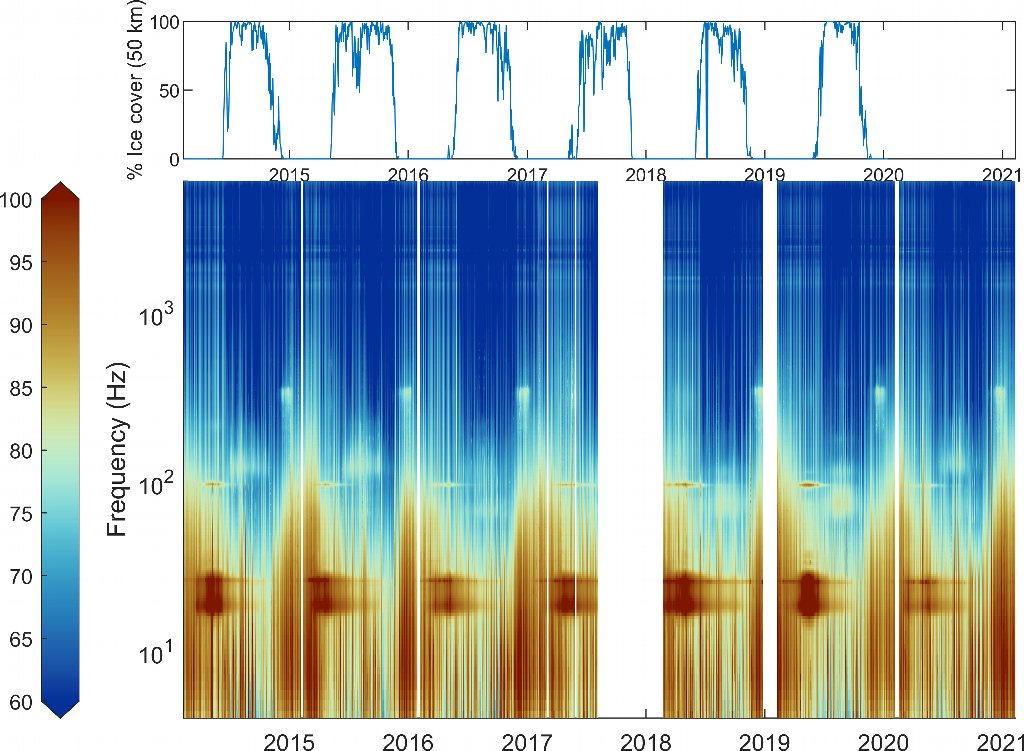
Our collection of long-term underwater recordings, used to monitoring decade-scale trends in marine mammal presence and abundance, continues to grow steadily. Three moored acoustic recorders were successfully retrieved and two moored acoustic recorders were successfully deployed.
Finally, we have continued to progress novel and ethical research technologies. The IWC approved funding for our application to develop a drone-based platform for whale biopsy and satellite tagging and preliminary work has begun. In addition, involvement in the Department of Industry's Business Research and Innovation Initiative challenge, in partnership with NOPSEMA, has resulted in significant advancement towards automated whale detection and data collation/transmission technology. Development of these new technologies allows us to take better advantage of the opportunities associated with the imminent delivery of RSV Nuyina to the Australian Antarctic Programme and the subsequent marine science activities that this vessel can support.
Summary of the season 2019/20
The large programme of research and research coordination undertaken by AAS 4600 is designed specifically to support the policy objectives of the Australian Government in regards to the conservation and management of cetaceans and its engagement in the International Whaling Commission (IWC).
Participation in the virtual meetings of the IWC Scientific Committee involved attendance at a large number of sessions including those related to stock assessment and modelling, the RMP, Aboriginal subsistence whaling, abundance estimates, bycatch, ship strike and ecosystem modelling. IWC-SORP continues to be well respected and highly productive with at least 21 peer-reviewed scientific papers in 2019/20, bringing the total number of peer-reviewed publications related to IWC-SORP to ca. 165. Moreover, 145 IWC-SORP related papers have been submitted to the Scientific Committee, 12 of them this year.
Analysis is ongoing for data obtained from the 2019 ENRICH voyage. This voyage offered the first opportunity to conduct a detailed survey of the distribution and characteristics of krill swarms while recording physical and biological oceanographic data together with the distribution and behaviour of the largest krill predators, primarily blue, fin and humpback whales.
Two moored acoustic recorders were retrieved at two long-term recording sites in East Antarctica. The instrument on the Casey resupply route recorded for 11.8 months and the instrument along the Mawson resupply route recorded for 14 months.
Finally, applications to progress novel and ethical research technologies were developed and successful. Taking these first steps towards development of these new technologies allows us to take advantage of the opportunities associated with the imminent delivery of RSV Nuyina to the Australian Antarctic Programme and the subsequent marine science activities that this vessel can support.
Related publications
-
Beyond counting calls: estimating detection probability for Antarctic blue whales reveals biological trends in seasonal calling Frontiers in Marine Science, 2024
(Ref: 17166)
Category 1: Peer-reviewed literature
We explore the utility of estimating the density of calls of baleen whales for better understanding acoustic trends over time. We consider as a case study stereotyped 'song' calls of Antarctic blue whales (Balaenoptera musculus intermedia)…
-
Extreme capital breeding for giants: Effects of body size on humpback whale energy expenditure and fasting endurance Ecological Modelling, 2024
(Ref: 17212)
Authors:Category 1: Peer-reviewed literature
Baleen whales are extreme capital breeders, capable of fasting for more than half a year while migrating thousands of kilometres and nursing rapidly growing offspring that quadruple in body size over the same period. To understand this energetic conundrum…
-
Ship-based RPA operations for cetacean research in Antarctica: progress, opportunities and challenges. Frontiers in Marine Science Sec Marine Ecosystem Ecology, 2024
(Ref: 17156)
Category 1: Peer-reviewed literature
Data collection facilitated by remotely piloted aircraft (RPA) has proven to be revolutionary in many disciplines including for research in extreme environments. Here we assess current use and utility of small multirotor remotely piloted aircraft (RPAs)…
-
Behavioural responses of southern right whales to satellite tag deployment, with a comparison to biopsy sampling." Journal of Cetacean Research and Management, 2025
(Ref: 17453)
Authors:Category 1: Peer-reviewed literature
Satellite tagging provides vital information about the ecology of whales, not currently obtainable in any other way, but it can elicit short- and long-term impacts on individuals.
-
Modelling Migratory Pinch Points and Connectivity of Pygmy Blue Whale Using Circuit Theory: A Case Study of Savu Sea, Indonesia ILMU KELAUTAN: Indonesian Journal of Marine Sciences, 2025
(Ref: 17327)
Category 1: Peer-reviewed literature
Blue whale and their subspecies is an endangered whale species that needs to be conserved by protecting their important habitat and migration corridor. Research about designing and modelling blue whale habitat for marine protected area has been done many times. However…