
Project information
Project aim
Metocean dynamics of the Antarctic Marginal Ice Zone (MIZ) is a topic of challenge and significance. The wave forecast has to accommodate multiple physical mechanisms of wave-ice interactions, depending also on complex mechanical properties of ice. Furthermore, waves can break the ice, which can subsequently melt or refreeze (ie. promote or arrest wave growth), and thus wave forecast in MIZ becomes an air-sea-wave-ice coupled problem. In turn, the ice breakup can impact air-sea fluxes at seasonal and even climate scales. Analytical theories for some of the processes, albeit not all, are available, but quantitative guidance is very limited.
The project proposes systematic experimental studies of Metocean dynamics of the Antarctic MIZ. Observations will be concurrent with implementation of wave-ice modules in the wave model WAVEWATCH-III (WW3), and with coupling WW3 with ocean circulation models ROMS and MOM5. End users from AAD and BoM will be research collaborators on the project.
Project milestones
Summary of the project achievements 2021/22
In order to improve our understanding and forecasting skills of waves and sea ice in the Antarctic Marginal Ice Zone, we conducted observational campaigns of waves in Antarctic sea ice in parallel with the development of wave-ice interaction modules and wave-ice-ocean coupled models. We performed several field experiments on Antarctic landfast sea ice to measure waves, sea ice vibrations and underwater acoustics. With these observations we were able to quantify all key interactive processes between waves and landfast sea ice: wave attenuation, dispersion and wave-induced sea ice break-up. Additionally, we were able to use our observations to provide proxy estimate of the physical properties of the ice, which are critical variables in our models but difficult to measure in the field. The knowledge gained in this project was used to develop wave-ice interaction modules which were, subsequently, implemented in operational wave forecasting model WaveWatch-III. By coupling the ice and waves with ocean circulation models, we have shown improvement of model performances and the importance of waves in modulating the properties of the sea ice, including thickness and concentration. Our research thus highlights the necessity of integrating wave physics in our forecasting models. The project outcomes are expected to lead to significant improvements in performance of regional Antarctic and global operational weather and climate models.
Summary of the season 2021/22
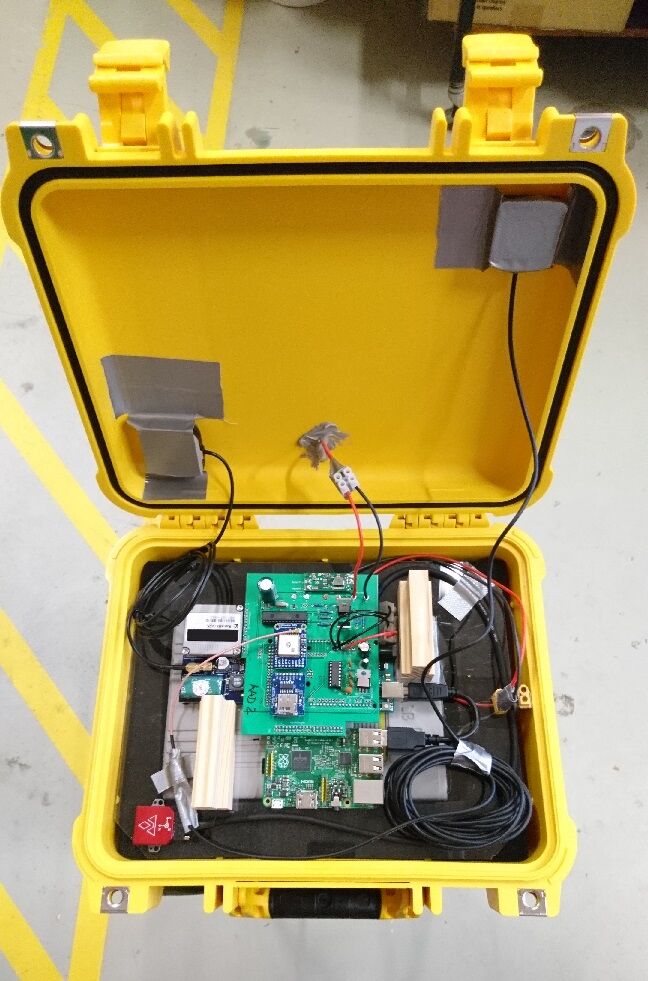
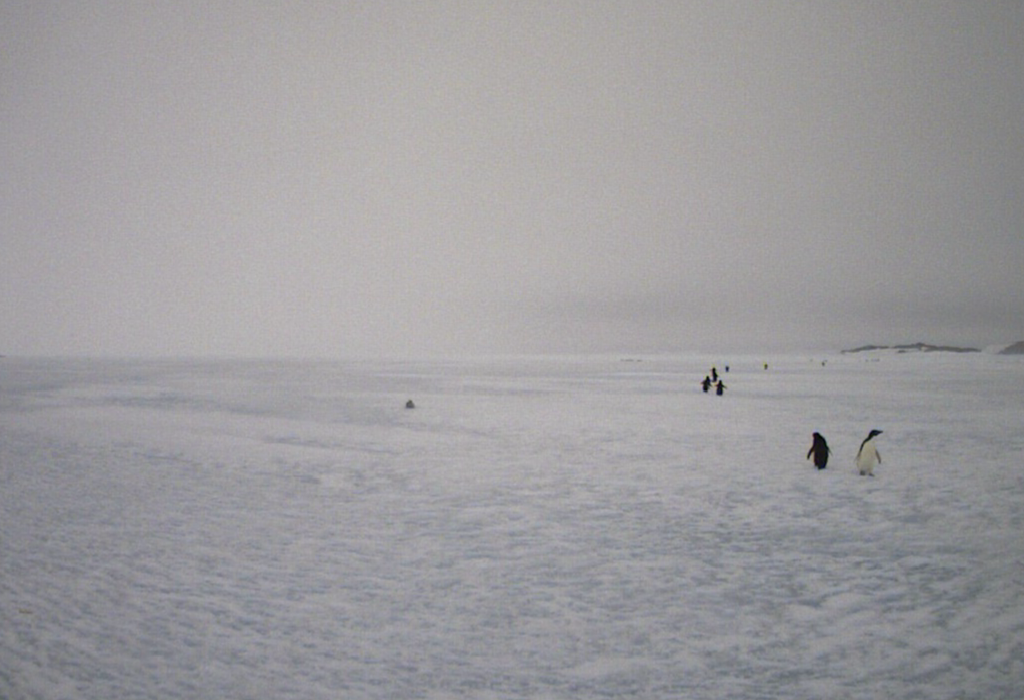
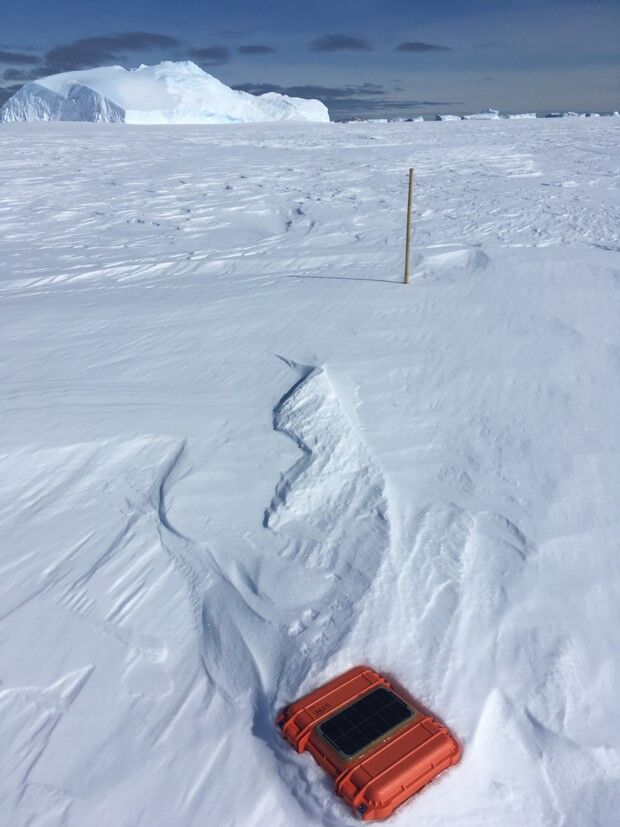
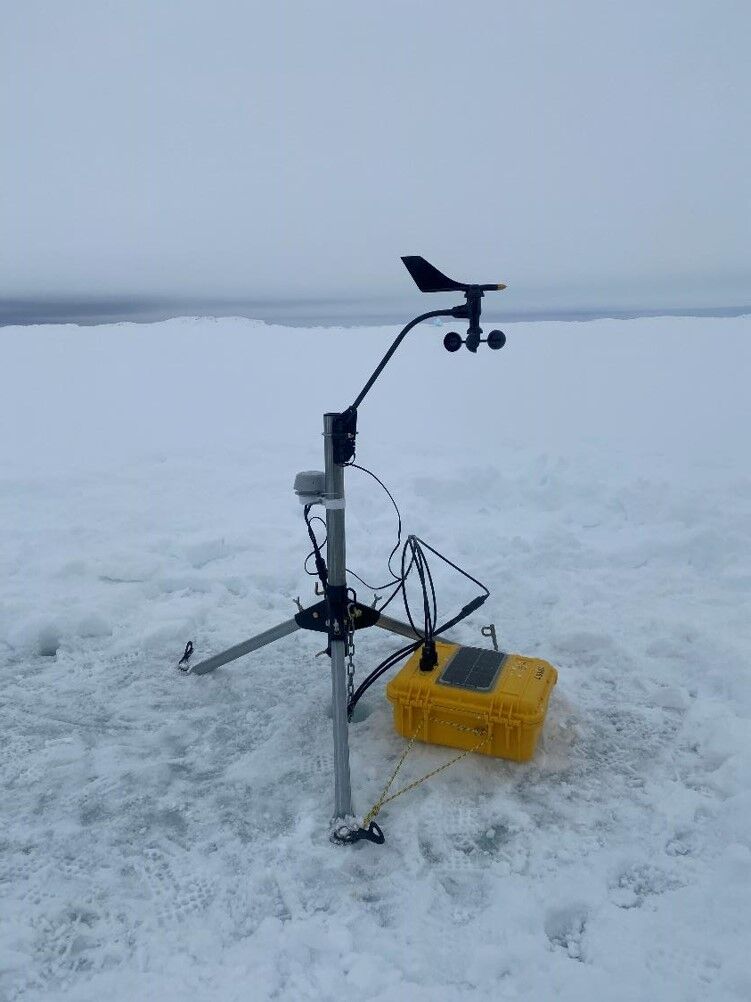
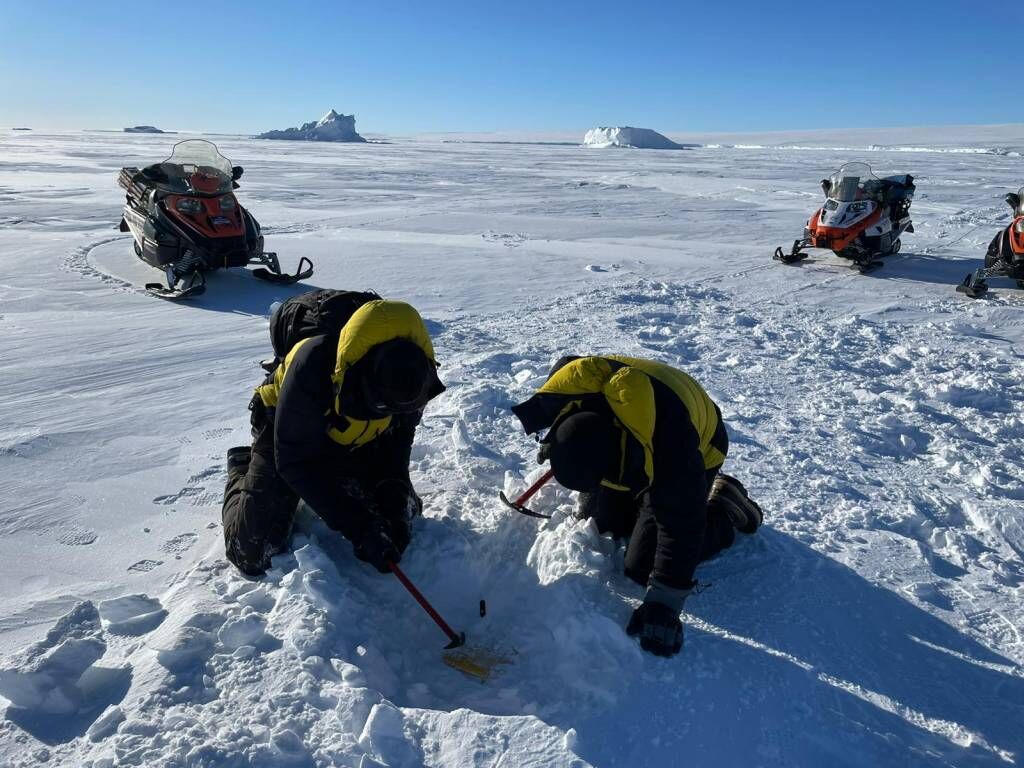
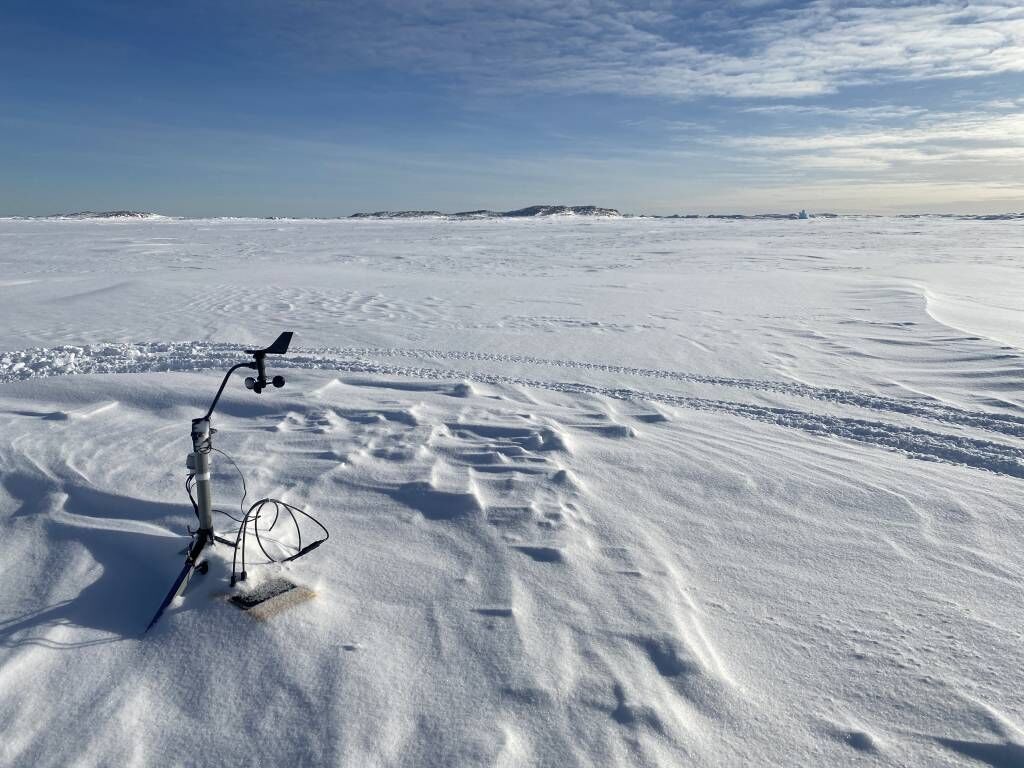
A comprehensive field measurement campaign was performed on Antarctic fast ice from September-October 2021 near Casey Station, in collaboration with fieldwork undertaken for AAS4506. Measurements include waves, ice thickness, wind speed, air/ice/sea temperature, atmospheric pressure and sea ice vibrations. Based on the experimental field campaigns performed in the first two years of this project, parameterizations of wave attenuation were derived, and mechanical properties of ice were estimated. The parameterizations of wave attenuation and wave-induced sea ice break-up were implemented in the operational wave forecasting model WAVEWATCHIII. The model was validated by a case study of the Davis Sea using in-situ measurements and satellite imagery. A new set of novel instruments, combining wave-ice buoys, vibration loggers and hydrophones, are expected to be deployed on Antarctic fast ice in August 2022 to provide more insights on wave-ice interaction processes.
Summary of the season 2020/21
Based on the experimental field campaign of early 2020, we derived a wave-induced sea ice break-up criterion for implementation in weather forecasting models. This criterion is, for the first time, based on a broad range of physical scales and conditions, from laboratory-grown sea ice to Antarctic field observations. The impact of wave-induced break-up on seasonal sea ice was studied numerically in an coupled ice-ocean model. A regional study on the implementation of the wave-induced sea ice break-up criterion in the operational wave forecasting model WAVEWATCH III is ongoing. In October 2020, with support of AAS4506, two ice motion measuring instruments were deployed for three weeks on landfast ice at Casey Station and are expected to provide us with rare observations of wave dispersion and dissipation. Innovative open-source and low-cost instrumentation was designed to measure sea ice vibrations and environmental conditions, prototypes of which are awaiting deployment on Antarctic fast ice in October 2021.
Summary of the season 2019/20
The project proposes systematic experimental studies of Metocean dynamics of the Antarctic MIZ, concurrent with implementation of wave-ice modules in the wave-forecast model WAVEWATCH-III (WW3), and with coupling wave and ice models with ocean circulation models. In this first year,rare observations of wave attenuation and sea-ice breakup were obtained. We observed several wave-induced sea-ice breakup events and records of these events are currently being processed and analysed. While we have implemented and validated viscoelastic wave-ice attenuation module in WW3 (journal paper is accepted), these freshly obtained observations will be used to further implement and verify new wave-ice modules, both for wave attenuation and for ice breakup. Coupling of CICE and ROMS has been done and tested.
Related publications
-
Inferring the seasonality of sea ice floes in the Weddell Sea using ICESat-2 The Cryosphere, 2025
(Ref: 17309)
Category 1: Peer-reviewed literature
Over the last decade, the Southern Ocean has experienced episodes of severe sea ice area decline. Abrupt events of sea ice loss are challenging to predict, in part due to … incomplete understanding of processes occurring at the scale of individual ice floes. Here, we use high-resolution altimetry…
-
Anomalous Diffusion by Ocean Waves and Eddies Journal of Marine Science and Engineering,, 2024
(Ref: 17192)
Authors:Category 1: Peer-reviewed literature
Understanding the dispersion of floating objects and ocean properties at the ocean surface is crucial for various applications, including oil spill management, debris tracking and search and rescue operations. While mesoscale turbulence has been recognized as a primary driver of dispersion…
-
Antarctic Landfast Sea Ice: A Review of Its Physics, Biogeochemistry and Ecology Reviews of Geophysics, 2023
(Ref: 16882)
Authors:Category 1: Peer-reviewed literature
-
Analysis of ecologically relevant sea ice and ocean variables for the Southern Ocean using a high-resolution model to inform ecosystem studies Progress in Oceanography, 2023
(Ref: 16850)
Category 1: Peer-reviewed literature
-
A Two-Part Model for Wave-Sea Ice Interaction: Attenuation and Break-Up Journal of Geophysical Research: Oceans, 2022
(Ref: 16757)
Category 1: Peer-reviewed literature