
Project information
Project aim
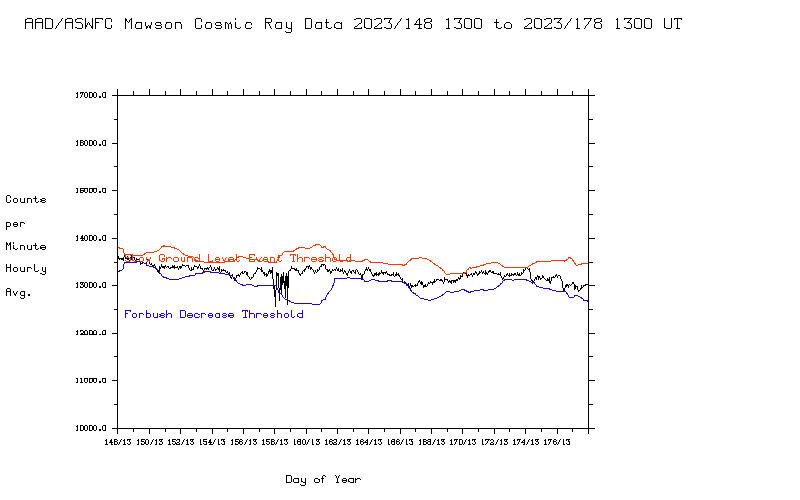
The program monitors the cosmic rays that constantly bombard Earth's atmosphere, producing secondary particles that are effectively and cheaply measured by a neutron monitor and muon telescopes at Mawson, Antarctica and Kingston. Cosmic rays include particles accelerated by solar storms, which can disable satellites and give some radiation dosage to airline passengers, as well as providing the first warning before other potential "space weather" effects of these storms, such as power outages. Solar particles are best studied from Earth's polar regions. Solar storms and high-speed solar wind streams (which also have space weather effects) disturb fluxes of galactic cosmic rays, which are also measured by these detectors. In addition to maintaining these detectors, which have unique functions in global networks, we propose to upgrade the Mawson neutron monitor to detect spectral variations in cosmic rays for improved understanding of solar ejecta and interplanetary plasma conditions.


Project milestones
Summary of the season 2024/25
We continued to collect data on the cosmic ray flux, directional distribution, and spectrum using neutron counters at Mawson Station, Antarctica and muon telescopes at Mawson and at Kingston, Australia. These data contribute to international databases and space weather warning systems.
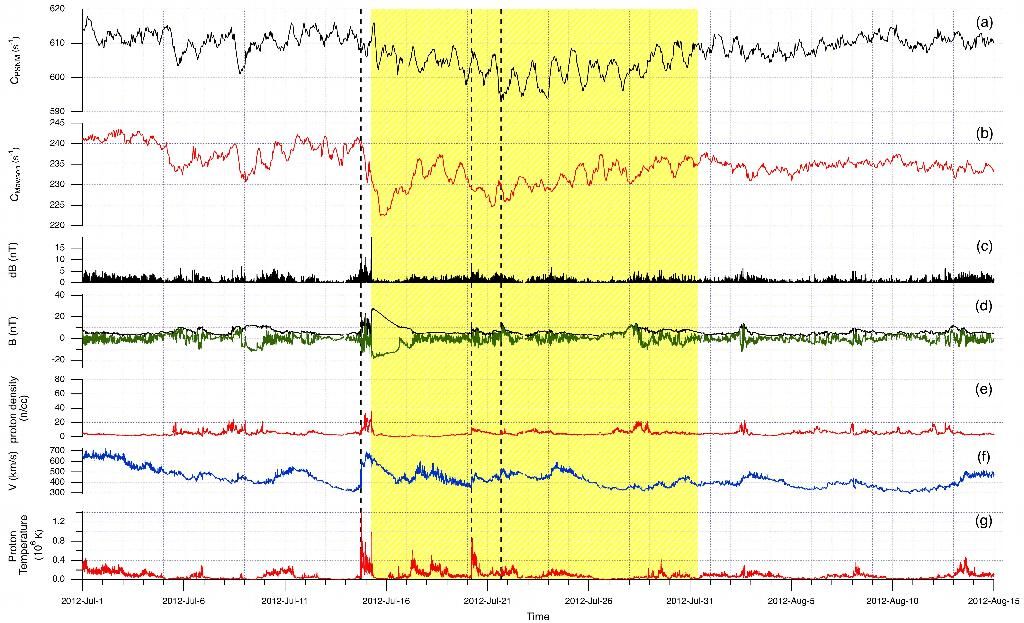
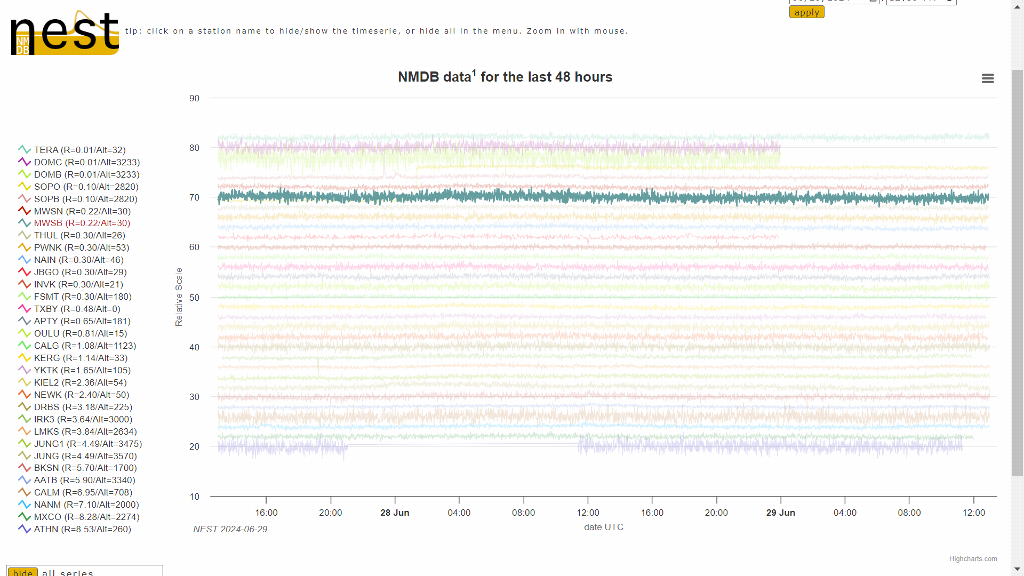
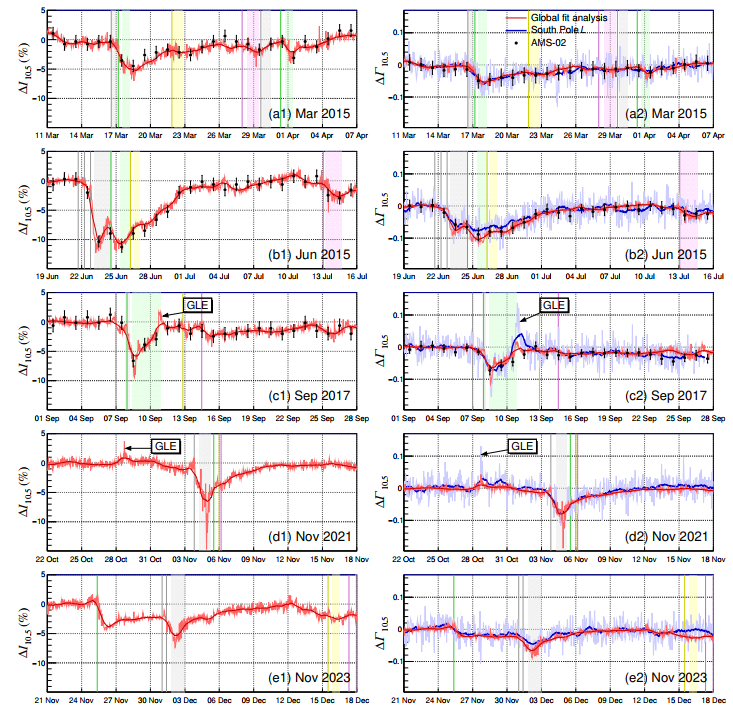
This year we published scientific results from the project in four articles in major international journals: one in Advances in Space Research, two in the Astrophysical Journal, and one in the Astrophysical Journal Letters. Results were also presented at two international conference presentations. These results include: 1) verification of a new technique to measure the energy spectrum of cosmic rays using neutron monitors, using electronics installed by expeditioners at Mawson in 2020, 2) application of data from both neutron detectors and muon detectors to study temporary Forbush decreases due to solar storms, particularly the strong cosmic ray anisotropy and spectral changes, and 3) Monte Carlo simulation of the response of the neutron monitor to cosmic rays of varying energy, in particular with regard to detection of the same cosmic ray shower by multiple counters as enabled by the upgrade during our 2020 expedition. Furthermore, data on spectral variations in cosmic rays as tracked by the upgraded electronics at the Mawson neutron monitor are now made public in real time.
Summary of the season 2023/24
We continued to collect data on the cosmic ray flux, directional distribution, and spectrum using neutron counters at Mawson Station, Antarctica and muon telescopes at Mawson and at Kingston, Australia. These data contribute to international databases and space weather warning systems; data from recently installed bare neutron counters were recently included into such a warning system. This year we installed a new data collection computer for the muon telescope at Kingston. We also published scientific results from the project in an article in the Astrophysical Journal, one of the world's top journals for research in astrophysics, and in two further articles submitted to the Astrophysical Journal and to Advances in Space Research, which are now under review. Results were also presented at four international conference presentations. These results include: 1) confirmation of a solar magnetic polarity dependence of the cosmic ray spectrum, 2) verification of a new technique to measure the energy spectrum of cosmic rays using neutron monitors, using electronics recently installed at Mawson, 3) mapping the strong cosmic ray anisotropy and spectral change during a recent Forbush decrease in 2024 March due to a solar storm, also using the new electronics, 4) unique cross-counter neutron time-delay distributions provided by the new electronics, and 5) Monte Carlo simulation of the response of the neutron monitor and recently installed bare neutron counters at Mawson.
Summary of the season 2022/23
We continued to collect data on the cosmic ray flux, directional distribution, and spectrum using neutron counters at Mawson Station, Antarctica and muon telescopes at Mawson and at Kingston, Australia. These data contribute to international databases and space weather warning systems. This year we published scientific results in two articles in the Astrophysical Journal, one of the world's top journals for research in astrophysics.
Summary of the season 2021/22
We continued to collect data on the cosmic ray flux, directional distribution, and spectrum using neutron counters at Mawson Station, Antarctica and muon telescopes at Mawson and at Kingston, Australia. These data contribute to international databases and space weather warning systems. We presented scientific results that included Mawson and Kingston data at the 37th International Cosmic Ray Conference and other conferences, including the following topics:
* Time-Delay Measurements from Antarctic Neutron Monitor Stations Indicate Weak Spectral Changes during 27-day Variations
* Solar Magnetic Polarity Effect on Neutron Monitor Count Rates from Latitude Surveys Versus Antarctic Stations
* Diurnal Anisotropy Enhancement Due To Non-local Effects of Coronal Mass Ejections
* A Peculiar ICME Event in August 2018 Observed with the Global Muon Detector Network
* Diurnal Dips and Forbush Decreases in Galactic Cosmic Rays Observed at High Cutoff Rigidity
Summary of the season 2019/20
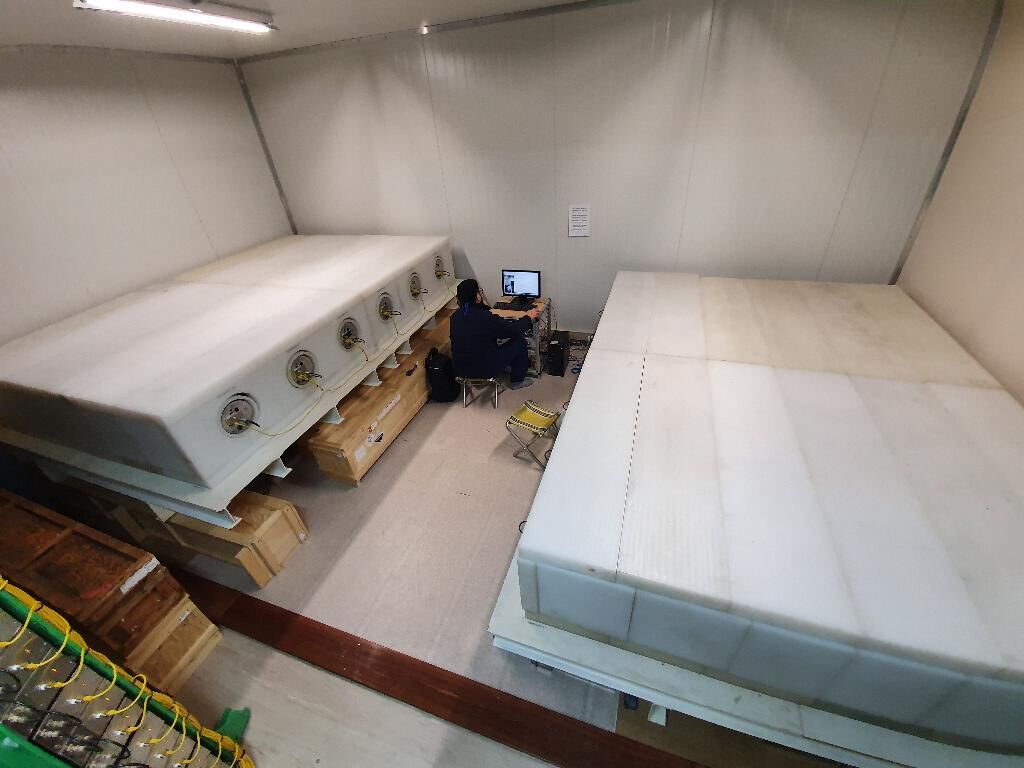
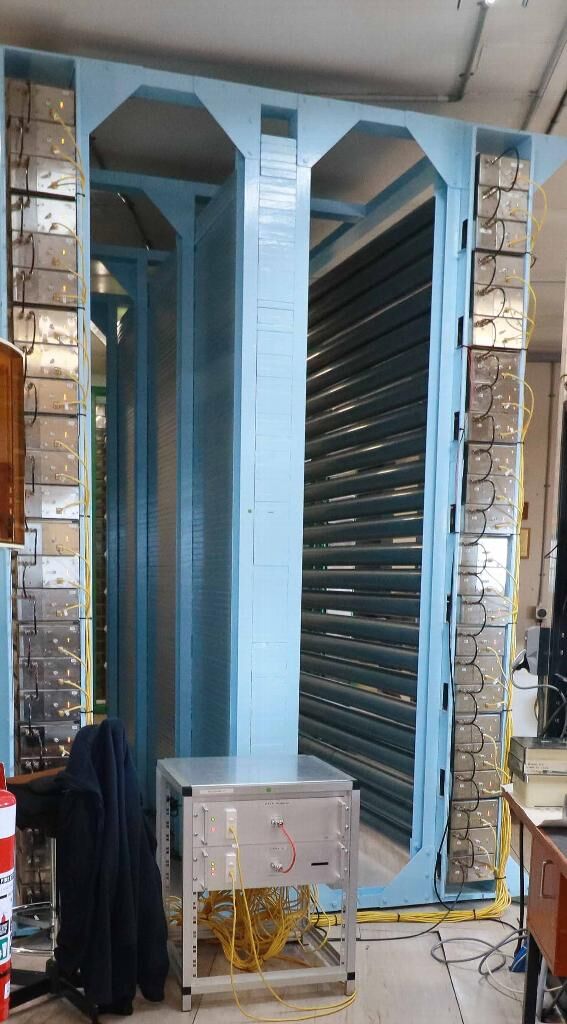
In this season we have prepared for and carried out an expedition to Mawson Station by two scientists from Thailand to upgrade the neutron monitor (NM), which is a detector of cosmic rays, i.e., high-energy particles from space. We supplied two identical new computers with upgraded software, one to replace the existing data acquisition computer and the other as a hot spare. The upgraded software provides continuous 10-second count rates, which will be useful in the case of a major solar radiation storm, for which NMs at Mawson and other polar stations generally provide the world's first warning. We installed new firmware into the electronics of the 18 NM counter tubes, which gives them a new capability to monitor variations in the spectrum as well as the flux of cosmic rays. We also installed 6 additional neutron counter tubes (which were already at Mawson Station) as "bare" counters outside a NM, which are sensitive to cosmic rays of lower energy and will provide a precise measurement of the high-energy particle spectrum during a solar radiation storm. The bare/NM count rate ratio, together with the counter-independent bare count rate vs. position from our bare swapping experiment and detailed measurements of the station geometry during the expedition, can be used to validate Monte Carlo simulations of the detector response. We have already verified that the bare counters and new firmware and software provide a set of cross-counter neutron time-delay data that is unique worldwide. We continue to monitor that the new computer is successfully transmitting real-time count rate data to the Bureau of Meteorology's Space Weather Services and their World Data Center, and also monitor other types of data. In addition, Thai team members learned from Australian team members about the data processing of Mawson NM data and data processing and analysis of Mawson muon telescope data.