
Project information
Project aim
Despite their remote location, threats to Antarctic ecosystems are escalating in response to increasing human activity, pollution, biological invasions and climate change. It is therefore imperative to understand more about risks to Antarctic ecosystems and identify areas that warrant increased management or policy focus. The Red List of Ecosystems (RLE) is an internationally endorsed standard for identifying ecosystems, diagnosing threats and estimating relative risks, laying a foundation for systematic conservation planning and ecosystem management. RLE methods have been applied with tangible conservation outcomes worldwide, but application in the Antarctic is limited. We will use the RLE approach to describe, map and diagnose change in Antarctic terrestrial and nearshore ecosystems, assembling indicator data and assessing risks to key ecosystems. This will lay the foundation for a systematic continent-wide RLE and inform conservation planning, management and policy development.
Project milestones
Summary of the season 2023/24
The project scientist (Dr Aniko Toth) has been on parental leave September 2023 – June 2024 and the project was extended to accommodate this absence. Nonetheless the Antarctic Ecosystem Inventory v1.0 is now complete and available through open access data repositories. A manuscript is currently in review at Scientific Data. The Antarctic Ecosystem Inventory v1.0, including spatial data and descriptions for Major Environmental Groups and Habitat Complexes, is now available via the Australian Antarctic Data Centre (https://data.aad.gov.au/metadata/AAS_4568_The_Antarctic_Ecosystem_Inventory) and Zenodo (https://doi.org/10.5281/zenodo.11629115; https://doi.org/10.5281/zenodo.12737213)
Summary of the season 2021/22
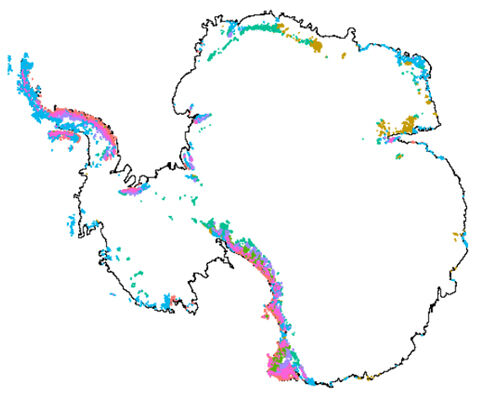
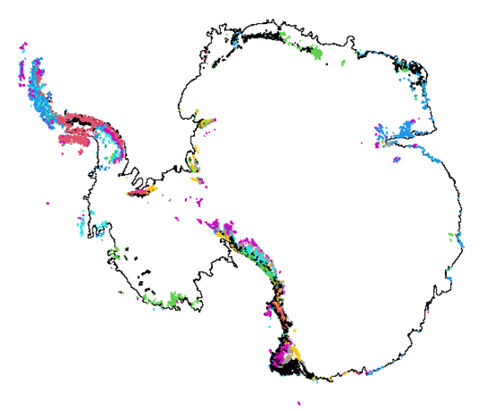
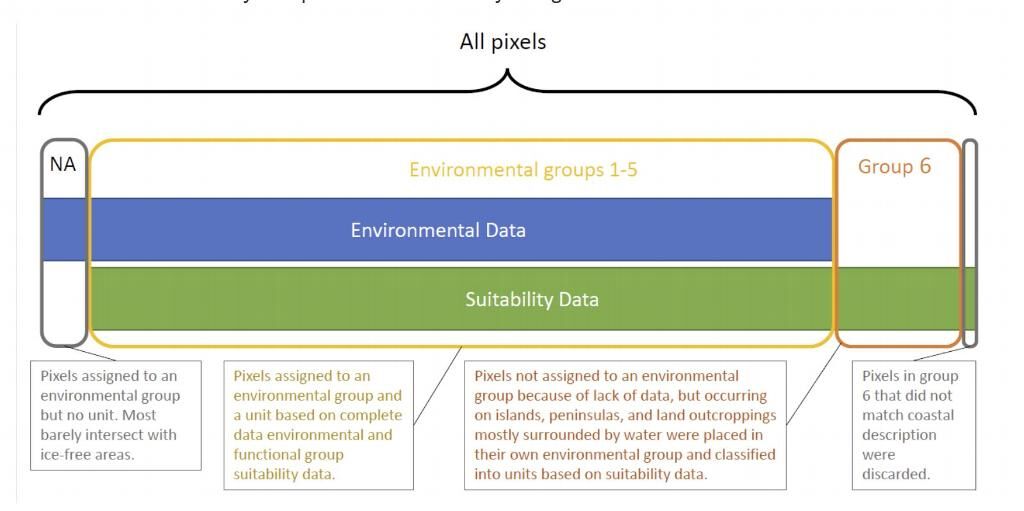
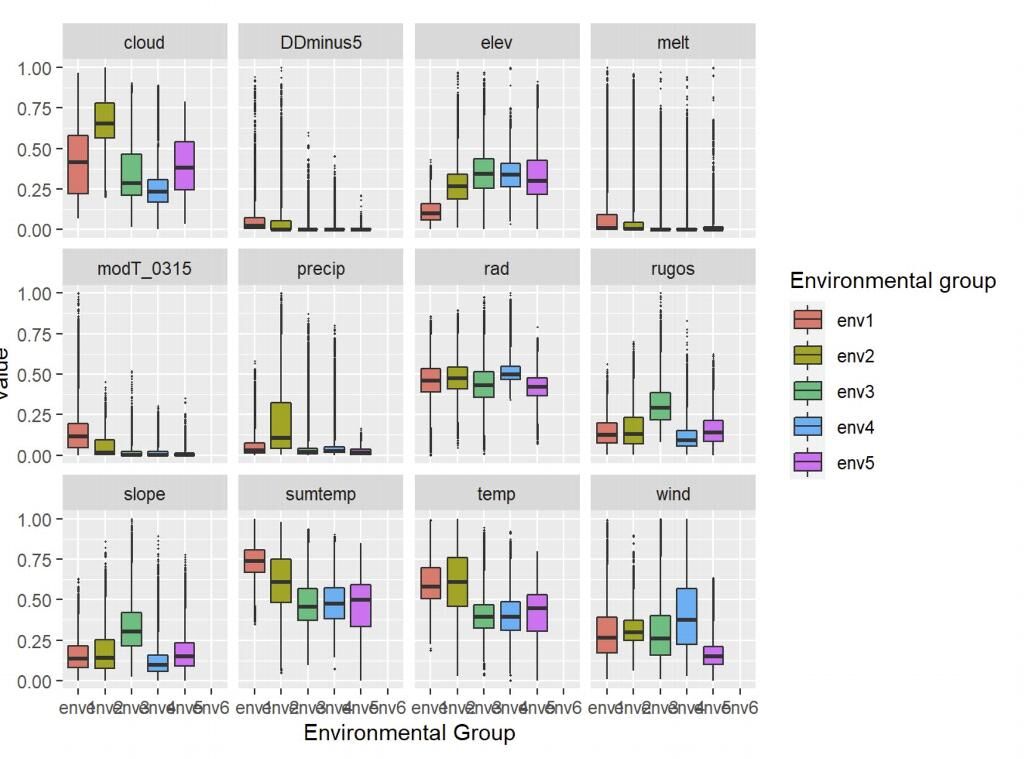
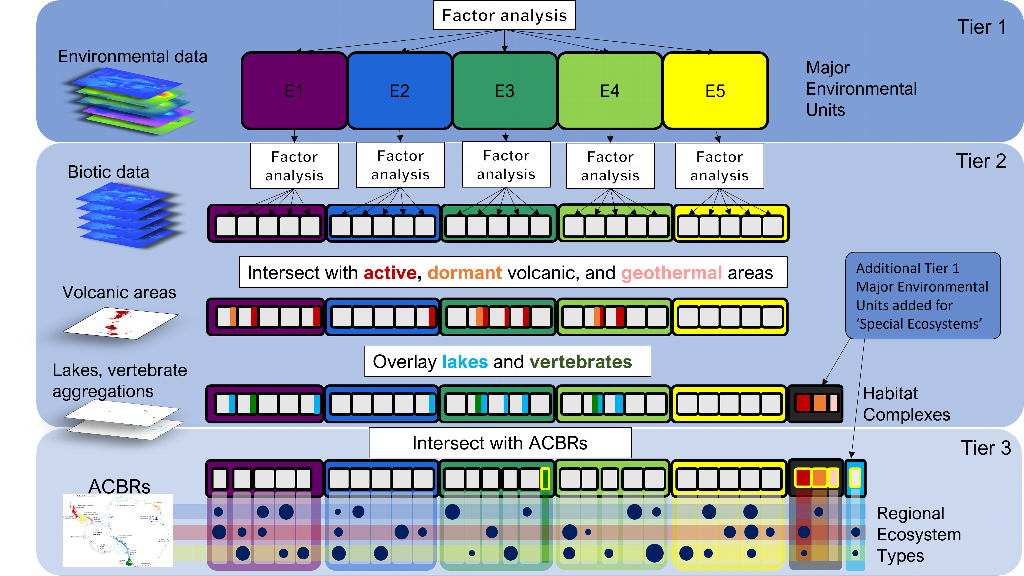
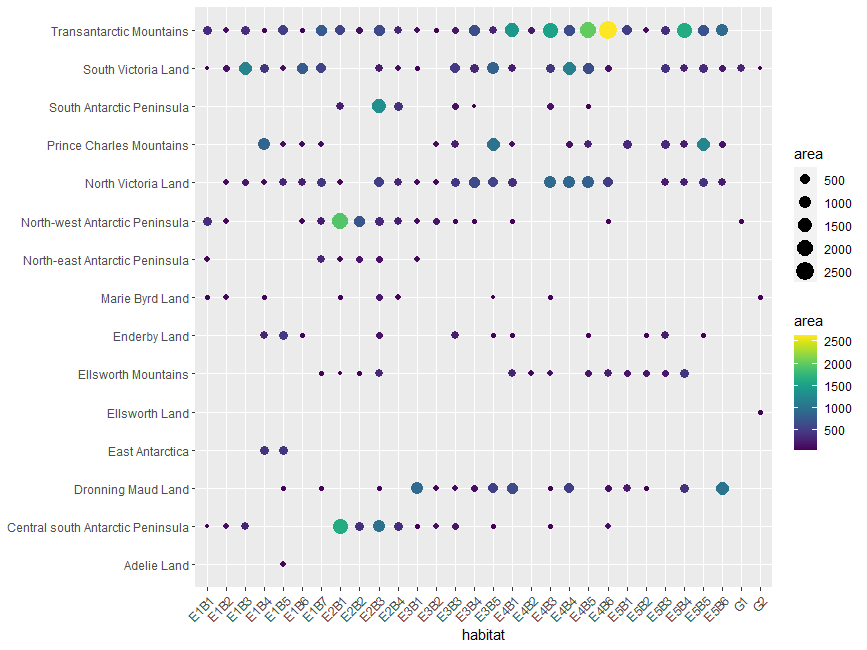
The draft typology of ice-free terrestrial ecosystems of Antarctica has been workshopped, revised and fully documented. The typology was developed from an innovative analytical strategy designed to accommodate the limited range and patchy coverage of ecological data that typifies the least explored continent on Earth. The two-step analysis first identified five major groups of ecosystems distinguished by their unique physical environments: Midland mesic ecosystems; High cliffs and crags; Mild lowlands; Sunny outcrops; and Highland windy plateaus. In the second step, between five and seven distinctive biological assemblages were defined within each of the five major environmental groups, producing a total of 28 tier-two units in the classification. Maps showing the distribution of each of the 28 tier-two units across the continent were produced as a by-product of the analysis. Critical review by international Antarctic experts re-affirmed the approach and resulted in minor refinements to the groupings. Available spatial data for lakes, seabird and pinniped colonies, geothermal systems and volcanoes will enable them to be added to the typology. The review was carried out at a dedicated workshop held in Hobart and by correspondence. In collaboration with the specialists, detailed descriptive profiles were prepared for each of the tier-2 groups identified. The profiles summarise environmental conditions and characteristic species of each unit, including photographic images of examples and graphic representation of environmental properties. The tier-two units will be subdivided according to their representation in Antarctic Conservation Bioregions (ACBRs), producing the first continent-wide classification of ecosystem types for Antarctica. A scientific manuscript presenting the typology and its derivation is in preparation for submission to an international journal. The typology will also be presented at the International Biogeography Society meeting in Vancouver, Canada, in 2022.
Spatial data have been compiled to support a similar analysis of near-shore marine Antarctic ecosystems. Additional spatial data to support a risk analysis of Antarctic ecosystems have been identified and will be compiled in the coming months.
Summary of the season 2020/21
In 2020, the project has produced the first comprehensive classification of Antarctic ice-free ecosystem types across the entire continent. This classification is comprised of six functional ecosystem types divided into a total of 31 unique ecosystems. Each ecosystem has been described in terms of the environment and the species that live there. These descriptions, together with maps of each ecosystem type, have been combined into descriptive profiles for each ecosystem. The data-based profiles are currently being refined and expanded via input from Antarctic experts. The ecosystem classification scheme will be used to underpin risk assessments and identify data and research gaps needed to complete a more comprehensive assessment to make future recommendations for Antarctic conservation.
Summary of the season 2019/20
The primary goal of this research is to establish a solid foundation for a systematic assessment of risks to Antarctic terrestrial and nearshore ecosystems as a basis for securing biodiversity into the future under a changing environment. We have appointed a post-doctoral fellow (Aniko Toth) to lead this work and have made considerable progress in identifying a draft set of ecosystem typologies based on existing (Antarctic biogeographic regions, species point data), developing (habitat suitability models) and new (habitats) spatial layers.