
Project information
Project aim
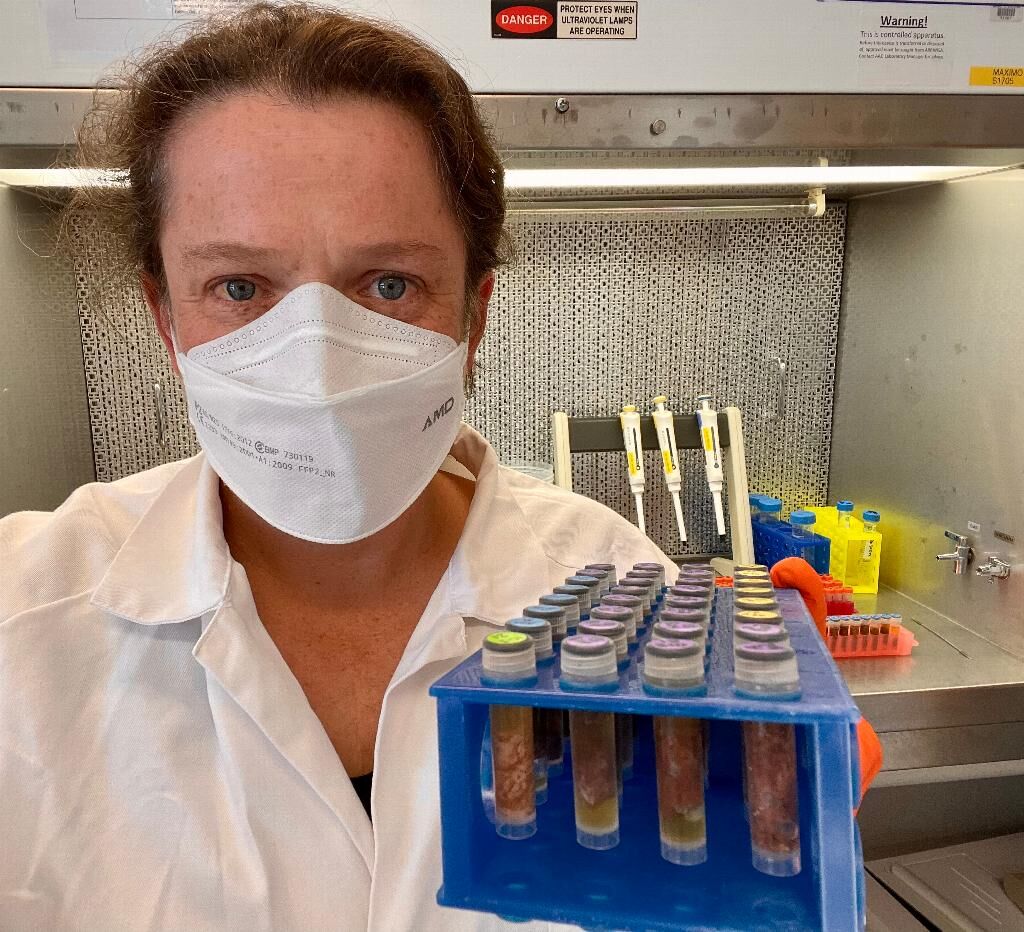
It is the start of a golden age in genetic approaches for measuring biodiversity and also an exciting period of transition within the Australian Antarctic Program to an era of new scientific capabilities. As such, it is an opportune time to incorporate new genetic techniques into our research. In this project we will develop, evaluate and apply environmental DNA (eDNA) systems for Southern Ocean biomonitoring. We will focus on two promising areas: (A) Evaluation of potential for ship-based underway eDNA monitoring to establish a research program for RSV Nuyina, and (B) Establishing faecal eDNA diet analysis as an Antarctic ecosystem monitoring tool. During the project we will characterise eDNA in a range of Southern Ocean water samples and compare our results with conventional biological monitoring. We will also lead a collaborative circumpolar eDNA study of penguin diet. The outcomes will deliver next generation tools for an effective, collaborative biomonitoring future.
Project milestones
Summary of the season 2024/25
The aim of this project is to assess how ship-based environmental DNA (eDNA) sampling can contribute to long-term biodiversity monitoring of the Southern Ocean. In addition, we aim to assess the diet of Adelie penguins from molecular analyses of diet DNA in penguin scats.
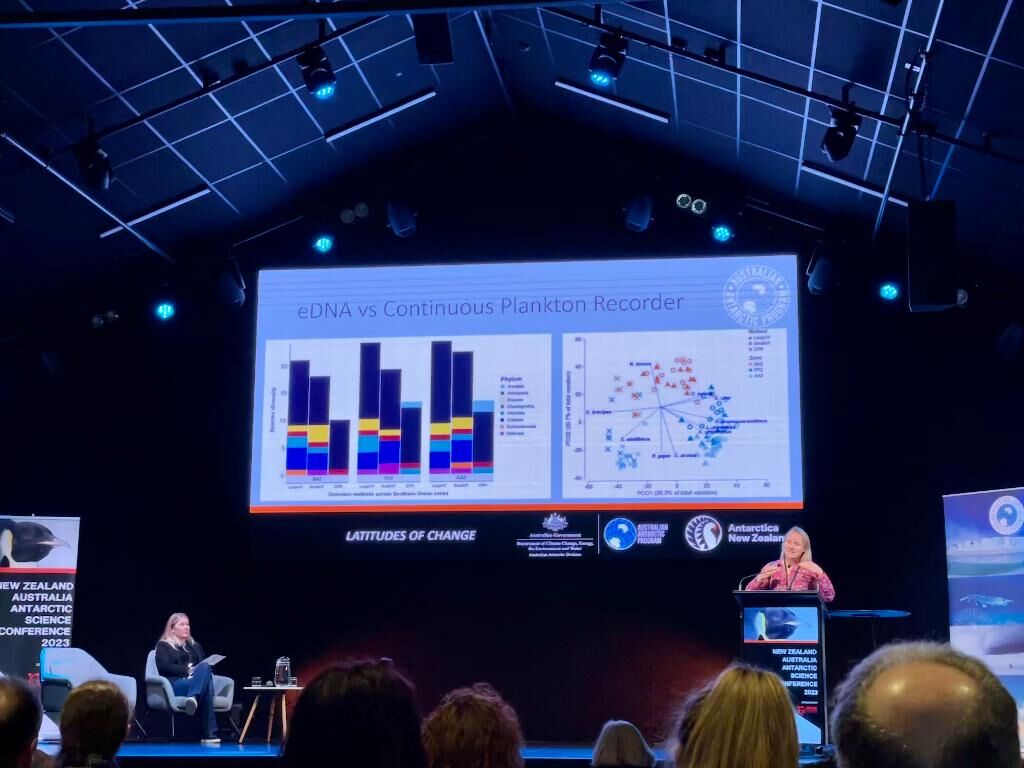
The project progress of the 2024/25 season includes the publication of two peer-reviewed manuscripts: a comparison of biodiversity surveys conducted with eDNA methods vs the Continuous Plankton Recorder to understand strengths and limitations of both methods, and a multidisciplinary study comparing eDNA-based survey of Antarctic krill with other krill survey methods (acoustic, trawl, visual) to understand how krill eDNA abundance and age can improve our knowledge of krill distribution and habitat use. This paper was also submitted to CCAMLR WG-EMM and presented as a session keynote talk at the ICES Annual Science conference in the UK.
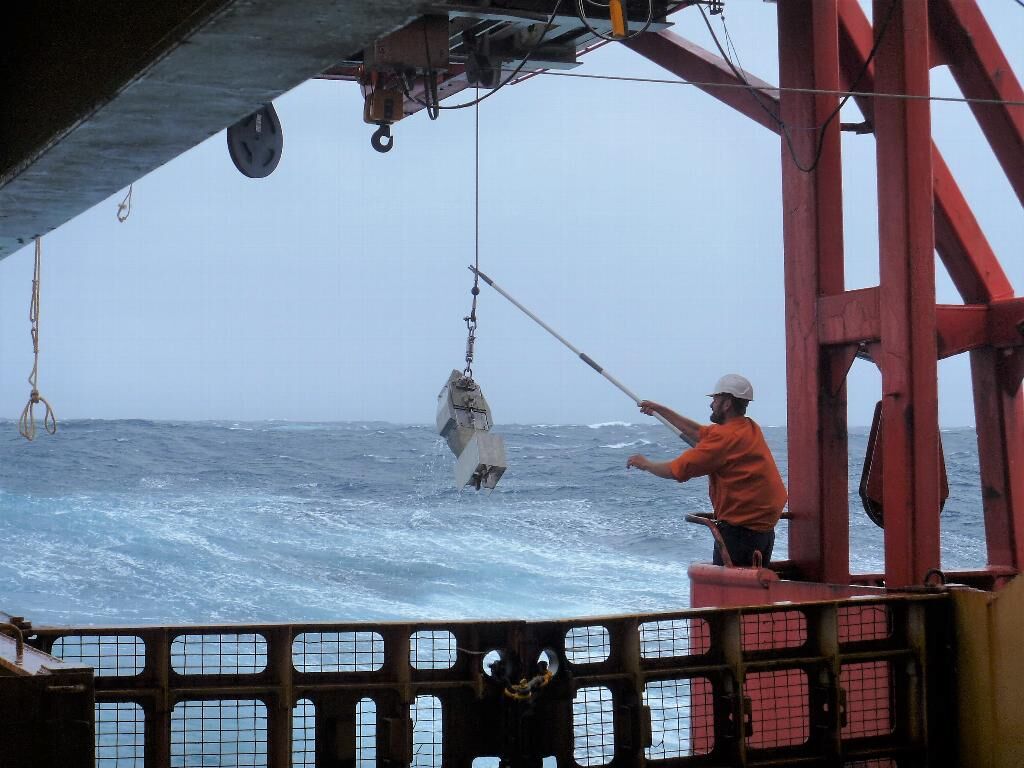
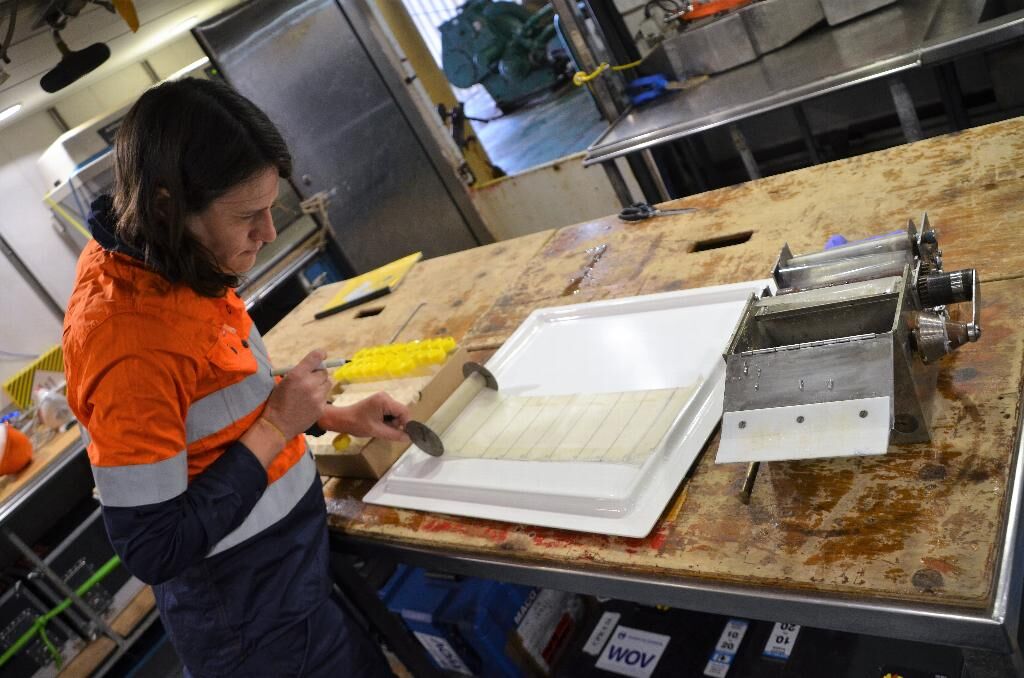
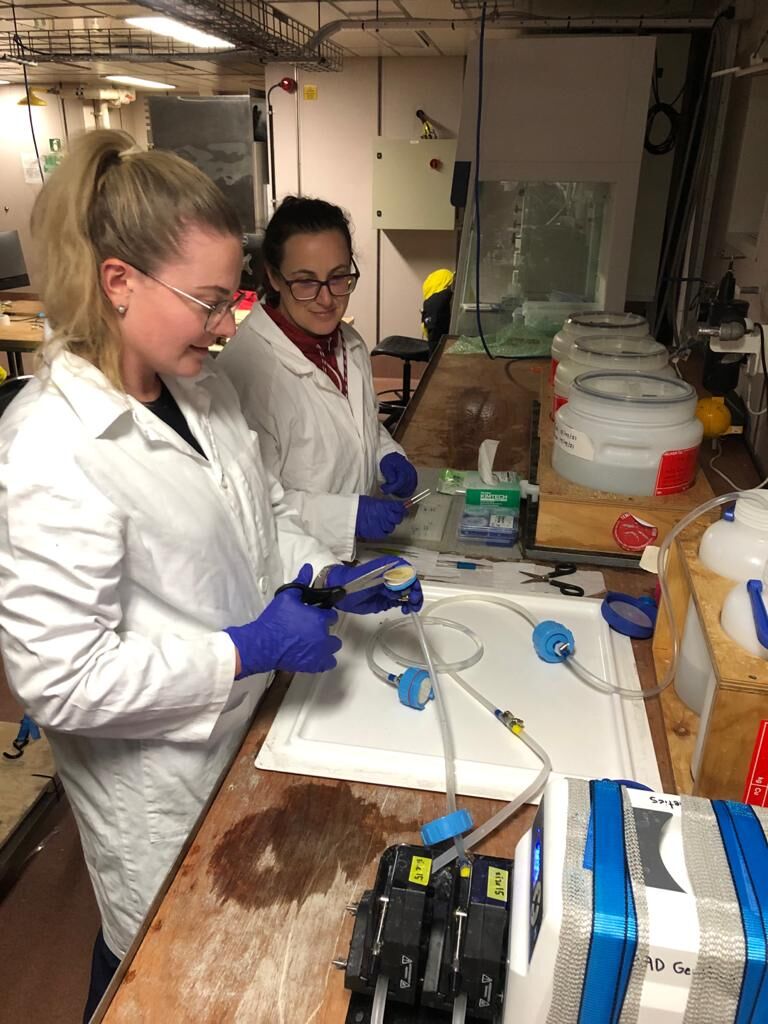
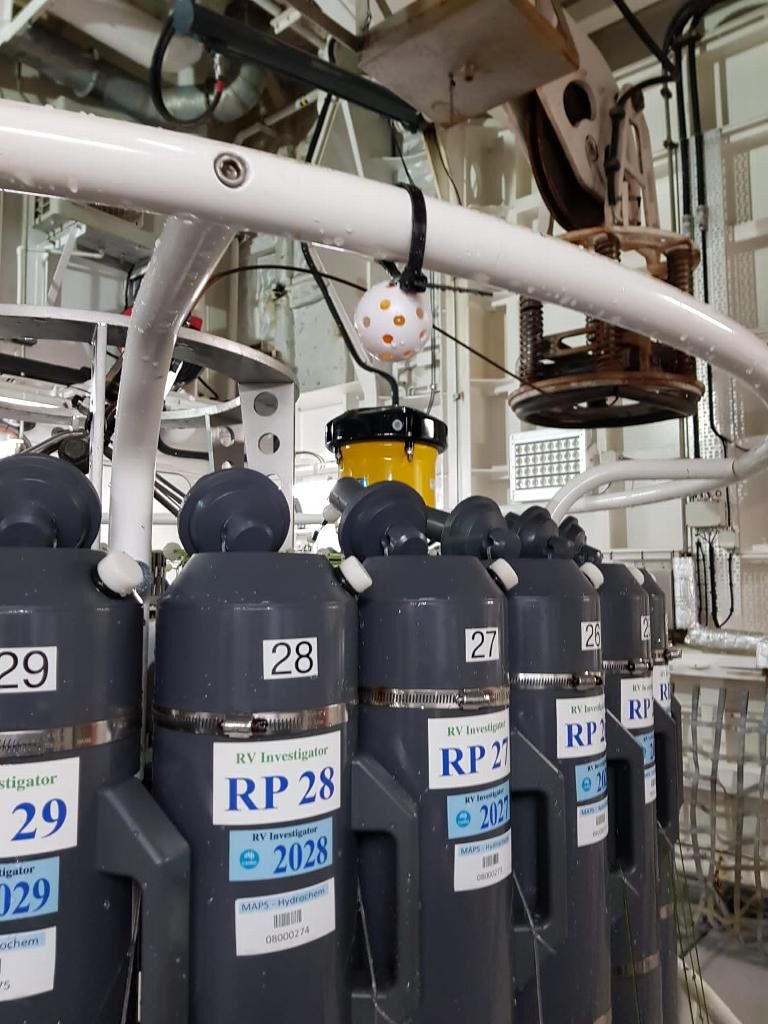
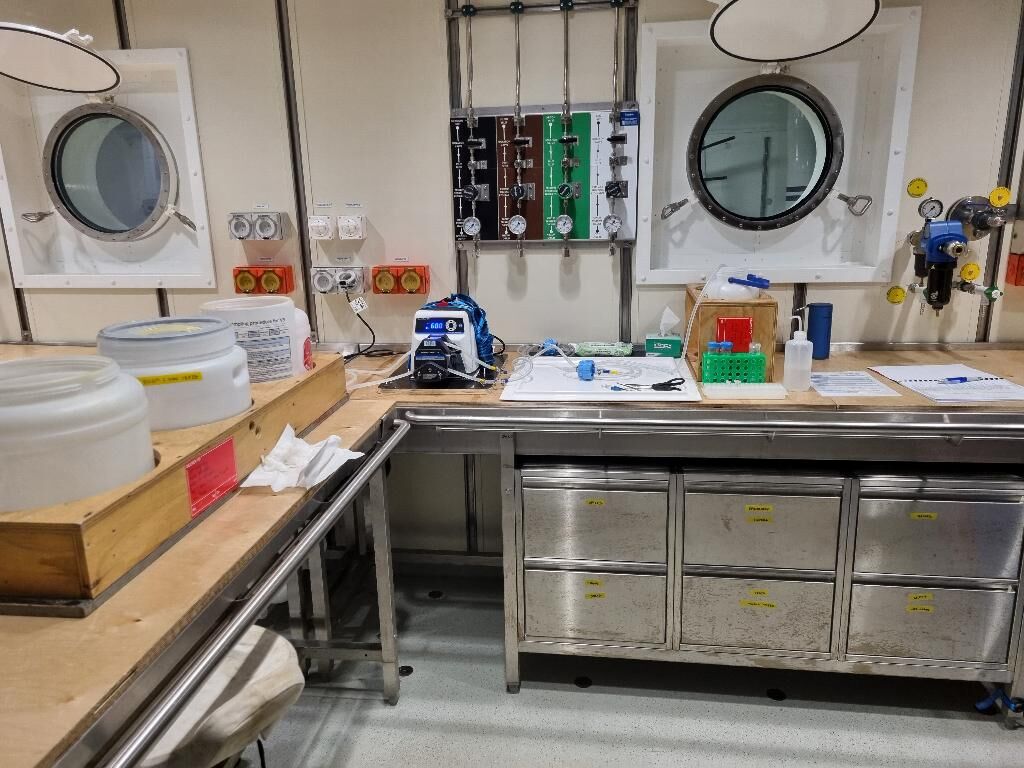
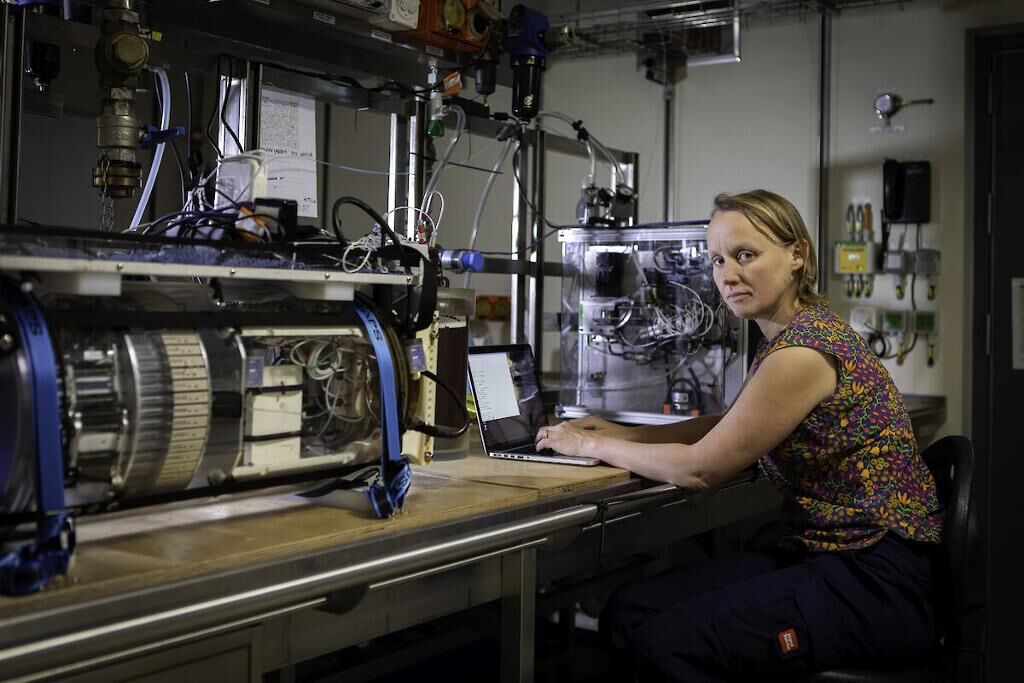
In collaboration with AAS4636 (KaKE) we collected eDNA samples on RSV Nuyina's V2 voyage to all Australian Antarctic stations, mirroring sampling conducted in the previous season. In addition, on V3 (the Denman Marine Voyage, DMV), we collected hundreds of underway samples from the surface and samples from CTD casts down to the sea floor. These eDNA samples will provide high resolution biodiversity assessments throughout the survey area and water column, and through comparisons to physical and chemical data collected by other teams on the voyage we will be able to assess drivers of observed biodiversity patterns. To explore whether ship-based underway sampling can be automated, we tested two state-of-the-art autonomous eDNA samplers loaned to the AAD through a collaboration with the Monterey Bay Aquarium Research Institute (MBARI) on the DMV in parallel to manual underway sampling. Molecular processing of this season's samples is currently underway. Our work on the DMV attracted extensive media coverage, highlighting the importance of eDNA analyses for Southern Ocean biodiversity assessments.
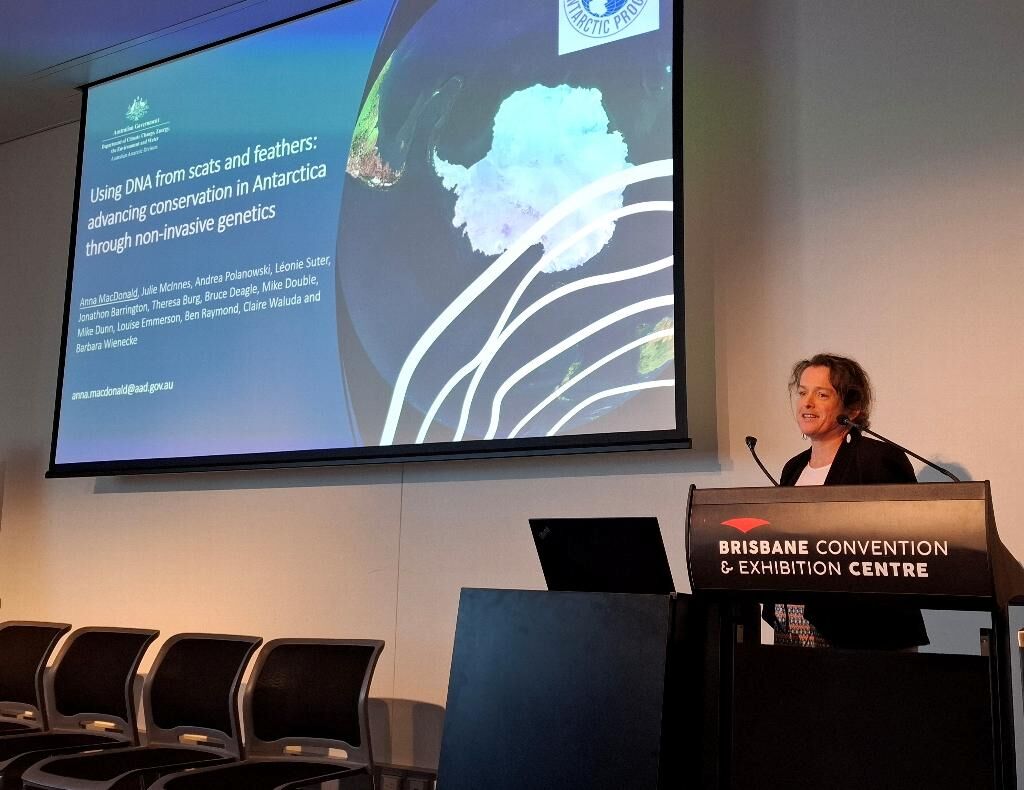
We finalised analysis of a multi-year Adelie penguin diet study, comparing molecular diet analyses from scats to stomach lavage data over eight seasons, and investigate which environmental parameters contribute to diet variation. We submitted a summary paper to CCAMLR WG-EMM, are preparing scientific manuscript for publication, and presented this work at five conferences/workshops. In addition to the multi-year study, we have also received 829 Adelie penguin scat samples collected by nine collaborating teams around Antarctica in the 2023/24 season, extracted the DNA from all samples and have processed them for broad diet analysis, with further analyses planned for next year. This study will reveal the variation of diet around Antarctica within a single season, increasing our understanding of temporal and geographic variation in Adelie penguin diet, and highlight the value of molecular diet analyses of predators for CCAMLR.
Summary of the season 2023/24
Environmental DNA – known as eDNA – is DNA shed into the environment by all organisms. We aim to develop methods for ship-based eDNA surveys to assess animal biodiversity of the Southern Ocean, with a particular focus on krill and krill predators. We also aim to assess the diet of Adelie penguins from prey DNA in their faeces to understand how variation in food availability affects penguin populations.
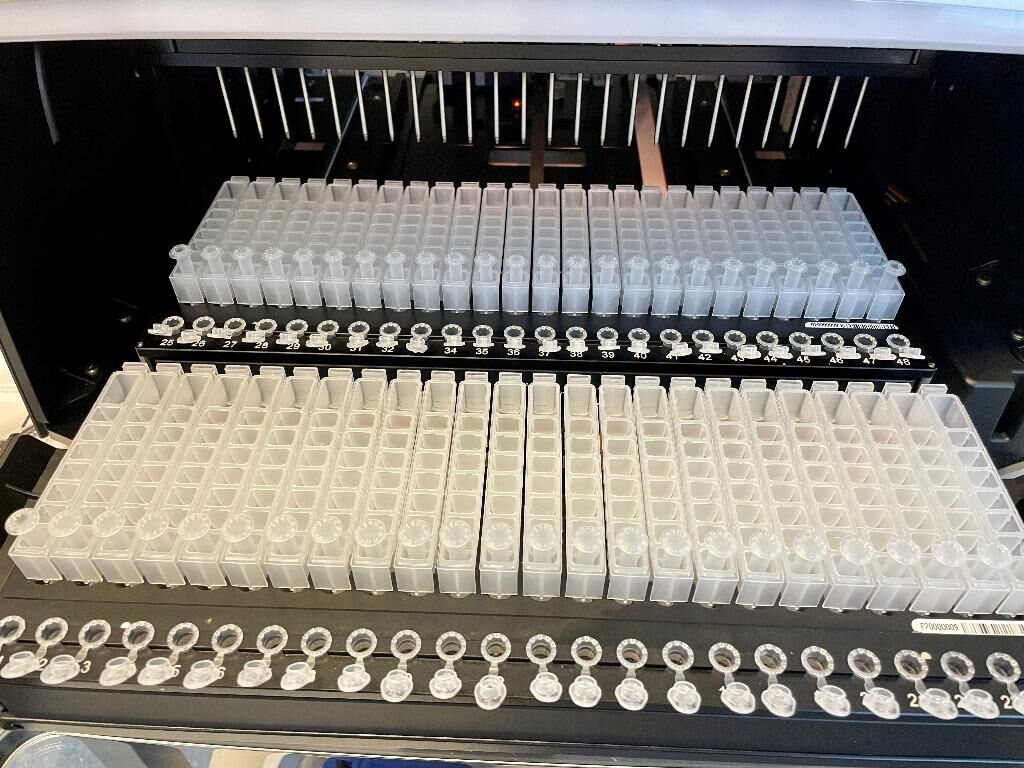
In the 2023/24 season, we have made substantial progress on the eDNA aspect of this project. We have finalised laboratory analysis of all eDNA samples collected across five seasons. We have submitted a manuscript to a peer reviewed journal, comparing detection of Southern Ocean biodiversity on a voyage between Australia and Antarctica using eDNA and the continuous plankton recorder. We are finalising a manuscript that compares Southern Ocean Antarctic krill eDNA surveys with other krill survey methods. We conducted a biodiversity assessment using video footage of the Southern Ocean seafloor and surface waters, and we will compare this to biodiversity detected from eDNA samples collected from the same locations, as well as trawl and predator surveys. In collaboration with AAS4636 (KaKE) we collected 111 eDNA water samples from the RSV Nuyina on the 2023/24 V3 resupply voyage between Hobart, Australia, and all three Australian Antarctic stations. This adds another year to our multi-year eDNA dataset and provides the first samples from the coastline between the Australian stations, therefore enhancing both geographic and temporal coverage. We have secured new collaborations with the Monterey Bay Aquarium Research Institute and CSIRO to trial three automated eDNA samplers on the 2025 Denman Marine Voyage in collaboration with KaKE.
The Adelie penguin diet aspect of this work has also progressed. All laboratory analyses have been completed for the multi-year diet study (a collaboration with the British Antarctic Survey), and a manuscript is in preparation: this will compare diet characterisation using molecular methods and stomach lavage methods. We have established a new multi-national collaboration to conduct a circumpolar Adelie penguin diet study during the 2034/24 season. Researchers from seven national Antarctic programs collected 750 Adelie penguin scat samples from nine locations around Antarctica. Together, the results of these two studies will provide information on spatial and temporal variation in diets. We submitted a CCAMLR WG-EMM paper to provide an update on scat diet analyses for Southern Ocean CEMP indicator species. To share our research with the broader scientific community, we have presented our work at the New Zealand – Australia Antarctic Science Conference 2023, at XXIII SCAR biology symposium 2023 and at the 7th Zooplankton Production Symposium 2024, where we also co-convened a zooplankton metabarcoding workshop.
Summary of the season 2022/23
We have substantially progressed our environmental DNA (eDNA) work to assess Southern Ocean biodiversity, krill eDNA abundance, and Adelie penguin diet from molecular analysis of scats. We have published three peer reviewed publications: our newly developed methods to quantify krill eDNA; best practice guidelines for environmental DNA biomonitoring in Australia and New Zealand; and an expert-driven framework for applying eDNA tools to improve biosecurity in the Antarctic. We have presented this at an international environmental DNA conference and will present at the AUS/NZ Antarctic conference and SCAR biology conference in New Zealand later this year. Postgraduate student Georgia Nester has completed her PhD, with her last chapter comparing animal eDNA metabarcoding to the continuous plankton recorder in the largest open ocean eDNA survey to date.
Our Southern Ocean eDNA sample collection now consists of five data sets covering five summer seasons from 2018 to 2023, including a new collaboration aiming to understand the links of microbial functional genomics and animal communities in eDNA samples from the 2019 ENRICH voyage. Through IMAS collaborators, we also successfully collected a new set of Southern Ocean eDNA samples during the 2023 CANYON voyage on the RV Investigator, including trialling passive adsorption of eDNA on sponge material exposed to deep sea environments. Laboratory analysis of these five eDNA datasets is near completion. In addition to animal metabarcoding, TEMPO eDNA samples were analysed using krill-specific qPCR markers to assess krill eDNA at the surface and near the seafloor. These data will be compared to acoustic, trawling and visual survey data, with planned publication later this year. Matching video footage from the surface and seafloor of the TEMPO voyage is in the process of being comprehensively analysed for krill abundance and animal biodiversity.
As part of the MetaZooGene SCOR working group's Intercalibration Experiment, we are aiming to evaluate factors affecting reproducibility of eDNA metabarcoding data. Ten laboratories across the world are comparing data using shared samples, including one of ours. We have completed laboratory work for this project and publication is expected later this year.
In our collaborative DNA diet project with the British Antarctic Survey (BAS) we are using DNA metabarcoding methods to evaluate Adelie penguin diet from scats collected over eight consecutive seasons (2014 to 2021), which wee will compare to data collected using a stomach lavage methods. We completed DNA extractions from all 800 scat samples, using a newly optimised DNA extraction protocol, and processed all samples with a broad metabarcoding marker to gain an overview of penguin diet. We are also contributing to a collaborative project to determine which metabarcoding markers are most suitable for Southern Ocean predator diet analyses from scats.
Summary of the season 2021/22
The aim of this project is to develop, test and apply environmental DNA (eDNA) systems for biomonitoring of the Southern Ocean (SO). During 2021-22 we have progressed this work on three fronts: first, we have completed an Antarctic krill eDNA experiment, which has developed new genetic tools for monitoring the distribution and abundance of Antarctic krill eDNA in the SO. We demonstrated that newly developed, species-specific genetic markers can quantify Antarctic krill eDNA and estimate the time since the eDNA was shed by the krill. This work may increase capacity by adding quantitative and temporal estimates of krill eDNA to future Antarctic krill surveys. We have presented this to the SCAR Krill Action Group (SKAG) and other stakeholders, and will publish it in a peer reviewed journal later this year. Second, we have evaluated genetic tools for monitoring SO biodiversity, using SO eDNA samples collected on the V1 2019 voyage to Davis station. We have determined the most informative set of molecular markers and best laboratory protocols to survey all SO krill species, marine mammals (whales and seals), fish, and broad animal communities. Two publications planned from this work will address best practice methods of eDNA surveys in the SO, a crucial step towards establishing long-term SO eDNA monitoring. Third, in collaboration with the British Antarctic Survey (BAS) we are evaluating methods for predator diet analysis, comparing DNA analysis of Adelie penguin scats over multiple years with stomach lavage data from the same sampling periods. This work will show how Adelie penguin diet varies across years, and validate the utility of molecular methods for diet assessment, relative to the more invasive stomach lavage approach. This will allow us to make solid recommendations on the use of molecular methods to analyse Adelie penguin diet to the Commission for the Conservation of Antarctic Marine Living Resources (CCAMLR) and CCAMLR Ecosystem Monitoring Program (CEMP).
Summary of the season 2020/21
In this project we aim to develop, evaluate and apply environmental DNA (eDNA) systems for Southern Ocean biomonitoring. Over the last year we have published our work in two peer reviewed scientific journals: we compared eDNA biomonitoring capability to the continuous plankton recorder, and determined Gentoo penguin diet and distribution off South Georgia in collaboration with the British Antarctic Survey (BAS). Findings of our work with BAS (overlap of Gentoo penguin feeding area with krill fisheries) led to an extension of the no-take zone around South Georgia, increasing the protection of Gentoo penguins from the krill fisheries. We presented online virtual displays of our work at the SCAR 2020 online conference, and communicated our results to broader audiences through several media channels, including the AAD media team.
We processed eDNA samples from the V1 2019 voyage to Davis Station in the molecular lab to determine best eDNA sampling methods. We are developing new genetic markers specifically targeting mammals, fish and krill species of the Southern Ocean to capture the distribution of krill and predator species more accurately than with a more broad range genetic marker.
We contributed to the planning of the 2021 TEMPO voyage and organized for eDNA samples to be collected throughout the voyage. These samples will allow us to contribute to the assessment of krill distribution and abundance, as well as studying interactions with krill predators.
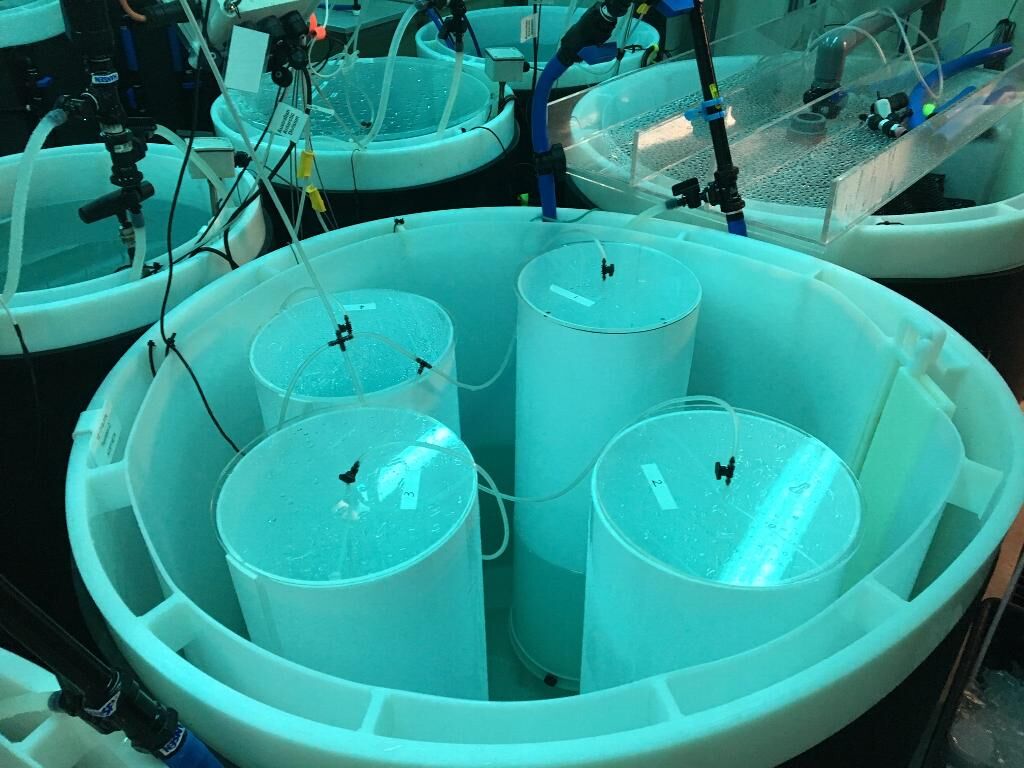
To characterize for how long eDNA shed by Antarctic krill remains detectable in the environment, we conducted an experiment in the marine research aquarium. We developed new genetic markers exclusively targeting Antarctic krill, and are processing the collected samples in the molecular lab.
Lastly, a master student analysed Adelie penguin and snow petrel scats collected across three different seasons to establish diet overlap between these species, diet variability across years and between male and female birds.
Summary of the season 2019/20
The aim of this project is to develop, evaluate and apply environmental DNA (eDNA) systems for Southern Ocean biomonitoring. eDNA is genetic information (DNA) extracted from small environmental samples, such as small volumes of filtered seawater or scats of seabirds. The DNA can be analysed to determine which species occur in the sample. This AAS project has been approved in August 2019 and funding has been confirmed in October 2019.
Over the last six months, we have assessed how eDNA sampling of Open Ocean seawater compares to traditional bulk sampling to determine the usefulness of eDNA as a biomonitoring system. We validated eDNA samples collected between Hobart and Macquarie Island against traditional bulk sampling with the continuous plankton recorder (CPR) and found eDNA to be remarkably effective at detecting metazoan species and community compositions as well as species driving community differentiation across geographic scales. Our findings have been submitted to a high impact, peer reviewed scientific journal and have been presented at two small scientific conferences.
In addition, we have processed and analysed Gentoo penguin scat samples collected in South Georgia in collaboration with the British Antarctic Survey to determine whether Gentoo penguin foraging overlaps with the winter krill fisheries in South Georgia. A manuscript presenting the results is in preparation and will be submitted to a scientific journal in the near future.
We are also in the process of analysing a multi-year collection of various sea-bird scats collected near Mawson station to determine how seabird diet varies between species and across years. Lastly we have collected eDNA and CPR samples on a resupply voyage to Davis station to further validate and apply eDNA as a biomonitoring system, and these samples will be processed and analysed over the coming months.
Related publications
-
Monitoring Antarctic krill (Euphausia superba) distribution in the Southern Ocean: environmental DNA (eDNA) adds to the toolbox Frontiers in Marine Science, 2025
(Ref: 17307)
Authors:Category 1: Peer-reviewed literature
Antarctic krill (Euphausia superba Dana) is a key species of the Southern Ocean ecosystem, immensely abundant and targeted by the krill fishery. For their sustainable management, krill distribution and biomass estimates are required, typically achieved through acoustic-trawl surveys.
-
An expert-driven framework for applying eDNA tools to improve biosecurity in the Antarctic Management of Biological Invasions, 2023
(Ref: 16872)
Authors:Category 1: Peer-reviewed literature
Signatories to the Antarctic Treaty System's Environmental Protocol are committed to preventing incursions of non-native species into Antarctica, but systematic surveillance is rare. Environmental DNA (eDNA)…
-
Denman Marine Voyage returns after critical research voyage to glacier, Department of Climate Change, Energy, the Environment and Water, Australian Antarctic Division AAD Media, 2025
(Ref: 17382)
Category 4: Popular articles
-
Testing new ways to monitor biodiversity in seawater on RSV Nuyina AAD Media story, 2025
(Ref: 17381)
Category 4: Popular articles
-
Preindustrial-to-present-day changes in atmospheric carbon monoxide: agreement and gaps between ice archives and global model reconstructions Atmospheric Chemistry and Physics, 2025
(Ref: 17403)
Authors:Category 1: Peer-reviewed literature
Global chemistry–climate models (CCMs) play an important role in assessing the climate and air pollution implications of aerosols and chemically reactive gases.