
Project information
Project aim
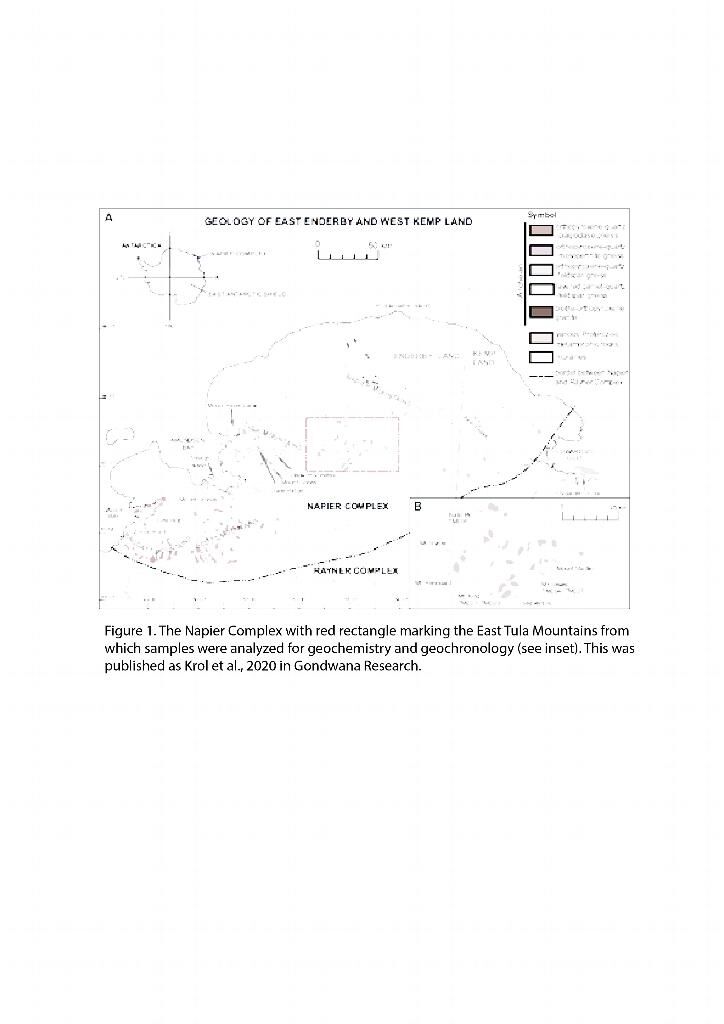
A large inventory of samples, collected by past Australian expeditions to Antarctica, reside with Geoscience Australia and provide a unique treasure-trove of information that can now be tapped, following major advances in knowledge and instrumentation over the past three decades. Selected samples collected from the Napier Complex in Enderby and Kemp Lands, on the western frontier of the Australian Antarctic Territory, have already provided exciting new insights into the timing and complexity of geological processes acting during the earliest stages of Earth’s history. In order to further advance our understanding of this globally significant area, and to add value to a vital academic resource, this project aims to determine the extent of this most ancient terrain and to unravel the complex geological events that affected the area since its formation almost four billion years ago.
Project milestones
Summary of the season 2024/25
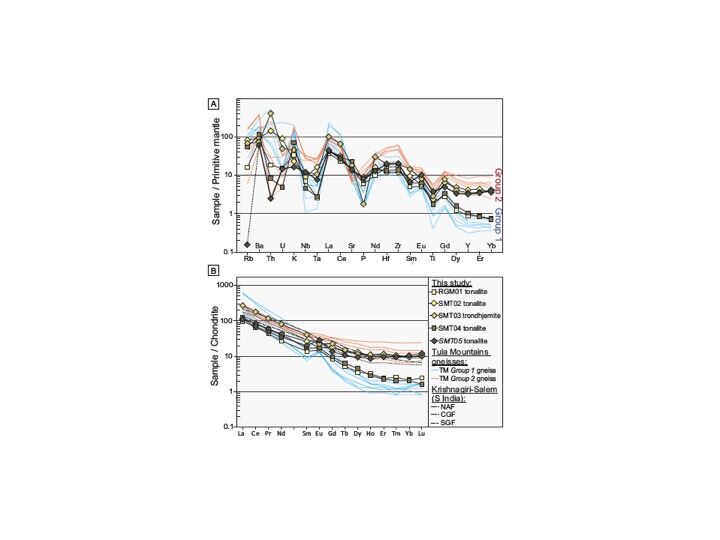
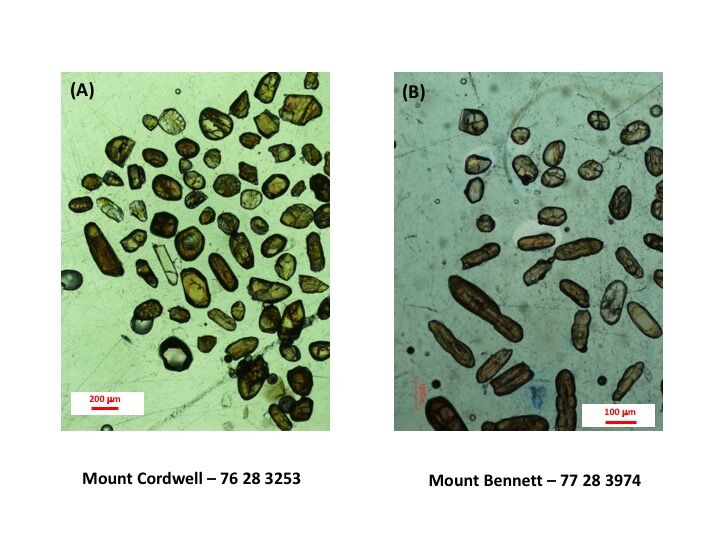
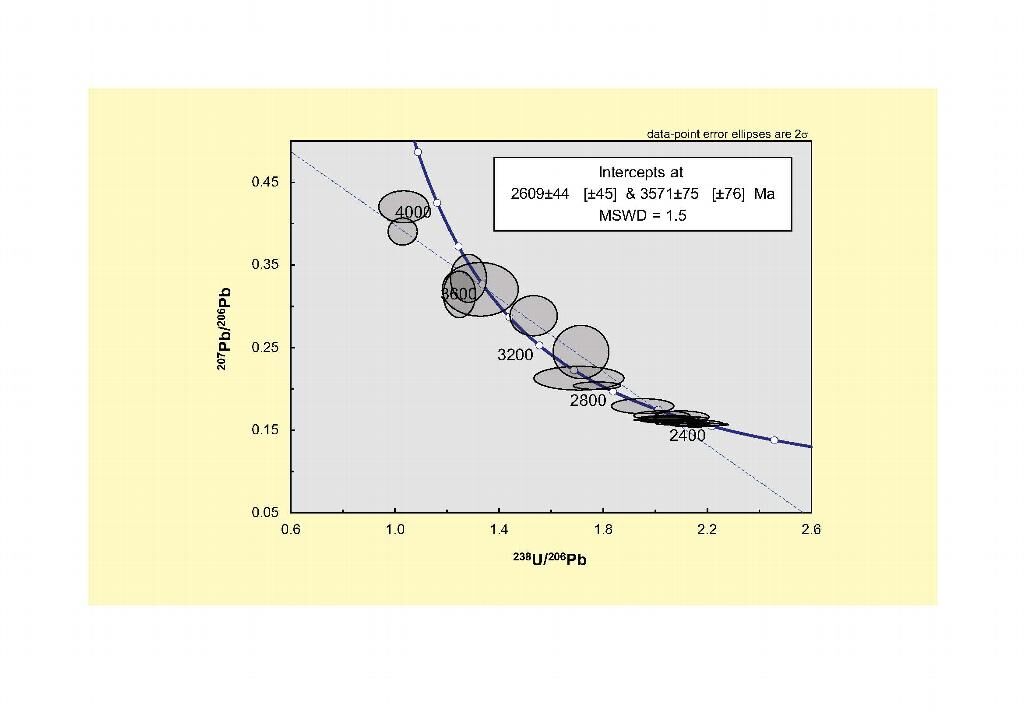
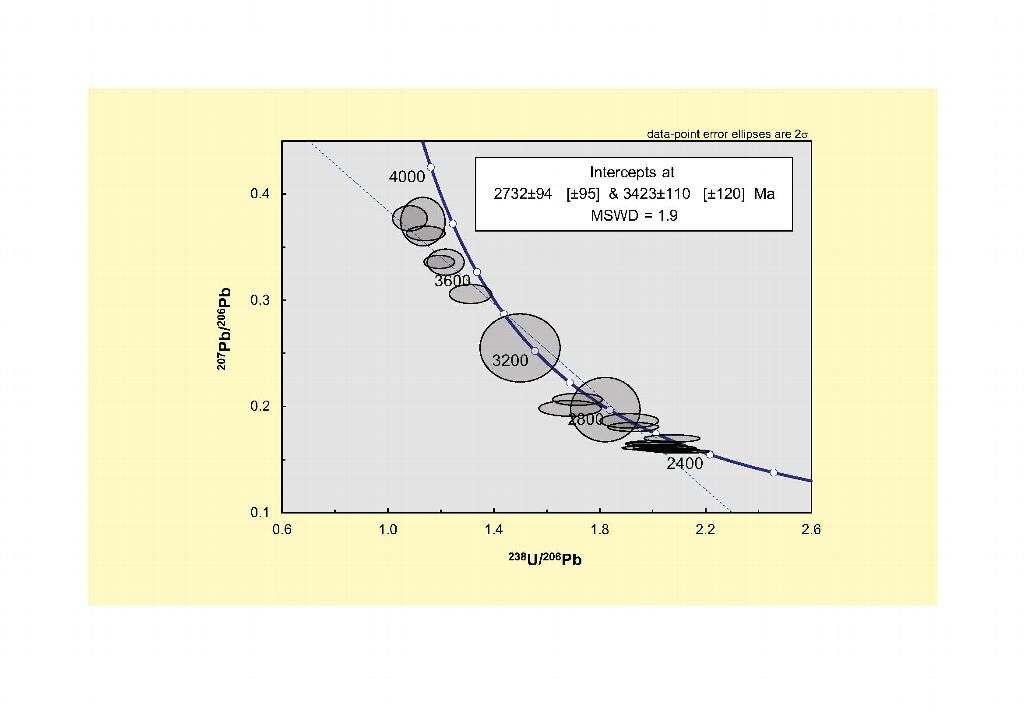
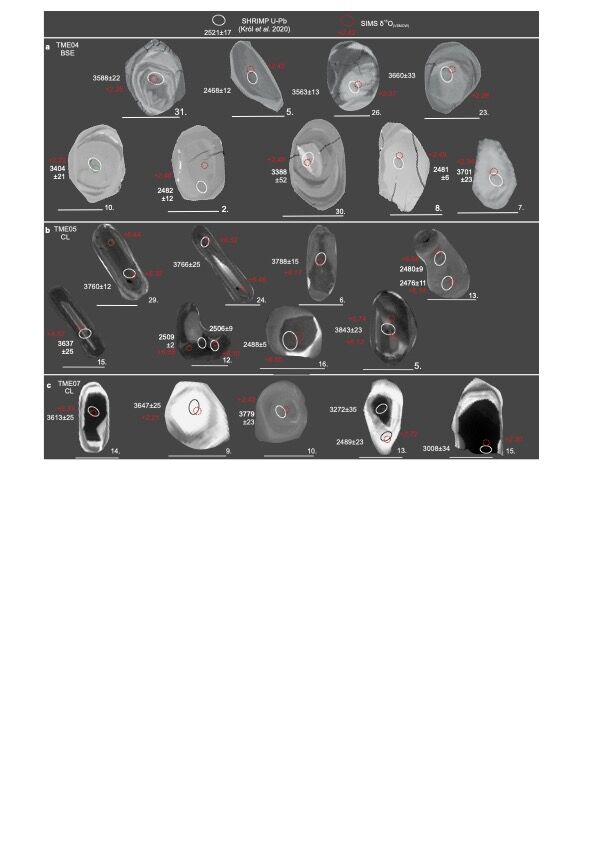
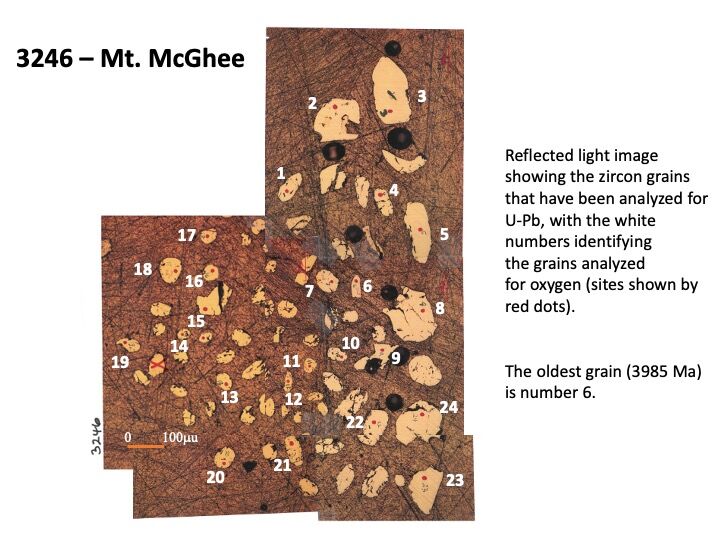
This project was designed to determine the extent of the oldest terrane in Antarctica (Eoarchean >3.6 Ga -Giga annum) and to determine the distribution and significance of lead (Pb) nanospheres in zircon from Enderby Land, utilizing legacy samples collected in the 1970s during a series of Australian expeditions and stored at Geoscience Australia in Canberra, but supplemented by additional samples stored at the University of Tasmania. Zircons obtained from the first set of 22 orthogneiss samples (those of igneous parentage), previously analyzed for U-Pb age and oxygen isotopes, were analyzed at the University of Western Australia for trace elements and for Lu-Hf isotopes, as reported in last year's annual report. However, the huge dataset was not fully processed until this year. Trace element analysis was coupled with simultaneous U/Pb analyses so that the age data can be evaluated against the ages obtained by secondary ion mass spectrometry (SIMS). Overall, these new results help us place constraints on both the nature of the protolith to the orthogneisses and its approximate age, potentially enabling identification of different crustal domains within the Napier Complex of East Antarctica. Along with the oxygen isotope data, they can also assist in the identification of any fluid influx associated with the 2.8 Ga and 2.5-2.4 Ga metamorphic events. Because the data only recently became available, they have yet to be fully evaluated.
A re-evaluation of the coverage across the Napier Complex revealed a number of gaps where key data were required. This included both orthogneisses and paragneisses (rocks of sedimentary parentage). As samples from many such areas were available, a suite of 16 additional samples were prepared and analyzed for U/Pb age utilizing SIMS. The samples came from both the Geoscience Australia and the University of Tasmania collections.
Former PhD student Piotr Krol has continued his work with Co-I Dunkley at the Polish Academy of Sciences on samples obtained earlier from the Geoscience Australia collection, with efforts focused around Amundsen Bay, and including paragneisses. Also in Poland, Co-I Kusiak has expanded the geochemical facilities and staffing at the GeoBeLa Lab, with a new post-doctoral researcher commencing work on Napier Complex samples.
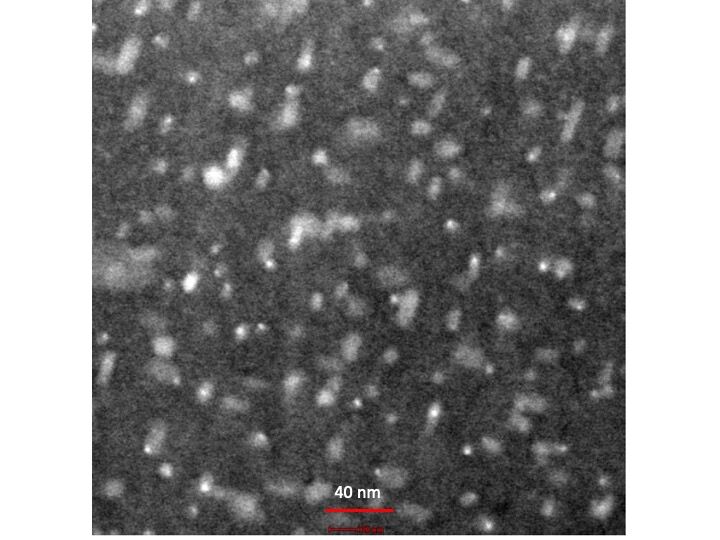
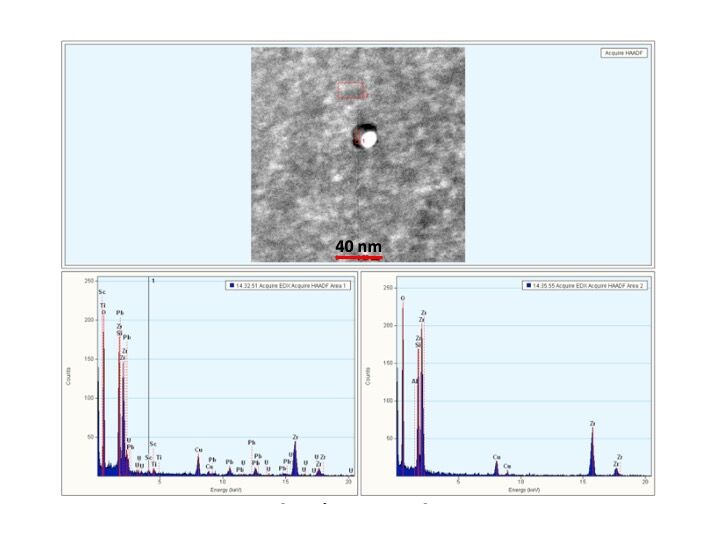
The Tula Mts in Enderby Land was the first locality in the World where nanospheres of pure metallic Pb were identified in zircon. This localized concentration of Pb has the potential to seriously affect age determinations during microanalysis. Work has continued on identifying zircon domains where mobility of radiogenic lead has been detected. This will now be applied to the 16 newly-analyzed samples for U/Pb, as uneven distribution of radiogenic lead has been identified during SIMS analyses in a number of samples.
Summary of the season 2023/24
This project aims to determine the extent of the oldest terrane in Antarctica (Eoarchean >3.6 Ga -Giga annum) and to determine the distribution and significance of lead (Pb) nanospheres in zircon from Enderby Land. These data will enable us to tell if the source rocks that generated the zircon host were derived directly from the Earth's mantle, or whether they included supracrustal components that had been in contact with the Earth's atmosphere and therefore likely to have undergone weathering.
Samples from the western Tula Mts, had elevated oxygen isotope values indicating incorporation of supracrustal material. Similarly, samples further north, to the west of the Napier Mountains at Mt Hurley and Mt Biscoe, also recorded elevated values. This is generally considered to be indicative of crustal recycling. Significantly, the elevated oxygen values from Mts McGhee and Smethurst mark the eastern extent where Eoarchean zircons have been discovered in the Napier Complex. In contrast, samples from Mt Codrington and Mt Paish in the Tula Mountains recorded low values, considered to record the earliest evidence on Earth for the emergence of land. Further evaluation is required on a sample-by-sample basis as the results show considerable variations.
The Tula Mts in Enderby Land was the first locality where nanospheres of pure Pb were identified in zircon. This concentration of Pb has the potential to seriously affect age determinations during microanalysis. Further work on the zircon domains where mobility of radiogenic lead was identified last year have now been scanned using the ion imaging technique in Sweden and sites of interest have been identified and mapped. This phenomenon has now been identified in several localities around the world, but has yet to be adequately explained.
Following oxygen isotope analysis in Sweden, the zircons in all 22 samples were then analyzed at the University of Western Australia for trace elements and Lu-Hf isotopes. Trace elements can be useful in determining the source of the zircon host rock, with the Lu-Hf data also identifying if the rocks were derived directly from the mantle or whether the magma incorporated older crustal sources. The results are still being processed, but should be available by the end of July.
Former PhD student Piotr Krol has continued his work with Co-Is Kusiak and Dunkley at the Polish Academy of Sciences on samples obtained earlier from the Geoscience Australia collection. This includes identification of the oldest known examples of oxygen isotope signatures (3.5-3.7 Ga) indicative of interaction of surface waters with the protoliths to orthogneisses at Mt Jewell and Budd Peak in the Tula Mts. This paper has been published in Precambrian Research. Dr Krol is now working on a range of samples from around Amundsen Bay, including paragneisses, utilizing both samples from Geoscience Australia and those provided by Co-I Harley as part of this project.
Summary of the season 2021/22
A total of 107 samples from across the Napier Complex, mostly retrieved from Geoscience Australia (GA) in Canberra, meant a start could at last be made on the research project; severely delayed by COVID-19. A further 70 samples from the University of Tasmania collection were forwarded to the University of Edinburgh for detailed work on establishing the metamorphic conditions. An initial set of 20 samples was prepared for uranium-lead (U-Pb) analysis of zircon grains: the yield was variable, but generally high. During the year, 12 samples were fully analyzed and preliminary results indicate (a) an extension of the ancient terrane to the eastern extremity of the Tula Mountains; and (b) a clear distinction was evident between magmatic zircon and later metamorphic growth in several samples. PhD student Piotr Krol at the Polish Academy of Sciences, along with other team members, published results obtained from the Scott and Raggatt Mts in early 2022.
Summary of the season 2020/21
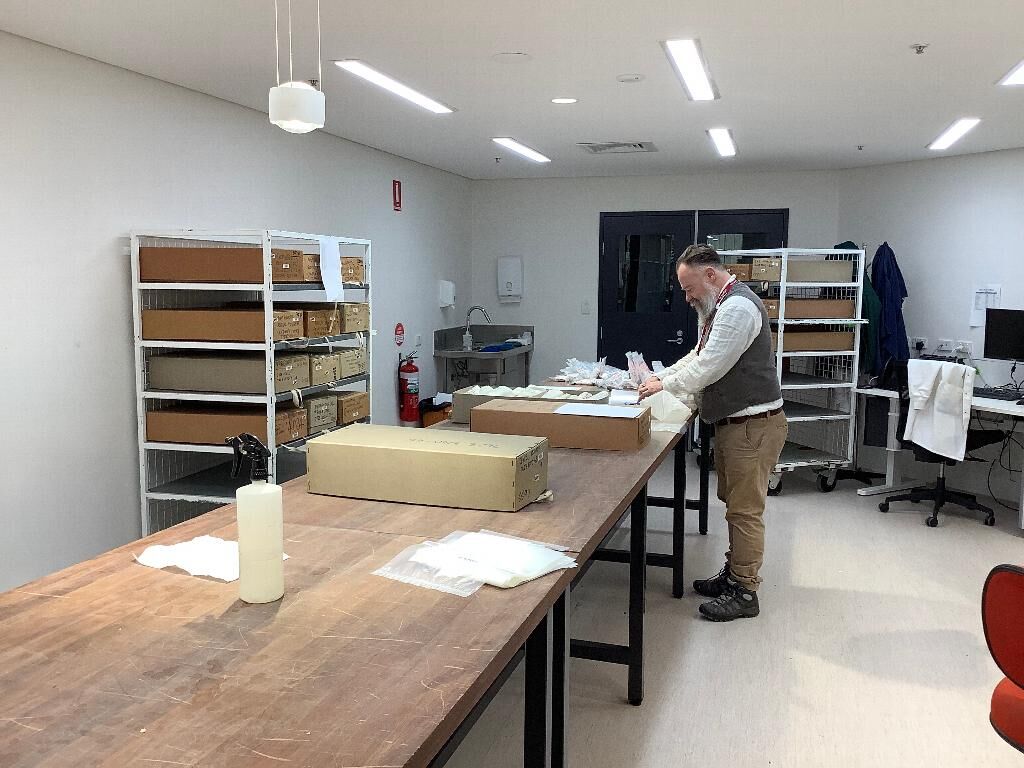
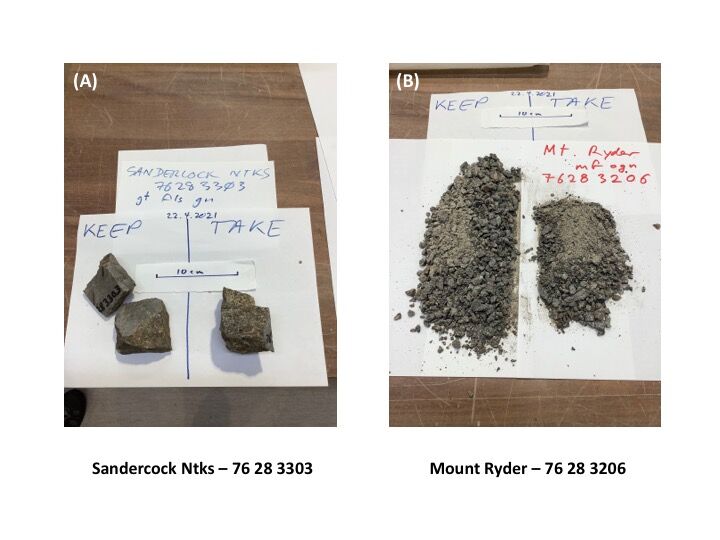
1. COVID-19 continued to have a devastating impact on carrying-out this project. Because of uncertainties over border closures and Curtin University regulations, it was not possible to travel to Canberra to identify, extract and ship the required samples back to Perth. I eventually took a risk and travelled to Canberra from 21 to 23 April 2021, resulting in the successful transportation of 52 samples back to Western Australia. However, I arrived back in Perth ninety-minutes prior to a 3-day lockdown so, although the trip was successful, it does indicate the risks of travelling across Australia in a pandemic! However, with the help of Co-I Harley, we had already identified and obtained in March 2021 a supplementary suite of samples archived at the University of Tasmania, so together we now have a more-than-adequate number of samples to actually commence this project.
2. We continued to work on samples that Co-I Kusiak obtained from Geoscience Australia (GA) as part of the PhD project of Piotr Krol.
3. Krol's first paper on rocks of the eastern Tula Mts was published in 2020 and his second paper on the 2.8 - 2.5 Ga rocks of the Scott and Raggatt Mts is in the final stage of preparation. In addition, certain rocks from the Tula Mts have been identified with extremely low delta Oxygen values and these results are being prepared for publication in a high-impact journal.
Summary of the season 2019/20
COVID-19 has impacted the ability of the project team to get access to samples.
However some progress has been made:
1. A draft map has been prepared that identifies the areas in the Napier Complex where samples are required. In addition, we have an Excel file that lists all the samples that are potentially available for study;
2. Co-I Kusiak was able to locate and retrieve a suite of samples from GA when she last visited Australia. These were selected in part for the project of her PhD student Piotr Krol, whose study area is in the Napier Complex. Importantly, all samples retrieved come from areas that fall within the parameters of this project;
3. Piotr Krol's first paper was published in March 2020 in Gondwana Research, and provides geochemical and geochronological data on the East Tula Mountains, where no such information was previously available. Rocks as old as 3.7 Ga are present at Mt Jewell and Budd Peak, indicating the eastward extension of known Eoarchean rocks Three of the project team are co-authors on this publication. Geochronological work has also been commenced on samples from the Raggatt and Scott Mountains.