
Project information
Project aim
Antarctic sea ice controls climate change and variability in the Southern Hemisphere, and also limits shipping in the Antarctic region, posing a safety risk to operations. The development of the capacity to predict Southern Ocean sea ice on weekly, seasonal and longer timescales is therefore a high priority in Antarctic research. We will conduct the most comprehensive assessment to date of the performance and accuracy of Australia’s global ocean-sea ice model in the Antarctic region. This project will enhance understanding of sea ice and ocean processes in the Southern Ocean and optimise the performance of these processes in models, to minimise model bias. It will thereby underpin the development of future sea ice forecasting capability and enhance future projections from Australia’s climate model.
Project milestones
Summary of the project achievements 2021/22
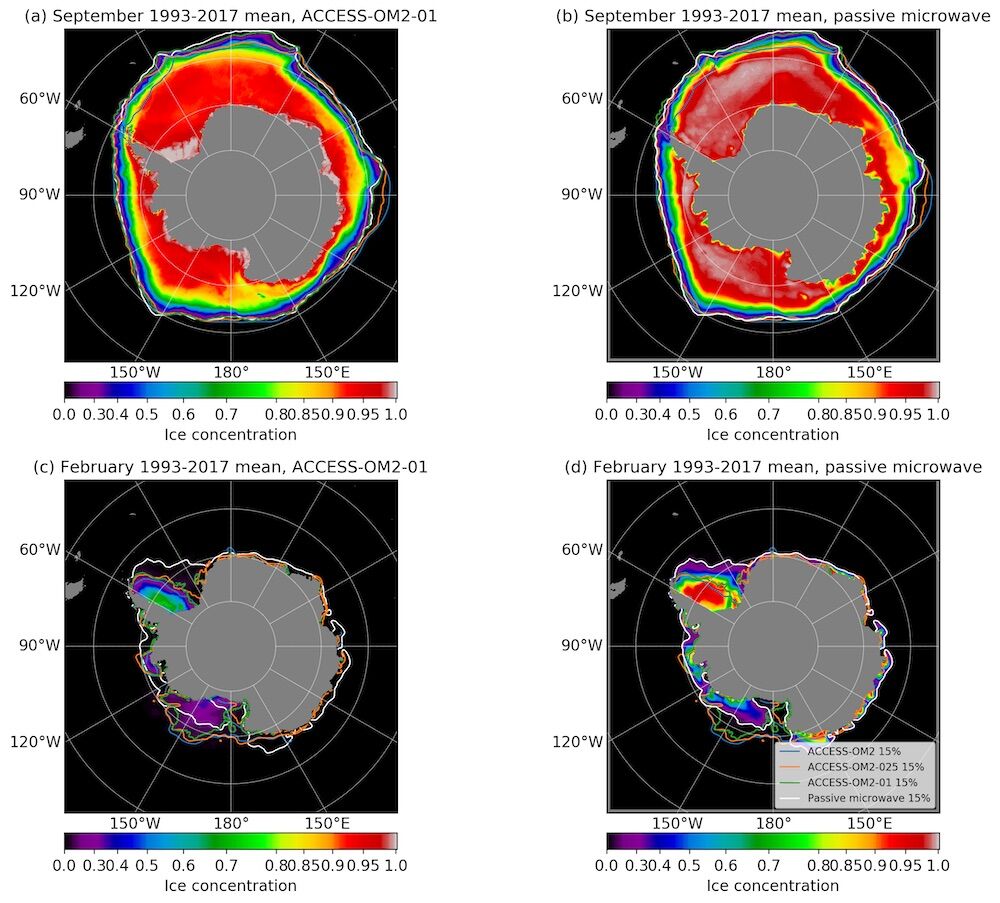
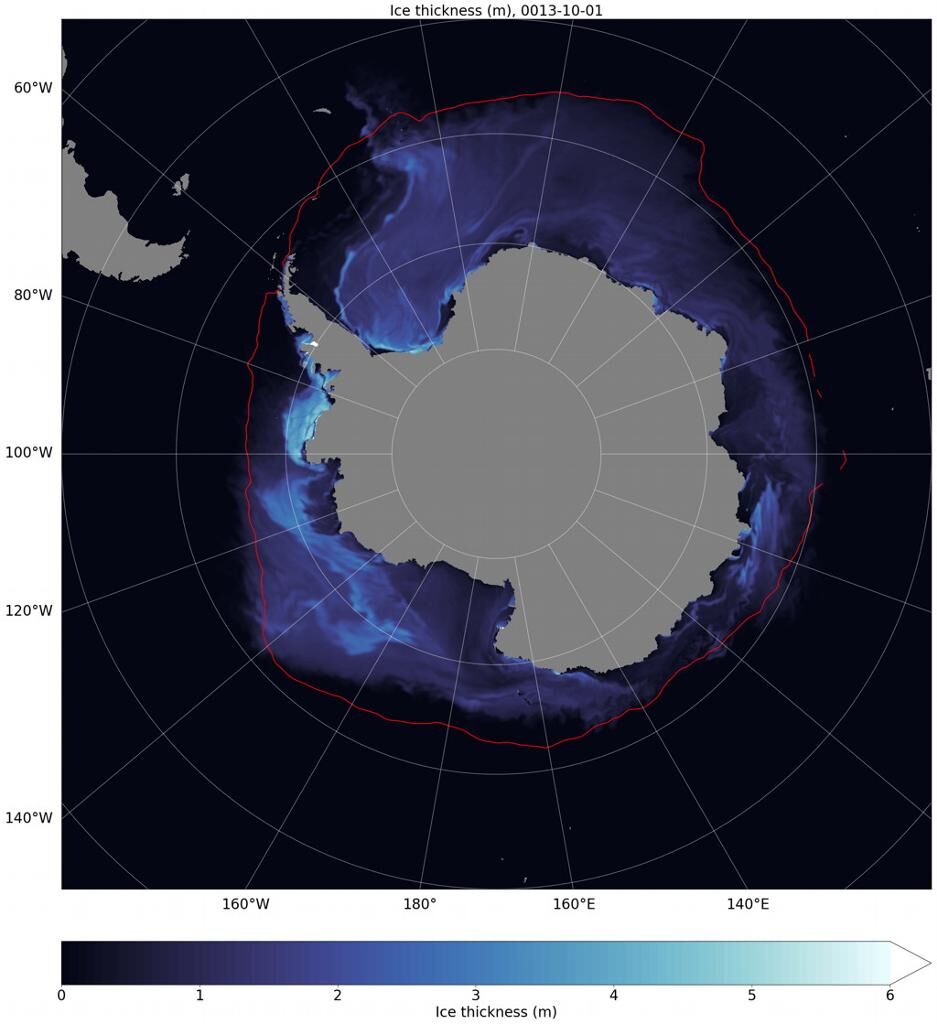
This project aims to evaluate and optimise the sea ice component of Australia's flagship ocean-sea ice model, ACCESS-OM2. The evaluation of this model showed that it is one of the highest performing free-running ocean-sea ice models. Sensitivity analyses to reduce sea ice biases demonstrated that the biases are primarily governed by the forcing dataset, rather than the model, and that the original parameters of the model were very close to optimal. This result lends confidence to the use of ACCESS-OM2 as a tool to understand Southern Ocean sea ice dynamics.
Summary of the season 2020/21
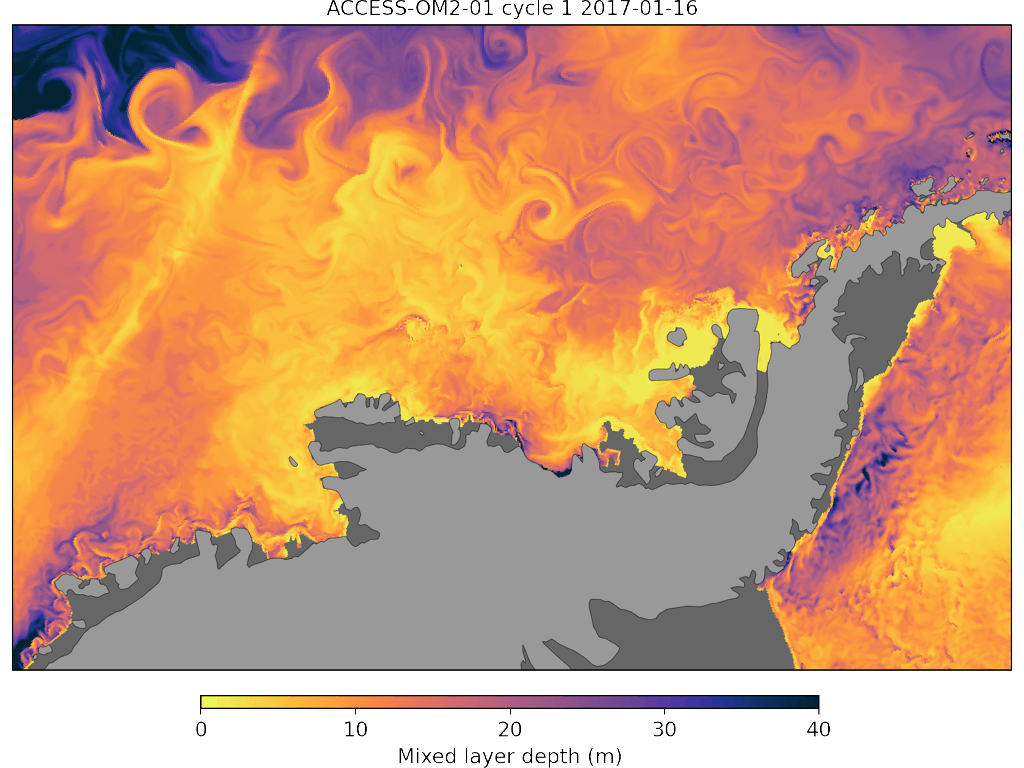
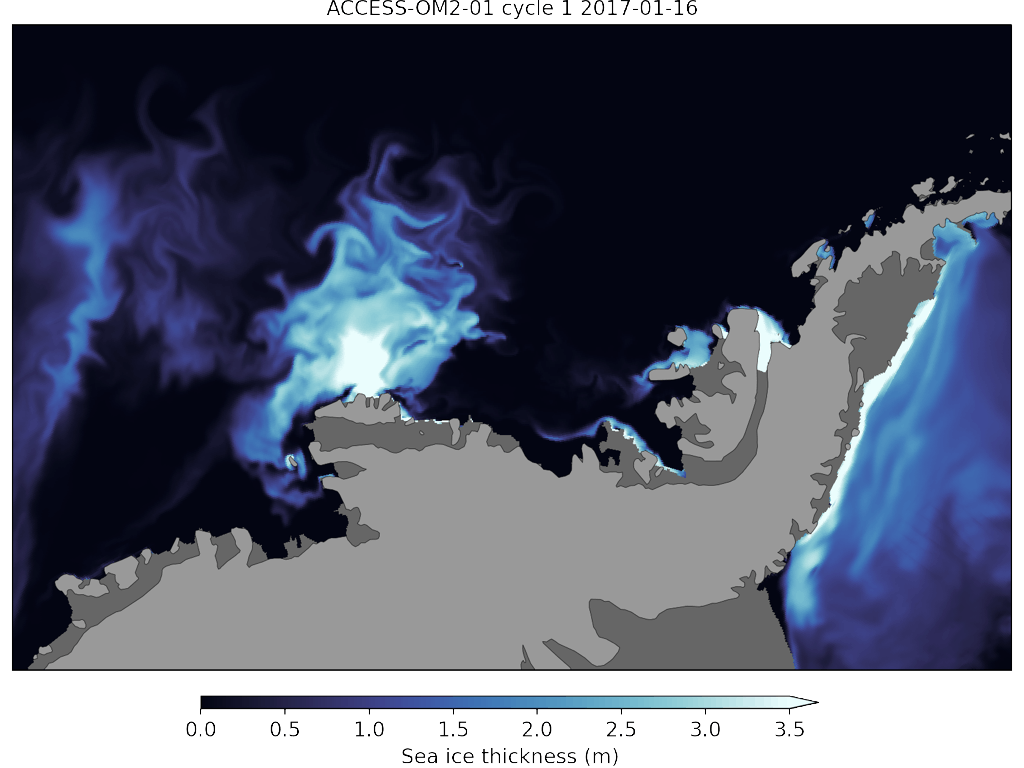
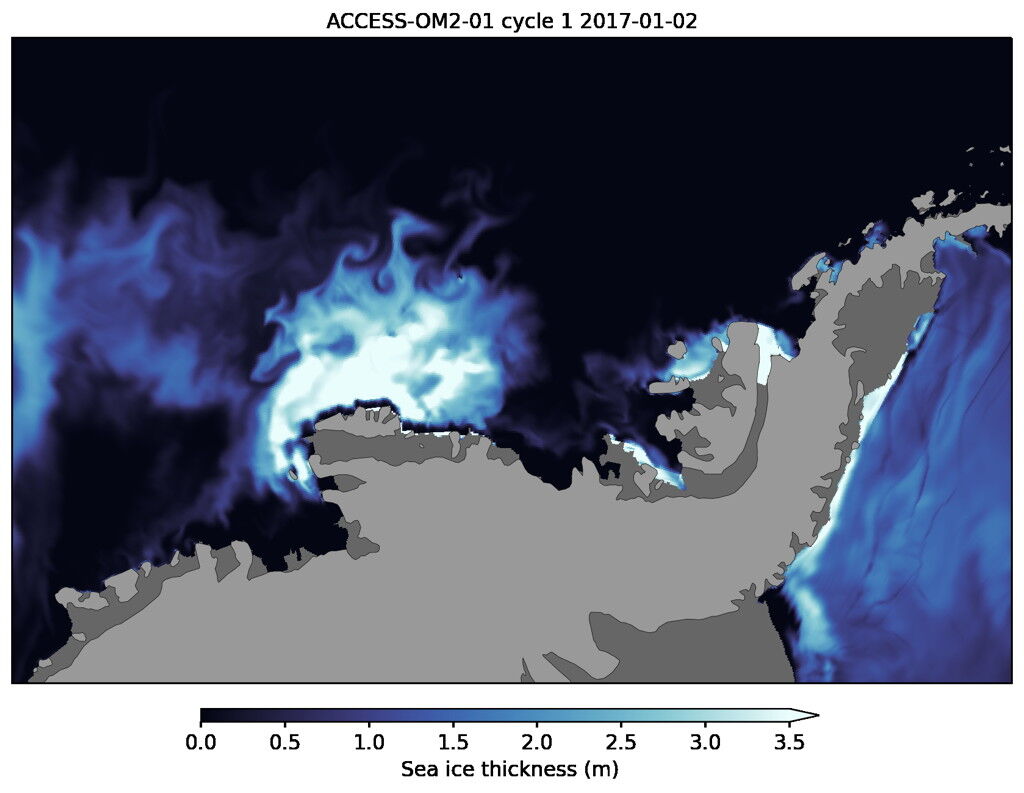
The Antarctic environment is influenced by the annual expansion and melt of sea ice over an area of ocean larger than the Antarctic continent itself. Sea ice is frozen seawater, and its growth and decay involve a complex interplay of sea ice with heating, cooling and drag from ocean currents and the atmosphere. In turn, sea ice affects the heat absorbed from the sun, the ability of the ocean to absorb atmospheric gases, and the salinity (and therefore density) of the surface ocean. In this project we aim to improve the accuracy of state-of-the-art computer models that simulate the ocean and sea ice and run on the most powerful supercomputer in the Southern Hemisphere. These model components depend on many parameters whose values are poorly constrained, and we aim to improve the simulations by refining these parameter values. In the past year we have used a coupled ocean-ice model to simulate ocean and sea ice change from 1958 to 2018 and undertaken careful comparison with available observations to check their accuracy. We have found that our model configurations perform better than many previous ones, but they are still biased in ways we would like to improve. We conducted 45 experiments with different parameter choices to determine parameter sensitivity. These experiments show that the model biases mostly do not depend on model grid resolution, and investigation is ongoing to determine the optimal set of parameters that minimises the discrepancy with observations. These optimised parameters will then be used to improve the Bluelink ocean forecasting system, which is being upgraded to include sea ice; ultimately, sea ice in ocean state forecasts will improve the safety of shipping in Antarctic waters. Other end users might include developers of operational ocean-ice forecast models.
Summary of the season 2019/20
The start of this project was delayed as agreements were not signed until February. Therefore, only preliminary preparation of the data files has been possible so far.