
Project information
Project aim
The project aims to assess the susceptibility of the remaining Antarctic ice shelves to rapid and catastrophic disintegration, of the type that removed ice shelves around the Antarctic Peninsula over recent decades. The study is motivated by the project team’s recent Nature article that revealed a link between Antarctic Peninsula disintegrations and loss of sea buffers around the shelves, which allowed destructive ocean swells to impact the shelf fronts. Ice shelf susceptibilities will be assessed using a combination of the best available satellite and model data, and the most advanced mathematical models. The project findings will have profound implications for future projections of Antarctic Ice Sheet discharge into the Southern Ocean and the resulting global sea level rise.
Project milestones
Summary of the project achievements 2023/24
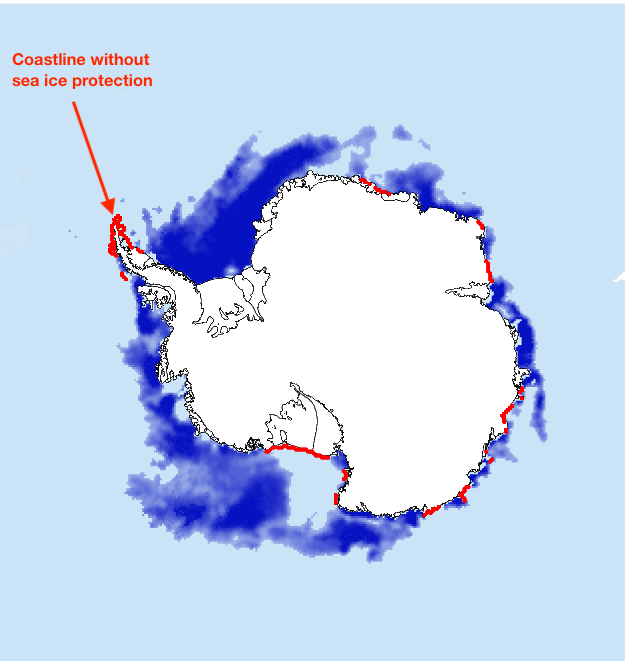
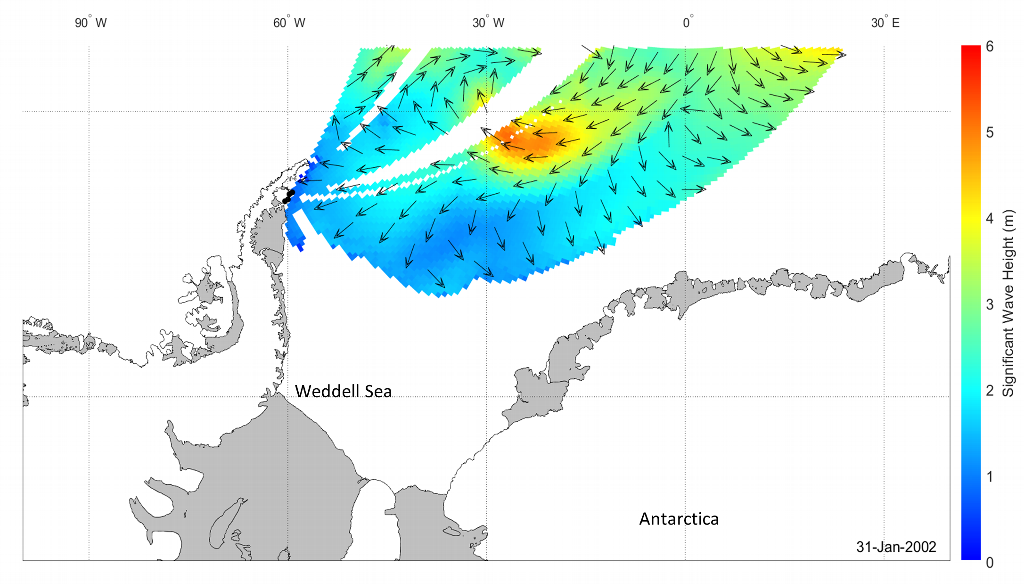
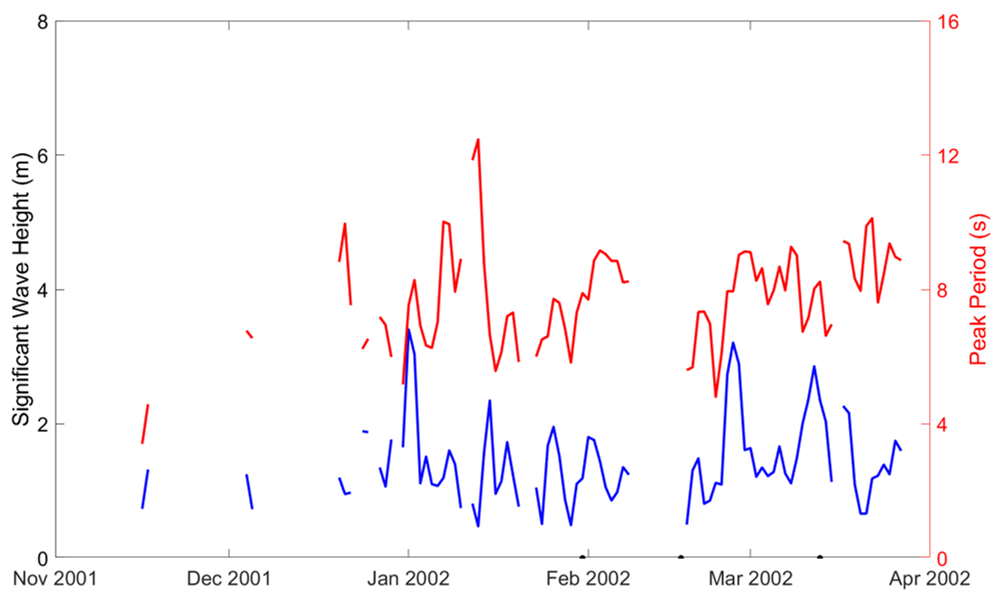
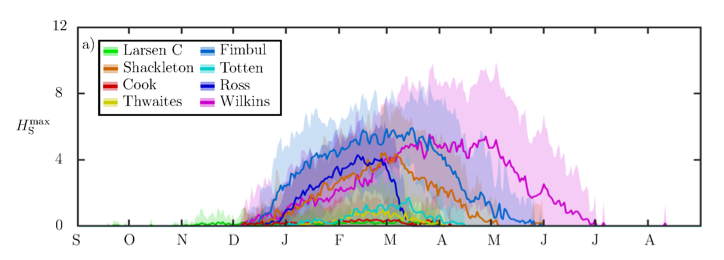
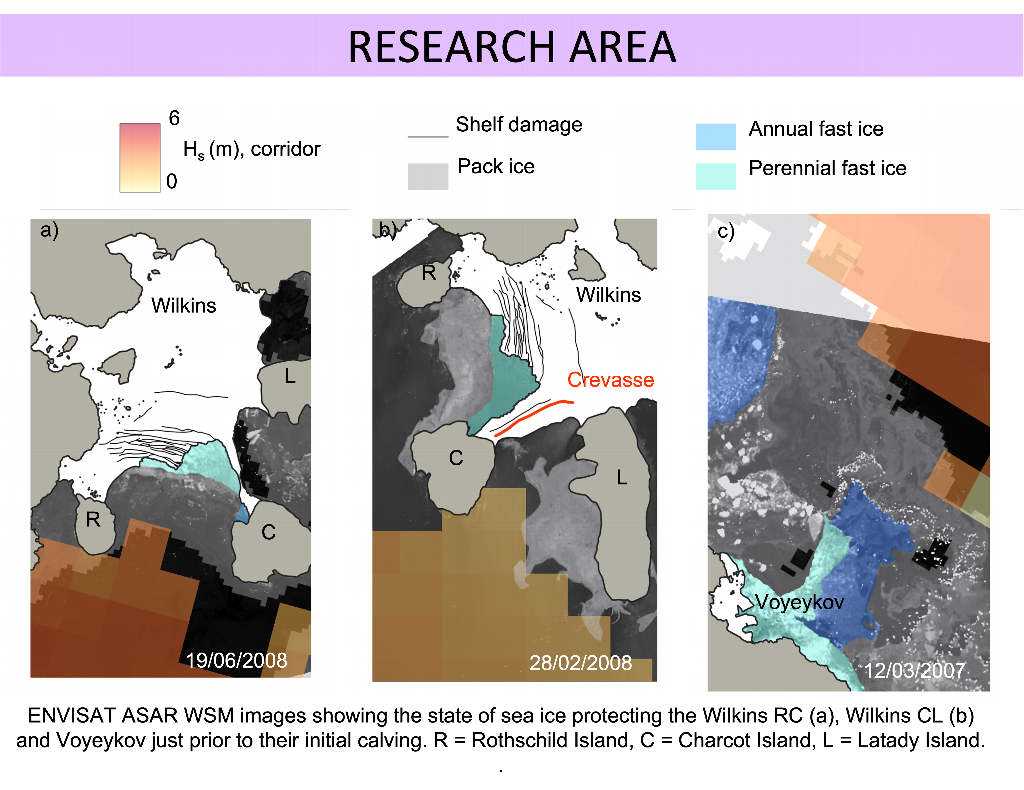
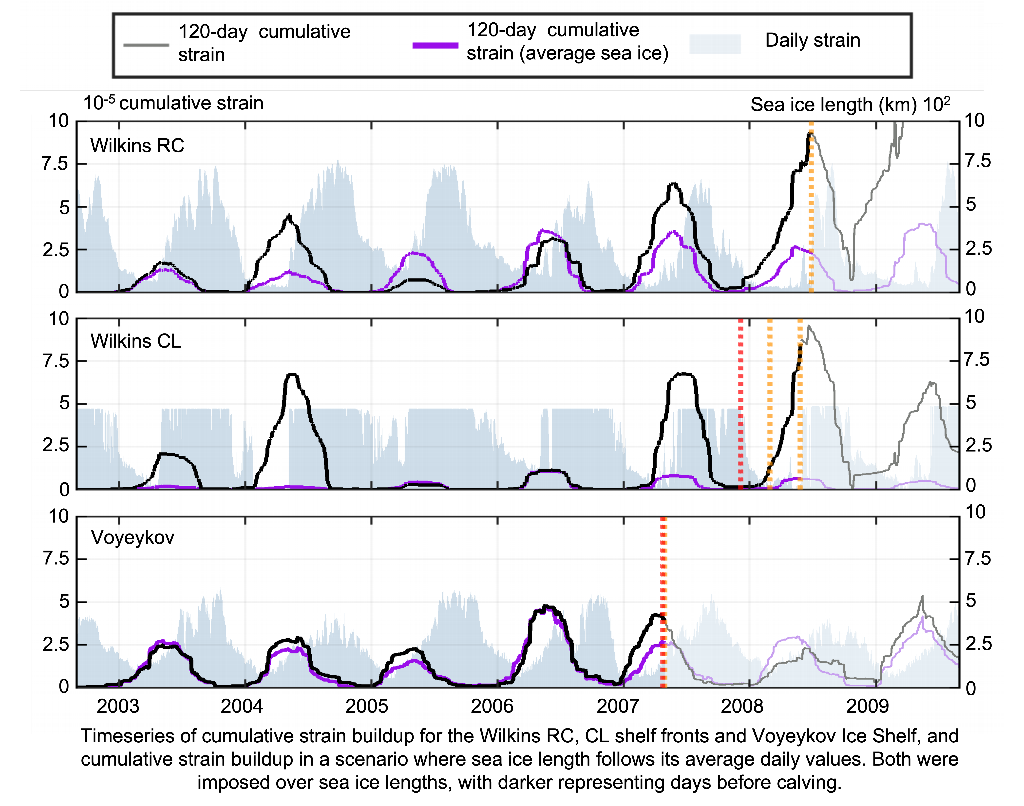
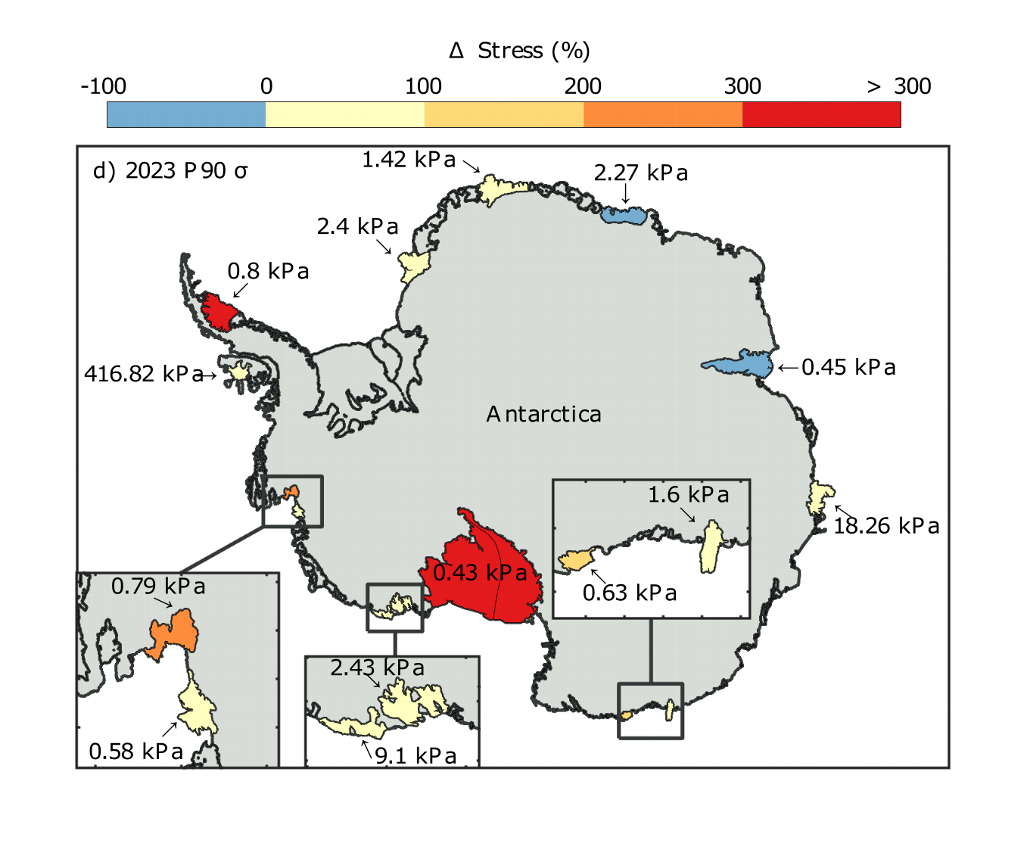
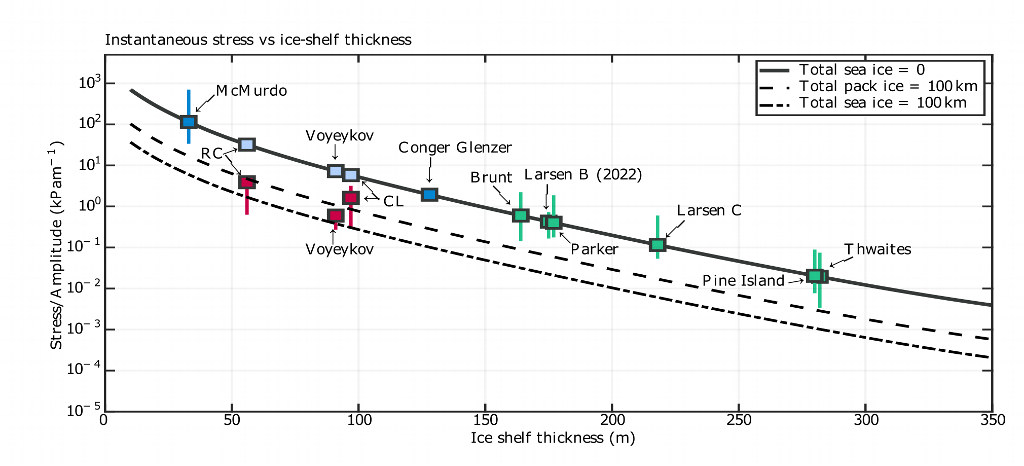
Antarctic ice shelves reduce the rate at which the Antarctic Ice Sheet flows into the ocean. Thus, the deteriorating state of many ice shelves threatens an acceleration in global sea level rise, which is a major consideration for adaptation policies in countries worldwide. Weakening of ice shelves is compounded by loss of surrounding sea ice (the frozen ocean surface), which allows powerful ocean waves to reach ice shelves and hasten the breaking away of large chunks of ice shelves in a process known as "calving". We conducted case studies and large-scale assessments of the ice shelf–sea ice–ocean wave system, generating new datasets and models that allowed us to understand the thresholds reached in large-scale calving events and predict the susceptibility of ice shelves to future calving events. The project outputs and outcomes are now available to end-user and policy makers for advanced assessments of future ice shelf losses that inform sea level rise projections.
Summary of the season 2020/21
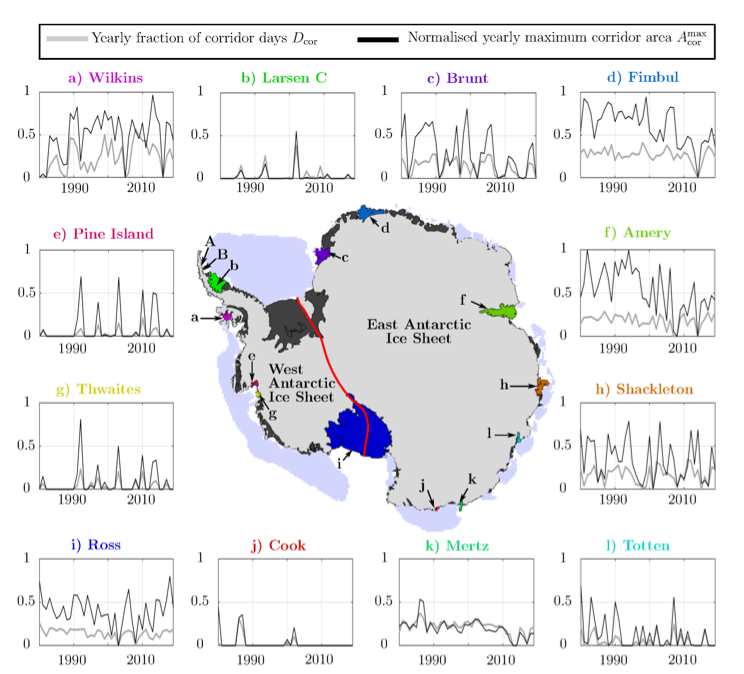
The project has achieved advances on two fronts. (1) New mathematical models of wave-induced ice shelf vibrations have been developed, in which the shelf is modelled as a finite elastic body rather than a thin plate, allowing for more accurate modelling of stresses around rifts and other defects in the shelves, and with BEDMAP2 data integrated for the ice shelf thickness and seabed profiles. The model developments and results have been published in a series of journal articles and presented at domestic and international research conferences. The code has been made freely available in a GitHub repository. (2) Satellite-derived sea ice concentration datasets have been used to calculate open ocean corridors leading to shelves over the past four decades, and the team have begun integrating the corridors with ocean wave hindcast datasets to calculate wave energy reaching the shelves, and determine long-term trends. Preliminary results have been presented at a domestic conference and at a research seminar.
Summary of the season 2019/20
The team have generated a data product giving daily time series of Antarctic coastline without a sea ice barrier, during the Satellite era (1979–). An HDR student has joined the team, and is currently extending the data product using a wave hindcast to generate a time series of coastline exposed to ocean waves. Moreover, the team have developed the first mathematical model of ice shelf vibrations induced by open ocean waves, in which the shelf is modelled using the full equations of elasticity, and permits ice thickening and seabed shoaling in the sub-shelf cavity. We have been awarded funding for a workshop on the Mathematics of Sea Ice and Ice Sheets, which we plan to hold in 2021, and bring leading international researchers in the field to Australia.
Related publications
-
Sea-ice extent, concentration, and seasonality in 'State of the Climate in 2023' Bulletin of the American Meteorological Society, 2024
(Ref: 17388)
Category 1: Peer-reviewed literature
Net sea-ice extent (SIE; the area enclosed by greater than 15% sea-ice concentration) and sea-ice area (SIA; the product of sea-ice extent and concentration) were well below average or at record-low levels throughout 2023 (Fig. 6.11a).
-
Sea ice extent, concentration, and seasonality in 'State of the Climate in 2024' Bulletin of the American Meteorological Society, 2025
(Ref: 17385)
Category 1: Peer-reviewed literature
Surface melt on the Antarctic Ice Sheet (AIS) occurs primarily on the low-elevation coastal margins, especially on the Antarctic Peninsula and on the ice shelves surrounding the continent.
-
Large-scale ice-shelf calving events follow prolonged amplifications in flexure Nature Geoscience, 2025
(Ref: 17386)
Category 1: Peer-reviewed literature
The retreat of Antarctic ice shelves due to calving and the subsequent reduction in buttressing of the Antarctic Ice Sheet are of major concern for future sea-level rise. Sudden…
-
Impacts of Antarctic summer sea-ice extremes PNAS Nexus, 2025
(Ref: 17363)
Authors:Category 1: Peer-reviewed literature
Antarctic sea ice plays many crucial roles in the physical environments and ecosystems of Antarctica and the Southern Ocean. In this study, we synthesize the physical, biogeochemical, ecosystem, and societal impacts of summers with extreme low Antarctic sea-ice coverage.
-
Altimetric observation of wave attenuation through the Antarctic marginal ice zone using ICESat-2 The Cryosphere, 2022
(Ref: 16571)
Authors:Category 1: Peer-reviewed literature
The Antarctic marginal ice zone (MIZ) is a highly dynamic region where sea ice interacts with ocean surface waves generated in ice-free areas of the Southern Ocean. Improved large-scale (satellite-based) estimates of MIZ extent and variability are crucial for understanding atmosphere–ice…