
Project information
Project aim
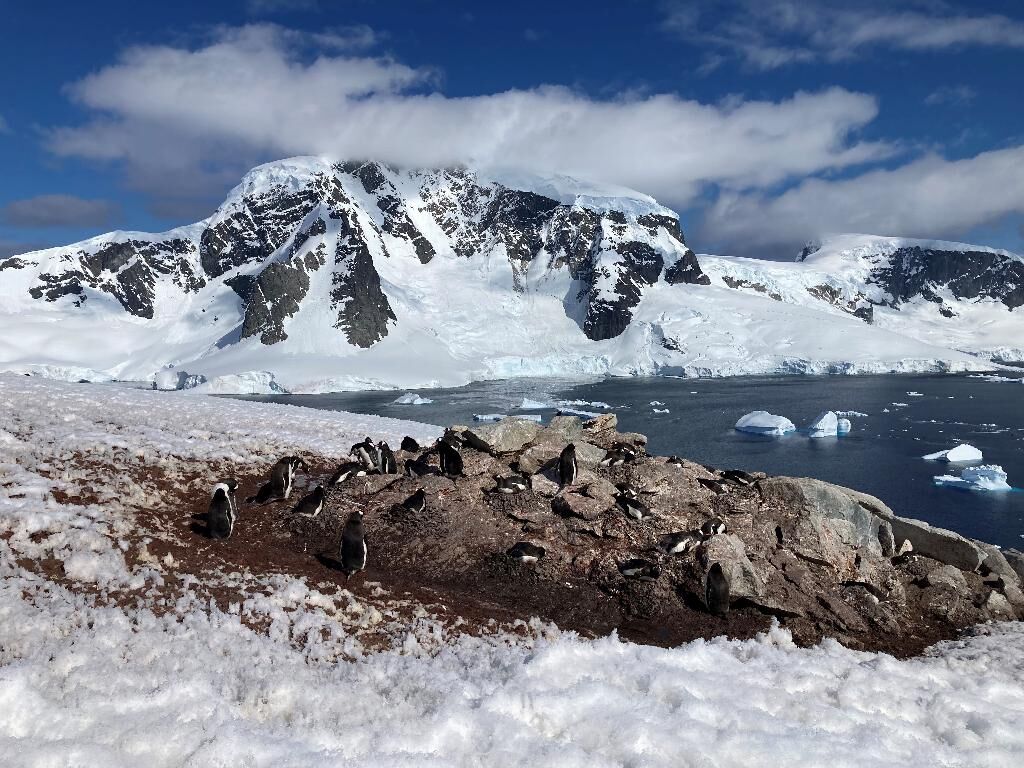
Seabirds are useful indicators of change in the Southern Ocean because of their links to terrestrial and marine environments where they breed and forage. They also have their own conservation needs. This project aims to monitor and assess Antarctic breeding seabirds across the AAT to determine population status and trends and to identify and understand current, potential or emerging threats. Research will be conducted to examine how the foraging ranges of different species overlap, and to identify important marine and terrestrial habitats, key ecological processes and driving factors. Data will provide a health-check on Antarctic breeding seabird populations, and contribute to ecosystem-based management of fisheries in east Antarctica and assessment of non-fisheries impacts such as climate change and human activities. This project will identify long-term conservation needs and track the wellbeing of a suite of Antarctic breeding seabirds including penguins and flying seabirds.
Project milestones
Summary of the season 2023/24
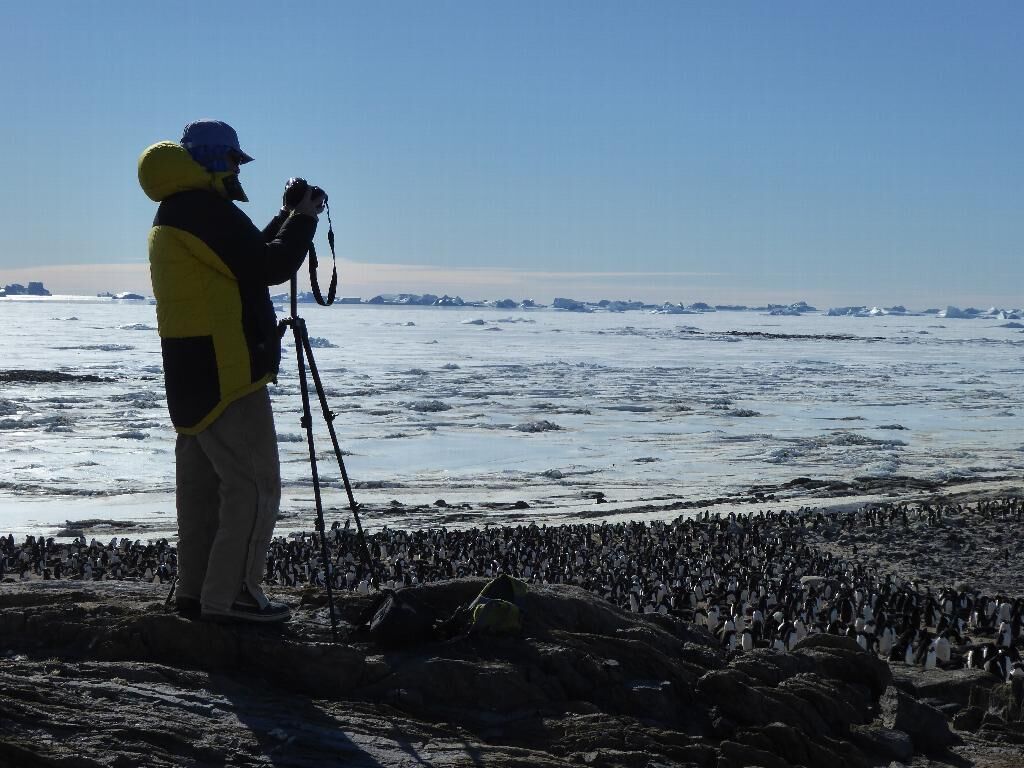
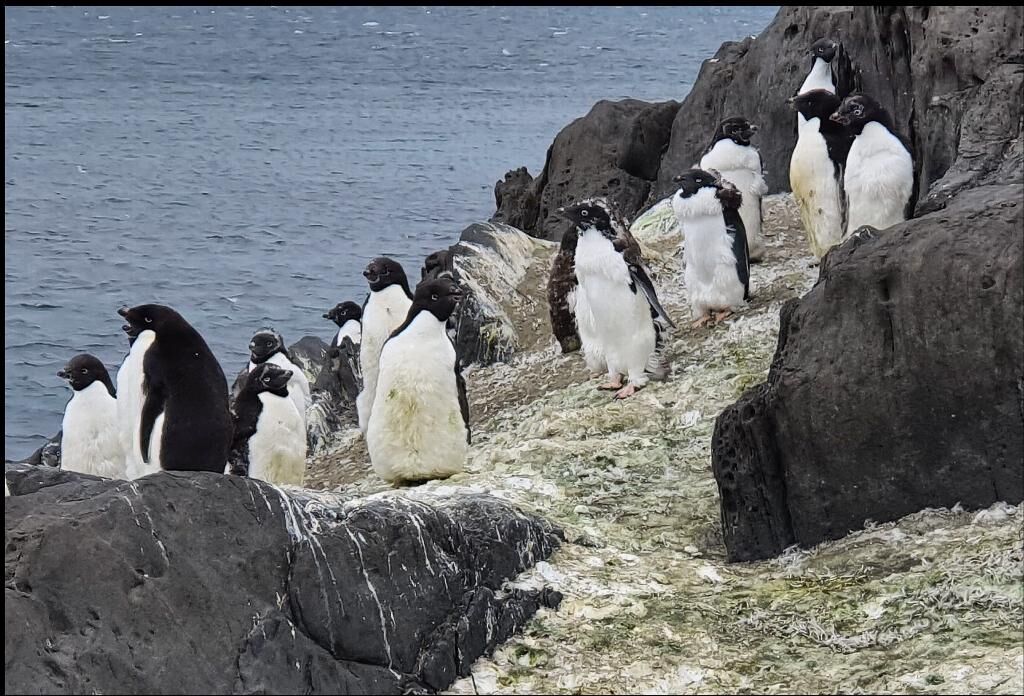
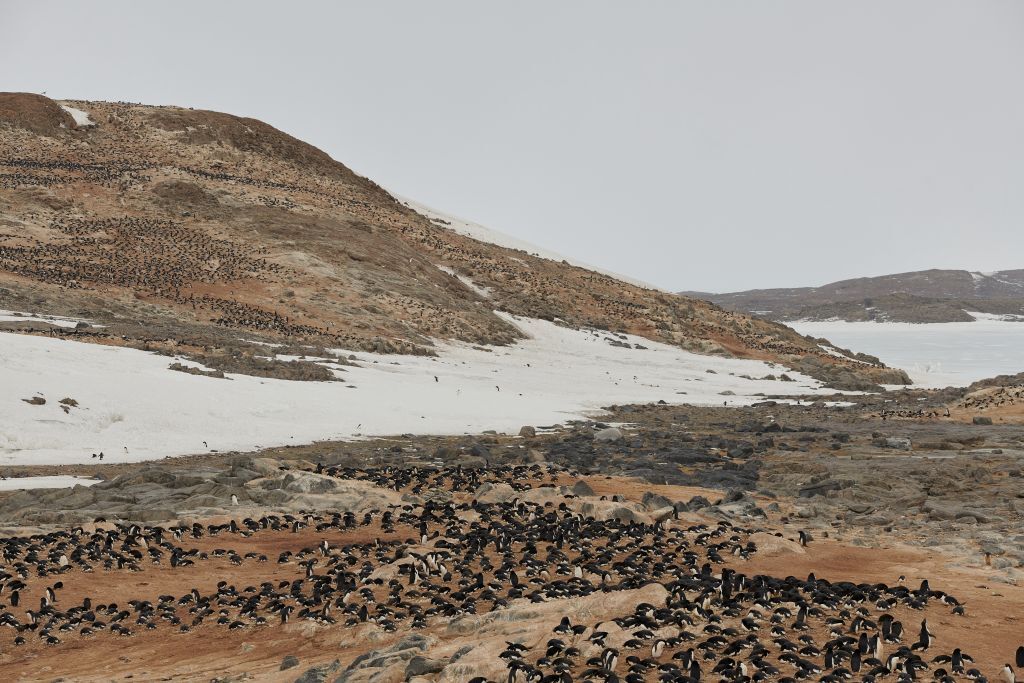
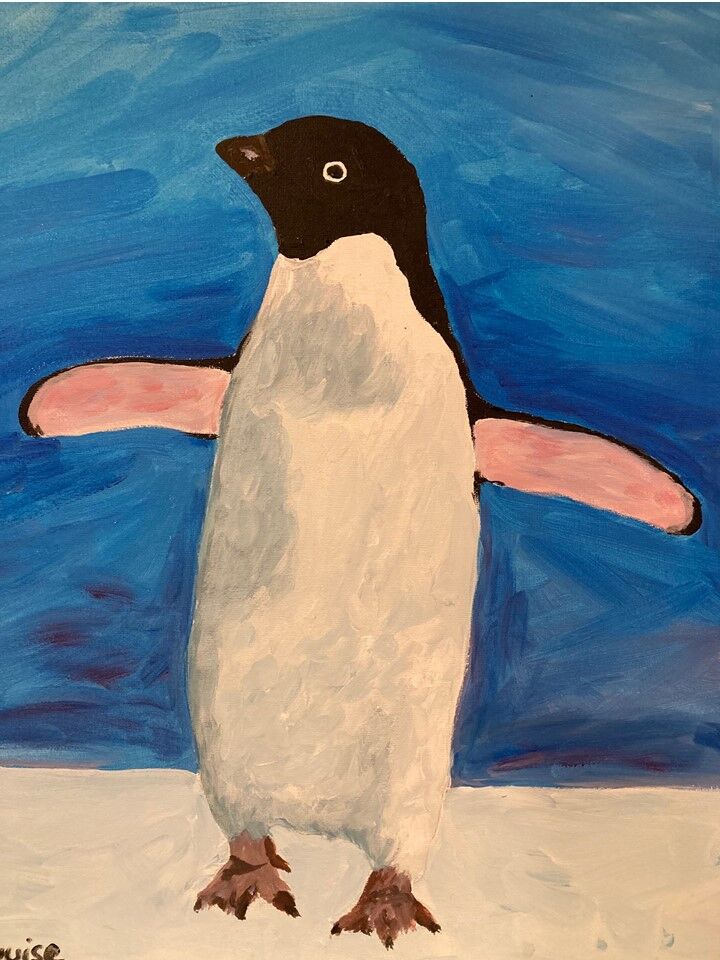
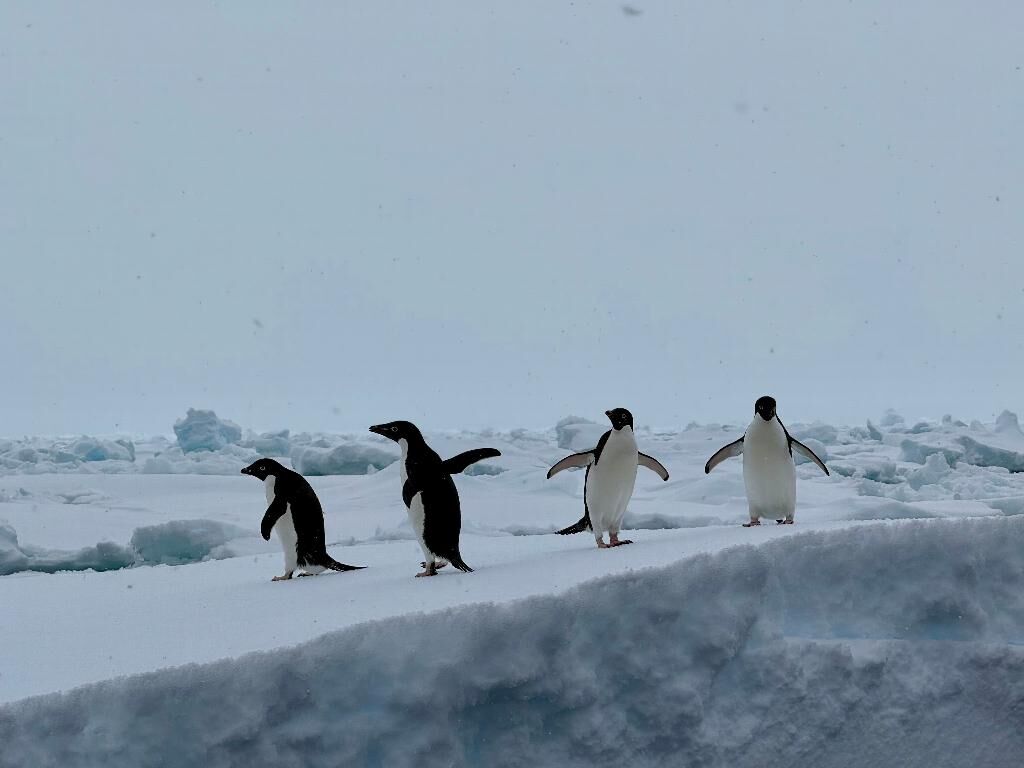
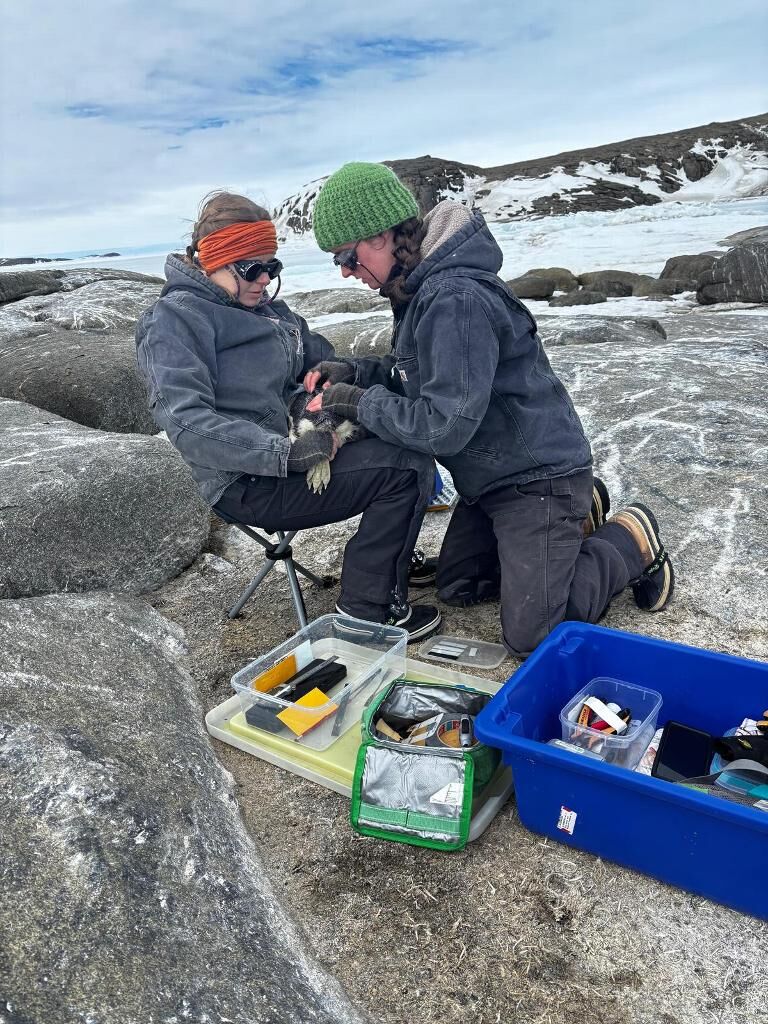
Our ground-based field team in the Mawson region confirmed that the Adélie penguin population has remained at a low level since the dramatic decadal long decline we reported in 2019/20 when we last had a field team present. The team deployed trackers on seabirds to see where they were foraging in this extreme low sea ice year. The team were able to re-instigate the long-term Adélie penguin mark-resight program which allows us to estimate their survival rates for young and old penguins - the only program able to estimate these key demographic parameters for Antarctic breeding wildlife in the Australian Antarctic Territory. We also sent a team to the Bunger Hills to enhance the capacity for the AAD to deliver a large field campaign in the area while minimising impacts on wildlife. The team traversed the landscape widely in search of skuas, snow and Wilson's storm petrels, but their populations were very restricted in distribution and their abundance was low. Collectively the two teams took whatever logistics opportunities were available to look for any signs of HPAI H5N1, a devastating strain of avian influenza that has been spreading across the globe. While their capacity to assess this was restricted only to the closest Adélie penguin colonies near Casey and Davis Station, the Mawson team was able to assess this along a large section of the coastline and did not observe any evidence of this virus being present in a range of seabird species living in that area.
The project continued to inform international policy and contributed to the Commission for the Conservation of Antarctic Marine Living Resources annual assessment of the state of the ecosystem.
Summary of the season 2022/23
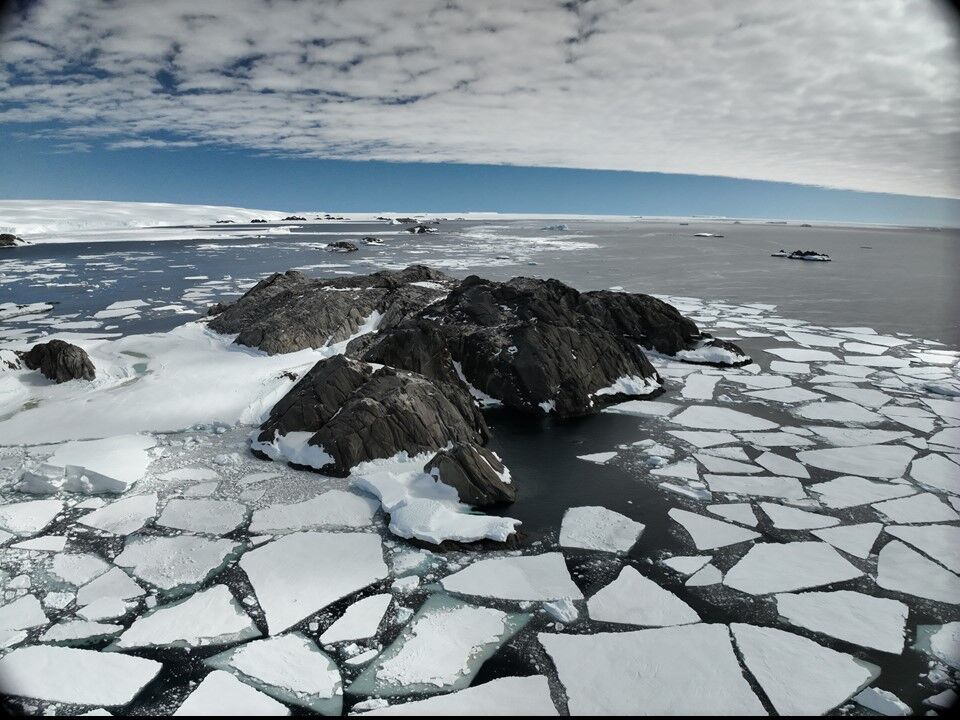
Various factors beyond our control again halted field plans for our seabird science teams working in Antarctica, now for the third year in succession. This has made us reliant again on our camera network and station expeditioners to collect some components of our planned data collection. It has also extended gaps in our time series data which impacts our ability to assess and understand change. We look forward to the opportunity to re-establish our field plans in future years. Back in Australia, we have focussed on analysing existing data and contributing to domestic and international policy issues for environmental management. Our analyses have shown considerable differences in the trajectories of the large regional metapopulations of Adélie penguins along the East Antarctic coastline. More importantly, these population trajectories are not stable. Where this is most concerning is when the population starts to rapidly decline after previously being positive. In the Mawson region, this is precisely what has occurred, and at a pace that rivals negative population growth rates reported elsewhere in Antarctica. In this area, this change was likely due to a combination of extensive fast ice making it difficult for parents to provision their offspring coupled with a reduced fledgling survival during their first winter. While it is challenging to identify precisely why the fledglings struggled after they left their colonies for their winter migration, it looks like their survival is enhanced when large cohorts of penguin chicks leave together and this may reflect safety in numbers applying across the vast and harsh Southern Ocean.
Summary of the season 2021/22
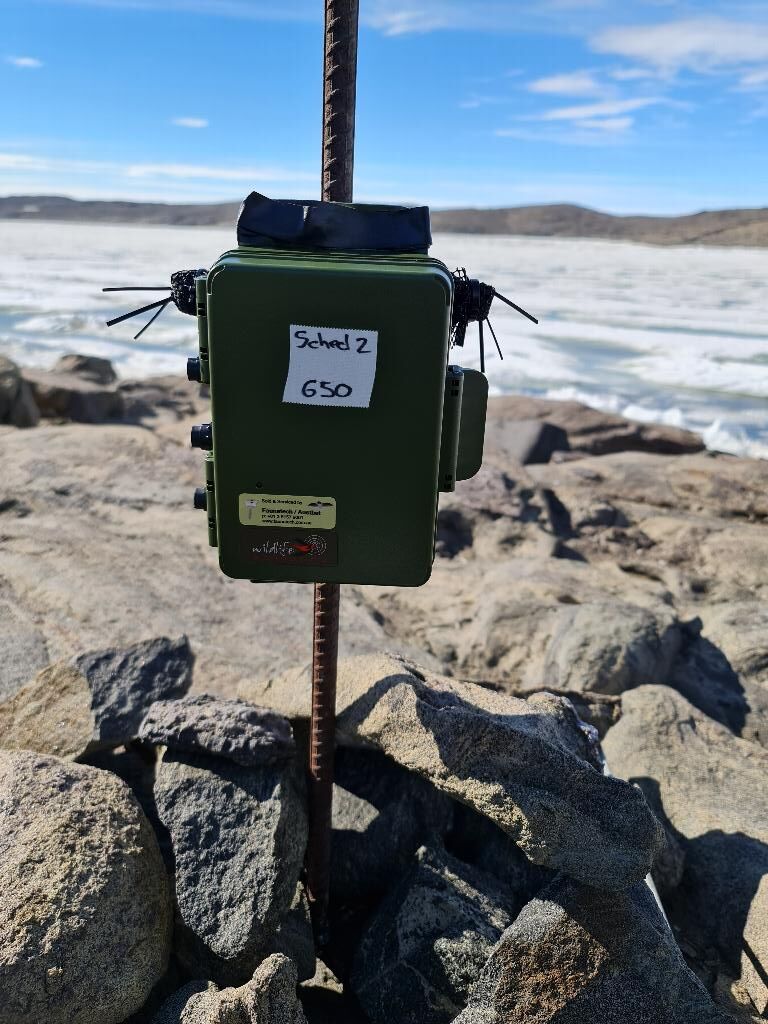
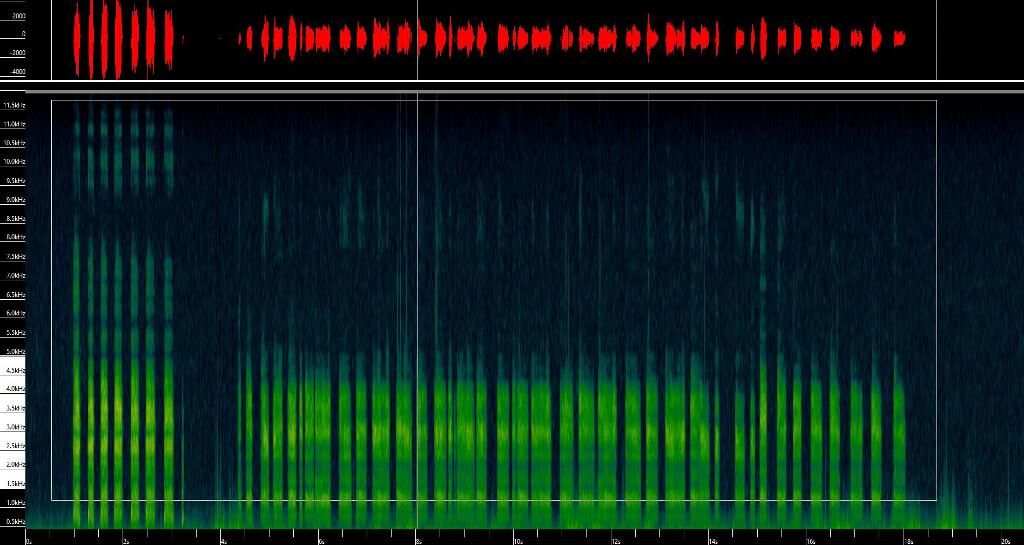
Our field plans were again thwarted. Fortunately, our expeditioners did what they could to help. The Mawson Huts Foundation team set up a seabird monitoring camera, collected samples, and surveyed penguins at Commonwealth Bay. Others resighted tagged penguins, counted seabirds, and maintained cameras. At Davis they counted moulting penguins and placed audio recorders near Wilson's storm petrel cavity entrances to assess whether their vocalisations signal their comings and goings. These tiny birds nest under large slabs of rock, and are incredibly challenging to observe. While they look delicate, they journey north of Australia during winter, and this technology should enlighten us on their summertime ecology. Back in Australia, our students estimated how much extra food penguins require under expected changes to their prey, the importance of well-constructed nests for successful breeding, and learnt about their incredibly flexible and adaptable 3-D foraging behaviour to capture food!
Summary of the season 2020/21
The global pandemic halted field plans for our science teams working on seabirds in Antarctica during 2020/21. As a consequence, we were more reliant than usual on station expeditioner support and very appreciative that the expeditioners at Mawson, Davis and Casey stations could continue to nurture our camera fleet for monitoring seabirds. While the full research program was not possible as components require experience working with and around wildlife, the expeditioners monitored previously banded skuas, resighted tagged penguins, took photos of colonies, and conducted marine debris and moulting penguin surveys. We were relieved to learn that the skuas carrying small light sensors had returned to their nesting areas, and we remain keen to retrieve the devices and their precious data on their winter migration as soon as we can get a science team on the ground. Our team led at-sea bird surveys on the Investigator for the TEMPO voyage which will result in a better understanding of their foraging behaviour. At Davis, surveys of moulting penguins showed them gathering in groups of up to 150 birds, mainly along the coastline but also inland up to half a kilometre. The moult is an incredibly challenging time for the birds when they remain on land for weeks losing body condition as they replace their feathers. Moulting is vitally important so the birds can start their winter migratory journey and enter the harsh winter months with new feathers so they can remain warm and waterproofed. The survey showed moulting penguins distributed on land well beyond their breeding colonies in larger groups than we were expecting.
Summary of the season 2019/20
During 2019/20 we successfully deployed field teams to the Mawson and Davis regions to research a range of Antarctic breeding birds. Some of the work was sombre in its nature as we collected samples that will tell us whether these birds, living in one of the most remote parts of the planet, have accumulated mercury in their feathers, or ingested plastics or micro-plastics. The Adélie penguins demonstrated their lack of capacity to behave in a mathematically optimal manner as they traversed the sea-ice in anything other than an orderly route. As always, their antics amused, and the video footage of them capturing krill under the sea-ice impressed us with how agile they are at capturing their prey. We finalised what we are confident is an approach for monitoring cape petrels across the Vestfold Islands which will serve to detect future change and allow an early indication of pressures on that species in that area. Other work was directed towards understanding the potential impacts on the seabirds from building and operating an aerodrome in the Vestfold Hills near Davis Station. We have made substantial progress towards developing a system for monitoring the nesting activities and reproductive success of Wilson's storm petrels, the smallest of the Antarctic breeding seabirds that lives deep inside tiny cavities nestled in the rocks.
Related publications
-
High-resolution ocean sea ice model outputs to predict species distribution: case study of crabeater seal Lobodon carcinophagus in East Antarctica Marine Ecology Progress Series, 2025
(Ref: 17421)
Category 1: Peer-reviewed literature
Species distribution models (SDMs) quantify the relationship between species presence and environmental factors. They are often used to guide conservation management plans, but limited availability of environmental and biological data in undersampled regions, such as the Southern Ocean…
-
Mapping Antarctic seabird occupancy from a century of breeding observations to inform environmental management and conservation Diversity and Distributions, 2025
(Ref: 17379)
Authors:Category 1: Peer-reviewed literature
Aim … To map presence, absence and ignorance of Antarctic seabird breeding occupancy at the spatial resolution of ice-free habitat sites to identify knowledge gaps and inform management and conservation. Location … East Antarctica between longitudes 30°?E and 150°?E.
-
Global assessment of marine plastic exposure risk for oceanic birds. Nature Communications, 2023
(Ref: 16863)
Authors:Category 1: Peer-reviewed literature
Plastic pollution is distributed patchily around the world’s oceans. Likewise, marine organisms that are vulnerable to plastic ingestion or entanglement have uneven distributions. Understanding where wildlife encounters plastic is crucial for targeting research and mitigation. Oceanic seabirds…
-
Important Bird Areas and Antarctic Specially Protected Areas: Toward the development of selection criteria ATCM XLIII - CEP XXIII Paris, France 14 - 24 June 2021, Delegations of Australia, Germany, New Zealand, Norway, Spain, United Kingdom, United States (only AAD authors listed), 2021
(Ref: 17001)
Category 2: International meeting papers
This Information Paper supplements Working Paper 43 by setting out draft criteria that might be applied to identified Important Bird Areas (IBAs) as well as to other bird colonies or aggregations1 when considering ASPA designation.
-
Revision of the Management Plan for Antarctic Specially Protected Area (ASPA) No. 103 Ardery Island and Odbert Island, Budd Coast, Wilkes Land, East Antarctica ATCM XLIII - CEP XXIII Paris, France 14 - 24 June 2021, Delegation of Australia (only AAD authors listed), 2021
(Ref: 17003)
Category 2: International meeting papers
In accordance with Article 6.3 of Annex V to the Protocol on Environmental Protection to the Antarctic Treaty, Australia has undertaken a five-yearly review of the management plan for Antarctic Specially Protected Area (ASPA) 103 Ardery Island and Odbert Island.