
Project information
Project aim
Antarctic krill is a key component of the Southern Ocean (SO) food web, providing the link between lower trophic levels and higher-order predators. Therefore perturbations in the krill population will have ramifications throughout the SO ecosystem. Krill are also caught by a fishery in waters off Australia’s Antarctic Territory (AAT), and this must be adequately managed. This project contributes to ensuring sustainable management of the krill fishery in waters off the AAT through coordinating the design and execution of field surveys as well as analysis of existing data.
Project milestones
Summary of the project achievements 2022/23
Antarctic krill are a fundamental component of Southern Ocean ecosystems and perturbations to krill populations have ramifications for the entire ecosystem. Krill are fished across the Southern Ocean, which is managed by the Commission for the Conservation of Antarctic Marine Living Resources (CCAMLR), and ensuring the sustainable management of this fishery is a high priority for the Australian Government.
This project, by designing and executing a survey to estimate krill biomass and investigate dynamics of krill aggregation at multiple spatial and temporal scales, aimed to allow deciding the location of more targeted (i.e. one to two week long) krill surveys, that will be critical to further understand the regional krill dynamics and predator-krill interactions. Pursuing regular (annual, if not near-annual) surveys in the future using the developed survey design through this project will then allow for assessments of year-to-year variation of the krill ecosystem to CCAMLR, ensuring that harvesting is carried out in a sustainable manner into the future.
This project successfully
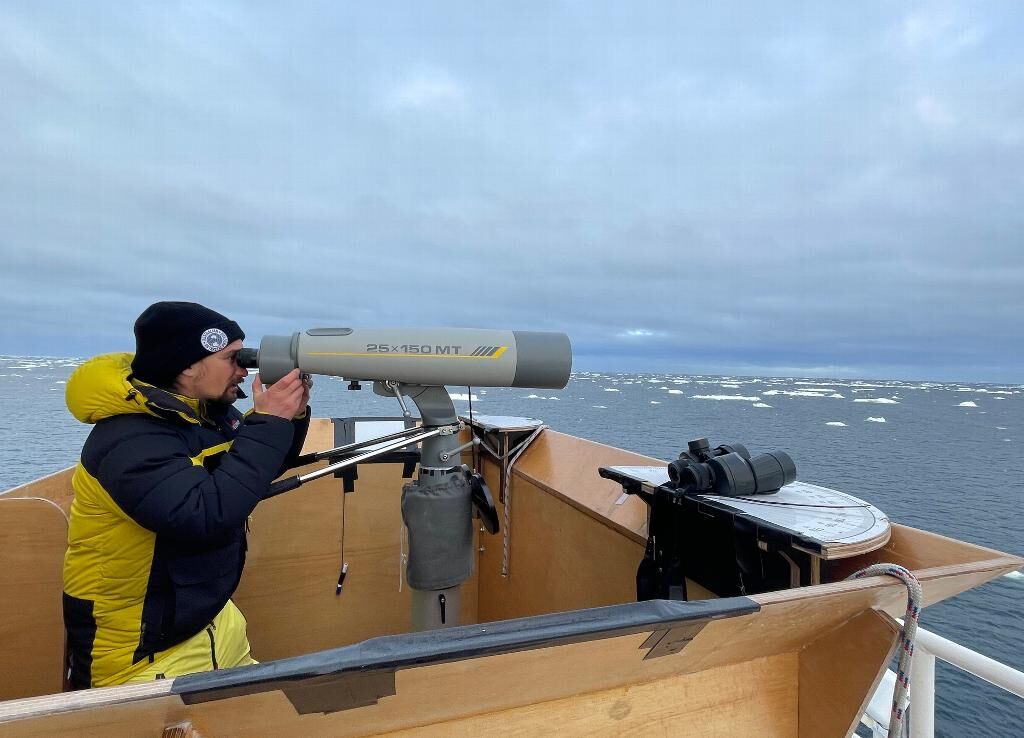
i) executed TEMPO survey and estimated krill biomass - a fundamental parameter for updating the precautionary catch limit for the krill fishery by CCAMLR – as well as collected predator data, in waters off a portion of Australia's Antarctic Territory,
ii) pursued and continued to refine the risk assessment framework, contributing to the development of small-scale management units for the krill fishery in CAMLR Convention areas,
iii) contributed to an assessment of marine ecosystem status in the East Antarctic region through an international collaboration under the CCAMLR system
iii) synthesised empirical models to inform survey designs, and to design and test tractable long-term krill monitoring program off the AAT, which led to kick starting the new AAS project (#4636), 'Sustainable Management of Antarctic Krill and Conservation of the Krill-based Ecosystem' (KaKE) which was approved in 2022, and;
iv) initiated long-term monitoring using KOMBI, which will contribute greatly to our understanding of krill seasonal abundance and will be an integral part of the design the future long-term monitoring program of AAT (#4636) and to inform krill fishery management.
Summary of the season 2022/23
Antarctic krill are a fundamental component of Southern Ocean ecosystems and perturbations to krill populations have ramifications for the entire ecosystem. Krill are fished across the Southern Ocean and sustainable management of this fishery is a high priority for the Australian Government. This project aims to refine, design, develop and implement an integrated and comprehensive interdisciplinary program of scientific research and monitoring at a scale that will provide new and important insights into krill and the Southern Ocean krill-based ecosystem.
In the last 12 months, members of the project team have progressed with review and publication of a krill biomass estimate for Commission for the Conservation of Antarctic Marine Living Resource (CCAMLR; the international body manages krill fishery) Subdivision 58.4.2-east, which had previously been endorsed by its Scientific Committee as the best available scientific estimate for the region.
The team has initiated the process for updating precautionary catch limit for krill in this Subdivision for it to be considered at this the annual Scientific Committee later this year and presented updated parameters for the krill stock assessment model (Grym) to estimate precautionary yield at the intersessional Working Group for Ecosystem Monitoring and Management.
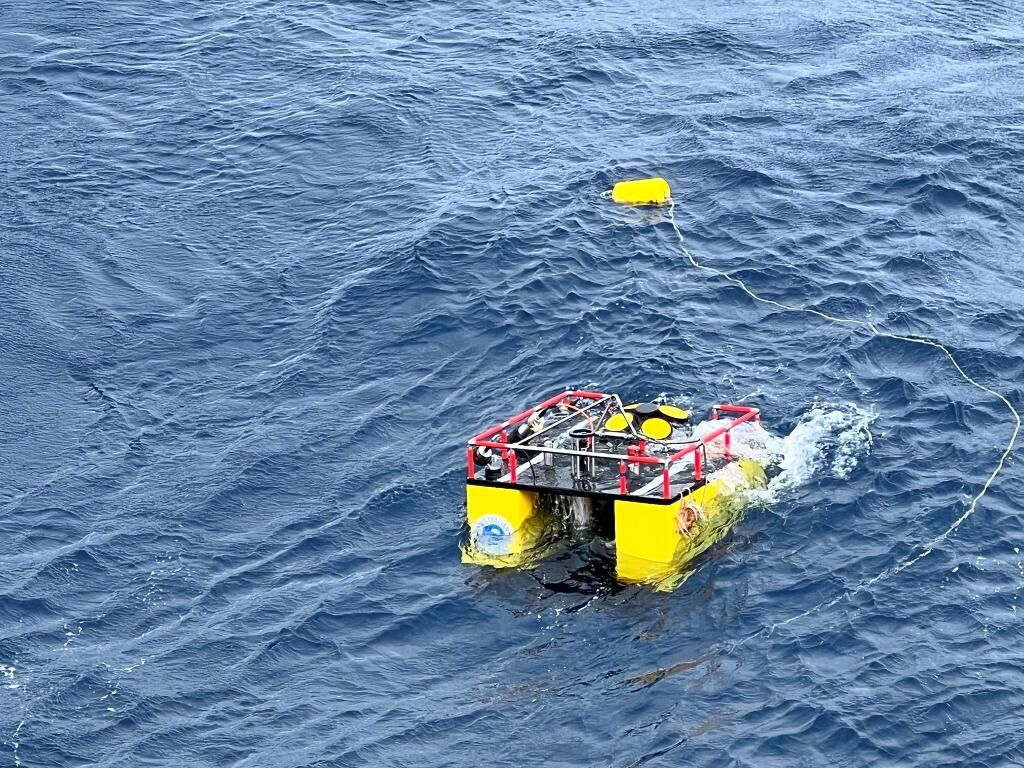
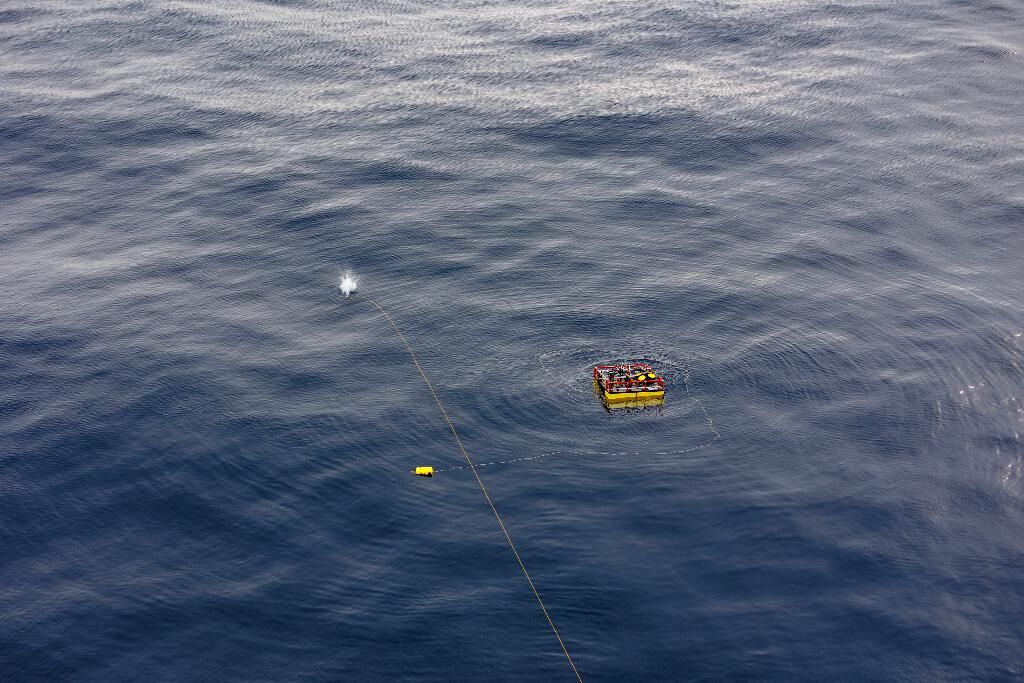
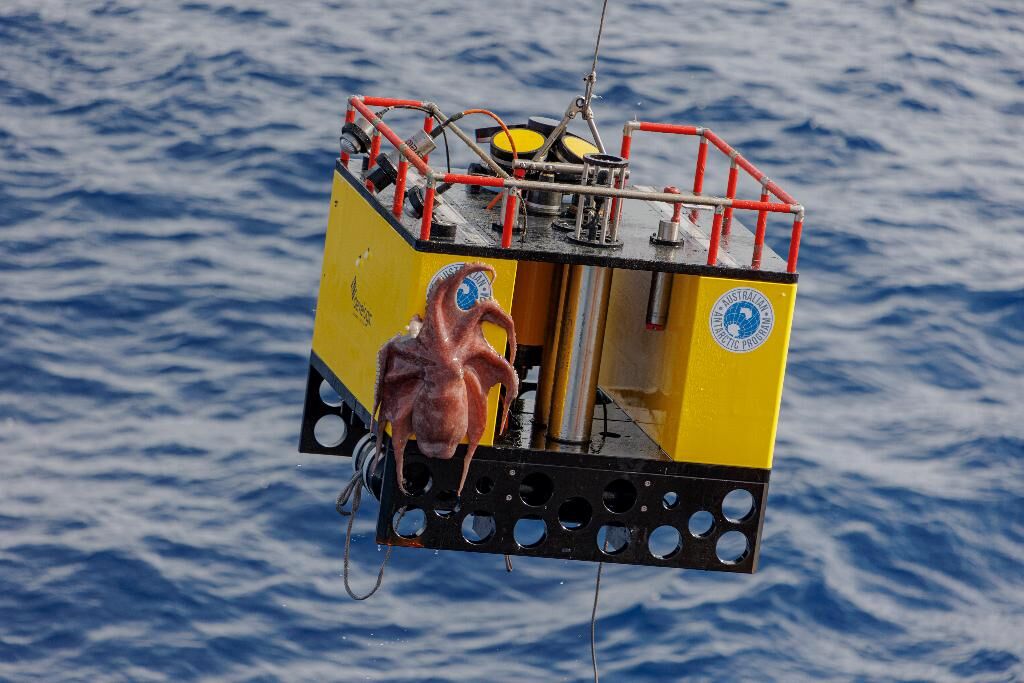
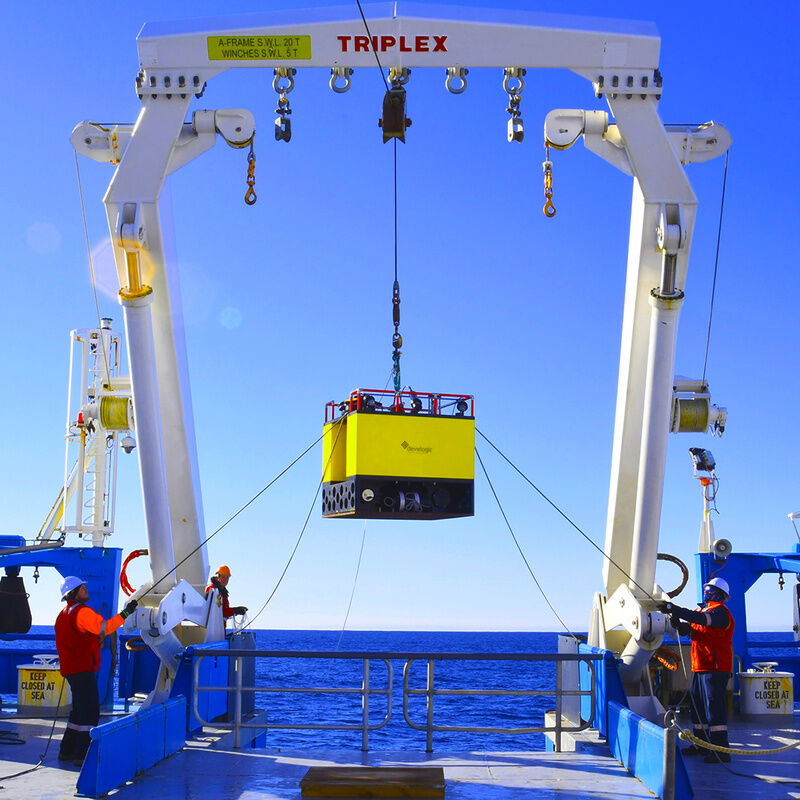
Another highlight was the successful recovery of the remaining two Krill Observational Moorings for Benthic Investigation (KOMBI) by the chartered ice breaker MV Aiviq. The KOMBI Moorings were originally deployed during TEMPO voyage in 2021, and were successfully recovered from the sea floor at sites of 835 and 1705 metres depth. Analysis of the data from the KOMBI mooring retrieved in the previous year has progressed well with data revealing the distribution and movement of krill throughout an entire year being successfully recorded and currently being prepared for publication. The data will contribute greatly to our understanding of krill seasonal abundance and will be an integral part of the design the future long-term monitoring program of AAT and to inform krill fishery management.
SCAR Krill Expert Group (SKEG) Krill Stock Hypothesis Workshop held online in March 2023, supported by members of the project team. At CCAMLR's request, the aim of this workshop is to develop a Krill Stock Hypothesis to support the development of krill management in the Southwest Atlantic Sector, and included presentations by several early career researchers associated with the project.
Finally, the project team have been working towards kickstarting the new AAS project (#4636), 'Sustainable Management of Antarctic Krill and Conservation of the Krill-based Ecosystem' (KaKE) which was approved in 2022.
Summary of the season 2021/22
Antarctic krill are a fundamental component of Southern Ocean ecosystems and perturbations to krill populations have ramifications for the entire ecosystem. Krill are fished across the Southern Ocean and sustainable management of this fishery is a high priority for the Australian Government. This project aims to refine, design, develop and implement an integrated and comprehensive interdisciplinary program of scientific research and monitoring at a scale that will provide new and important insights into krill and the Southern Ocean krill-based ecosystem.
In the last 12 months we progressed the analysis of acoustic data and estimated krill biomass in the region, which was endorsed by Commission for the Conservation of Antarctic Marine Living Resources (CCAMLR; the international body manages krill fishery) as the best available scientific estimate for the region.
One of the highlights of this season was the successful recovery of the Krill Observational Moorings for Benthic Investigation (KOMBI) by our new ice breaker RSV Nuyina. The KOMBI Moorings were originally deployed during TEMPO voyage in 2021, and one of these was successfully recovered after sitting one year on the 385m deep seafloor. The confirmation of the basic functioning of KOMBI gives us a great confidence on the key technology that consist the integral part of the design the future long-term monitoring program of AAT and to inform krill fishery management.
Summary of the season 2020/21
Antarctic krill is a key component of the Southern Ocean (SO) food web, providing the link between lower trophic levels and higher-order predators. Therefore perturbations in the krill population will have ramifications throughout the SO ecosystem. Krill are also caught by a fishery in waters off Australia's Antarctic Territory (AAT), and this must be adequately managed. This project contributes to ensuring sustainable management of the krill fishery in waters off the AAT through coordinating the design and execution of field surveys as well as analysis of existing data.
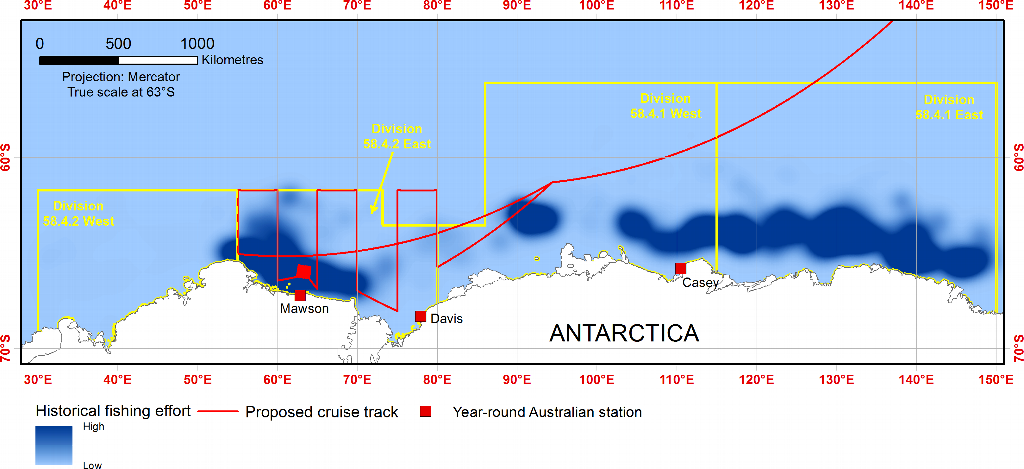
Since last year the majority of our effort went into consolidating planning and execution of Trends in Euphausiids off Mawson, Predators, and Oceanography (TEMPO) Voyage, the ship-based acoustic line-transect survey during January to March 2021 on RV Investigator to estimate krill biomass and to observe predators to understand interaction between predator and krill biomass distribution.
Our experimental approach continued to focus on studies into aspects of krill life history parameters and impacts of climate change and ocean acidification on krill biology and ecology that contributes to improving management of the krill fishery in the SO.
Summary of the season 2019/20
Antarctic krill is a key component of the Southern Ocean (SO) food web, providing the link between lower trophic levels and higher-order predators. Therefore perturbations in the krill population will have ramifications throughout the SO ecosystem. Krill are also caught by a fishery in waters off Australia's Antarctic Territory (AAT), and this must be adequately managed. This project contributes to ensuring sustainable management of the krill fishery in waters off the AAT through coordinating the design and execution of field surveys as well as analysis of existing data.
Since last year the majority of our effort went into progressing and consolidating planning of the ship-based acoustic line-transect survey scheduled during January to March 2021 on RV Investigator to estimate krill biomass and to observe krill dependent to understand interaction between predator and krill biomass distribution.
Our experimental approach continued to focus on studies into aspects of krill life history parameters and impacts of climate change and ocean acidification on krill biology and ecology that contributes to improving management of the krill fishery in the SO.