
Project information
Project aim
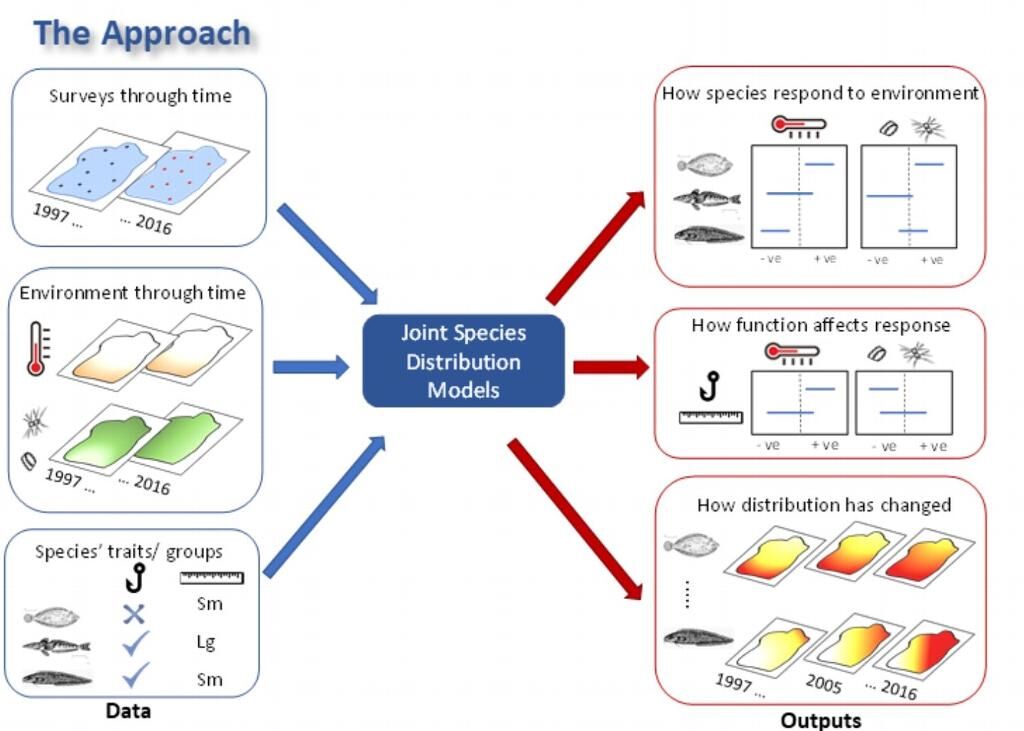
This project aims to provide scientific information on the ecological impacts of climate change and other drivers on key components of the Southern Ocean ecosystem to facilitate evidence-based monitoring, management and policy decisions. We will use new statistical methods in ecology and combine them with existing, long-term datasets of demersal fish on the Kerguelen Plateau and zooplankton in East Antarctica. We will provide maps and new, quantitative knowledge on if, how (which species) and why (in response to which factors) these key Southern Ocean assemblages have changed in recent years and what they are likely to look like in the future. These maps will be combined with simulations to provide advice on zooplankton monitoring to track changes and measure the performance of spatial management into the future. This will significantly advance the scientific information available for planning and evaluating policy and management actions.

Project milestones
Summary of the project achievements 2023/24
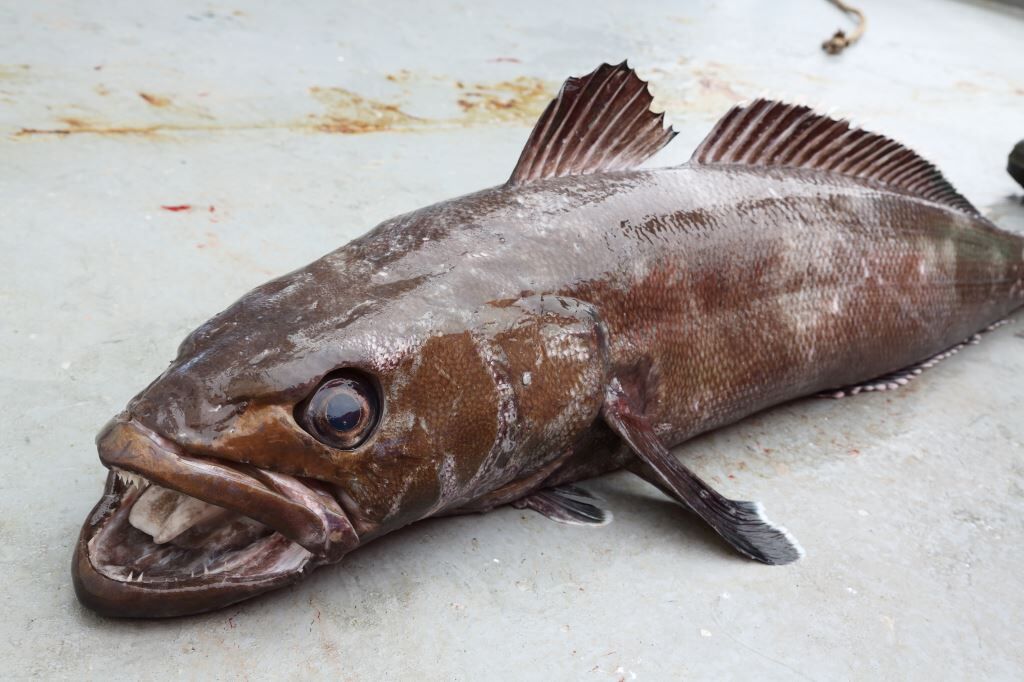
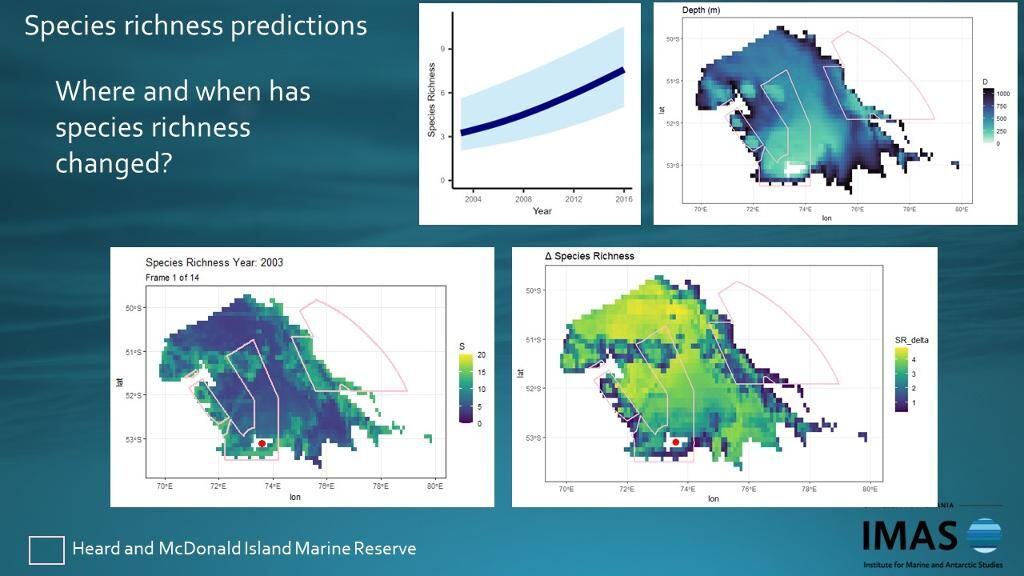
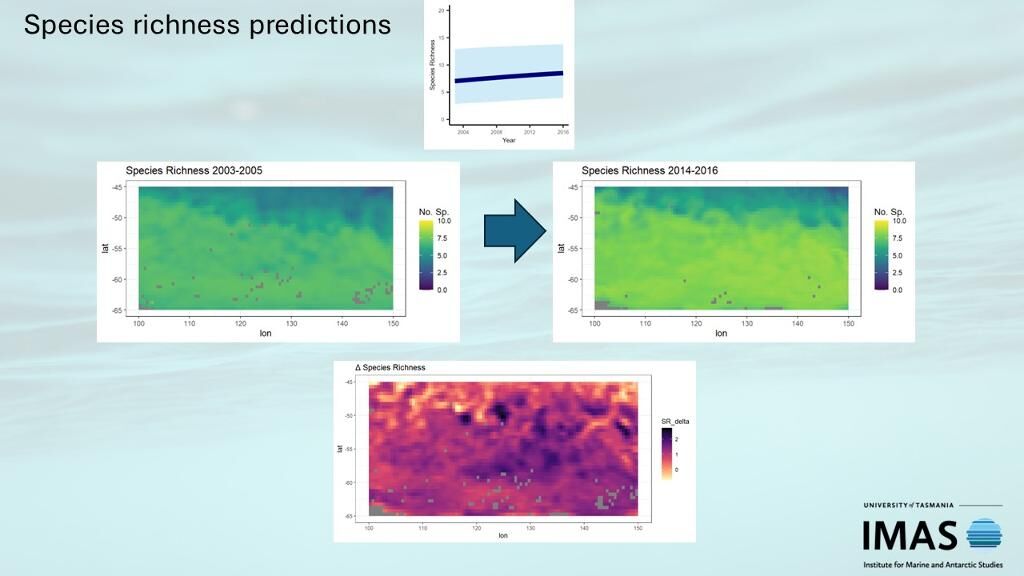
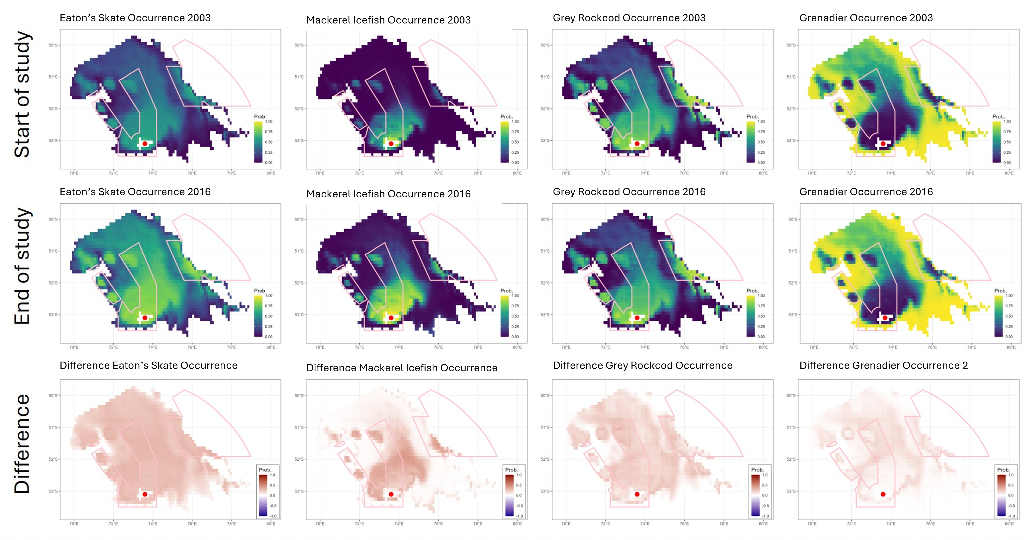
Over the past 25 years the Southern Ocean fish and zooplankton communities have been changing in distribution and composition. This study aims to model, predict, and map these changes. By using existing monitoring data and advanced modelling procedures, we were able to establish what species, where and when these changes occurred, and how these changes relate to environmental change and fisheries management. The project was split into two components; 1) Heard Island and McDonald Island (HIMI) demersal fish, and 2) Southern Ocean zooplankton. The HIMI demersal fish model showed unexpected results in that the occurrence of most fish species, and species richness, had increased between 2003 and 2016. This includes for many of the by-catch managed species, such as the skates and rock cod. The timing of these increases coincides with a fishery led changeover from the trawl-dominated fishery to a longline-dominated fishery and the elimination of illegal fishing. The study could not rule out the possibility that warmer conditions has led to an increase in the productivity of the area to benefit of demersal fish. It is difficult to establish exact causal mechanisms driving these changes, but it is likely a culmination of several of these factors. We applied the same modelling approach using data from the Southern Ocean Continuous Plankton Recorder Program. The results of the modelling showed that the distribution of zooplankton is highly patchy. We found evidence that the spatial distribution of some species has increased across the Southern Ocean, while some species have declined and their distributions have contracted. These results will aid stakeholders, managers and policymakers with future monitoring and decision making in these regions.
Summary of the season 2022/23
The analysis of ecological change in the Southern Ocean Project has provided the first insight into how fish assemble on the Kerguelen Plateau sea floor and how the zooplankton of East Antarctica changed over time. We have been able to demonstrate that the prevalence of most fish species has increased between 2003 and 2016. This timing coincides with a changeover from the trawl-dominated fishery to a longline-dominated fishery, as well as the removal of illegal fishing, and the possibility of warmer conditions has led to an increase in the productivity of the area. It is difficult to establish causal mechanisms. We are currently preparing these findings for a peer-reviewed journal article. We have used the same approach with zooplankton data. Initial results have demonstrated that zooplankton are highly patchy and that their distribution is most likely more related to species biology than to environmental conditions. We are currently working on using the same models to make future predictions. These are all important results that can now be incorporated, used by AAD researchers and managers, and used by CCAMLR, SOOS and SCAR to improve the management and monitoring of the Southern Ocean.
Summary of the season 2021/22
A new postdoc began on the project in July 2021. Analyses examining the changes in prevalence, abundance and distribution of demersal fish on the Kergeulen Plateau with respect to environmental conditions are complete. These analyses use a cutting-edge joint species distribution model and results indicate that overall species richness has increased through time and that many species have also increased in prevalence and abundance. This research is currently being written up for publication and is being presented at a national and international conference.
Summary of the season 2020/21
A recruitment process was conducted in June and a postdoc appointed to the project in August 2020, but this postdoc has unfortunately resigned for personal reasons after spending five months on the project. We have appointed another postdoc who will begin on the project in early July 2021.
Over these five months, environmental data has been compiled and demersal fish data from Heard and McDonald Island (HIMI) and zooplankton data from East Antarctica has been cleaned and formatted ready for analyses. Two expert workshops have been conducted to enhance our understanding of each ecosystem and the data collection process to facilitate modelling. Preliminary models have been built to examine changes in the HIMI demersal fish assemblage.
Summary of the season 2019/20
The funding agreement for this project was signed by all parties in late December 2019. Dr Nicole Hill, who was to be primarily responsible for conducting the project's analyses, has since been successful with a number of other funding applications (submitted around the same time) and this has necessitated a reduction in her time commitment on the project to 10%. The project will instead recruit a high-calibre researcher to fill this position but due to circumstances surrounding COVID-19 this has been delayed. We have received approval to advertise the position and are proceeding with recruitment which will enable the completion of project milestones.
We anticipate delivering the project in full, but within slightly delayed time frame.