
Project information
Project aim
We propose to investigate changes in Southern Hemisphere (SH) hydroxyl radical concentration ([OH]) over the industrial period. OH is the main tropospheric oxidant, determines the lifetime of many radiatively-important trace species such as methane, and is probably the most important parameter of the chemical state of the atmosphere. [OH] variations prior to the 1980s are unknown. We propose to measure the atmospheric history of 14C-carbon monoxide (14CO) from glacial ice at Law Dome (DE08), Antarctica, using it as a tracer for past OH. The enormous snow accumulation rate at this site minimizes interference from 14CO produced in the ice by cosmic rays, allowing for accurate determination of the atmospheric concentration. We also propose to investigate the potential of 86-Krypton in glacial ice as an indicator of changes in the position of the SH westerly winds. The information about past [OH] variations will improve model predictions of the future climate and atmospheric chemistry.
Project milestones
Summary of the project achievements 2020/21
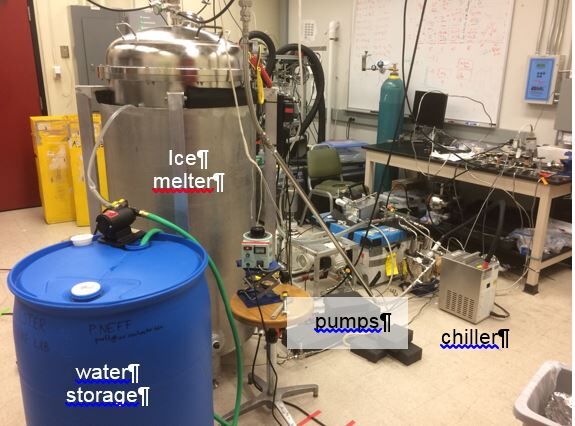
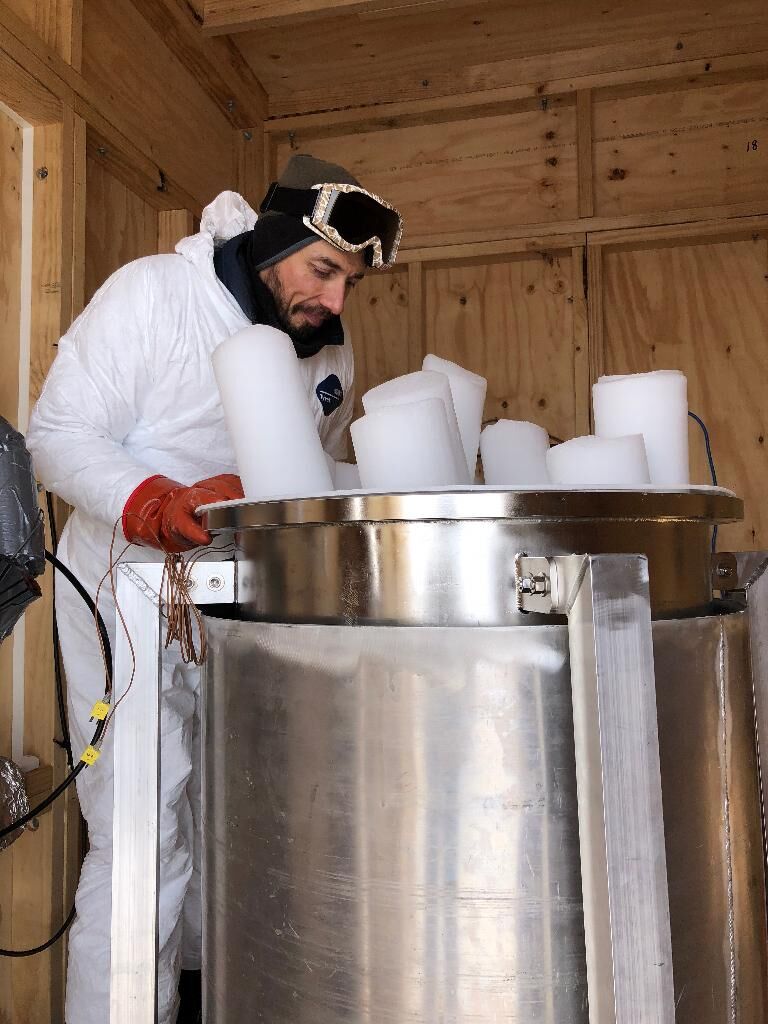
Hydroxyl, OH, is the main tropospheric oxidant and determines the lifetime of methane and most other trace gases in the atmosphere, thereby controlling their impact on climate, the ozone layer and atmospheric chemistry. Changes in OH concentration ([OH]) in response to past and future changes in reactive trace gas emissions are uncertain. Measurements of 14C-containing carbon monoxide (14CO) and other tracers such as methyl chloroform over the last ≈25 years have been successfully used to monitor changes in average [OH]. Reconstructions of 14CO from ice cores could in principle provide such constraints but are complicated by in-situ production of 14CO by cosmic rays directly in the ice. This in-situ component is relatively small and accurately corrected for at sites with very high snow accumulation rates. A joint US and Australian team sampled and measured firn air and ice at Law Dome, Antarctica (2018-19 season, site DE08-OH), to a depth of 240 m. Trapped air was extracted from the ice using an on-site large-volume ice melting system. Methane measurements of the samples date the ice core air sample ages from the 1870s to the early 2000s. Firn-air samples from the snow surface to 81 m depth capture air from the early 2000s to present. Analyses of [CO] and halocarbons in the samples demonstrate that the samples are unaffected by ambient air inclusion. 14CO analyses in these firn and ice core air samples have been successfully completed. Corrections for in-situ 14CO production, validated against direct atmospheric measurements for the more recent samples, have allowed us to develop a 14CO history. This history is being interpreted with the aid of atmospheric chemistry models to place the first observational constraints on the variability of Southern Hemisphere [OH] since ≈1870 AD. Surprisingly there is little or no long term trend in 14CO and hence probably OH over this period, despite the large increase in emissions of compounds that react with OH. A compensating mechanism that increases OH production may be the reason.
The large extracted air samples also allowed additional measurements of 14C levels of methane. 14CH4 quantifies the emission of methane from fossil sources. The new measurements before the fossil fuel era confirm earlier results that emissions of methane from anthropogenic fossil sources are much larger than previously estimated. Krypton isotopes have also been measured on the firn and ice samples for an indicator of past storminess.
Summary of the season 2019/20
Hydroxyl, OH, is the main tropospheric oxidant and determines the lifetime of methane and most other trace gases in the atmosphere. Changes in OH concentration ([OH]) in response to large changes in reactive trace gas emissions are uncertain. Measurements of 14C-containing carbon monoxide (14CO) over the last ≈25 years have been successfully used to monitor changes in average [OH]. Reconstructions of 14CO from ice cores could in principle provide longer constraints but are complicated by in-situ production of 14CO by cosmic rays directly in the ice. Recent work shows that the in-situ component would be relatively small for at sites with very high snow accumulation rates. From December 2018 to January 2019, we sampled and measured large volumes of air from firn and ice to 240 m at Law Dome, Antarctica (site DE08-OH, 1.2 m a-1 ice-equivalent snow accumulation). CH4 measurements confirm the ice core air sample ages span from the 1870s to the early 2000s. Firn-air samples to 81 m depth capture air from the early 2000s to present. Analyses of CO and halocarbons in the samples show a relatively low and stable procedural CO blank and demonstrate that the samples are unaffected by ambient air inclusion. 14CO analyses in these firn and ice core air samples have now been successfully measured at ANSTO after processing in Rochester. Sample replicates and comparison with atmospheric data are very promising. Corrections are now being applied to derive the atmospheric 14CO history. This will be interpreted with the aid of chemistry-transport models to place the first observational constraints on Southern Hemisphere [OH] changes since ≈1870 AD. An additional aspect to the project made possible with the large air samples is the measurement of 14CH4 to infer the contribution of fossil sources to the methane increase. Measurements of 86Kr in the ice and firn air will be used to infer synoptic pressure variability and water isotopes will provide indicators of past climate.
Summary of the season 2018/19
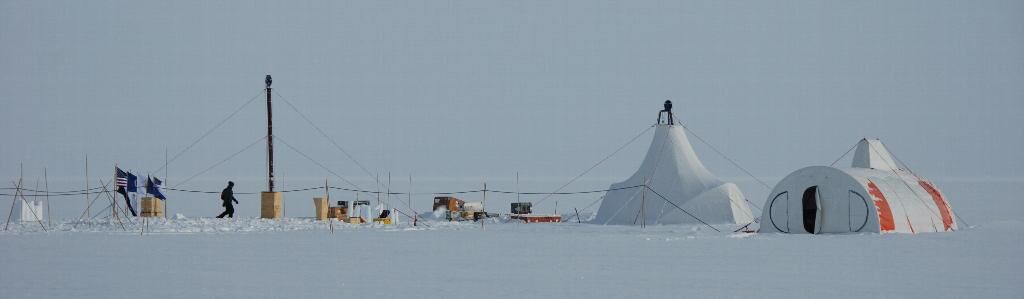
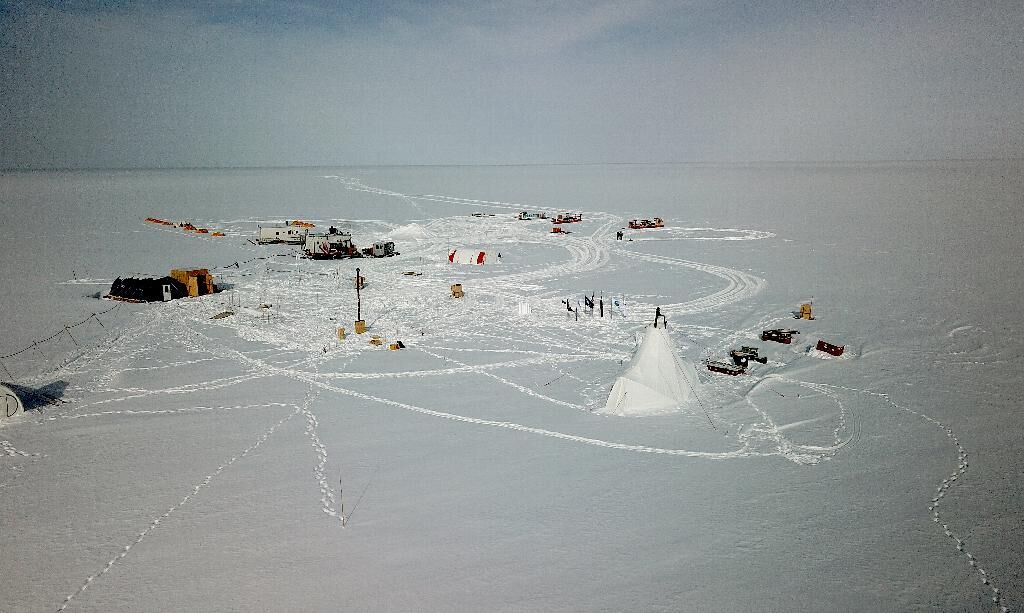
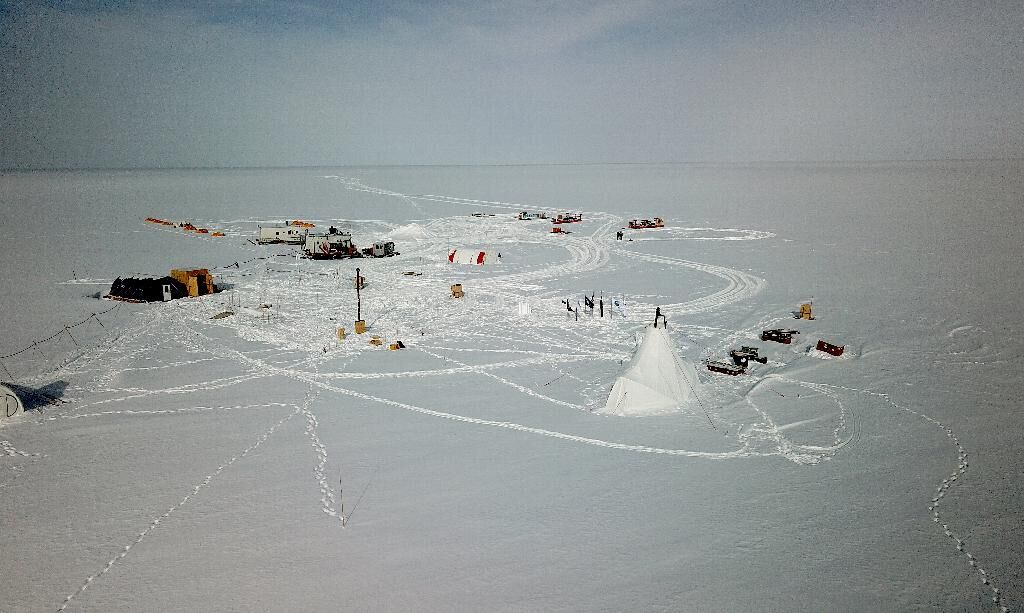
The 2018-2019 Antarctic summer was the main field season for this comprehensive project. It comprised establishing a camp at DE08-OH on the east side of Law Dome, ice drilling, sampling and analysis of ice and extracted air over 78 days in the field. The project team comprised 12 scientists, engineers and field personnel from 6 organisations across Australia and the USA as well as assistance by staff from Casey Station. Substantial logistic support was provided by the Australian and US Antarctic science programs. The field season followed comprehensive planning, logistics arrangements, modelling and equipment development over the previous 1-2 years.
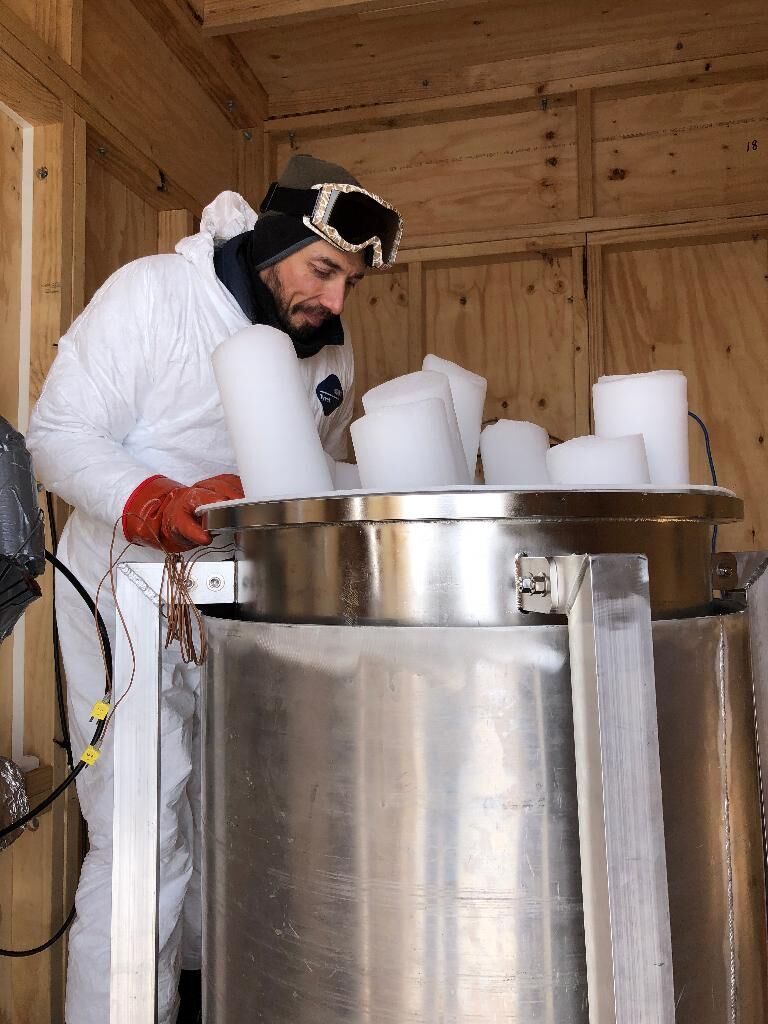
Field activities included collecting over 1000 m of ice core between 3 different drilling systems and 6 boreholes. Eleven large-volume (≈50 L STP each) air samples with mean ages between ≈2010 and ≈1875 CE. were melt-extracted from ice (≈500 kg per sample) for carbon-14 monoxide (14CO) measurements from which trends in hydroxyl (OH) and hence atmospheric oxidising capacity will be found. Firn air samples (68) collected from the surface to 81 metres will be measured to tune models of air enclosure and dating and to correct for in situ production of 14CO. Firn and ice samples were also collected for trace gas and isotope measurements, including the krypton-86 proxy of synoptic pressure variability. Field measurements on firn and ice core air and initial laboratory measurements at CSIRO and SIO indicate that the samples are of good quality.
Further laboratory analyses of these gas tracers in firn air and in air extracted from the ice cores will be carried out over the coming year (University of Rochester, ANSTO, SIO, CSIRO). Numerical models will be applied to date the air, correct for the ice enclosure effects and for other influences on 14CO, and infer the trend in OH over the industrial period.
Summary of the season 2017/18
The project is in the planning stage for the field component. A significant task has been to combine the proposed drilling, firn air sampling, and ice sample melt air extractions into one season on Law Dome (2018-19). This has proceeded well although that season has recently had changes in its air support to Casey through Wilkins. Despite this, planning of the field logistics support, to be provided by Australia (AAD) and USA (NSF and IDDO), is proceeding well.
Meanwhile there have been developments in some technical aspects of the project. The large ice core sample melting system has been built and tested for its effect on carbon monoxide (CO) and carbon-14 content. The tests show that large air samples are able to be extracted from the ice at the drilling site (a key part of the project) and with minimal contamination.