
Project information
Project aim
The Southern Ocean and Antarctica is the most climate-data sparse region on the planet, and this is particularly true for the Indian Ocean sector. The lack of inhabited land in the Southern Indian Ocean means climate observations prior to the satellite era (1979) are from a handful of research stations set up after the International Geophysical Year (1957). This means scientists lack the regional data to assess climate variability and how it may change in the future. Because of this, the International Partnerships in Ice Core Sciences (IPICS), as part of the Past Global Changes (PAGES) 2000 year climate initiative, have pinpointed a need for an array of 2000 year long Antarctic ice core records. Currently the Antarctic region from Enderby Land to East Wilkes Land (~45-160 °E, see map) has only two high resolution ice cores spanning 2000 years. This project aims to add a third, from a region we have assessed will contain a valuable new record of Indian Ocean sector climate.

Project milestones
Summary of the project achievements 2021/22
The final year of AAS 4414 has been a successful one, with many goals of the project achieved. One of the primary successes of this project, although not specifically identified initially, has been the number of students trained in ice core research during the lifetime of the project, and the success and quality of their projects, which are resulting in numerous high quality peer-reviewed publications published or being prepared. In addition, many of the students with projects involving the MBS ice core have won numerous UTAS awards, top-up scholarships, conference awards and travel scholarships.
Another clear success has been that the quality of the data, a direct result of our careful site selection process, has led to the development of new competitive grant applications devoted primarily to the further development of the MBS datasets into climate records and reconstructions. We have had two major successes so far, the first being an Australian Research Council Discovery Project, "Australia's variable rainfall: how dry or wet can it really get?" which will use MBS data to derive storm histories of the southern Indian Ocean (Lead CI Tessa Vance, $353,000). This project has commenced and has employed one postdoctoral researcher (with another to come later in the project), and is primarily tasked with developing Australian hydroclimate policy-relevant outcomes, through proxy development and stochastic modeling. Another recent success is an ANSTO grant (Lead CI Delphine Lannuzel, $98,000) which will analyse volcanic glass samples from MBS at the Australian Synchrotron in Melbourne. This is part of a current PhD project (Meg Harlan) which is an interdisciplinary co-tutelle project spanning AAPP Ice Core and Biogeochemistry projects between UTAS and the University of Copenhagen, which will provide policy relevant findings about the importance of volcanic iron fertilization in the Kerguelen Plateau region.
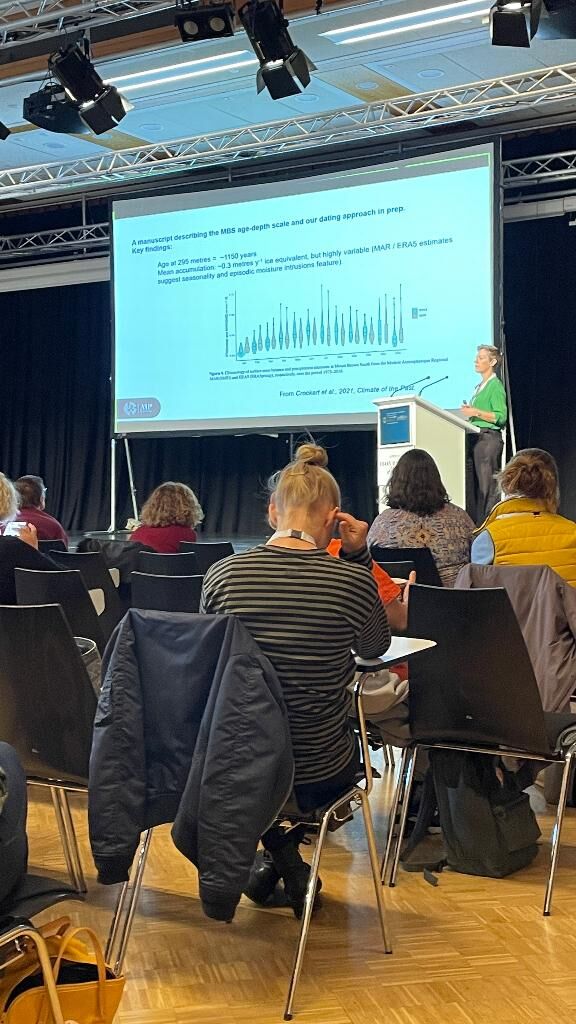
The 2021/2022 season for AAS 4414 has been devoted to finalizing the dating of the raw datasets produced from the MBS ice cores, and ensuring the continuous flow analysis isotopes can be matched to the discrete isotope analyses from AAD, Hobart and ANU, Canberra. All necessary analyses are completed for the milestones of this project, with the continuous flow analysis record of water stable isotopes (University of Copenhagen) replacing the delayed discrete isotope analyses (AAD, Hobart). HDR student (Honours, MSc and PhD) and other projects are continuing, and in some cases have been completed. A PhD student with a project aligned to MBS, Danielle Udy, has completed her PhD, while another PhD student, Sarah Jackson, will submit her thesis in March 2023. Two further PhD students will reach their 2 year point by April 2023. This adds to the three Hons/MSc students that have graduated their degrees using the MBS data, and shows the project will continue to deliver benefits in terms of research training and research and policy-relevant outputs
Summary of the season 2020/21
The 2020/2021 season for AAS 4414 has been devoted to commencing the interrogation and interpretation of the raw datasets produced from the MBS ice cores. A number of student and other projects have commenced, and in some cases been completed. So far, two students have graduated their degrees using the MBS data. An Honours student completed a project in July 2020, using the scanned images of the ice cores produced in 2019. A research masters student also graduated in late 2020 with an initial study of the sea salt and accumulation datasets. Another student in Copenhagen is currently writing up her masters thesis on the CFA data. Three new PhD students have commenced projects studying the MBS ice core in late 2020/early 2021. The bulk of analyses are completed, except for the still delayed isotope analyses for the discrete data record. Two publications have been accepted for publication, and two more are in preparation.
Summary of the season 2019/20
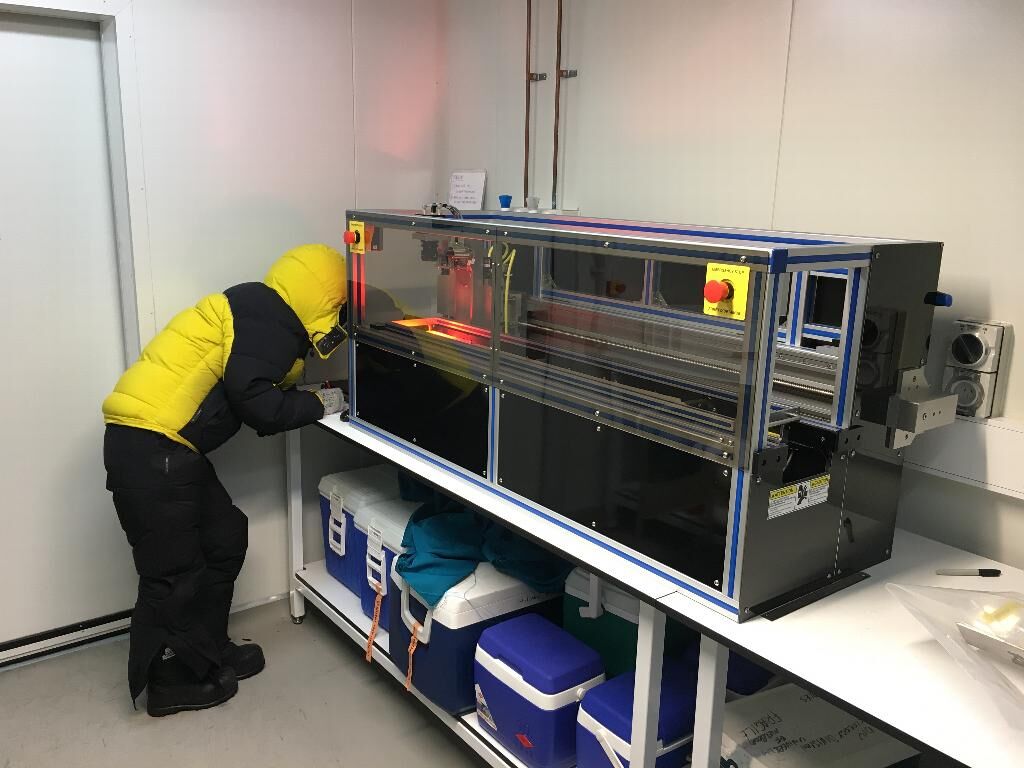
The 2019/2020 season of AAS 4414 has been devoted to continuing the processing and initial analysis of the ice cores and snow samples retrieved during the 2017/2018 field season. Of some 360 metres of ice core retrieved, all has now been processed into ice samples. One third of basic, primary water isotope analyses have been performed, and around 3/4 of the trace chemistry samples. All Continuous flow analysis in Copenhagen has been completed, and the raw data is awaiting dating. Initial dating of the upper 50 metres of the main core has been performed, and all short cores have been dated. The Mount Brown South ice core likely preserves clear annual layers in oxygen isotopes and trace chemistry, which should allow accurate dating throughout the 295 metre main core which is still expected to cover the last 1000 years. This primary data during the satellite era (1979-2017) is currently the subject of climate variability investigations in three student projects - one masters, one honours (both UTas) and one PhD (ANU). In addition, the main core (295 metres) and two short cores (45 metres) were imaged using a state-of-the-art Intermediate Layer Core Scanner (ILCS) instrument on loan from the University of Alberta, Canada for future stratigraphic studies.
Summary of the season 2018/19
The 2018/2019 season of AAS 4414 has been devoted to the processing and initial analysis of the ice cores and snow samples retrieved during the 2017/2018 field season. Some 360 metres of ice cores were retrieved, 2 thirds of which has been processed into ice samples, and one third of which has had basic, primary analyses performed in the past 12 months. Initial dating of the upper 30 metres of the main core, and the short cores has revealed that the new Mount Brown South ice core likely preserves clear annual layers in oxygen isotopes and trace chemistry, which should allow highly accurate dating throughout the 295 metre main core which is still expected to cover the last 1000 years. These clear annual layers lay the framework for more analyses over 2019/2020 exploring the climate signals this site preserves.
Summary of the season 2017/18
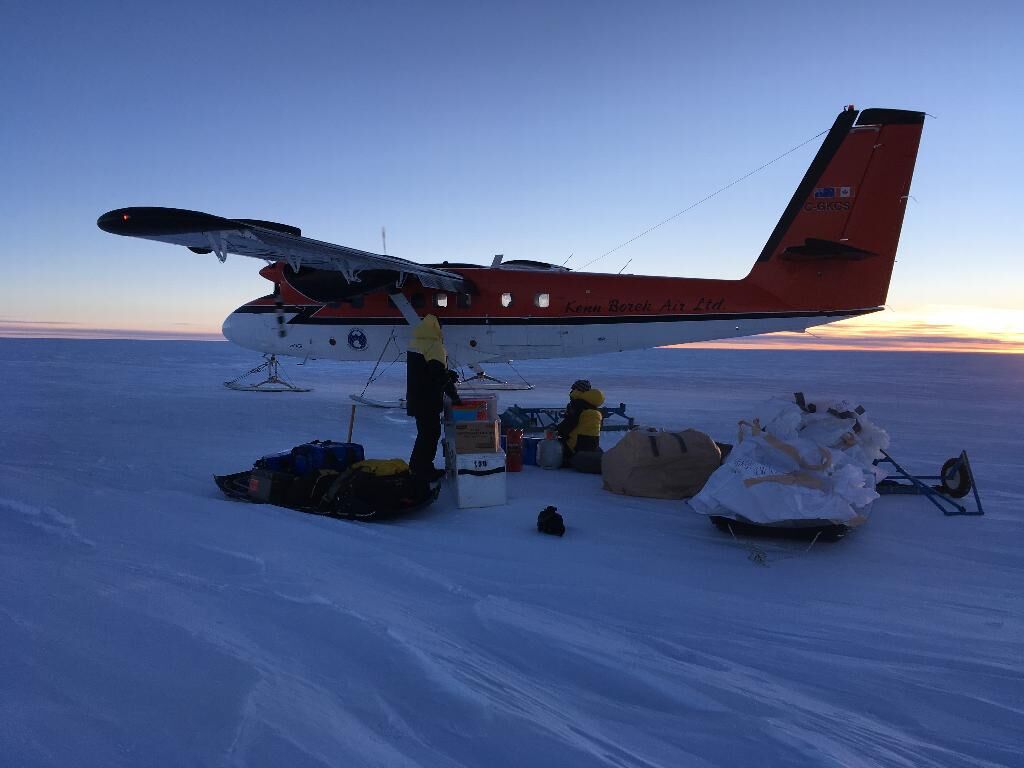
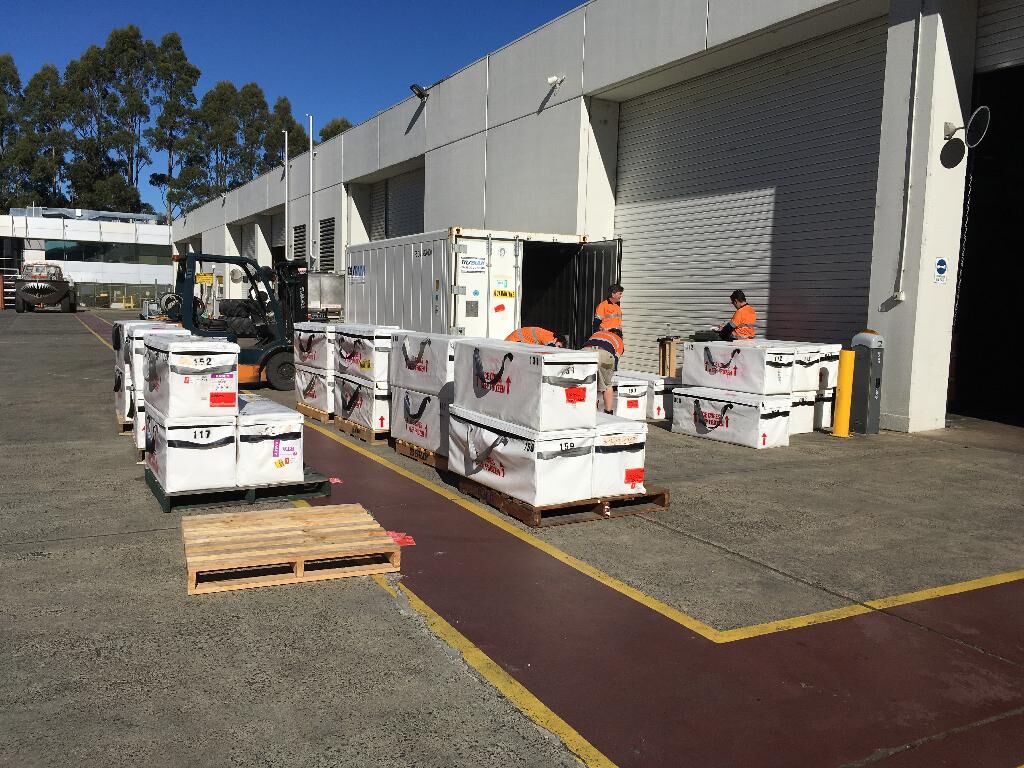
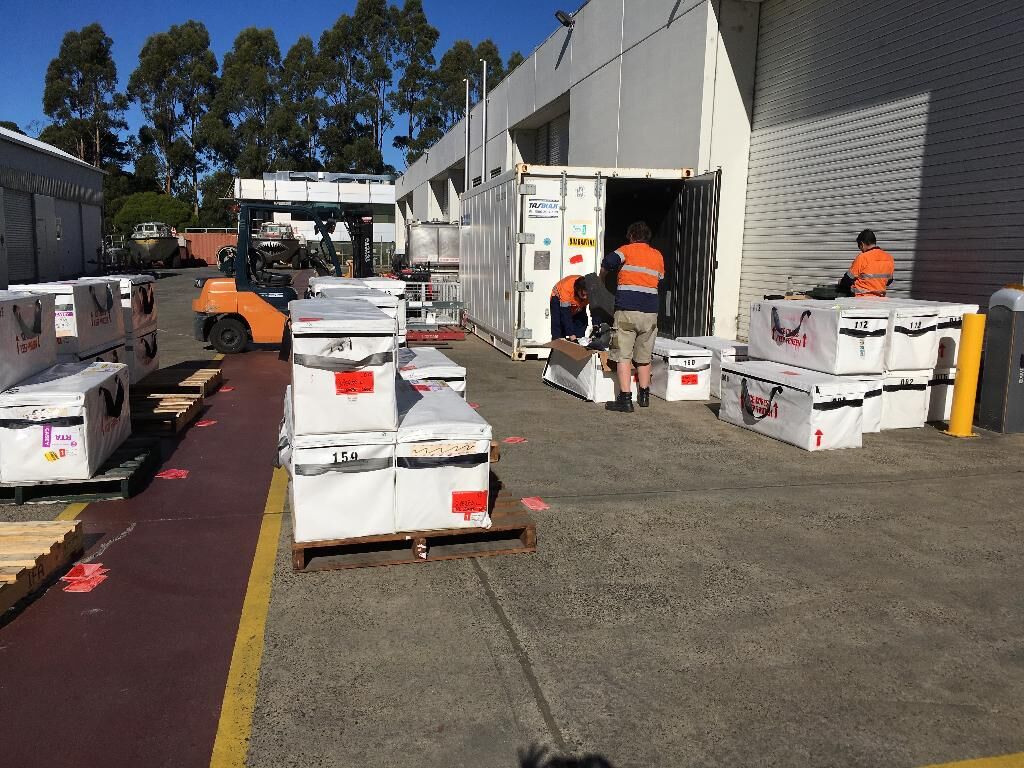
AAS project 4414 completed a very successful field component and ice core repatriation to Australia over the 2017/2018 season. In all, 295 metres of deep ice core and 65 metres of shallow cores were drilled and a 2 metre snowpit was sampled during the field team deployment of 1 December 2017 to 9 February 2018. All ice core material was returned to Australia in early March 2018, and has been sorted for priority processing. Discussions around sample cutting and analysis are well underway, and initial sample requirements for all project members and affiliated partner institutes will be finalised in the first half of 2018. Cutting of the ice core for subsampling will likewise commence in first half 2018.