
Project information
Project aim
The world's best astronomical observing sites are on the high plateau within the Australian Antarctic Territory. Australia is exceptionally well placed to lead and partner international programs in Antarctic astronomy. These bring industry access to cutting edge technology and create opportunities in the infrastructure and support of Antarctic research. This project aims to maintain Australia's lead in Antarctic astronomy, allowing us to capture the benefits of future international investment. Our participation in astronomical programs with China, the US, and Japan, ensures continued technology exchange and builds our knowledge base in robotics and harsh-environment engineering while creating important new science opportunities. The outcomes will include the first comprehensive exploration of the time-varying Universe in the near-infrared, and surveying transient objects including gravitational waves sources.
Project milestones
Summary of the project achievements 2020/21
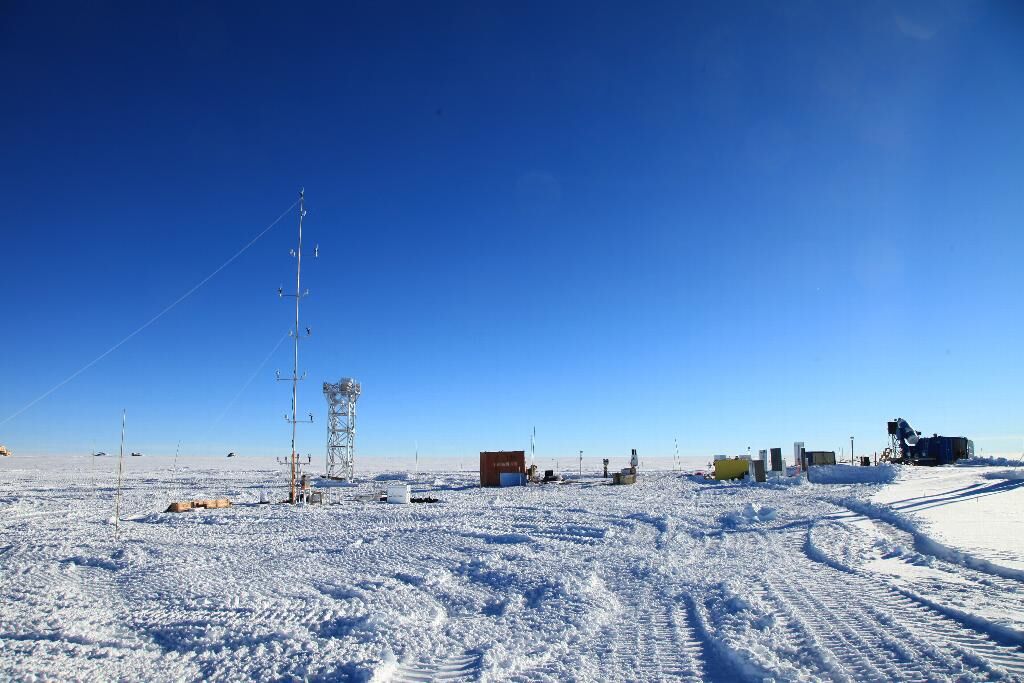
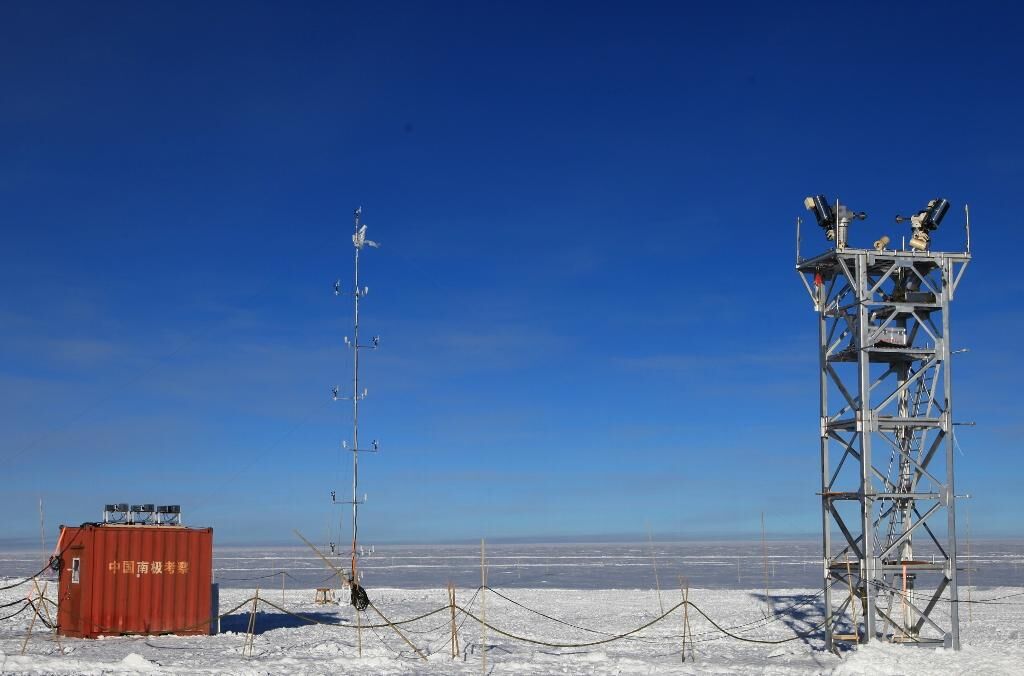
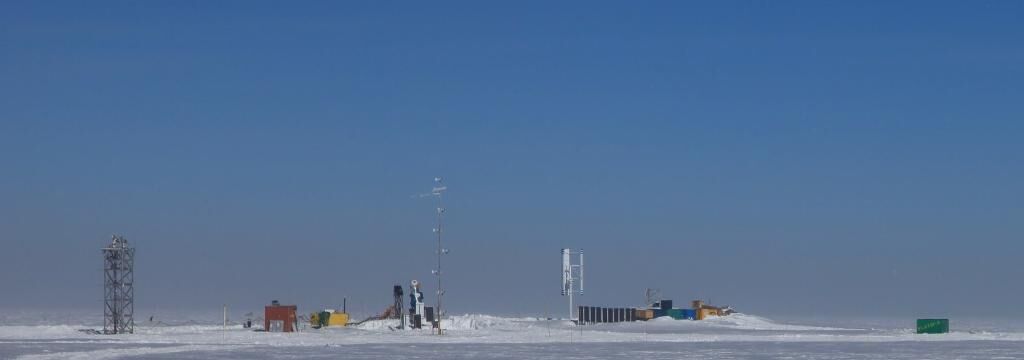
The high plateau of Antarctica contains the best astronomical observing sites on the surface of the Earth, by virtue of the cold, dry, and stable atmosphere. The premier location within the plateau is at its highest point, Dome A, where China has established the summer-only Kunlun station.
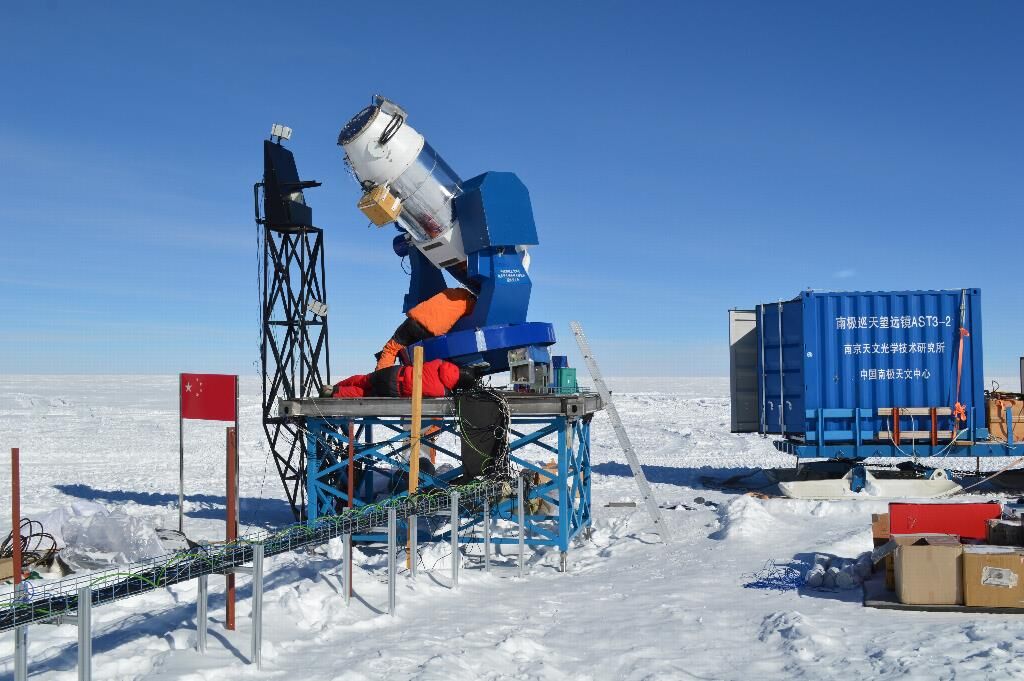
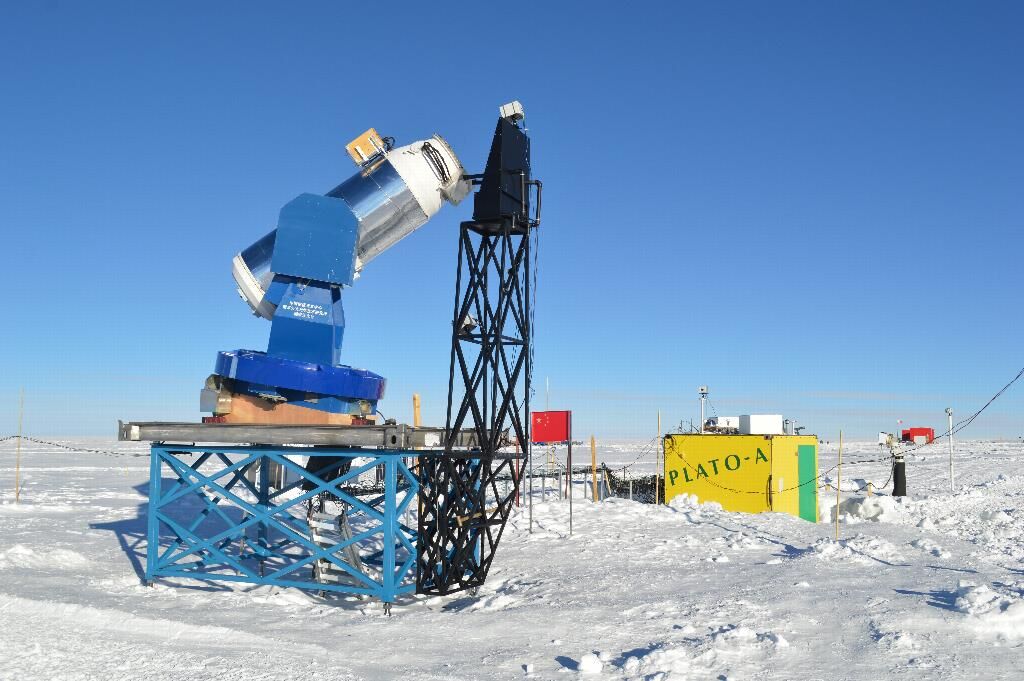
Our four-year project has been a collaboration between Australian and Chinese astronomers, with Australian-developed infrastructure making it possible to remotely operate telescopes at Dome A with no humans on site during the long, dark, Antarctic winters. Over the four years we have collaborated with 67 Chinese co-authors to publish a total of 16 refereed scientific papers, including one in the journal Nature that was ranked in the top 15% in terms of impact in that journal. Our main astronomical results have been the discovery of over 100 exo-planet candidates, i.e., planets orbiting stars other than the Sun, and participating in the first ever detection of electromagnetic radiation (i.e., light) from a gravitational wave event. This latter event was the result of two neutron stars spiraling in to form a black hole, releasing a staggering amount of energy and forming elements heavier than iron, including two times the mass of the Earth in gold and platinum alone. Apart from astronomy, we have published six papers on the properties of the Antarctic atmosphere, including the time variation of near-surface ozone concentrations, the wind and temperature within the surface boundary layer, atmospheric turbulence throughout the atmosphere, and cloud cover and auroral properties.
As part of our project we have worked on ideas to decarbonise the energy needs for Antarctic research and to minimise our footprint. In addition to using solar power during summer, we are designing a wind turbine specifically for the unique conditions on the high plateau.
From a geopolitical standpoint, the success of our collaboration with China in Antarctica has many benefits to Australia, not least being able to conduct front-line science from an area where we exercise stewardship: the Australian Antarctic Territory.
Summary of the season 2019/20
Our project aims to facilitate Australian collaboration with major astronomical experiments being conducted by China, the US, and Japan at the Antarctic stations at Dome A, South Pole, and Dome Fuji respectively.
[IMPORTANT NOTE: The following paragraph should be embargoed from public release until after the Nature article referred to is published, which should occur in June or July 2020]
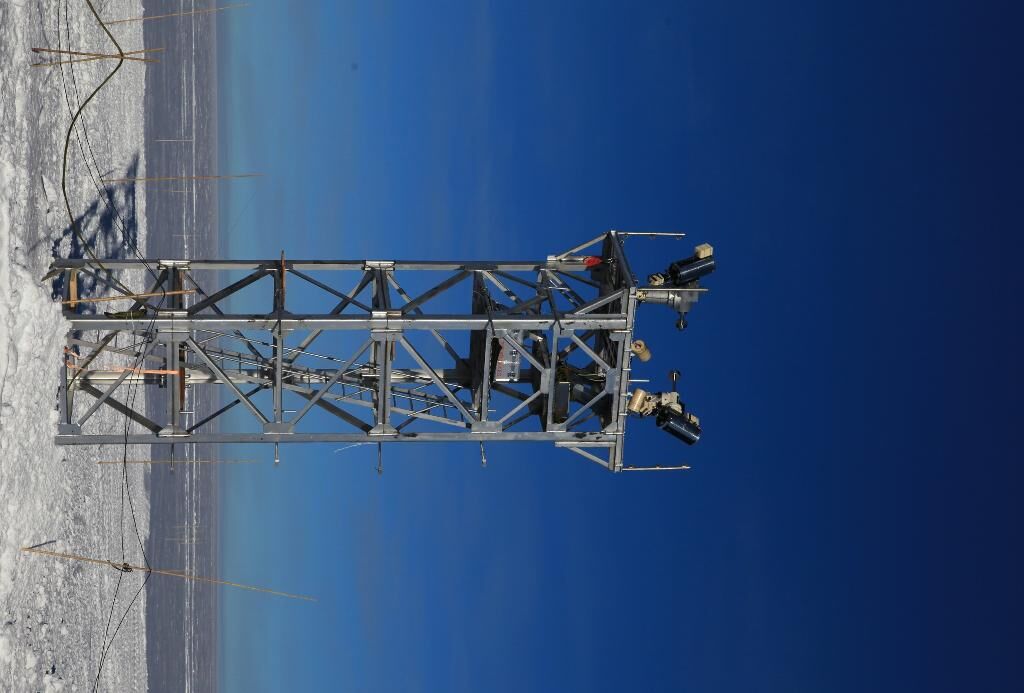
The most notable achievement in the last year has been the acceptance in April 2020 of our article to Nature describing our observations of atmospheric turbulence from the ground in winter at Dome A. The article has joint Chinese, Australian and Canadian authors. It gives, for the first time, direct observational evidence of the superb ground-based conditions at Dome A for astronomy. The observations were made by two automated telescopes, about four months after everyone had left the station. We expect this result to provide a major boost to Chinese plans to build KDUST, a large optical/infrared telescope at Dome A.
Summary of the season 2018/19
Our project aims to facilitate Australian collaboration with major astronomical experiments being conducted by China, the US, and Japan at the Antarctic stations at Dome A, South Pole, and Dome Fuji respectively.
The most notable achievement in the last year has been the publication of several significant scientific papers using results from the AST3-2 telescope at Dome A. With our assistance, our Chinese colleagues have operated a Differential Image Motion Monitor (DIMM) telescope at Dome A, and data from this instrument confirm for the first time that the ground-based astronomical "seeing" (a proxy for image quality) is as good as forecasts predicted. This means that future large telescopes, such as China's proposed KDUST telescope, have the potential to take images that are much sharper than those from any other observatory on Earth.
Summary of the season 2017/18
Our project aims to facilitate Australian collaboration with major astronomical experiments being conducted by China, the US, and Japan at the Antarctic stations at Dome A, South Pole, and Dome Fuji respectively.
The most notable achievement in the last year has been the optical observations by the 0.5 metre AST3-2 telescope at Dome A of the gravitational wave event GW170817. This event, which occurred on 17 August 2017, was the first time that an astronomical object has been observed in gravitational waves and electromagnetic (i.e., light) waves. By studying the observations, astronomers were able to determine that the event resulted from two neutron stars spiralling in towards each other to form a black hole. In this process, an enormous increase in neutron flux led to the creation of large amounts of heavy elements. We now believe that such events are responsible for almost all elements such as gold in the universe.
While our AST3-2 observations, in collaboration with colleagues from China, were a small part of the overall worldwide effort brought to bear on GW170817, they are highly significant. This is because a telescope in Antarctica is uniquely placed to make continuous high-quality observations of such events spanning many days to weeks, provided the event occurs during the Antarctic winter. In contrast, other astronomical observatories are affected by the daily rising/setting of the sun, so that continuous data is only possible by stitching together measurements made at different longitudes around the globe. This leads to poorer quality results, and systematic errors that affect the interpretation.
Over the next few years the gravitational wave observatories will be improving their sensitivity, and we will see many more events such as GW170817. The contribution from Antarctic telescopes will therefore become increasingly important.