

Project information
Project aim
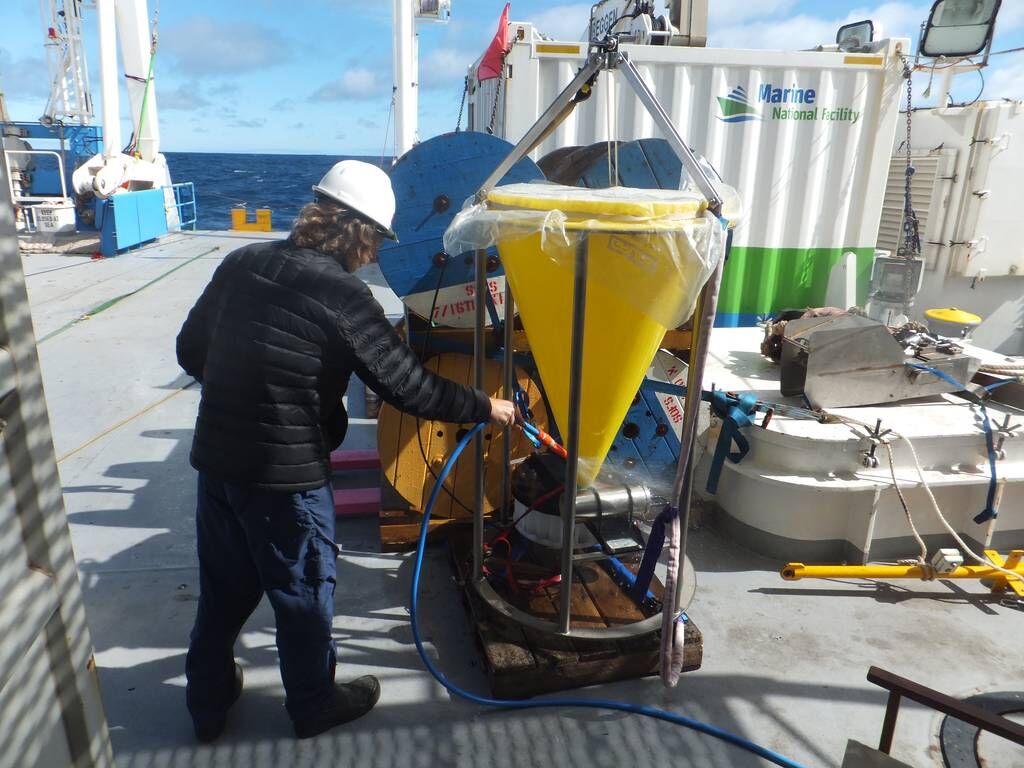
The Southern Ocean Time Series provides world-leading automated observations from deep-ocean moorings between Tasmania and Antarctica (47ºS, 141ºE) of the exchanges of heat, water, carbon dioxide, and oxygen between the ocean and atmosphere, and the physical and biological processes that control them. These results contribute to forward projections of anthropogenic climate warming, inform the setting of emissions targets, illuminate controls on climate variability, and provide a baseline for impacts on ocean pelagic ecology. Sensor data is returned live to the internet and samples are returned annually for further study in laboratories in Australia and overseas. SOTS is part of the Australian Integrated Marine Observing System and the international OceanSITES time-series network.
Project milestones
Summary of the project achievements 2017/18
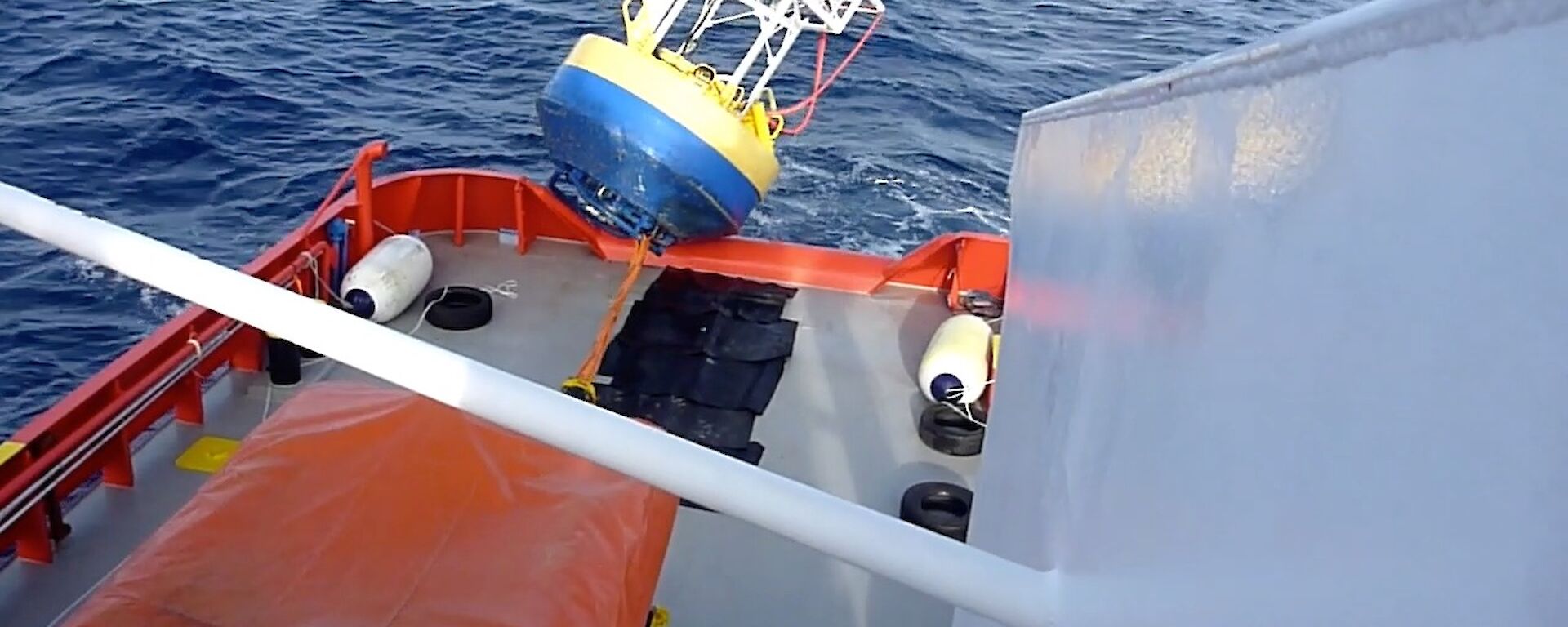
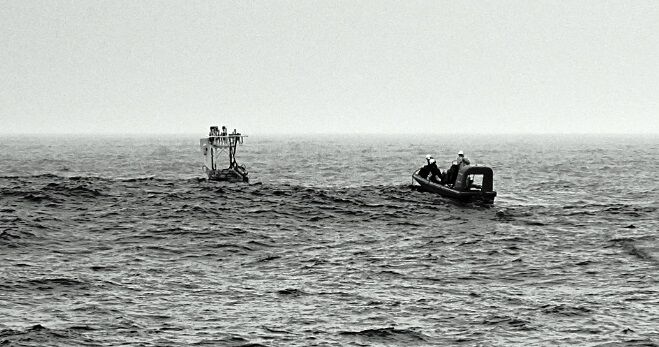
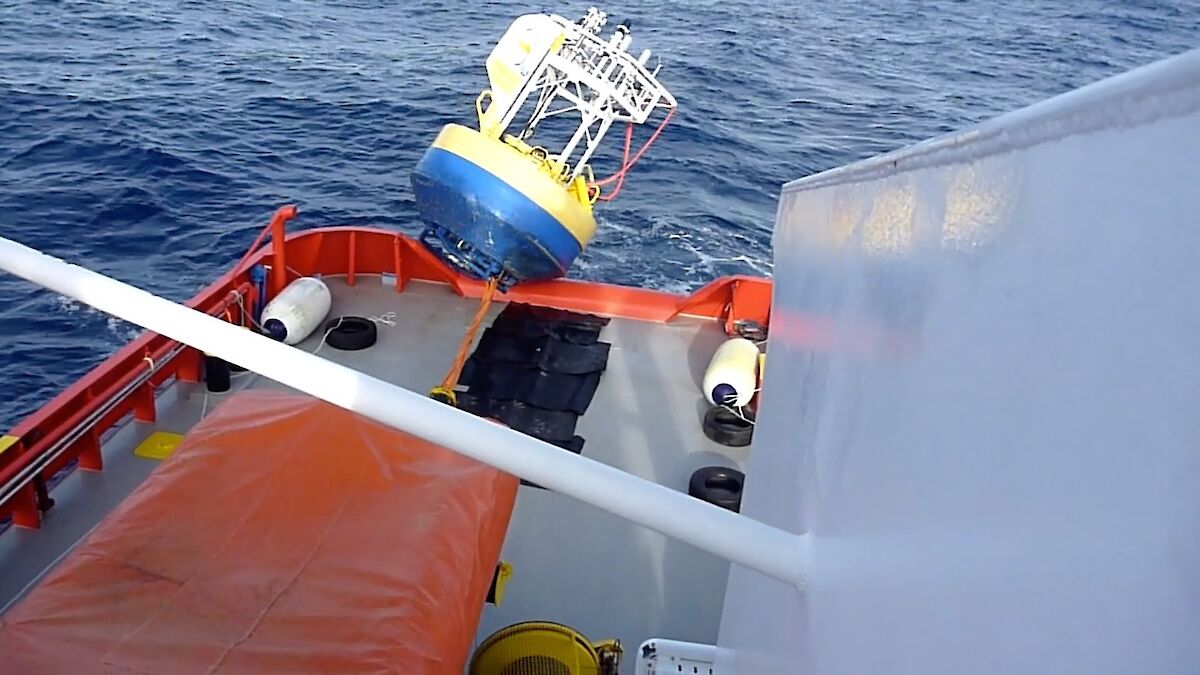
This proposal provided back-up vessel support for the Southern Ocean Time Series, which delivers automated observations of the exchanges of heat, carbon dioxide, and oxygen between the ocean and atmosphere, and the physical and biological processes that control them, using deep-ocean moorings. The high waves and winds in the Southern Ocean make the sustained observations very challenging, and full annual mooring durability has been difficult to achieve, with occasional rescue missions needed when the Southern Ocean Flux Study (SOFS) mooring breaks.
SOTS observations contribute to developing forward projections of climate warming, quantification of ocean acidification, and the assessment of ocean productivity and health. Sensor data is delivered live to the internet and samples are collected for further study in Australia and internationally. As the only sustained Southern Ocean observatory, SOTS is Australia's pillar in the global effort to understand our changing ocean. The effort was initiated in 1997 and is funded via the National Collaborative Research Infrastructure Strategy Integrated Marine Observing System through 2022, with the intention of further continuation.
It is now the longest sustained time series site in the Southern Ocean within the OceanSITES global network of moored open ocean time series, and thus provides a very important decadal perspective. The hourly or better temporal resolution of most of the sensor data and weekly to fortnightly resolution for autonomous sample collections also allow processes to be resolved on daily to weather to seasonal timescales.
For the three year period reported here, the SOFS mooring broke free several times and had to be replaced more than annually. The Australian Antarctic Division and RV Aurora Australia assisted by determining the location acoustically of a damaged subsurface mooring section.
Summary of the season 2016/17
The Southern Ocean Time Series provides world-leading automated observations from deep-ocean moorings
between Tasmania and Antarctica (near 47 ºS, 141 ºE) of the exchanges of heat, water, carbon dioxide, and oxygen
between the ocean and atmosphere, and the physical and biological processes that control them. In March 2016, two moorings were deployed using RV Investigator: i) the SAZ-18 sediment trap mooring, and ii) FluxPulse-1, a single mooring that attempted to combine meteorological observations (previously achieved with the SOFS surface tower mooring) and upper ocean biogeochemical observations (previously achieved with the Pulse elastic tether mooring). Unfortunately, the combined mooring failed after 2 months. The upper section with the surface float and meteorological isntruments was recovered using charter boat Ocean Destiny. Recovery of the lower section was attempted during RV Aurora Australis voyages 1 and 2, but was unsuccessful. The mooring appears to have tangled on the bottom and despite 30 hours of grappling could not be retrieved. In March 2017, using RV Investigator, the SAZ-18 mooring was successfully retrieved with full sample and data returns and two new moorings were deployed: i) SAZ-19 sediment trap mooring, and ii) SOFS-6, the standard meteorological mooring with a smaller complement of biogeochemical sensors within the surface float (but no seawater sampler, nitrate sensor, or total gas tension device) and no acoustic doppler current meter. Thus the loss of FluxPulse-1 means that for two years (March 2016-March 2018) the following data types will not be available from SOTS: water samples for nutrients and phytoplankton identification, net community production from combined oxygen and total gas tension measurements, currents above 500m. Redesign of the mounting of these instruments and the mooring itself is underway to enable return to the full complement of observations from March 2018 (deployment is scheduled using RV Investigator).
Summary of the season 2015/16
The Southern Ocean Time Series provides world-leading automated observations from deep-ocean moorings between Tasmania and Antarctica (47ºS, 141ºE) of the exchanges of heat, water, carbon dioxide, and oxygen between the ocean and atmosphere, and the physical and biological processes that control them. In the 2015/15 year, the annual servicing of the moorings was successfully carried out on the RV Investigator with the support of the Marine National Facility; and back-up support from the RV Aurora Australis was not required. A key scientific advance for this season has been the expansion of the measurements to include multi-frequency acoustic surveying of zooplankton and fish populations, revealing the seasonality of their abundance and the dynamics of their daily migrations from the safety of the dark ocean interior to feed near the surface.