
Project information
Project aim
Stellaria media is an invasive palatable weed of sub-Antarctic islands, suppressed by pest herbivore (e.g. rabbit) grazing. Given the high conservation value of Macquarie Is and threats to ecosystem structure and function from weed proliferation following herbivore eradication, well targeted control measures for invasive plants are vital. Of the non-native plants, S. media may most easily be managed, if not eradicated, because of its more limited distribution, but little is known about the influential soil seed bank or population dynamics of S. media post pest eradication, or the effect of herbicides and non-chemical control methods in cold conditions. This project helps fill those knowledge gaps and focuses on a non-grass species to complement and build on data collected in AAS project 4158 on the ecology and control of the more widespread invasive grass weed Poa annua. Results will be used to develop effective, low-impact control or eradication options for S. media and other weeds.
Project milestones
Summary of the project achievements 2017/18
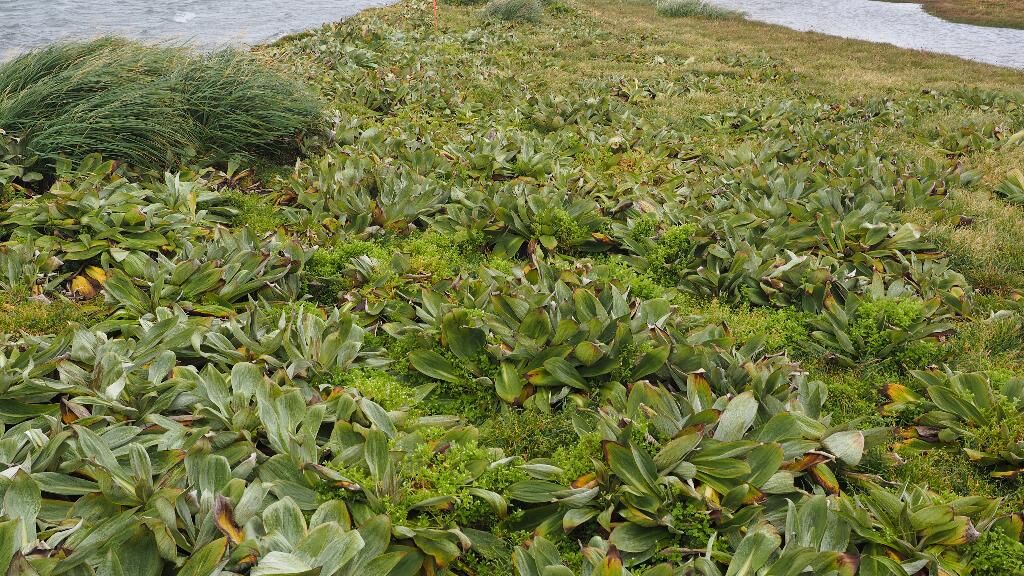
Chickweed (Stellaria media) is a common invasive weed of the sub-Antarctic. Given the high conservation value of World Heritage Macquarie Island (MI) targeted control measures are vital to manage for threats to the ecosystem from weed proliferation following rabbit eradication. Chickweed is considered the most easily managed of the non-native plants, and possibly eradicated, because of its limited distribution. Little, however, was known about the ecology and control of this weed in cold conditions.
In this project we quantified the ecological factors that might both help and hinder the success of chickweed eradication on MI. Factors that increased the chance of eradication include the small area of 0.27 ha requiring treatment, distribution currently restricted to eight distinct invaded areas, reasonable detection, low dispersal distance (< 60 cm) and the predictability of long-distance dispersal along watercourses and in areas of high wildlife activity.
Factors found to negatively affect eradication included the area over which chickweed could be distributed (1,008 ha), the size of some plants up to 7m2, high reproductive output (5,500 seeds/plant/year), dense soil seed bank (3,417 seeds/m2), ability to reproduce vegetatively and extended seed longevity (> 2 years).
Several herbicides were found to effectively control chickweed under cold conditions while causing little damage to key native plant species. Physical management methods such as scalping of vegetation and surface soil, and trimming vegetation back to ground level stimulated germination of chickweed seedlings while selective hand weeding was effective in removing chickweed plants and enabled native vegetation to suppress weed seedling emergence.
Research examining persistence and mobility of herbicides in the soil is still ongoing and together with our existing results, will help guide eradication and management programs for invasive plants on MI and more widely through the sub-Antarctic region.
Summary of the season 2016/17
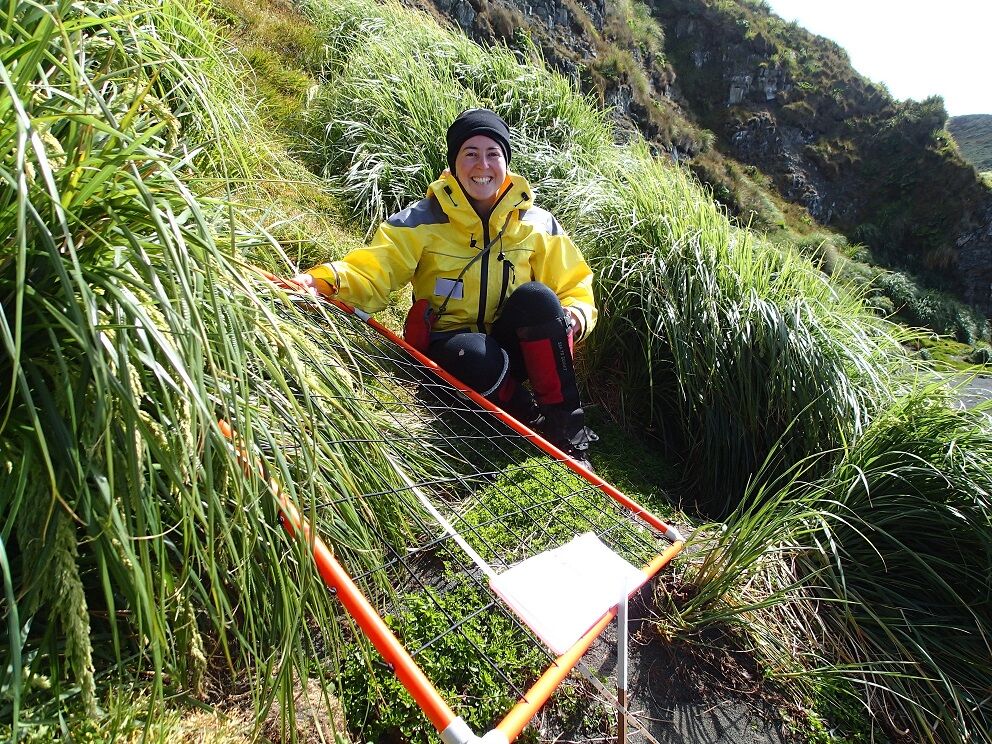
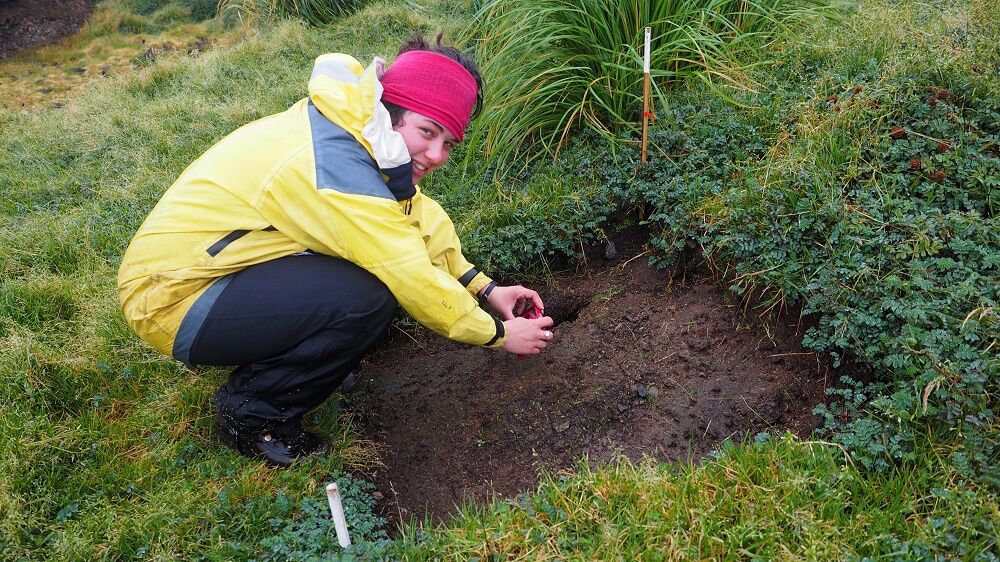
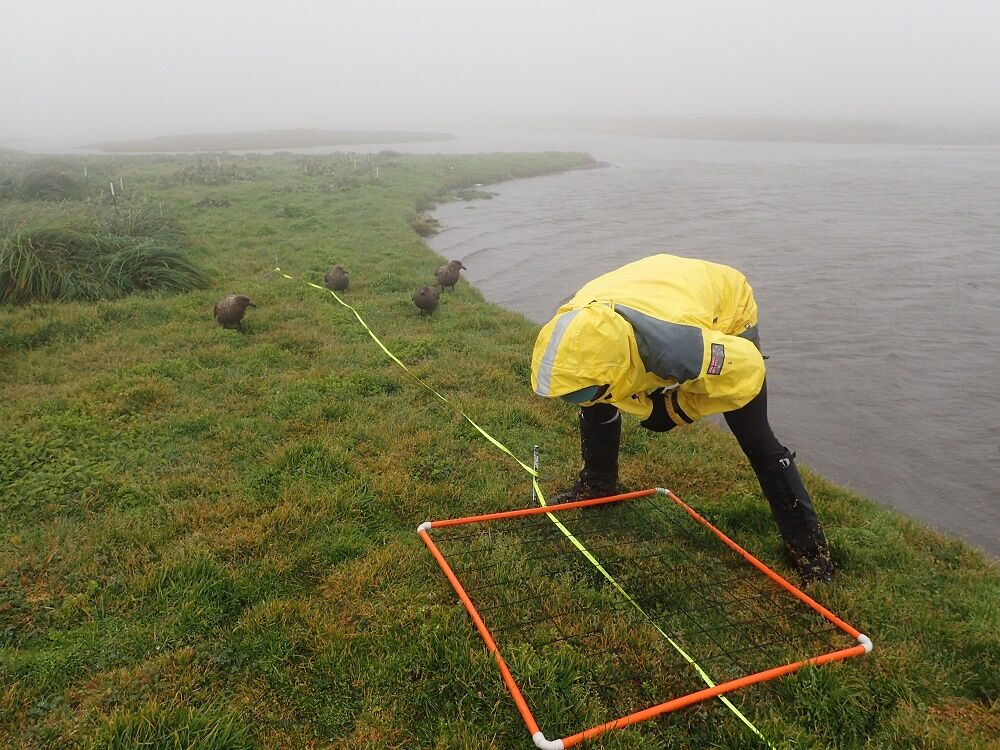
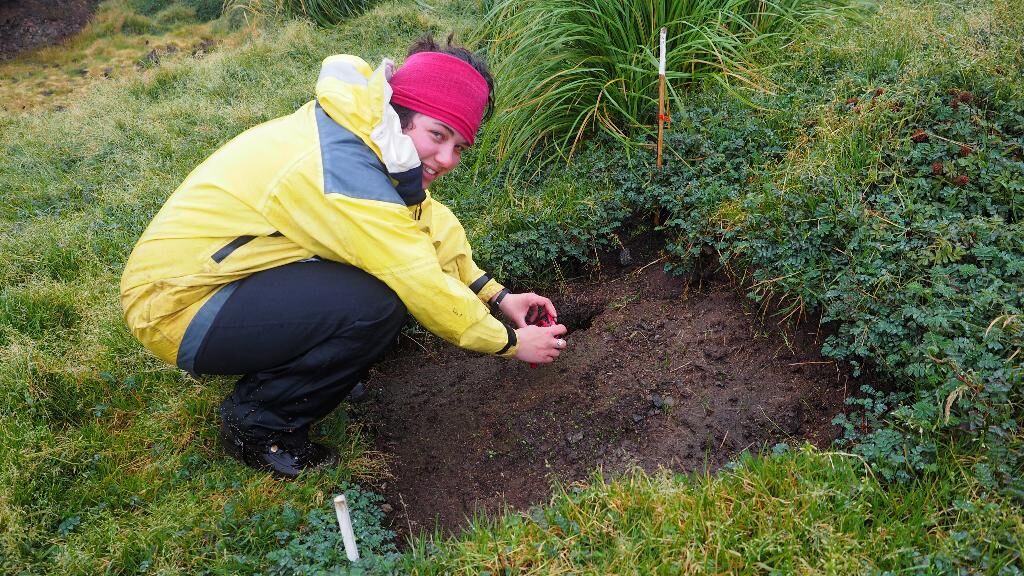
A new field team was employed for the 2016/17 summer field season on Macquarie Island with all project objectives being met successfully. Over 3 months, the northern half of the island was searched for Stellaria media, with all plants mapped and measurements taken of plant size, reproductive stage and dominance of the surrounding vegetation. Resurveying of experiments established in the 2015/16 summer was undertaken with important information collected on plant longevity, seed persistence and population dynamics. Additional measurements were undertaken to further understand the ecology of the species – plants were tagged to better understand longevity and assess reproductive capacity, plants were harvested to determine biomass allocation, vegetation surveys were undertaken to understand competitive ability and vegetation dynamics and soil cores were collected to study seed bank dynamics and dispersal. Additionally, a number of on-going management trials were established at 4 sites on the island to trial physical control methods on S. media. Live plants were collected and returned to Australia to test the efficacy and selectivity of herbicides on S. media and native species. This information will help determine how easy or difficult it may be to control S. media on Macquarie Island in future, and what control methods would be most effective and appropriate for the sub-Antarctic environment.
Summary of the season 2015/16
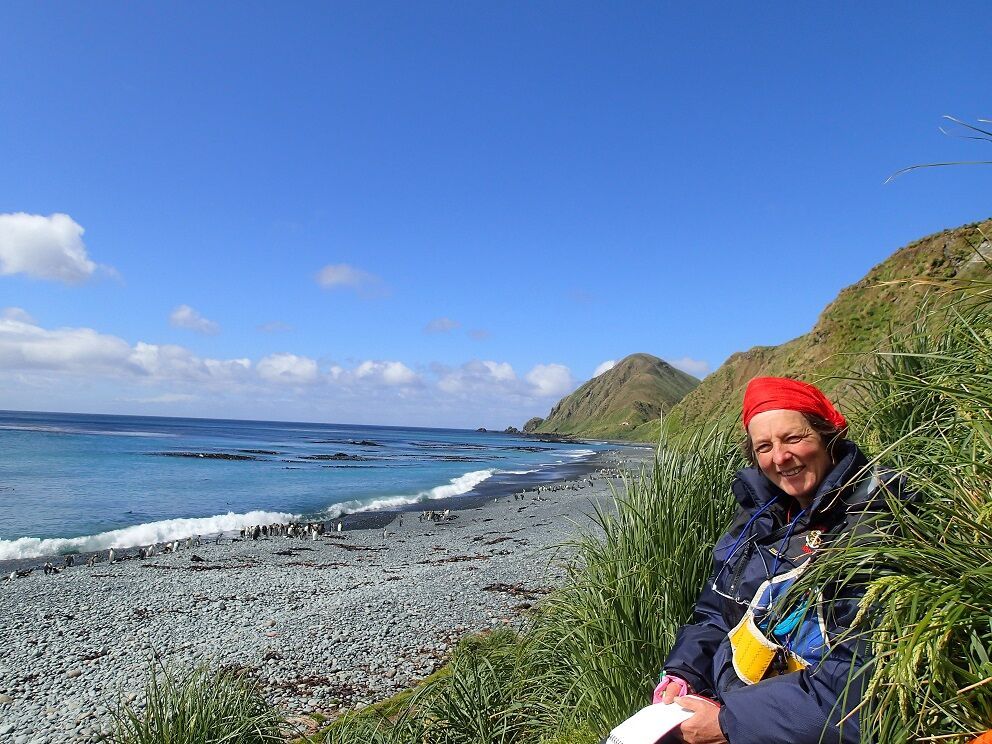
Jane Gosden and Karen Ziegler completed a 3 month stint on Macquarie Island during the 2015/2016 summer season. Jane and Karen achieved a large number of the project goals during this first season through the establishment of experiments, monitoring points, and surveys to determine the ecology of Stellaria media on Macquarie Island. Vegetation surveys were completed at known sites of S. media infestation. These sites were mapped and the data collected during these surveys will be used for examining population density, size, and structure at each site as well as investigating whether there is any association between S. media and other vascular plant species. Six of these sites will be monitored over the next two summer seasons to determine whether there is any change in vegetation where S. media is present. At six sites soil cores were taken to see if S. media has a soil seedbank on Macquarie Island. At the same six sites bags containing S. media seed were buried to be exhumed over the next two summer field seasons to examine viability of buried seed. Soil cores for use in experiments looking into the persistence and movement of herbicides through sub-Antarctic soils were collected and transported back to the University of New England (UNE). Live plants and seeds were collected from 10 species (encompassing all three exotic species and a range of native species) for use in herbicide screening, competition, and germination experiments. Jane and Karen thoroughly enjoyed their summer on Macquarie Island and both felt privileged to be able to work in such a unique environment.