
Project information
Project aim
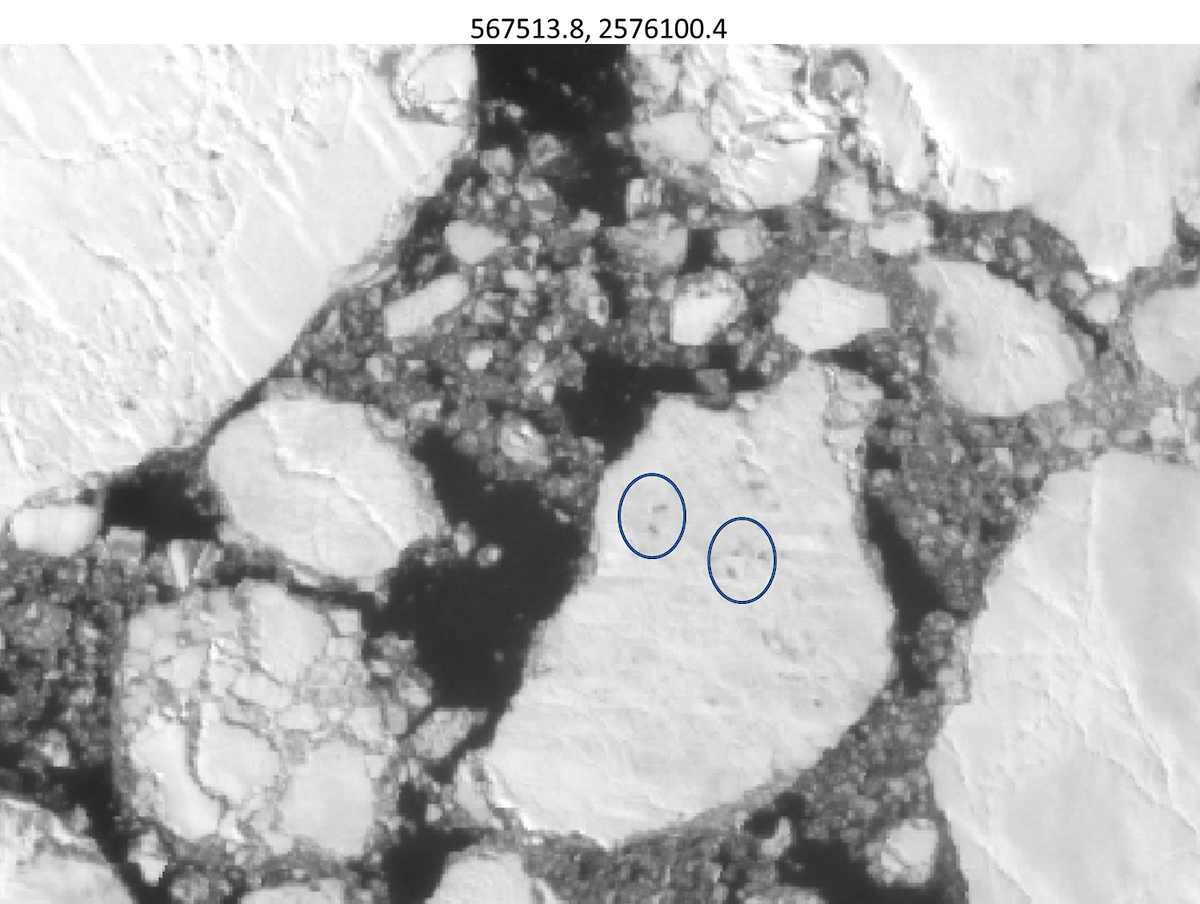
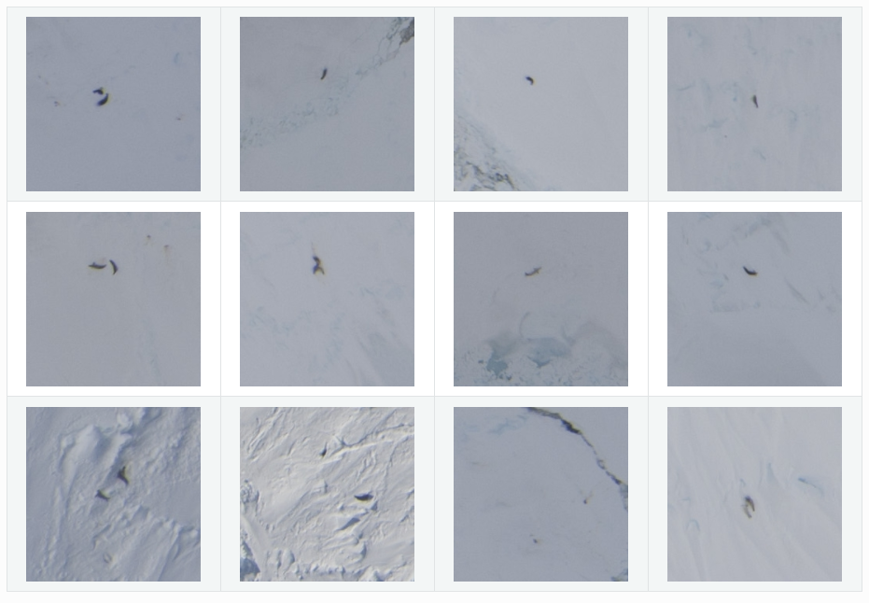
Despite being a ubiquitous and abundant component of the Southern Ocean ecosystem, pack-ice seals (crabeater, Ross and leopard seals) are notoriously difficult to census as they are sparsely distributed over large regions of remote pack-ice. Historically, population censuses have been made from ship- or helicopter-based surveys, which are expensive and logistically difficult, and this inevitably leads to data which are limited, in time and space. High resolution satellite images allow us now to accurately census seals e.g. elephant and Weddell seals at unprecedented spatial and temporal scales. Using this technology promises to provide regular estimates of the numbers of pack-ice seals in important regions such as Prydz Bay This study will develop techniques to survey pack-ice seals from high resolution satellite images, including automatic detection functions and a preliminary habitat model based on the characteristics of the ice contained in the images
Project milestones
Summary of the project achievements 2018/19
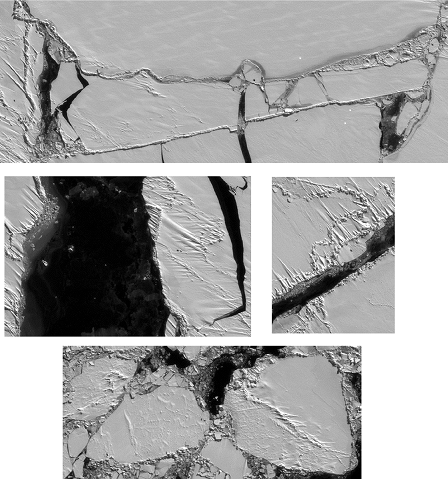
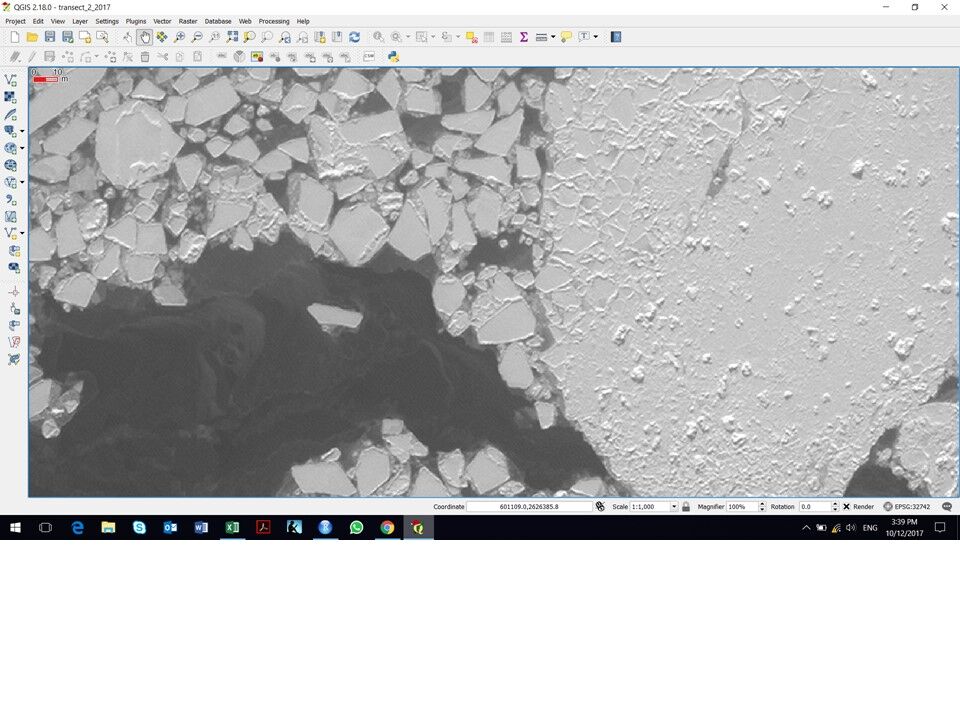
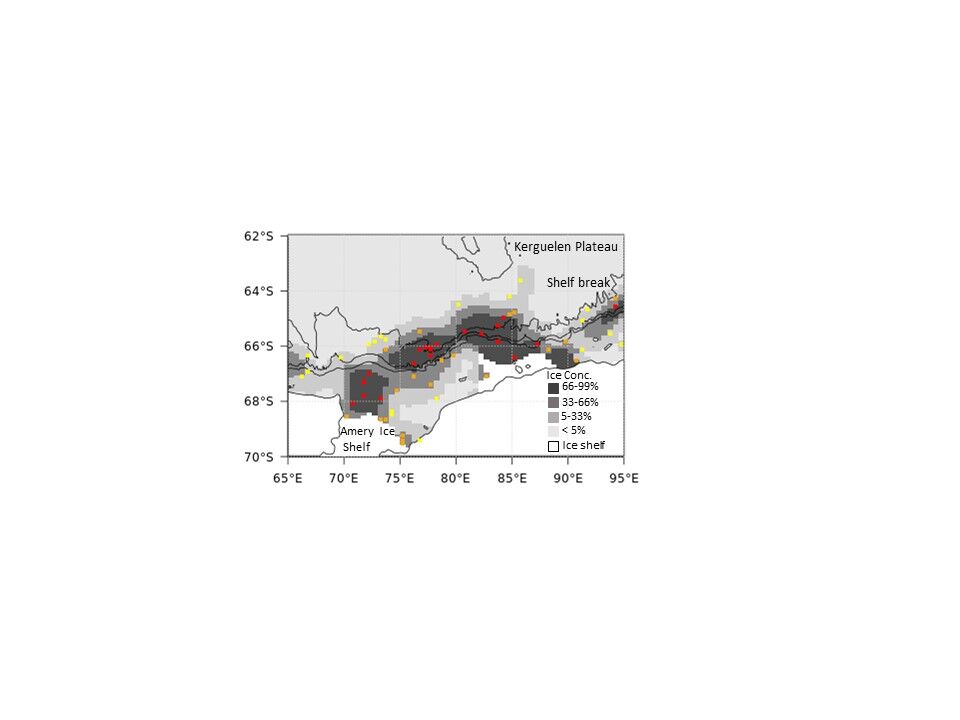
Despite being a ubiquitous and abundant component of the Southern Ocean ecosystem, pack-ice seals (crabeater, Ross and leopard seals) are notoriously difficult to census as they are sparsely distributed over large regions of remote pack-ice. Historically, population censuses have been made from ship- or helicopter-based surveys, which are expensive and logistically difficult, and this inevitably leads to data which are limited, in time and space. High resolution images have the potential to accurately census seals e.g. elephant and Weddell seals at unprecedented spatial and temporal scales. During the course of the study we commissioned 15 5*60 km high resolution images from Digital Globe to be taken of the Prydz Bay region in September and October 2015-2017. All images were received and subject to manual counts, from which we were able to make a preliminary estimate of pack-ice seal density in Prydz Bay. We also worked towards developing an automated technique for detecting seals in the images using a Haar image recognition approach
Summary of the season 2017/18
Despite being a ubiquitous and abundant component of the Southern Ocean ecosystem, pack-ice seals (crabeater, Ross and leopard seals) are notoriously difficult to census as they are sparsely distributed over large regions of remote pack-ice. Historically, population censuses have been made from ship- or helicopter-based surveys, which are expensive and logistically difficult, and this inevitably leads to data which are limited, in time and space. High resolution images have the potential to accurately census seals e.g. elephant and Weddell seals at unprecedented spatial and temporal scales. This is the third year of the project, and we commissioned 6 5*60 km high resolution images from Digital Globe to be taken of the Prydz Bay region in September and October 2017. All six images were received and subject to manual counts. Combined with the 9 images collected in the previous two years of the study we were able to make a preliminary estimate of pack-ice seal density in Prydz Bay. We also worked towards developing an automated technique for detecting seals in the images using a Haar image recognition approach
Summary of the season 2016/17
Despite being a ubiquitous and abundant component of the Southern Ocean ecosystem, pack-ice seals (crabeater, Ross and leopard seals) are notoriously difficult to census as they are sparsely distributed over large regions of remote pack-ice. Historically, population censuses have been made from ship- or helicopter-based surveys, which are expensive and logistically difficult, and this inevitably leads to data which are limited, in time and space. High resolution images have the potential to accurately census seals e.g. elephant and Weddell seals at unprecedented spatial and temporal scales. After only obtaining one image in 2015/16, this year we acquired 8 images in 2016/17. Seals can clearly be seen in these images.
Summary of the season 2015/16
Despite being a ubiquitous and abundant component of the Southern Ocean ecosystem, pack-ice seals (crabeater, Ross and leopard seals) are notoriously difficult to census as they are sparsely distributed over large regions of remote pack-ice. Historically, population censuses have been made from ship- or helicopter-based surveys, which are expensive and logistically difficult, and this inevitably leads to data which are limited, in time and space. High resolution images have the potential to accurately census seals e.g. elephant and Weddell seals at unprecedented spatial and temporal scales. We commissioned 5 5*60 km high resolution images from Digital globe to be taken of the Prydz Bay region in December 2015 and January 2016. Due to unusually cloudy condition we were only able to obtain on image on Dec 15 2016. This image contained largely broken any small ice floes, not ideal seal habitat. Close visual scrutiny was unable to find any seals in the image