

Project information
Project aim
For marine predators in remote Antarctic areas, telemetry studies (i.e. location tracking) provide the most feasible means for obtaining information on behaviour, movement, habitat utilization, and foraging locations. An ecosystem-level focus can be brought to predator studies by including multiple species within a single modelling framework (multi-species modelling). "Hotspot" areas of high predator use and diversity can indicate elevated prey abundance and predictability, habitat types or structural complexity, or niche space. Comparisons between predator species can elucidate processes such as competition between populations, territoriality, and successional habitat use that are difficult to infer from single-species studies. This project will develop improved methods for multi-species modelling of existing telemetry data. These methods will be applied at a range of spatial scales including a whole-of-Antarctic synthesis aligned with current international efforts.
Project milestones
Summary of the project achievements 2017/18
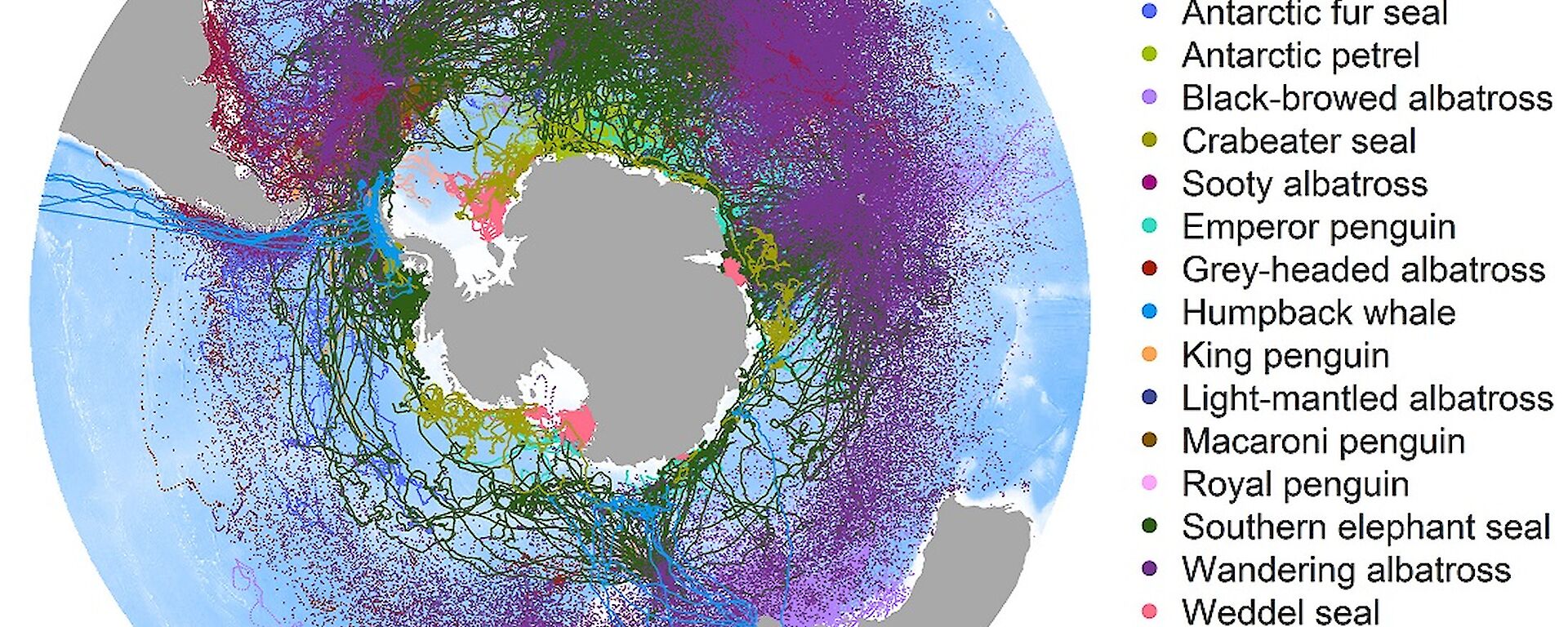
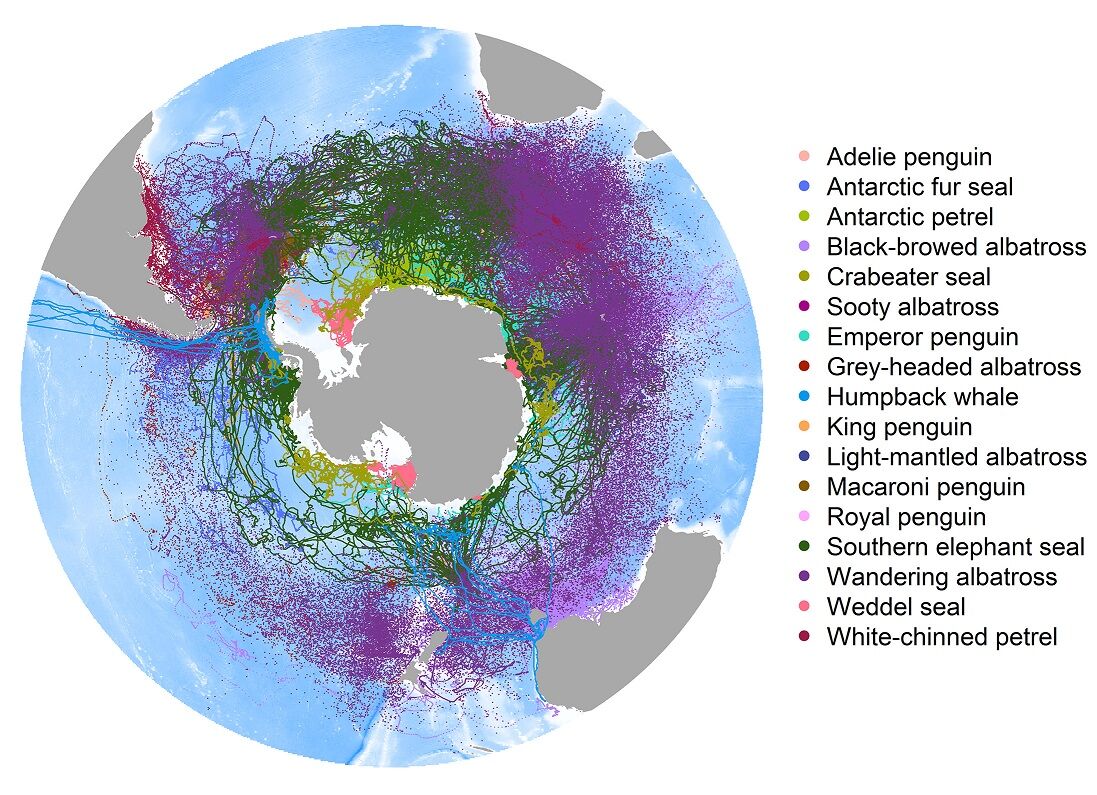
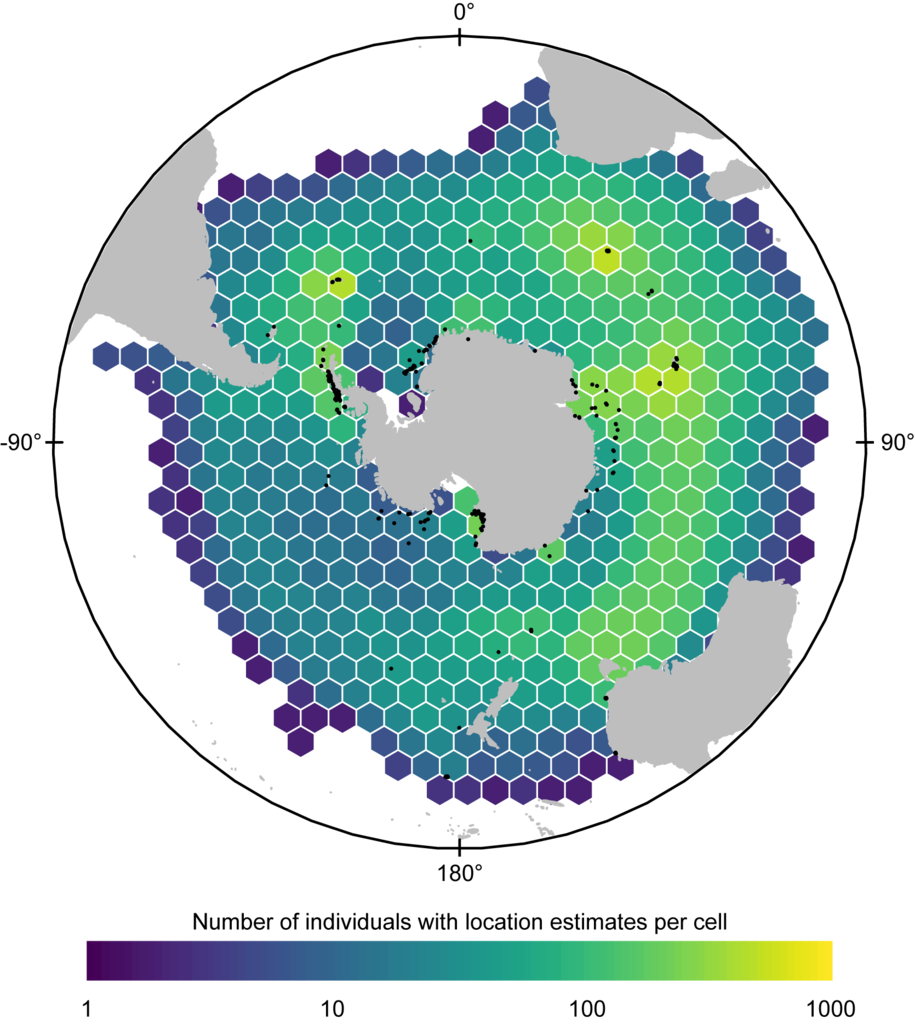
Southern Ocean ecosystems are under growing pressure from resource exploitation and climate change. Mitigation requires identification and protection of Areas of Ecological Significance (AES), yet these have eluded identification at the ocean-basin scale. Here, we have assembled > 4000 tracks from 17 species of animals tagged around Antarctica. The movement data of those animals was used to identify areas of ecological significance to individual species and more broadly to entire ecosystems across the whole Southern Ocean. We assessed threats to those areas from climate change and fishing in the context of current and proposed marine protected areas.
Summary of the season 2016/17
Further progress has been made by AAS 4311 and its companion SCAR/CCAMLR Retrospective Analysis of Antarctic Tracking Data project. The working data archive has been finalized, and comprises 4041 tracks from 17 species of marine mammal and seabird, with over 2.9 million locations in total. A data paper describing this data set is in the final stages of preparation, and will be submitted for publication to accompany the main science paper.
The modelling code (written in R) has been further refined, and can be found in https://github.com/SWotherspoon/Marseille and https://github.com/AustralianAntarcticDataCentre/availability. Draft single-species models have been prepared for some of the target species, and the method for modelling and predicting krill prey field characteristics has been submitted for publication.
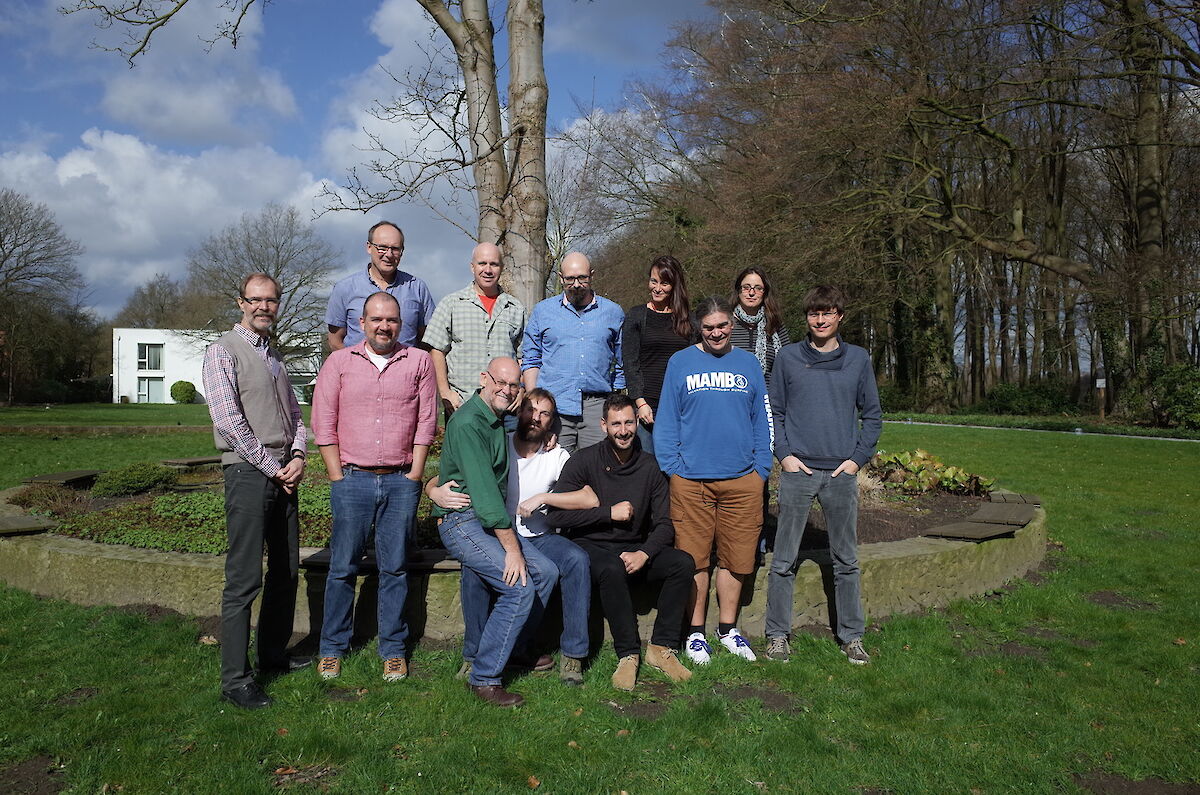
The associated SCAR/CCAMLR RAATD project held two workshops in September 2016 and March 2017, both hosted by the Centre for Synthesis and Analysis of Biodiversity in Aix-en-Provence, France.
Summary of the season 2015/16
Good progress has been made by AAS 4311 and its companion SCAR/CCAMLR Retrospective Analysis of Antarctic Tracking Data project.
Approximately 3500 tracks from 10 species of seabird and 5 marine mammal species have been collated, from 37 different data owners across 11 different countries. Metadata compilation for these tracks is expected to be completed around mid-2016. Some additional data are being sought; however, the current compilation represents a very substantial and adequate basis for the analysis phase of the project. No further data will be sought beyond 2016.
A suite of modelling code has been written in R. It provides efficient filtering of raw location data, and several techniques for estimating the geographic space available to animals and modelling their selectivity of habitats within that space. The code for estimation of available space can be found at https://github.com/AustralianAntarcticDataCentre/availability.
A method for modelling prey field characteristics has been developed, which uses acoustic observations of krill swarms and environmental data from the vessel and remote-sensing platforms. The model can be used to predict regional prey field characteristics using remotely-sensed environmental data (Bestley et al. 2015).
The associated SCAR/CCAMLR RAATD project held two workshops: the first in Belgium, 2015, and the second in Germany, 2016.
Bestley S, Cox M, Harcourt R, Hindell M, Gales N, Jonsen I, Nicol S, Peron C, Raymond B, Sumner M, Wotherspoon S, & Weimerskirch H (2015) Prediction of krill swarm characteristics that drive a marine predator hotspot region off East Antarctica. 3rd CLIOTOP Symposium. Spain.