
Project information
Project aim
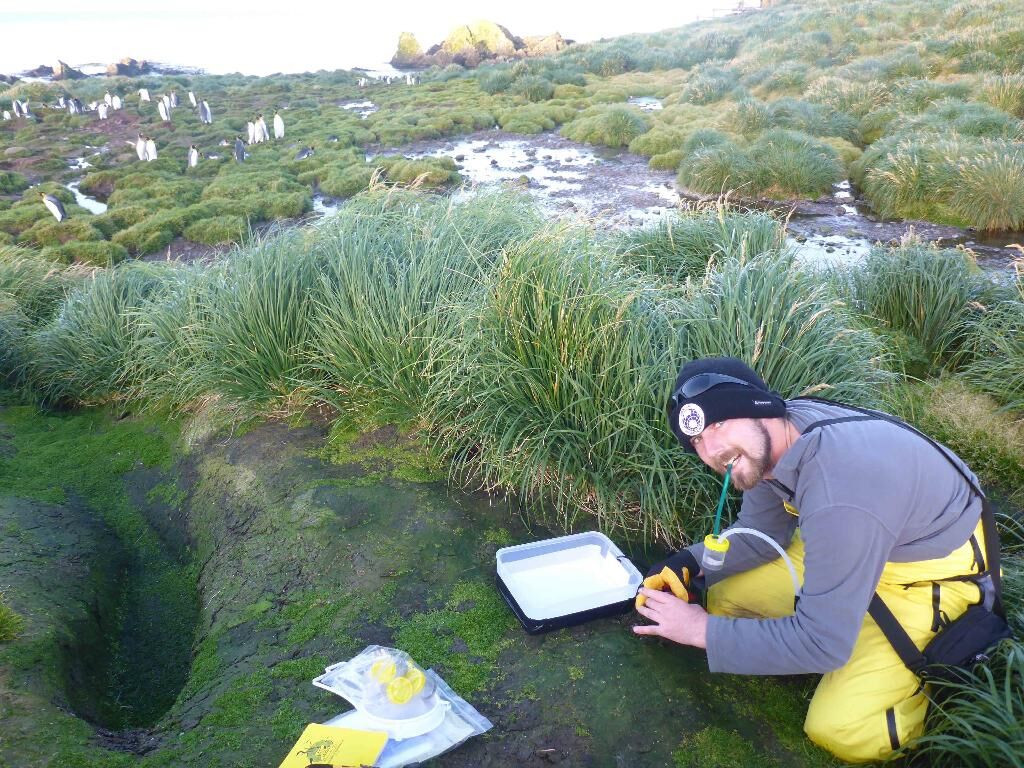
Conservation is all about managing populations. Often we aim to reduce populations of alien species that have impacts. Alternatively we aim to rescue populations that are at risk from pressures such as climate change. These two approaches are especially important in the Antarctic. Climate change and the impacts of alien species are the two main threats to land-based Antarctic biodiversity, along with local pollution. In this study we will improve our ability to predict how populations will respond to these drivers of change. We will focus on a key group of invertebrates, the springtails. We will first use laboratory experiments that test interactions among indigenous and alien species under different temperature and pollution scenarios. Information from these experiments will then be combined with field data to provide management forecast models for conservation. These will indicate which Antarctic areas are at risk, from what species, enabling us to improve environmental management.
Project milestones
Summary of the project achievements 2018/19
This project has demonstrated comprehensively that in soil systems, non-native species have a physiological and competitive advantage over their indigenous counterparts, especially in the Antarctic. Non-native species are more tolerant of warm, dry conditions and develop faster at high temperatures compared with indigenous species. Changing climates will clearly benefit the former. Biosecurity to the Antarctic has to be ramped up and rigorously implemented to maintain the biodiversity values of the region. Such elevated biosecurity requirements are especially required for ice-free areas expecting large numbers of visitors and infrastructure development. Such information is of critical importance to the Antarctic Treaty's Committee for Environmental Protection which has made non-native species prevention one of its highest priorities. It is also of much significance to Australia given its program of infrastructure renewal on Macquarie Island and in Antarctica, and in particular the proposed new runway development in the Vestfold Hills.
Summary of the season 2017/18
Our work has shown that from the Antarctic to the tropics, non-indigenous soil-dwelling arthropods have greater capacity to tolerate high temperature than their indigenous counterparts. In neither group is further evolutionary capability for heat tolerance present. In consequence, warming temperatures will differentially benefit non-indigenous species over their indigenous counterparts, with important consequences for ecosystem functioning. Effective biosecurity to the Antarctic is thus increasingly important. Our work has also shown that the Antarctic Peninsula and parts of the Ross Sea region will be susceptible to globally important biological invaders from 2050 or 2100 onwards.
Summary of the season 2016/17
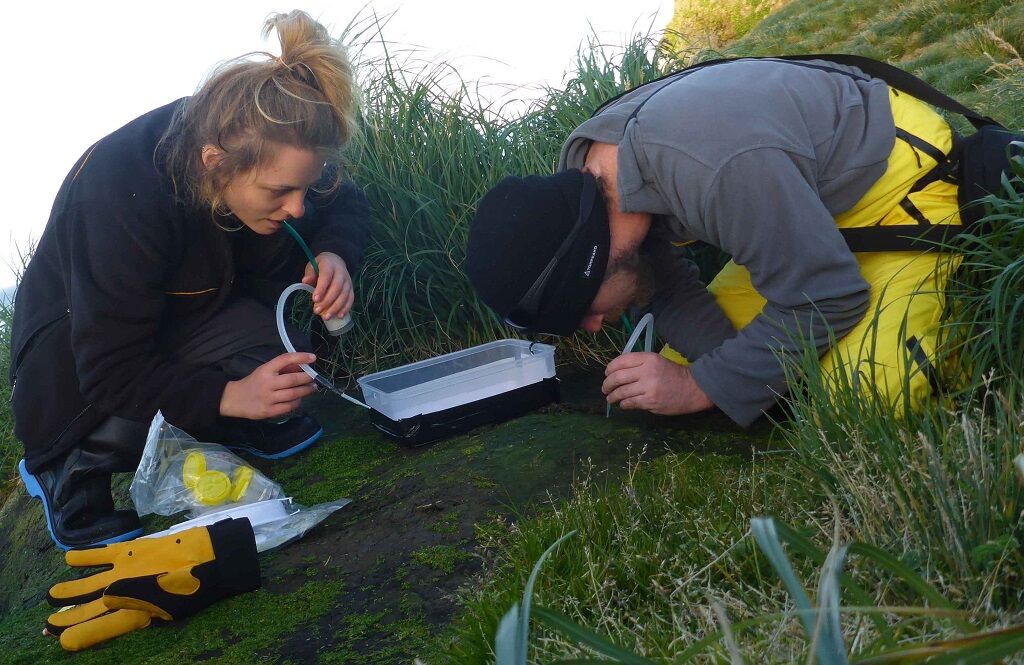
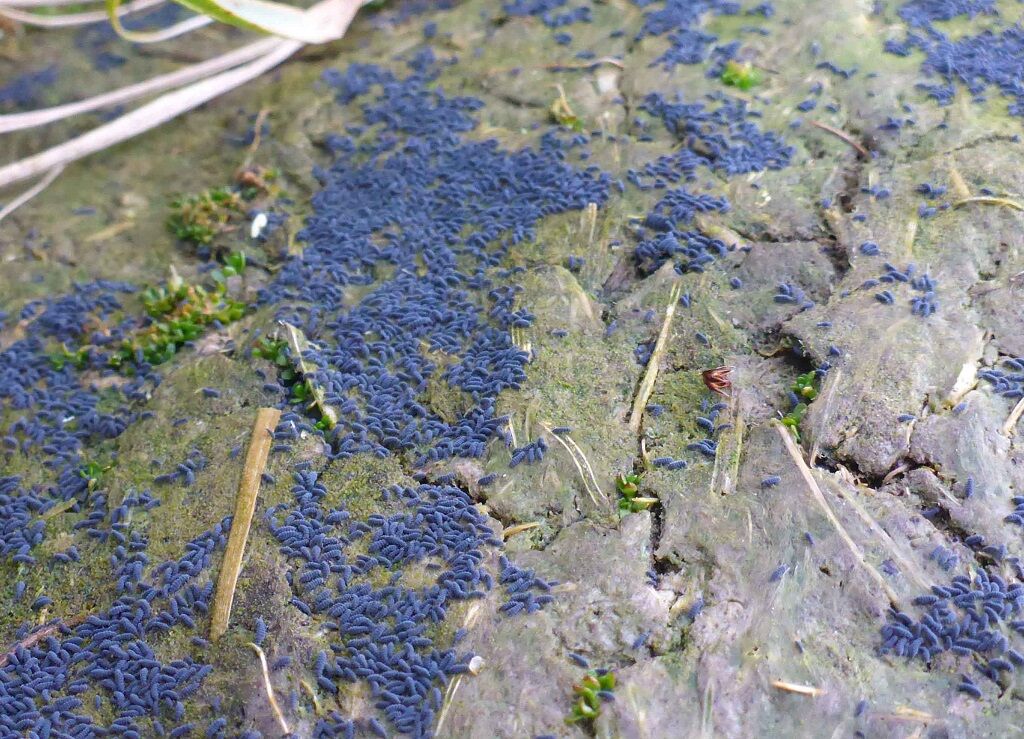
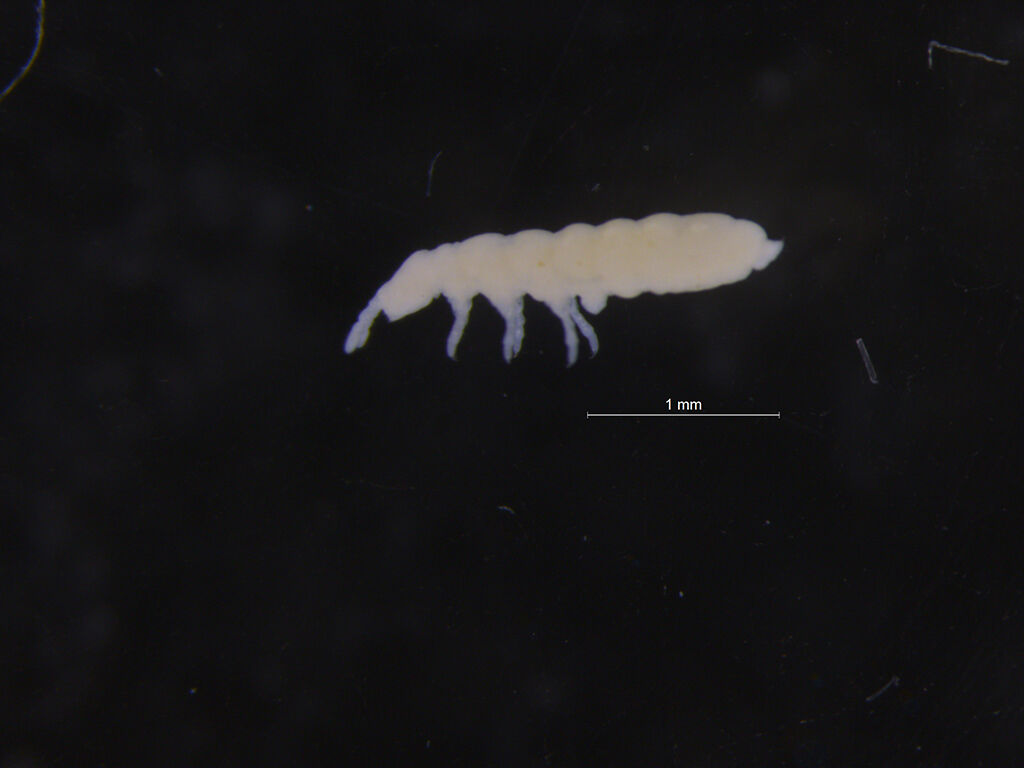
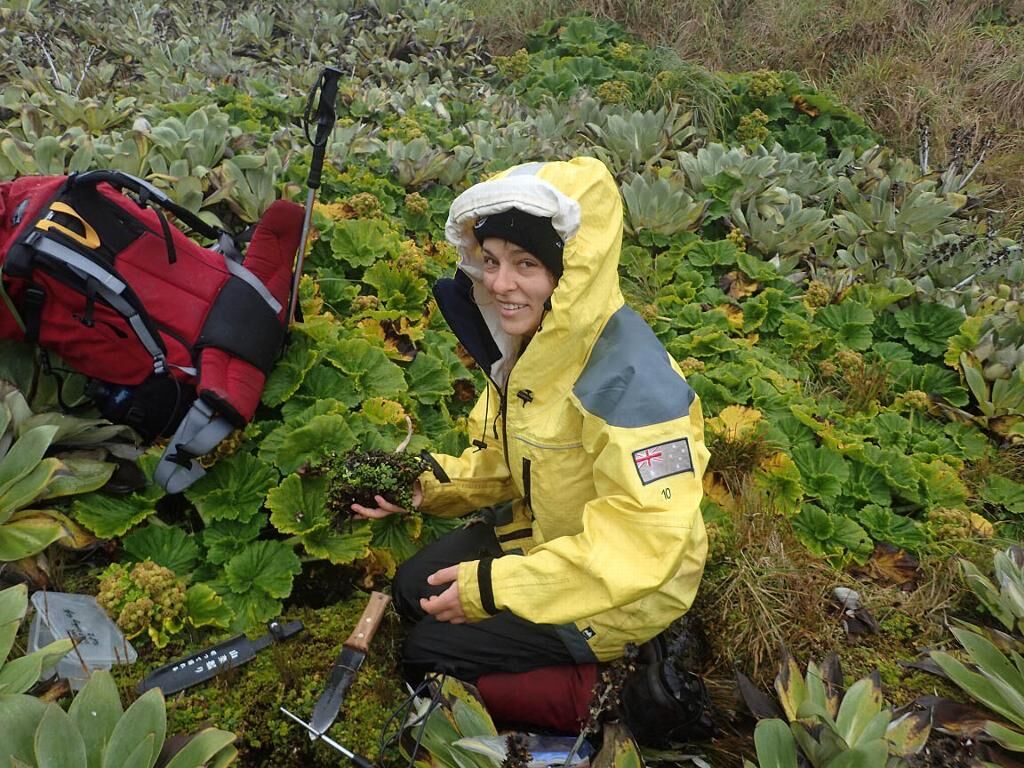
The season for this project was characterized by three important findings. First, two alien springtail species (small, though important invertebrates), Protaphorura firmata and Proisotoma minuta were shown to have extended their ranges on Macquarie Island. Both species had previously only been recorded from the scientific station. Now, they have been found as much as 3 km and 11 km from the station, respectively, in significant numbers. Second, this study has documented the recent introduction of another springtail species, Parisotoma notabilis (Schaffer, 1896) to Macquarie Island. Finally, the team was unable to verify the occurrence of an indigenous springtail species at Casey Station despite systematic surveys. A previous study suggested that such a species occurs there, based on material sourced from mosses collected close to Casey Station. Our work, along with previous surveys which have not found springtails in the vicinity of the Station suggest that the record is of a contamination. Thus, this region is one where springtails are perhaps not as important a group as elsewhere in Antarctica.
As part of this project we have also shown that, more generally, while genetic connectivity among sub-Antarctic islands is clearly pronounced in some marine species, in both terrestrial and other marine organisms the connectivity is less pronounced both within and among islands, resulting in significant genetic structuring. In consequence, much reason exists to ensure that biosecurity protocols emphasize both introductions from outside the region, and intra-regional transfers. Most genetic work has, to date, used standard markers. Next Generation Sequencing approaches are suggesting even greater structure, indicating that additional work using these methods could benefit biosecurity approaches for the region, and in particular as a means to distinguish climate change-associated colonization events from anthropogenic ones.
Summary of the season 2015/16
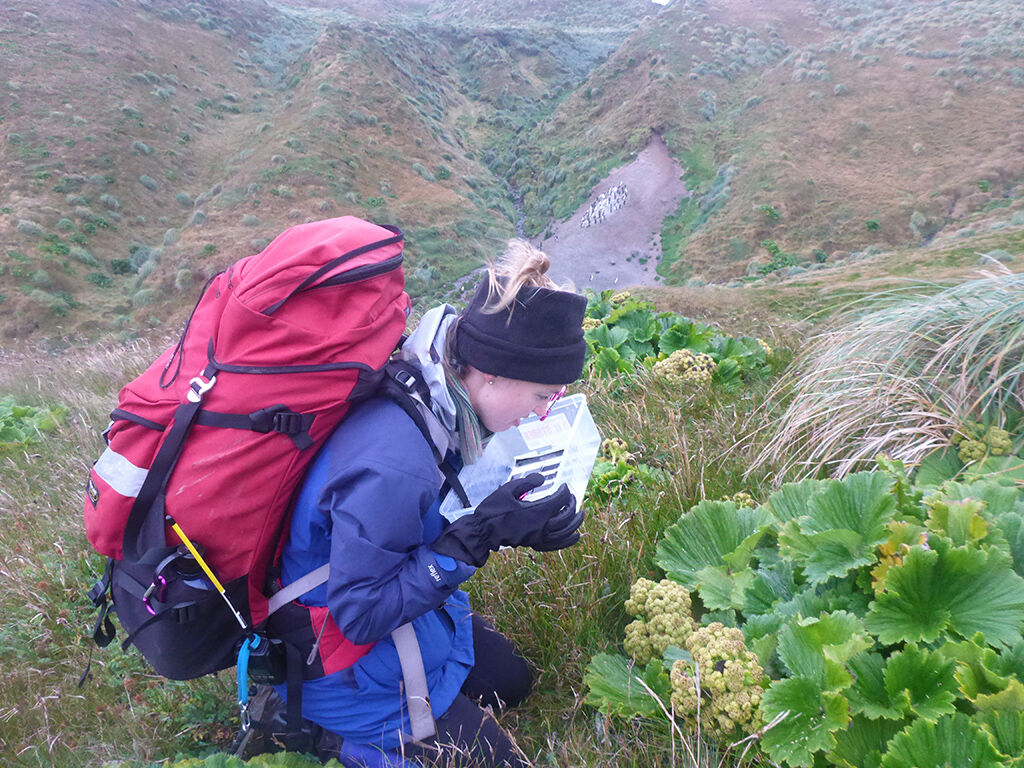
The project has commenced with data mining of information on springtail biology and distributions for the broader Antarctic region. Field work has been undertaken for a week-long period on Macquarie Island, with many of the island's springtails now collected and several in culture. Trait measurements have commenced on some of these species. A substantive contribution was made to a synthetic overview of global compositional variation among native and non-native regional insect assemblages, published in Biological Invasions. A technician, two honours students and a PhD student have undertaken work on the project along with the PI.