
Project information
Project aim
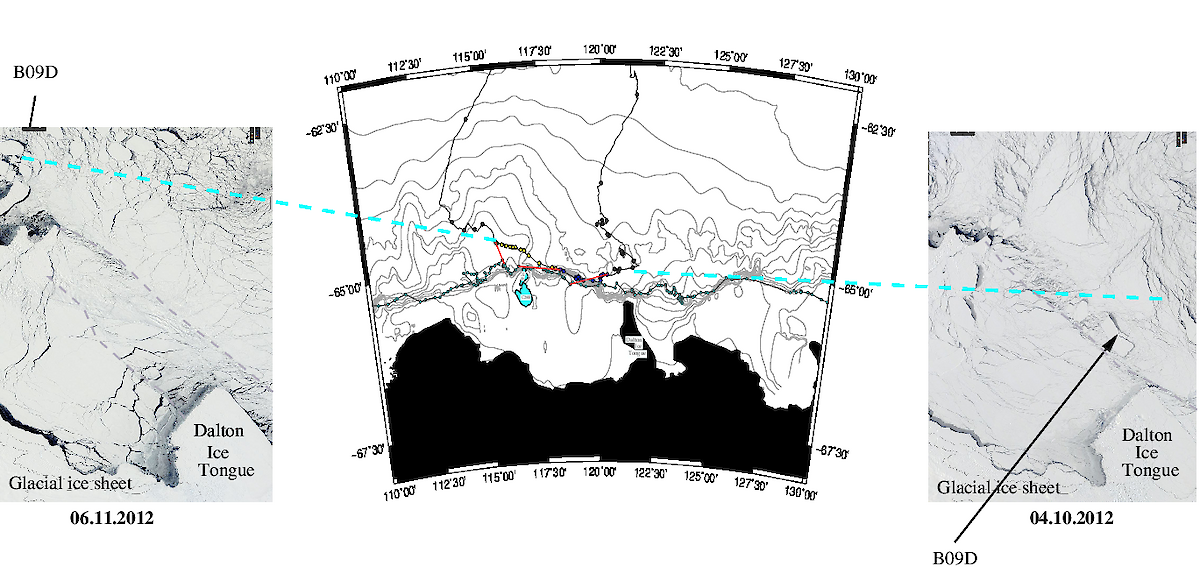
While Arctic sea ice is dramatically thinning, little is known about Antarctic sea-ice thickness, let alone whether it is changing. The planned work will address critical gaps identified in the IPCC Assessment Report 5, 2013 by providing a first estimate of East Antarctic [EA] sea-ice volume and its variability. It will achieve this through novel joint analysis of in situ, airborne and satellite data, to assess the thickness distribution and the contribution of ice dynamics, and how these are linked within the ice-sea-air system. This work will involve development (and validation) of a new technique for deriving large-scale proxy sea-ice thickness information from satellite radar-scatterometer data. Comparison with atmospheric reanalysis data will result in a first assessment of how EA ice volume covaries with large-scale modes of atmospheric variability, and will provide insight into factors responsible for observed change in EA sea-ice coverage since 1979 (to contribute to AAS4116).
Project milestones
Summary of the project achievements 2018/19
In light of dramatic changes of the cryosphere components in the Earth System, the Antarctic sea ice, up to recently, behaved atypically: In the Arctic dramatic thinning of the sea ice and a significant reduction of the sea-ice extent have been observed, however, the Antarctic sea-ice extent had been increasing slowly to an all time maximum in 2014. With few commercial shipping or military activities in the Southern Ocean, especially within the pack ice, little is known about Antarctic sea-ice thickness or how it evolved over time [IPCC Assessment Report 5, 2013]. However, knowledge of the third dimension, its thickness is crucial to assess changes in sea-ice volume, as under the influence of winds or ocean currents and tides, the total sea-ice volume might remain largely in balance but be redistributed into the vertical. Our project set out to analyze complementary in situ, airborne and satellite data, to assess the thickness distribution and the contribution of ice dynamics, and how these are linked within the ice-sea-air system. Unfortunately no field sea-ice campaigns had been launched in the East Antarctic zone since the 2012 expeditions, hence no new in situ and aerial measurements have been available for this region. In collaboration with our international colleagues we were able to contribute to their fieldwork and collaborate on shared observational data sets. In addition we have been able to thoroughly investigate atmospheric reanalysis for links between the large-scale circulation and changes to the sea-ice distribution, as well as space-borne scatterometer data, which we found to be extremely suitable to provide a proxy for sea-ice thickness.
Summary of the season 2017/18
Significant progress was made across a range of project objectives. These include: 1) Acquisition and processing of ASPeCt underway data during about 10 Antarctic voyages during 2017/18. 2) Significant progress in analysis of scatterometer (and passive microwave) data to classify Antarctic sea-ice types. 3) Deployed sea-ice buoys in the Southern Ocean to collect position and auxiliary data, such as ice temperature, snow thickness or atmospheric variables. 4) Processed most of the Envisat ASAR data to derive ice motion and adopted software to ingest other SAR and non-SAR data streams. 5) Used coincident ice-buoy data to validate satellite-derived ice motion. 6) Carried out a case study to derive sea-ice deformation off East Antarctica and investigated its interannual variability.
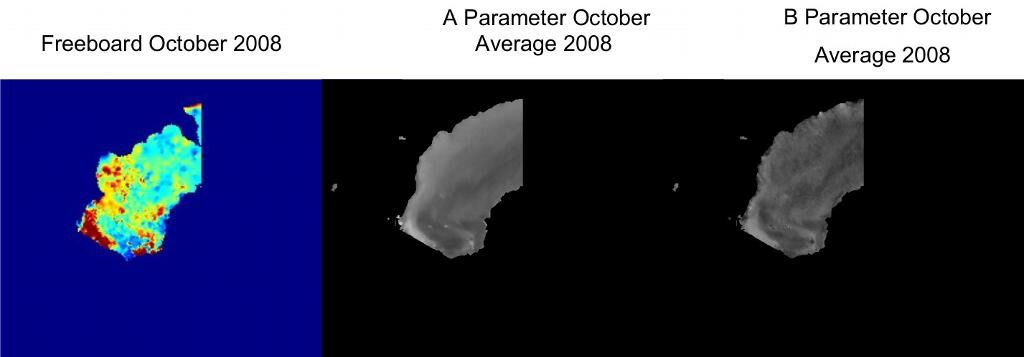
Our results show that ASCAT data collected over Antarctic sea ice hold great information on the sea-ice characteristics, as the scatterometer signal is modified by the surface properties of the reflecting material. Here we have been able to delineate the thick pack ice from the Marginal Ice Zone and first-year ice. This research has benefited from our Internat Space Science Inst project, through which we collaborate with overseas researchers to access their cross-validation data (from laser altimetry) and work closely with others who use a combination of passive-microwave and scatterometer data to identify ice age in the Southern Ocean.
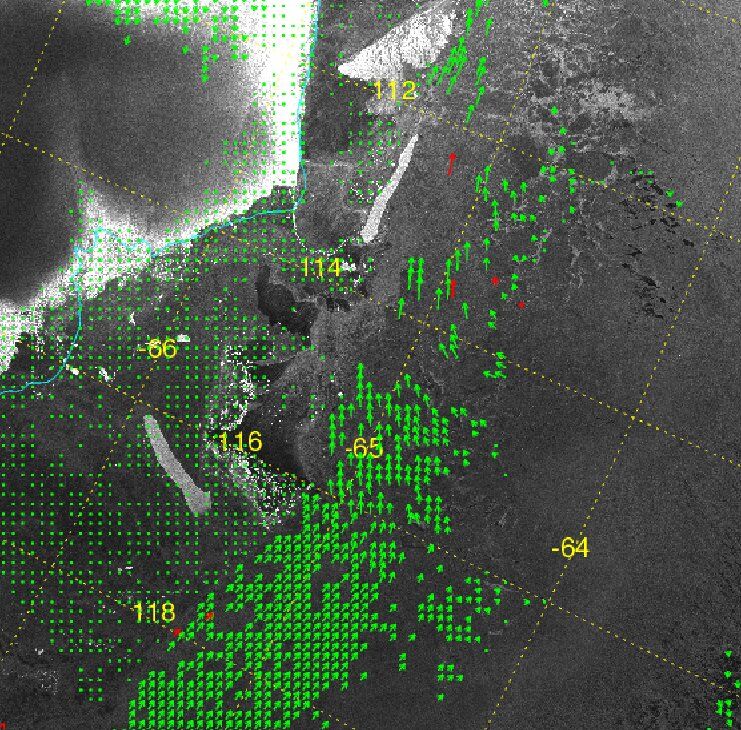
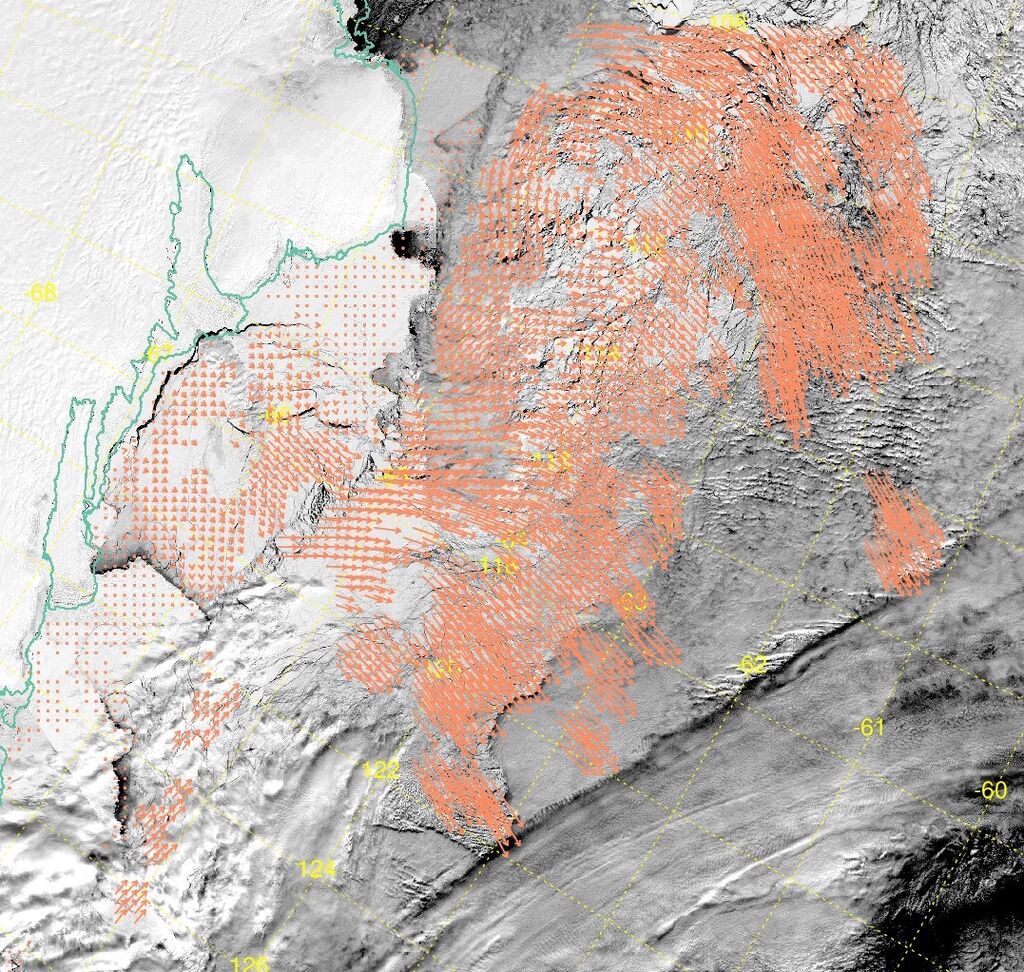
Recent results based on our IPADS analysis of SAR- and MODIS imagery have confirmed the skill of multi-sensor data to support climate studies. We have been able to substitute very high resolution SAR data with high resolution MODIS data to overcome the total lag of SAR data after Envisat and its ASAR ceased operations in April 2012. We now plan to extend this time series further by including Sentinel1A/B SAR data. Our results so far have shown deviations in sea-ice deformation for few years in our 10 year record, which we associated with atmospheric forcing.
Summary of the season 2016/17
While Arctic sea ice is dramatically thinning, little is known about Antarctic sea-ice thickness, let alone whether it is changing. Our research addresses critical gaps identified in the IPCC Assessment Report 5, 2013 by working towards a first estimate of East Antarctic [EA] sea-ice volume and its variability. We work on this through novel joint analysis of in situ, airborne and satellite data, to assess the thickness distribution and the contribution of ice dynamics, and how these are linked within the
ice-sea-air system. The development (and validation) of a new technique for deriving large-scale proxy sea-ice thickness information from satellite radar-scatterometer data is underway. Comparison with atmospheric reanalysis data will allow us to assess how the EA ice volume covaries with large-scale modes of atmospheric variability, and will provide insight into factors responsible for observed change in EA sea-ice coverage since 1979.
Summary of the season 2015/16
Good progress has been made on this project since it was accepted by the AAS in August 2015.
Historic data have been calibrated and pre-processed to derive estimates of total ice freeboard with view to investigating East Antarctic sea-ice thickness changes. This included APPLS data from East Antarctica for 2007 - 2012 (intermittent).
Investigations into the effect of snow on the sea ice and how to interpret freeboard have been conducted. Results have been summarized in a paper accepted by Elseviers Deep-Sea Res2.
Changing East Antarctic sea-ice conditions have been researched using SIPEX 2007 and 2012 observations and results have been submitted for review in an international journal.
Sea-ice kinematics in the polar regions have been explored and results have been summarized in three peer-reviewed publications.
Thermodynamic ice growth and the effect of platelet ice on the Antarctic sea-ice volume have been studied. Results have been published in JGR Oceans.
Sentinel-1A imagery are being acquired for the East Antarctic. Sentinel-2 data are monitored. TerraSAR-X and other remotely sensed data streams are acquired to build up our Cryospheric Antarctic & Southern Ocean image and data library.
Outreach took place during the National Science Week (Aug 2015) by hosting a stall on sea-ice dynamics at the Festival of Bright Ideas (Tasmania). Ongoing educational outreach is carried out within CSIRO's Scientists in Schools programme.
Related publications
-
Delivering Sustained, Coordinated, and Integrated Observations of the Southern Ocean for Global Impact Frontiers in Marine Science, 2019
(Ref: 17039)
Authors:Newman L.Heil P.Trebilco R.Katsumata K.Constable A.van Wijk E.Assmann K.Beja J.Bricher P.Coleman R.Costa D.Diggs S.Farneti R.Fawcett S.Gille S.T.Hendry K.R.Henley S.Hofmann E.Maksym T.Mazloff M.Meijers A.Meredith M.M.Moreau S.Ozsoy B.Robertson R.Schloss I.Schofield O.Shi J.Sikes E.Smith I.J.Swart S.Wahlin A.Williams G.Williams J.M.Herraiz-Borreguero L.Kern S.Lieser J.Massom R.A.Melbourne-Thomas J.Miloslavich P.Spreen S.Category 1: Peer-reviewed literature
The Southern Ocean is disproportionately important in its effect on the Earth system, impacting climatic, biogeochemical, and ecological systems, which makes recent observed changes to this system cause for global concern.
-
SIPEX 2012: Extreme sea-ice and atmospheric conditions off East Antarctica Deep Sea Research Part II: Topical Studies in Oceanography, 2016
(Ref: 17053)
Category 1: Peer-reviewed literature
In 2012, Antarctic sea-ice coverage was marked by weak annual-mean climate anomalies that consisted of opposing anomalies early and late in the year (some setting new records) which were interspersed by near-average conditions for most of the austral autumn and winter. Here…
-
On the extraordinary snow on the sea ice off East Antarctica in late winter, 2012 Deep Sea Research Part II: Topical Studies in Oceanography, 2016
(Ref: 17055)
Category 1: Peer-reviewed literature
In late winter-early spring 2012, the second Sea Ice Physics and Ecosystems Experiment (SIPEX II) was conducted off Wilkes Land, East Antarctica, onboard R/V Aurora Australis. The sea-ice conditions were characterized by significantly thick first-year ice and snow…
-
Drift of pancake ice floes in the winter Antarctic marginal ice zone during polar cyclones Journal of Geophysical Research: Oceans, 2020
(Ref: 16674)
Category 1: Peer-reviewed literature
-
Surface energy balance on the Antarctic plateau as measured with an automatic weather station during 2014 Advances in Polar Science, 2019
(Ref: 16167)
Category 1: Peer-reviewed literature