
Project information
Project aim
Despite its potential to naturally fertilize the Southern Ocean with iron and to stimulate the biological carbon pump, the marginal ice zone has been understudied compared to other naturally fertilized areas. Our international (Australia-USA-Belgium-Japan) and multi-disciplinary project will assess the physical and biological drivers of both the iron and carbon cycles (as well as the nitrogen and silicon cycles) in the marginal ice zone, by quantifying the fertilization potential of sea ice and its effect on the polar ecosystem functioning. By combining a fast ice process study, laboratory experiments, and ship-based sampling of the marginal ice zone, we will generate an improved understanding of the polar biogeochemical ocean processes required to constrain predictions of the changing sea ice habitat in the East Australian sector.
Project milestones
Summary of the project achievements 2017/18
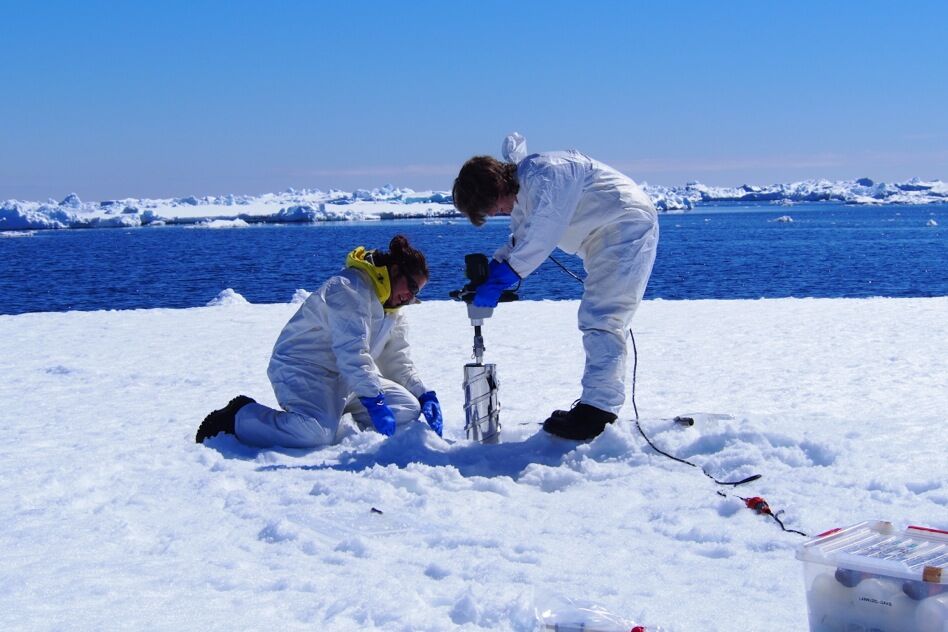
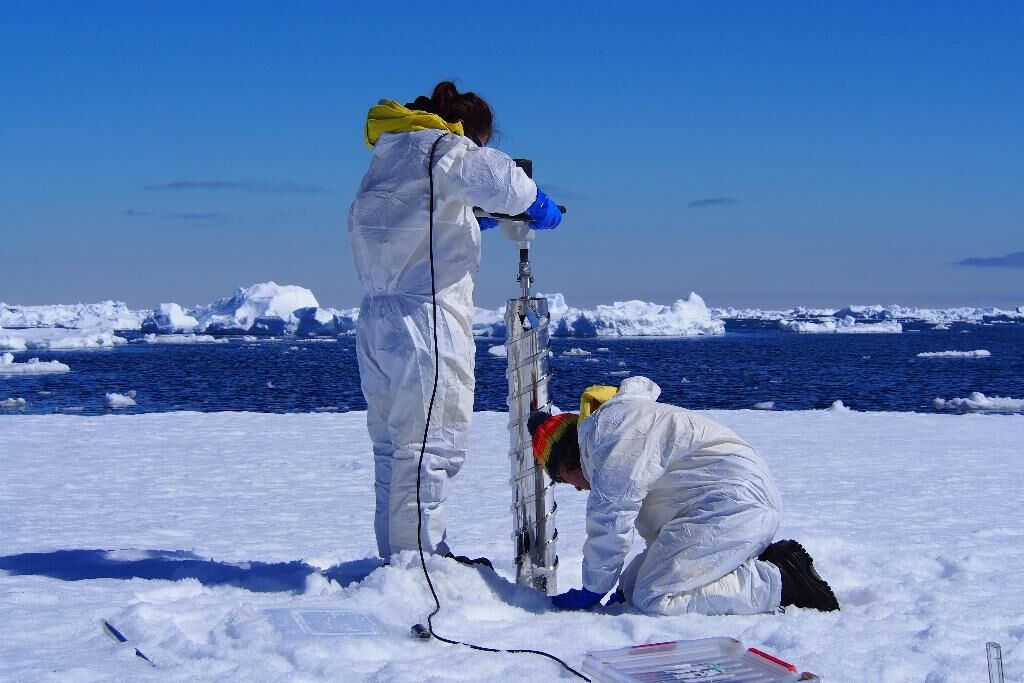
Our project aims at evaluating the effect of a changing icescape on marine productivity in the Southern Ocean. We first conducted a 3-weeks times series in summer 2015 in Antarctic fast ice during which we collected a suite of key physical, chemical and biological parameters. Data was then successfully implemented for the 1st time in Australia in a one dimensional sea-ice biogeochemical model. The model suggests that sea-ice diatoms have higher nutrients requirements than oceanic diatoms. Iron measurements in sea ice indicate a significant flux of iron-bearing dusts from the Vestfold Hills, the largest ice-free area in East Antarctica. As climate change may cause huge expansion to ice-free areas across Antarctica, close to a 25% increase by the end of the century (Lee et al., 2017). We hypothesize that the fertilization of the Southern Ocean from exposed iron-rich dust and rocks may increase as a consequence of Antarctica' great thaw. Given that dust contain highly refractory iron particles, large uncertainties remain on the magnitude and effectiveness of this iron source in coastal Antarctica.
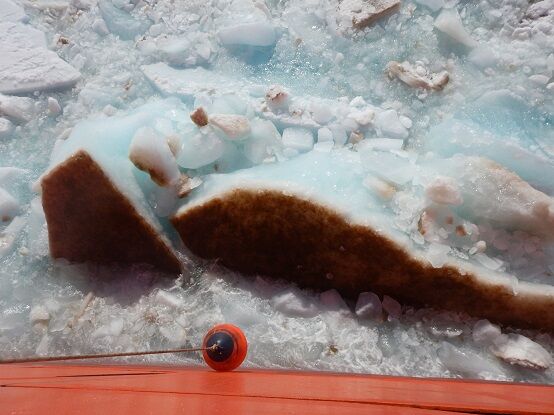
The 2nd part of our project focused on the influence of ice shelves on marine productivity in Antarctic polynyas. Three contrasting polynyas were therefore visited in East Antarctica in late December-early January 2017: the Dalton, Mertz and Ninnis polynyas. Phytoplankton biomasses in the Mertz and Ninnis polynyas were approximately double those measured in the Dalton polynya. In the Mertz and Ninnis polynyas, a stronger stratification and potentially iron-rich sea-ice meltwaters may have explained the very high phytoplankton biomass. In the Dalton polynya, the main driver of primary productivity may have been the outflow of Ice Shelf Water from the neighbouring Moscow University Ice Shelf. Coastal Antarctic waters are proven key areas for atmospheric CO2 uptake, biological carbon export and as feeding grounds for upper trophic levels.
Summary of the season 2016/17
Field-work was carried out at Davis station in summer 2015 and in sea-ice covered East Antarctic waters in 2016/17 (publication of these results is expected in late 2017 and early 2018). The sea-ice work responds to challenges identified in a large-scale review (Lannuzel et al., 2016). Results from radiotracer incubations carried out in situ showed high and temperature-dependant iron uptake by sea-ice algae (Lannuzel et al., submitted). This information is of primary importance for the construction of iron (and carbon) budgets in the Southern Ocean, which is seasonally sea-ice-covered. The role of the cryosphere as an ocean fertilizer has further been supported by the discovery that a large flux of iron derived from subglacial processes is delivered to euphotic waters through the accretion (Fe storage) and subsequent melting (Fe release) of a marine-accreted layer of ice at the base of the Amery Ice Shelf (Borreguero et al., 2016). The iron supplied by the melting of the marine ice layer is an order of magnitude larger than the required iron necessary to sustain the large annual phytoplankton bloom in Prydz Bay.
Summary of the season 2015/16
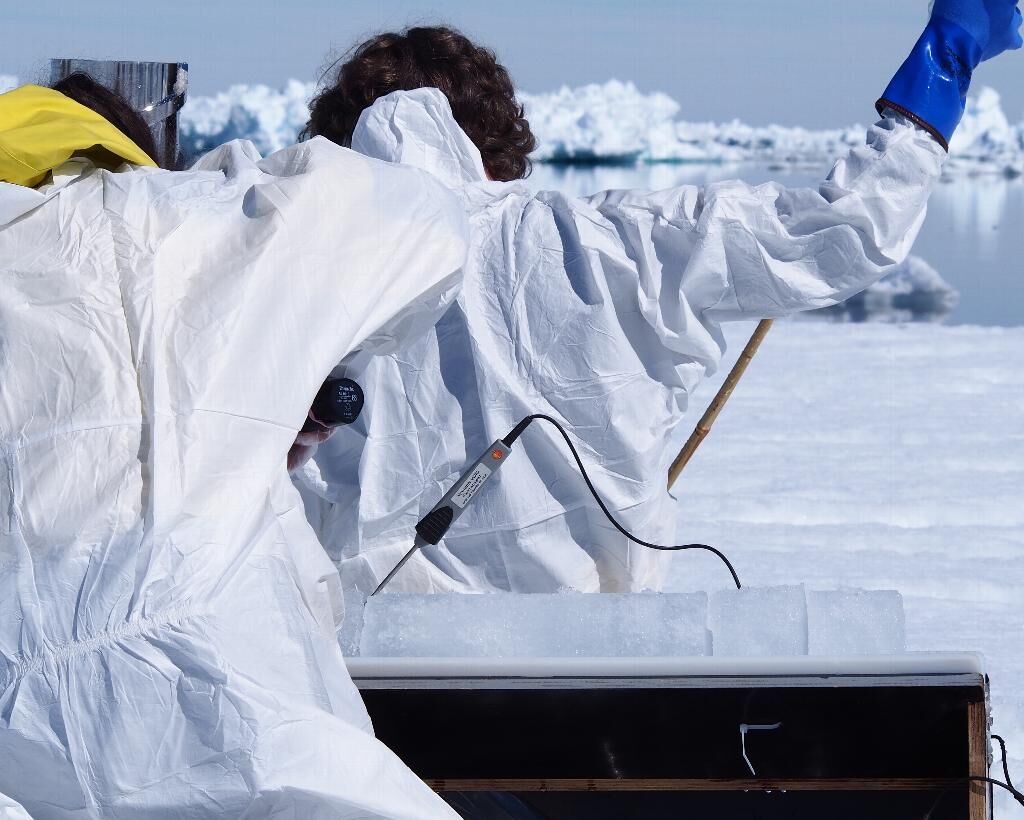
The AAS #4291 project team (co-CIs Lannuzel) has recently completed the field component of a station-based investigation of the cycling of iron and carbon in melting fast-ice. Samples of snow, sea ice, brine and under-ice seawater were collected at a site near Australia's Davis station during the transition of sea ice from winter to spring conditions (November/December 2015), every 3-4 days for 3 weeks. Samples will return on V3 for analysis in the laboratory. The data collected during this time-series will be used to construct iron (e.g. [Lannuzel et al., 2014]) and carbon (e.g., [Roden et al.,2013; Shadwick et al., 2011]) budgets for the fast-ice in this region. In addition, the new CO2 system observations contribute to longer-term assessments of anthropogenic forcing in this region by furthering the time series started in 1993 [Gibson and Trull, 1999] and continued in 2010 [Roden et al., 2013].The data collected during this 2015 field expedition will allow the parameterization of sea-ice primary production in ecosystem and biogeochemical models.