
Project information
Project aim
Presently the greatest source of uncertainty in forecasts of global sea level is the rate at which ice grounded on the Antarctic continent is discharged into the ocean. This uncertainty has driven significant recent developments in ice sheet modelling capability. However, these advances have outpaced our understanding of ice flow properties; a fundamental component of large-scale models used to predict evolution of the Antarctic Ice Sheet. This project will redress this imbalance by improving on currently inadequate descriptions of ice flow properties. A comprehensive program of laboratory ice deformation experiments, combined with analyses of ice crystal orientations will be used to refine the relationship governing ice flow rates used in ice sheet models. In particular, the way in which the flow configuration and temperatures close to the melting point influence flow rates will be investigated.
Project milestones
Summary of the project achievements 2018/19
The aim of this project was to support the ongoing development of numerical models used to predict the future evolution of the Antarctic ice sheet and its contribution to sea level rise. Long-term ice deformation experiments were used to improve our understanding of the flow properties of ice. Corresponding theoretical developments were used to improve the capability of an ice sheet model to accurately predict the flow of ice.
The achievements of the project can be separated into: i) theoretical developments and associated advances in ice sheet modelling; and ii) technical improvements to the laboratory and practices that have reduced uncertainty in the data and increased the stability and reliability of the experimental systems.
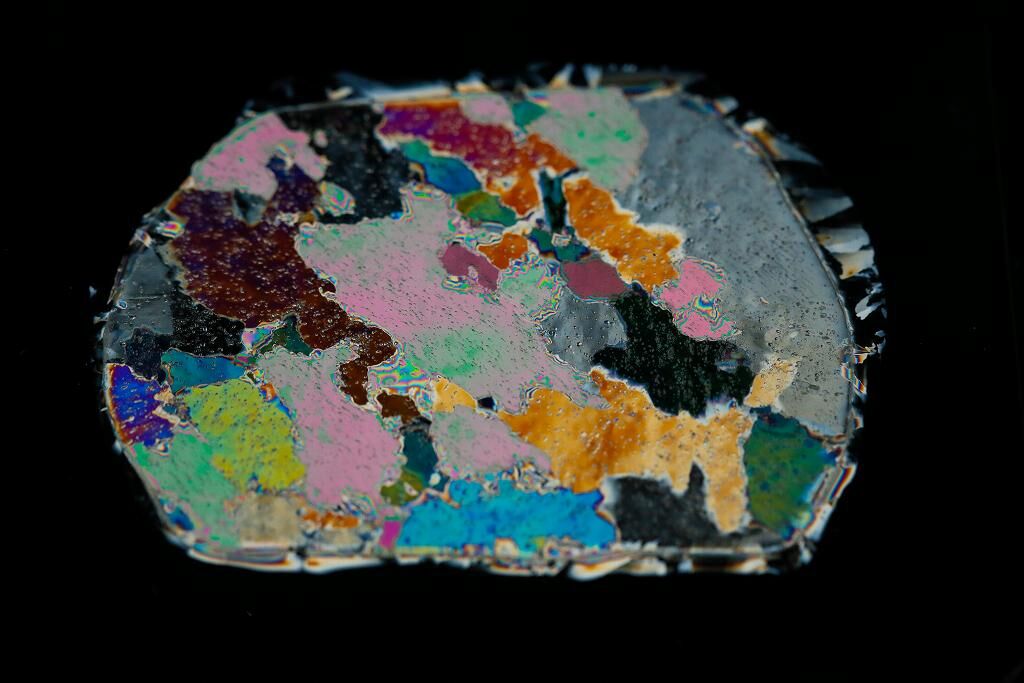
Using observations of ice microstructure and large-scale flow from an ice core and its associated borehole we demonstrated the superior performance of an empirical ice flow relation that has evolved from our experimental program. Owing to its origin and capabilities, we refer to this flow relation as ESTAR (Empirical Scalar Tertiary Anisotropic Regime). ESTAR has been implemented in the Ice Sheet System Model that is used to simulate the dynamic evolution of the Antarctic ice sheet. Modelling has demonstrated that predictions of large-scale ice shelf flow are significantly influenced by the choice of ice flow relation. The superior performance of ESTAR, compared with other descriptions of ice flow that are utilised in ice sheet models, is related to its ability to more realistically describe the spatial variability in the flow properties of ice. Additionally, ESTAR has been formulated so that it can be easily retrofitted into existing ice sheet models without any penalty to their computational efficiency.
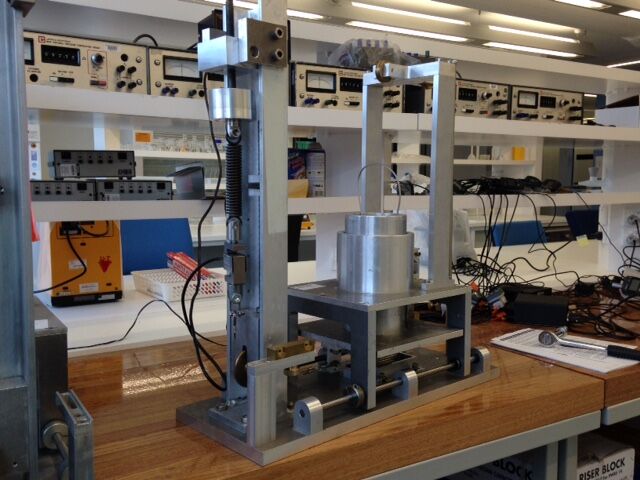
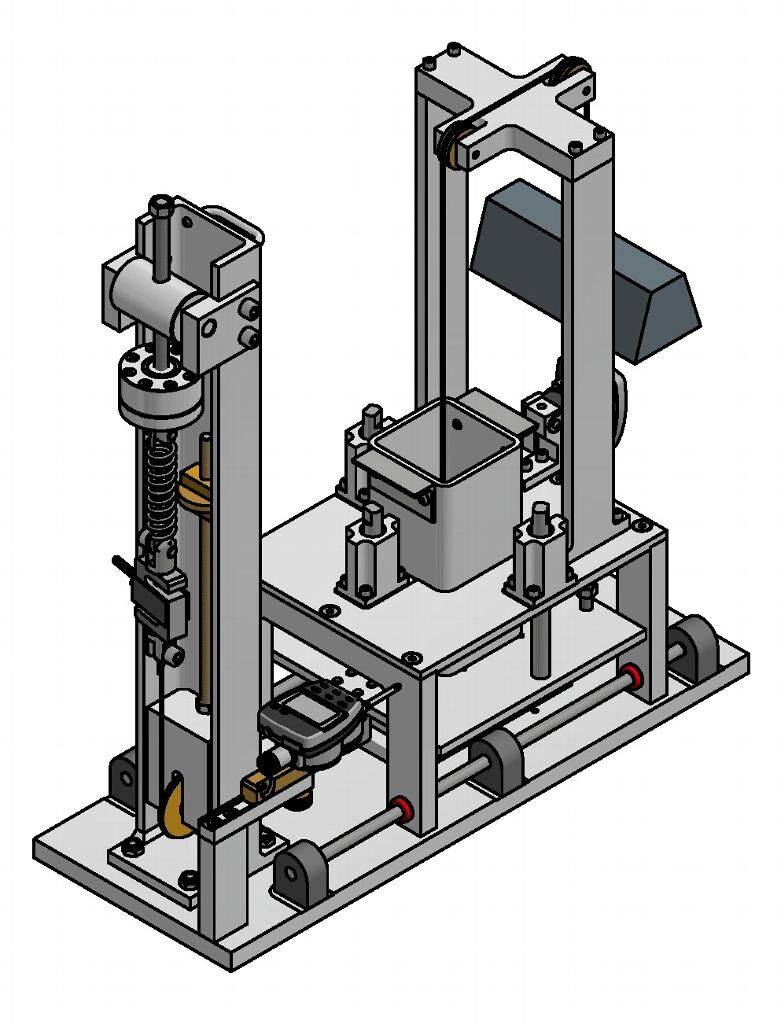
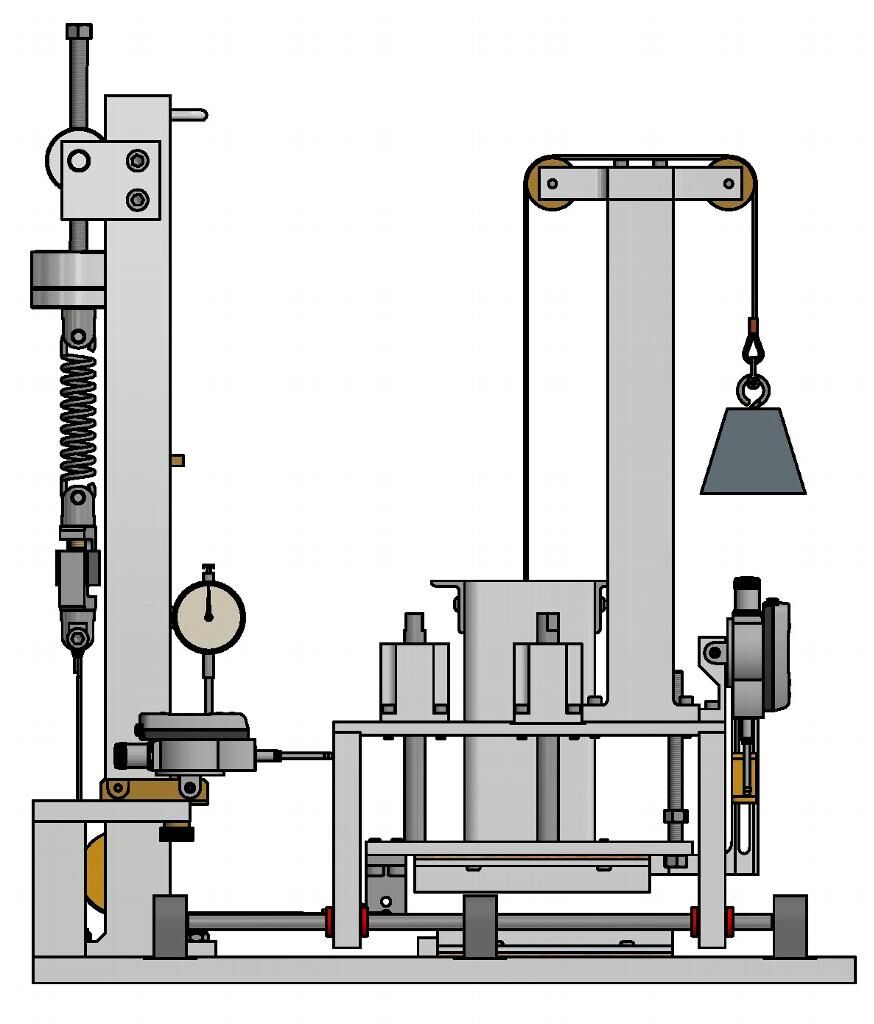
The experimental apparatus was redesigned to reduce mechanical losses and load instabilities which introduce uncertainty to the data. Prototyping revealed that these modifications improve the performance of the apparatus and they were retrofitted to all units. Further gains in experimental stability were achieved through upgrades to the thermal regulation and monitoring systems. Until now there has been insufficient data from experiments close to the melting point, these modifications provide the capability to target high temperature in future experiments. The development of a new digital data acquisition system has improved data quality and ensures continuity of data recording during disturbances to the power supply.
Summary of the season 2017/18
Progress for the project 'Ice rheology for ice sheet modelling' during 2017/18 has included:
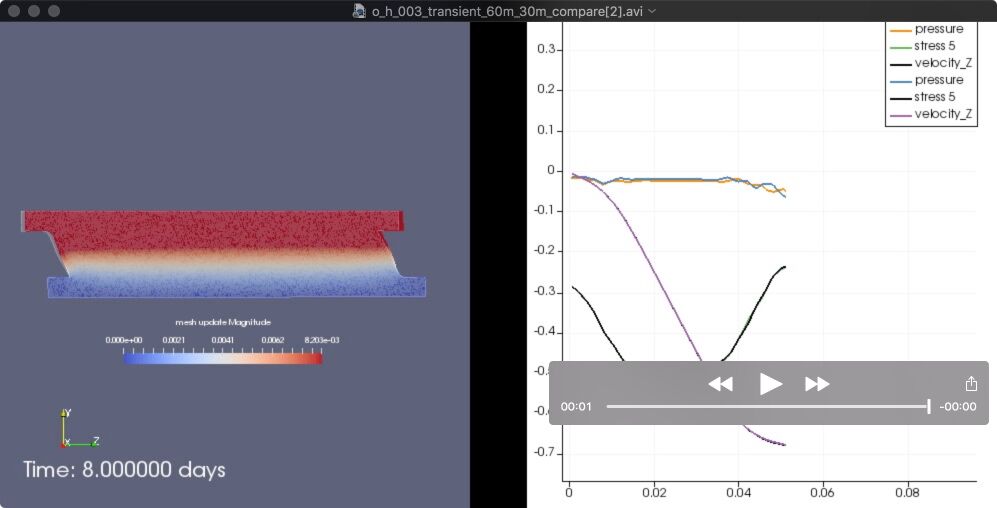
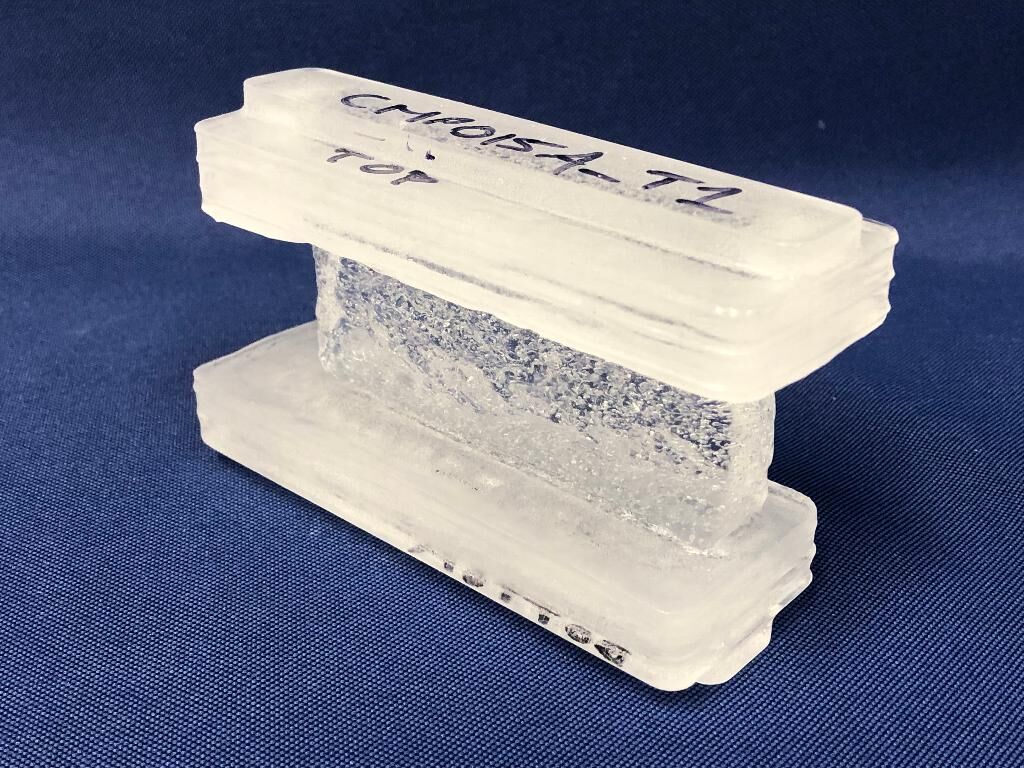
i) A numerical model that was developed to simulate the progressive changes in sample geometry that occur in long-term ice deformation experiments conducted in the ice mechanics laboratory. This model has been used to investigate changes in the distribution of stresses within samples that occurs in response to changes in their geometry. Initial results have provided guidance on optimising sample geometry and further simulations are ongoing.
ii) Experiments to test prototype modifications made to the ice deformation apparatus that are used in the ice mechanics laboratory have demonstrated that improvements to their performance have been made. To date, one of six identical apparatus has been modified. Following on from these tests some further (minor) changes have been made to the design prior to the remaining apparatus being modified.
iii) A manuscript describing the implementation of an improved description of ice flow physics has been published.
Summary of the season 2016/17
Progress for the 'Ice rheology for ice sheet modelling' project during 2016/17 has included:
i) An improved description of ice flow physics, based on previous experimental work, has been implemented in the Ice Sheet System Model (ISSM) which is used to simulate the dynamics and evolution of the Antarctic ice sheet. Tests have demonstrated the importance of describing the complex flow properties of ice in a physically realistic manner. These developments will assist in reducing uncertainty in simulations of ice sheet evolution that are used to predict future ice sheet contributions to sea level rise and reconstruct palaeo-ice sheet extent.
ii) A numerical model for simulating the deformation of samples used in laboratory experiments has been developed. Results from the simulations will be used to further optimise the experiments which underpin the development of an improved flow relation for ice that is used in ice sheet models.
iii) Final testing and commissioning of new and modified equipment in the ice mechanics laboratory was completed and experimental work has recommenced.
Summary of the season 2015/16
Progress on the 'Ice rheology for ice sheet modelling' project during 2015/16 has included:
i) A demonstration of the superior performance of the numerical ice flow relation developed from laboratory and field observations of ice deformation and microstructures. Key advantages of this flow relation are that it in comparision to other flow relations it provides a more realistic representation of the complex flow properties of the Antarctic Ice Sheet and can be more easily implemented within numerical models of the Antarctic Ice Sheet.
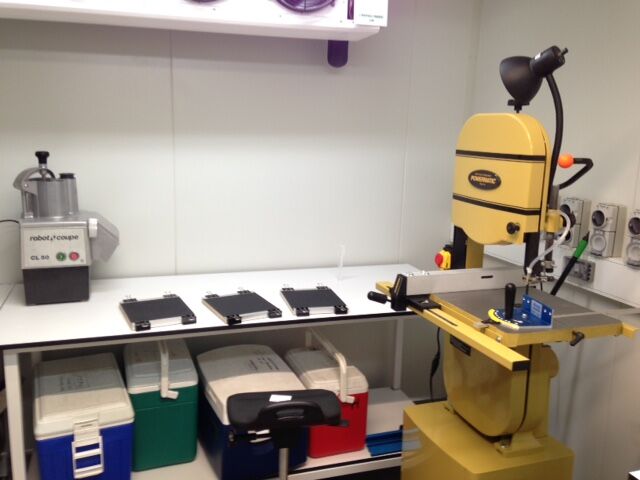
ii) Significant progress has been made towards upgrading the Ice Mechanics laboratory facilities located at the Antarctic Climate & Ecosystems Cooperative Research Centre (ACE CRC). The most significant development has been modification of the experimental apparatus to allow simpler and more reliable operation during experiments that may last for several months. Improvements have also been made to the measurement and acquisition of sample displacement, temperature and load data.