
Project information
Project aim
Energy from the Sun drives the Earth’s climate system but this energy varies: there is an 11 year solar cycle and the Sun’s intensity has varied over longer timescales. Reconstructing how the Sun’s output has varied in past times is crucial to understanding the Earth's past climate which is key to predicting future climate change. Naturally-occurring radioactive isotopes such as 7Be and 10Be are produced in the Earth’s atmosphere by cosmic rays, at a rate controlled by the activity of the Sun, and are layered in ice sheets, thus providing a means of reconstructing past solar output.
Project milestones
Summary of the season 2015/16
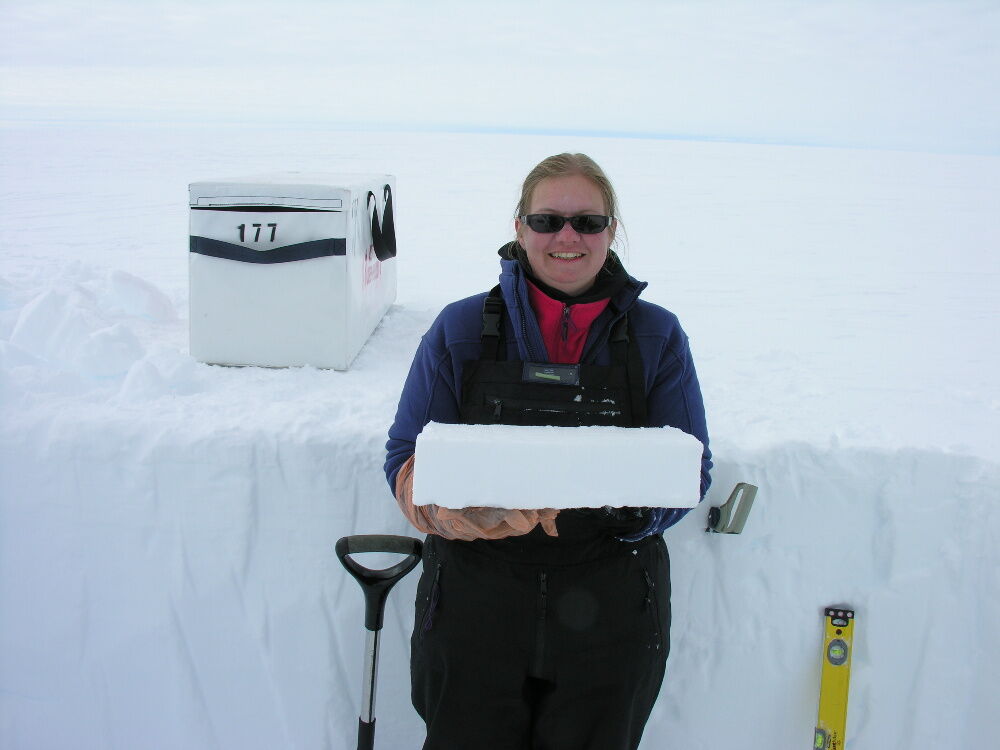
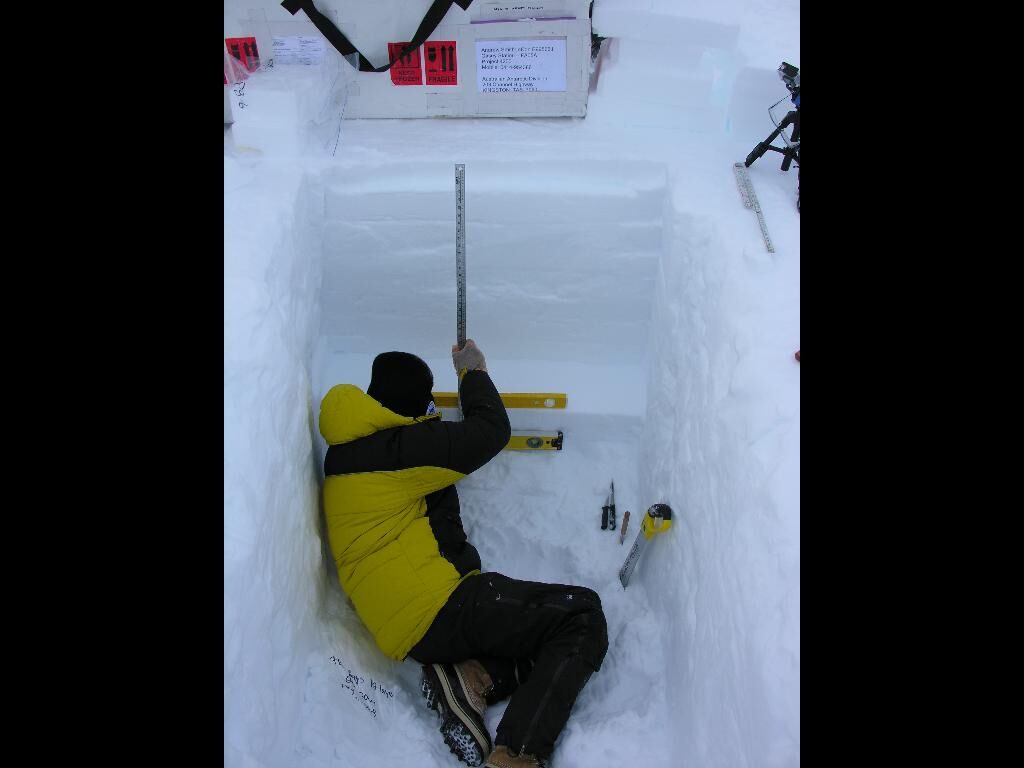
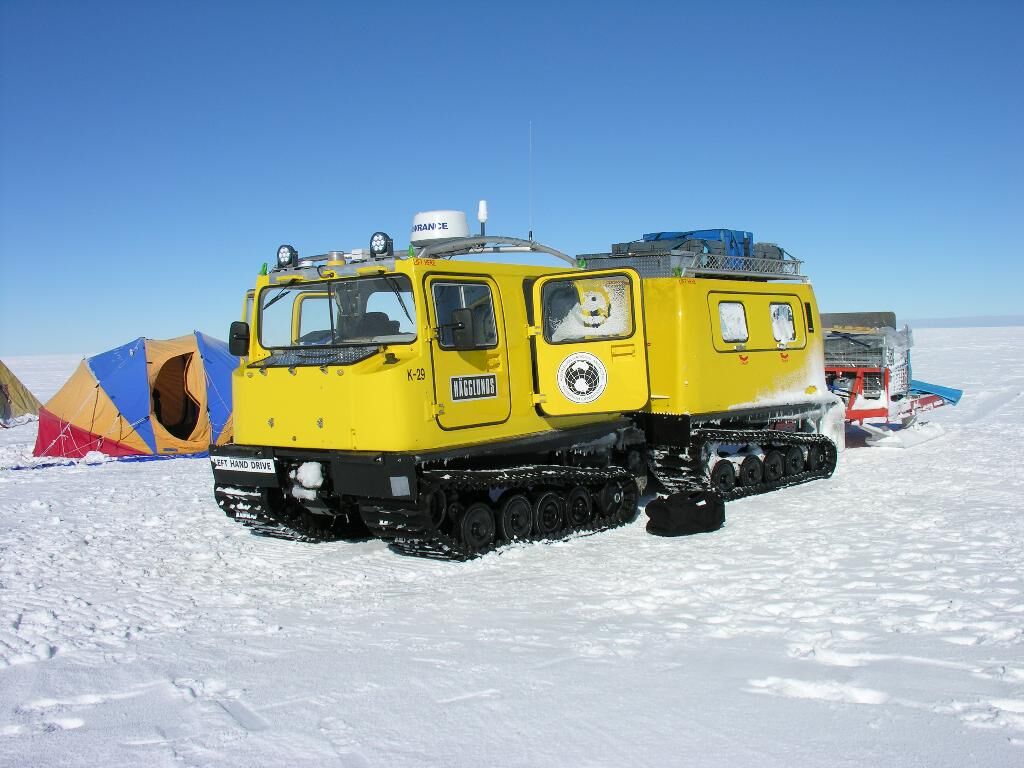
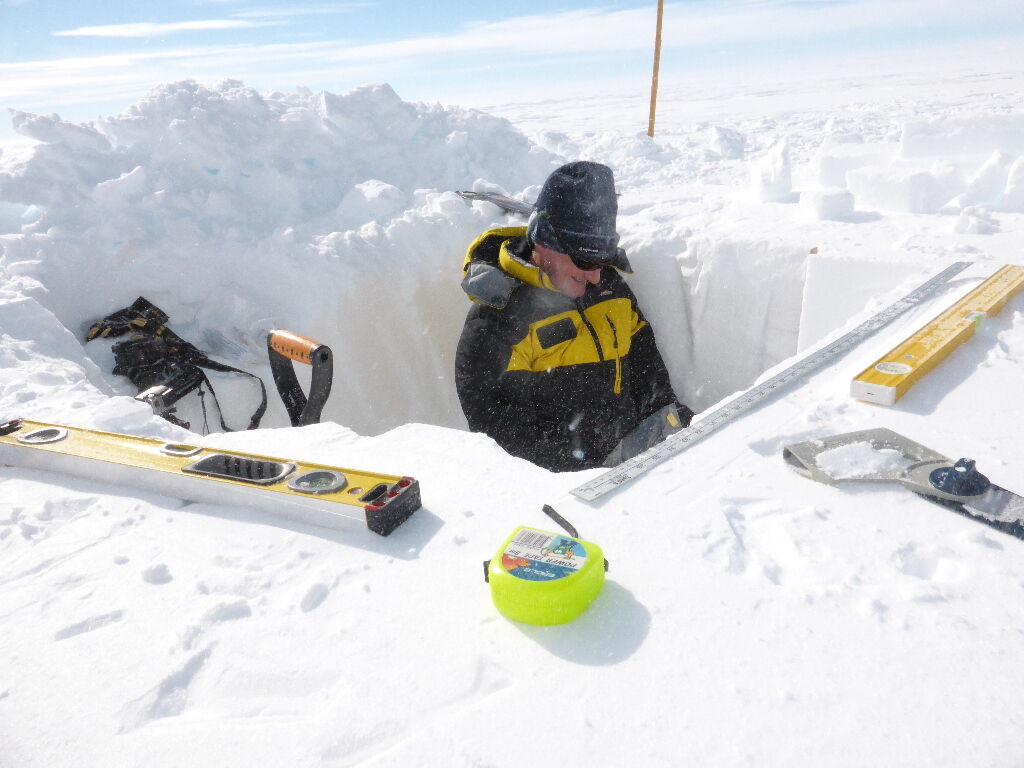
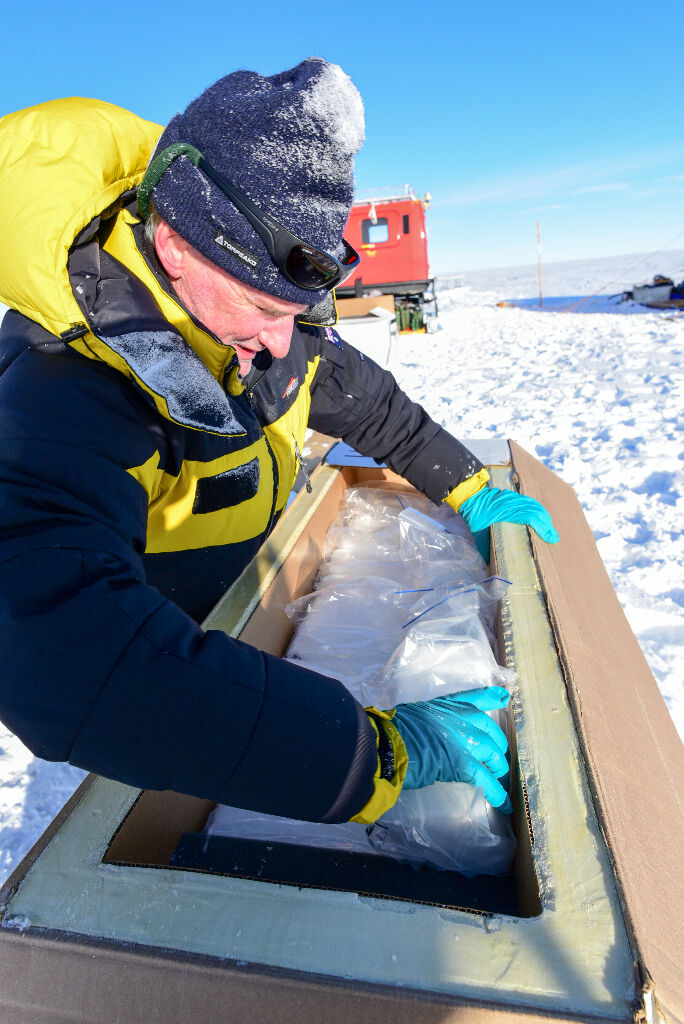
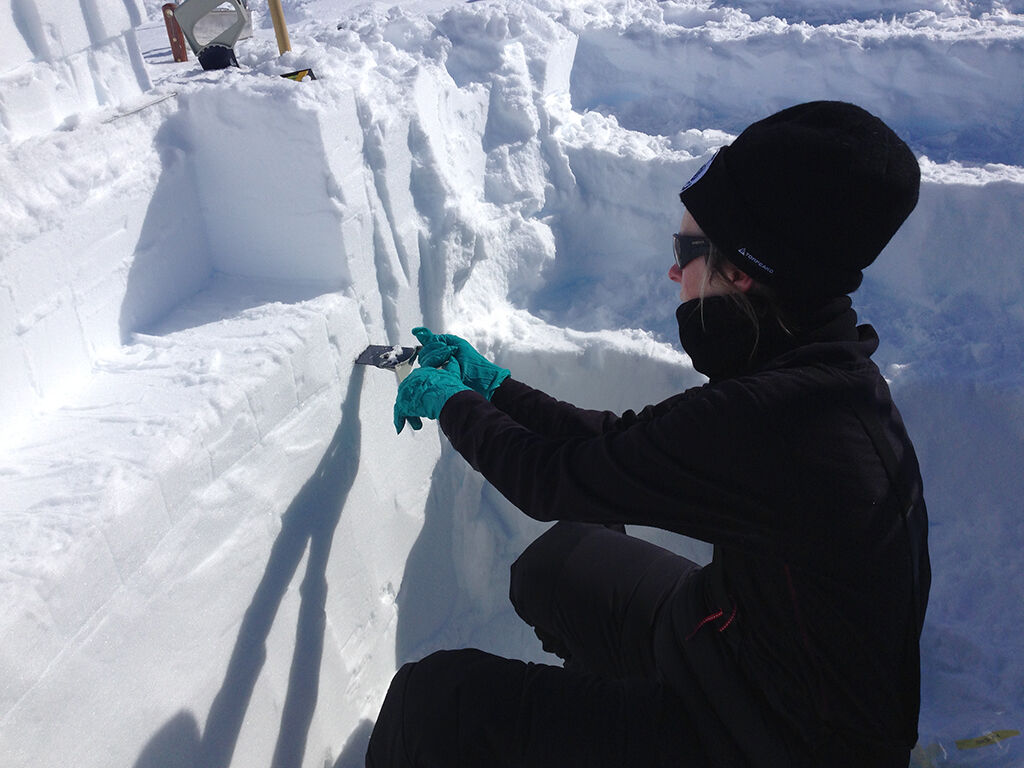
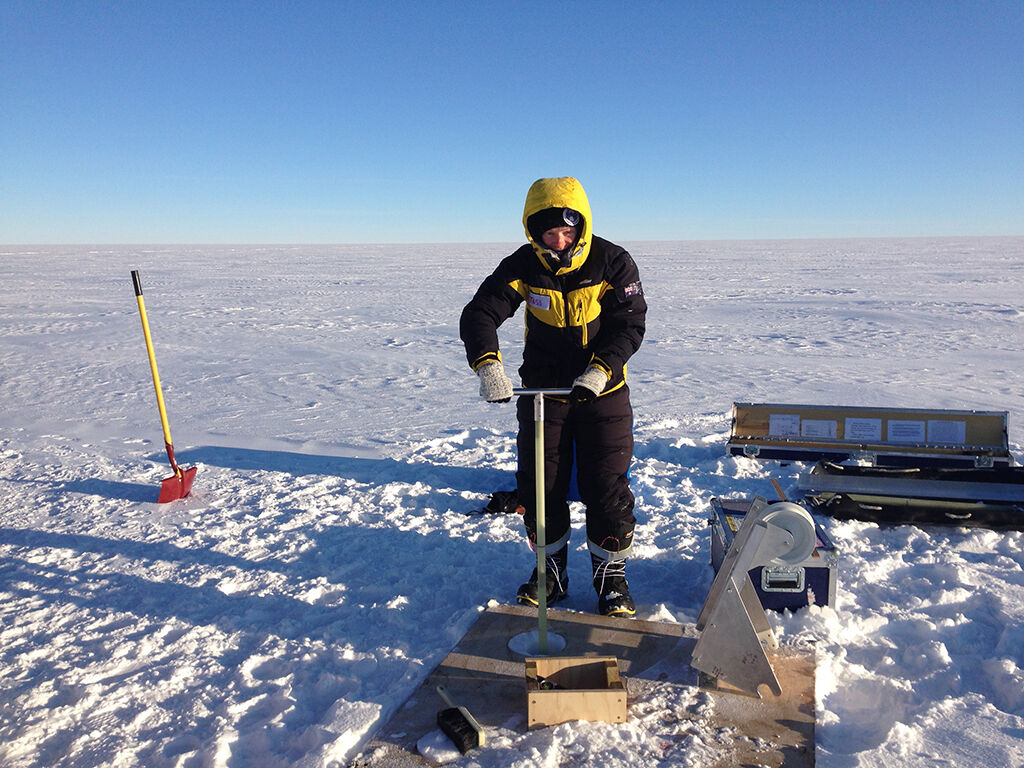
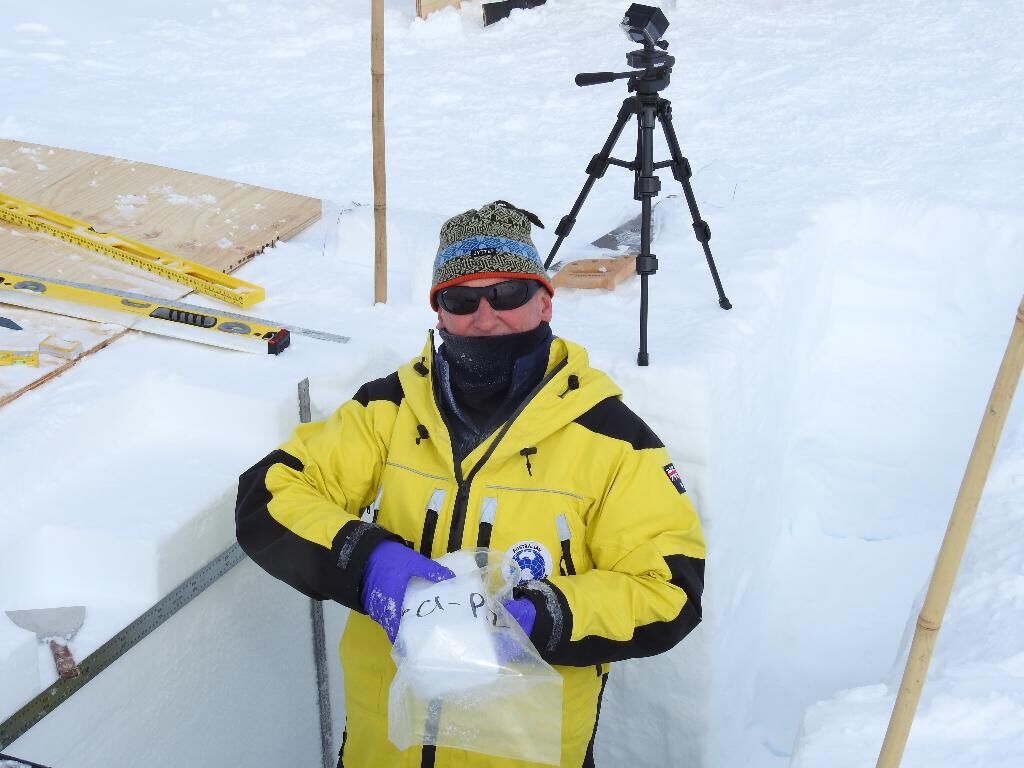
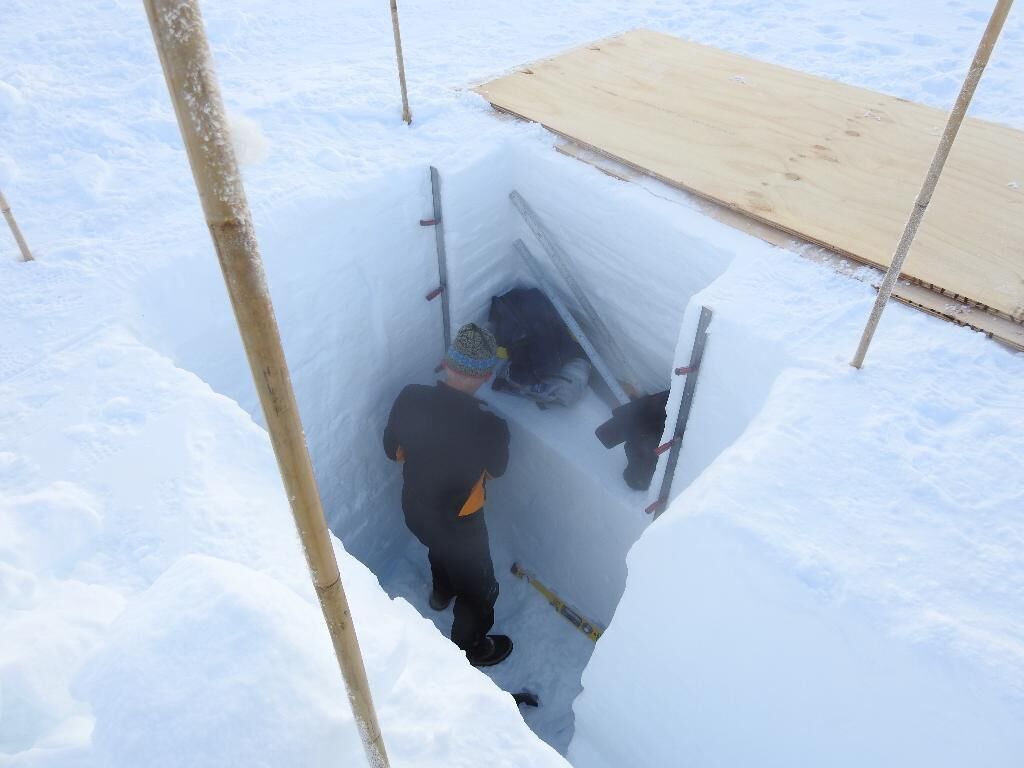
As agreed between the Chief Investigators last season, project AAS#4200 personnel did not participate in the field work this season, instead project #4062 personnel Dr Tessa Vance and Dr Paul Vallelonga undertook to collect the necessary ice core and snow pit samples. The large party field of 6 had three objectives: to take the 3x 3 m ice core and 1m snow pit samples for #4200, to take a long 20 – 30 m core for both projects and to install a new AWS at the previous AWS site located just north of Dome Summit South. The team departed Casey 07:10 Wednesday 10th, travelling in two tray-backed Hägglunds and arrived at DSS at 13:30. The snow pit was dug and sampled that day and the team camped overnight. Early Thursday morning drilling began with the 3” Kovacs drill in ‘manual mode’. From about 4 metres down to 7.5 m (final depth) only short 20 to 30 cm core lengths could be recovered; using ‘power mode’ did not help. The planned 20 – 30 m core had to be abandoned but three 3 m cores were taken in ‘manual mode’ for project #4200. It should be noted that the 7.5 m core satisfied the chronology requirements for project #4200. The team began their return to Casey Thursday evening after dinner, arriving 01:30 in the morning of Friday 12th February 2016.
All frozen samples were returned to Australia on flight FA07B on Saturday 13th February 2016. Preliminary laboratory work for the 7Be and 10Be samples commenced in Hobart on Monday 29th February and was mostly completed by Friday 4th March. The IPICS Open Science Conference in Hobart Monday 7th to Friday 11th March delayed sample processing at ANSTO which was completed the week commencing Monday 14th March. The 7Be Accelerator Mass Spectrometry run commenced on Monday 21st March and concluded later that night. The 10Be run commenced on Tuesday 22nd March 2015 and concluded in the evening of Thursday 24th March. Core chronology was completed by IMAS staff Thursday 5th May. Analysis and interpretation of the data is underway.
Summary of the season 2014/15
The sampling objectives of AAS#4200 were achieved during a field trip to Law Dome 7th - 8th February 2015. Additionally, the sampling objectives of the Jökulhlaup variation to the project were achieved during a field trip to Robinsons Ridge on 11th February 2015. All frozen samples were returned to Australia on flight FA07B on 20th February 2015. Preliminary laboratory work for the 7Be and 10Be samples was completed in Hobart on 27th February. The 7Be Accelerator Mass Spectrometry run commenced on 11th March and concluded on the 12th March 2015. The 10Be run commenced on 12th March 2015 and was aborted after several days of effort due to the failure of the ion source (more on this below). As of today 14th May 2015, the accelerator is undergoing annual maintenance and will not become available again until ~ July 2015 so these measurements are on hold.
Summary of the season 2013/14
The ANSTO team Krista Simon and I, Andrew Smith, departed Hobart on Friday 31st January. Saturday 1st February was spent packing and preparing for the 120 km trip to Law Dome Summit and at 6:30 am on Sunday we set off in a tray-backed Hägglunds with Field Training Officer (FTO) Tim Gill and senior Dieso Nick Johnston, arriving at the Dome Summit South site, elevation 1400 m, at 13:30.
The conditions were good, with excellent visibility and a light wind from the south. Nick dug the snow pit while Krista and I drilled two test holes with the PICO as practice, using the new ANSTO aluminium drilling checker-plate. Nick and I tried the ANSTO box sampler which was meant to make pit sampling for 7Be samples more routine; this wasn't successful and the traditional pitting method was used instead.
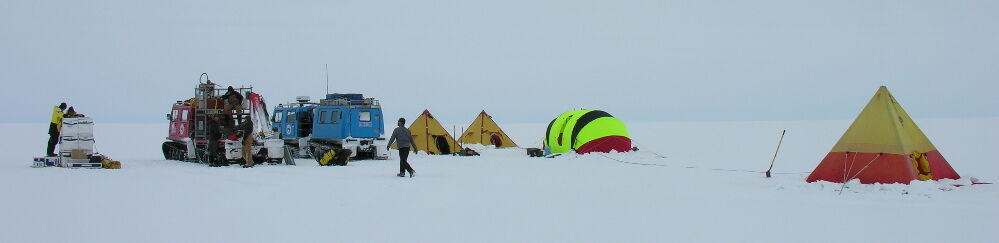
Krista and I took the first PICO core while Nick and Tim set up camp, having made the decision to stay overnight. Camp consisted of an oyster tent, used as the mess and later as Nick and Tim's bedroom, a polar pyramid for Krista and me to sleep in and a mountain tent as a toilet. I did the pit sampling while Nick and Tim drilled the remaining four PICO cores and Krista did the core logging. The PICO work was completed by about 20:00. I continued working on the pit while the others boxed the samples, tidied up and prepared dinner. The light began to fade about 21:00 and the pitting was completed at about 22:30.
On Monday we woke to a perfect day: no clouds, the sun beaming down and no wind. After a breakfast of pancakes and coffee we all pitched into packing up camp. And we were on the road by 10:00 and back at Casey some 6.5 hours later at ~ 16:30. I organised to board the Airbus 319 flight, re-scheduled to fly the next day. Then it was Mexican Night in the mess followed by frantic packing for a 03:15 wakeup and the flight back to Hobart. It was a record trip for me: just four nights in Antarctica with all sampling objectives achieved!
Summary of the season 2012/13
This February, field activities were combined at the DSS site on Law Dome, East Antarctica, for projects AAS#4062(Moy) and AAS#4200 (Smith). The field team camped for two nights, rather than making a dash up and down in a 24 hour period, as we have in the past. This gave a greater ‘weather window’, was much safer and allowed the team to concentrate on the scientific fieldwork.
Overall it was a great effort by many people and a successful 2012/13 field season for the collection and RTA of all science samples for AAS#4200 and #4062. The field team also tested the new shallow Kovacs ice core drill and after a few teething issues successfully drilled to 30m without much effort. The field team obtained the following samples:
1 x 30m ice core (4062 – Moy)
3 x 2m shallow cores for 10Be (4200 – Smith)
1 x 0.8m snow pit for 7Be (4200 – Smith)
The latter two sample sets were pre-processed in an AQIS-approved laboratories in Hobart with final processing at ANSTO, Sydney, in March. All