

Project information
Project aim
Poa annua is an invasive weed of sub-Antarctic Islands, impacting on native biodiversity. Given high conservation values and threats from disturbance & climate change, the development of targeted control measures for invasive species is vital. Little is known about the soil seed bank of P. annua or the effect of herbicides and non-chemical methods in cold conditions. The project will focus on those knowledge gaps. Results will be used to develop effective, low-impact control options for P. annua and subsequently other species in the sub-Antarctic, and has broader implications for conservation.
Project milestones
Summary of the project achievements 2015/16
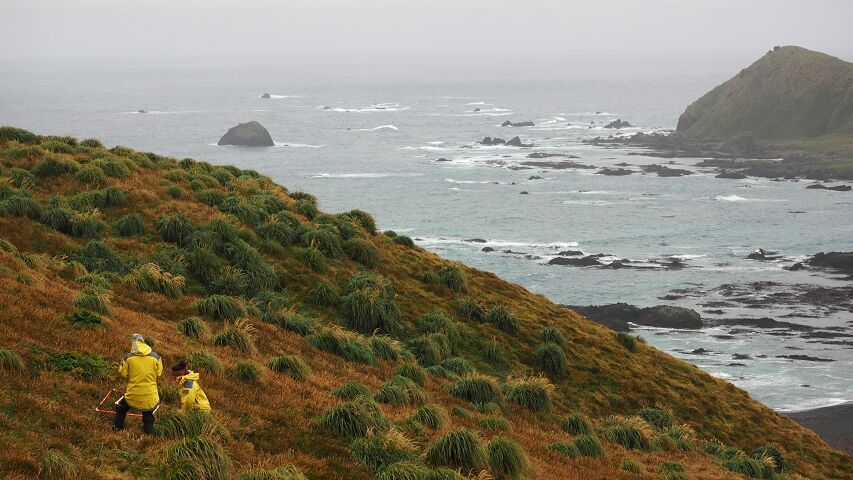
Poa annua is a widespread and successful non-native plant on Macquarie Island (MI) and is a threat to biodiversity and conservation in other parts of the sub-Antarctic. This project investigated the ecology and management of P. annua and assessed the impact of control on non-target species and the mobility of herbicides in MI soils. Research was carried out in field work on MI over three summer seasons and with further trials at the University of New England using simulated sub-Antarctic conditions.
Key findings from the project were to confirm the perennial lifecycle of P. annua on MI and document the large variation in growth and soil seed banks. Larger plants and denser seed banks were found at low elevation sites with high P. annua cover, high animal disturbance and deep, sandy soils. Plants allocated most biomass to roots (60-80%) and <3% of buried seed remained viable for 2 years, focusing persistence on live plants. The high cover of P. annua suppressed native plant diversity.
Physical control methods (scalping, hoeing, trimming, hand weeding) were ineffective on P. annua when applied once. Several herbicides controlled P. annua but glyphosate at 1/4 the recommended rate was also selective, not severely damaging several native plants. An integrated program using low rates of glyphosate followed by hand weeding emerging seedlings is likely to be an effective option. A 48-week leaching trial with two MI soils showed glyphosate leaching was low (~0.4% of the glyphosate applied), with the rest adsorbed to soil. The concentrations were well below regulatory guidelines and unlikely to impact on MI biota, but further research is required.
The research team compiled these research findings into a series of publications and presentations targeting a wide range of stakeholders. The project also provided PhD candidate, Laura Williams, with skills and knowledge in plant ecology in sub-Antarctic conditions, building further capacity in Australian invasive plant science.
Summary of the season 2014/15
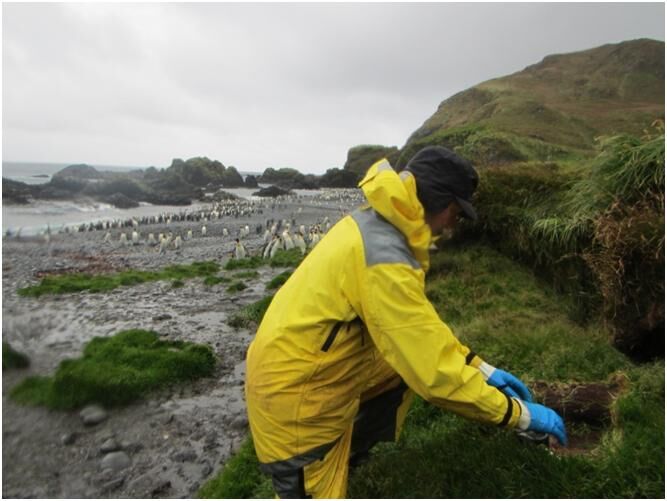
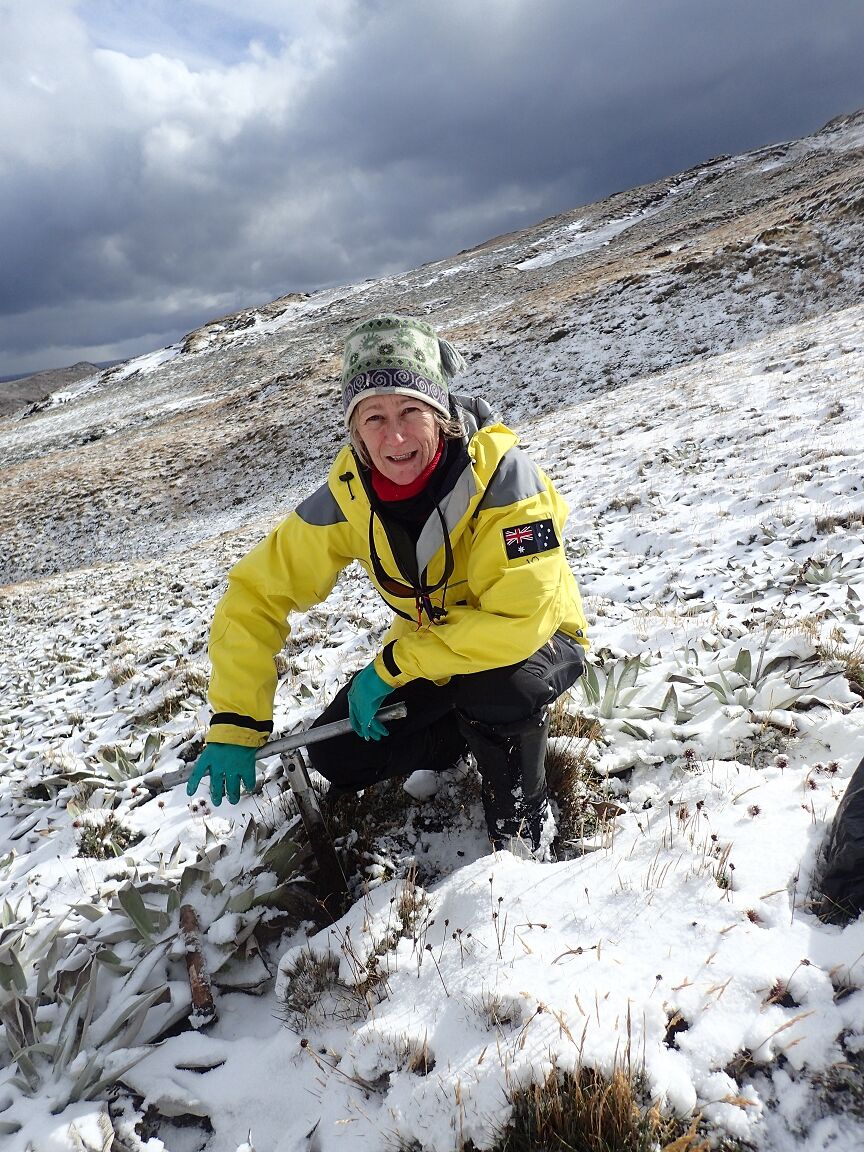
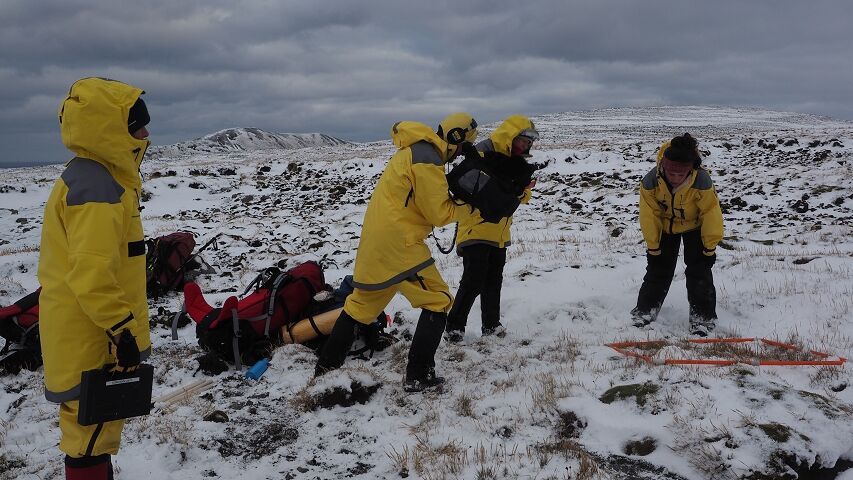
This summer Laura Williams, Brian Sindel and Susan Wilson finalised trials for the current project investigating the ecology and management of Poa annua on Macquarie Island. Seed bags buried were exhumed to investigate the seed viability and longevity of P. annua were exhumed. Management field trials to study how P. annua and native species respond to a variety of manual removal techniques were assessed for final data. Initial analysis suggests that physical management techniques, possibly with the exception of hand pulling at low densities, actually promote the growth of P. annua over native species. Additional soil cores were collected and used to quantify the characteristics of different soil types and will be used in a final study of the persistence and movement of herbicide in Macquarie Island soils. Tagged plants were reassessed to determine longevity.
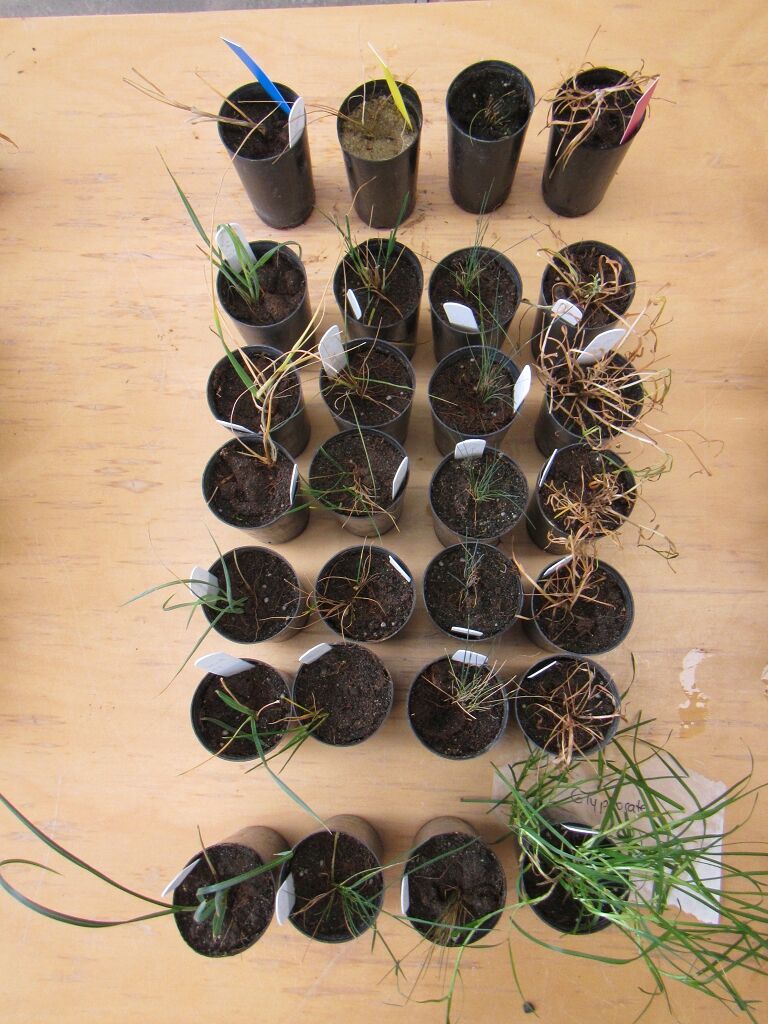
In Armidale, the efficacy of a wide range of herbicides against P. annua, and their selectivity against 3 native grasses has been tested. Results indicate that several herbicides offer good control of P. annua, even at low doses, while causing minimal harm to the native grasses. A competition experiment was conducted in simulated conditions in Armidale using P. annua and 3 native grasses comparing the competitive ability of the plants in a range of mixed plantings under differing fertility levels in the absence of grazing. Results indicate little effect of competition under these simulated conditions. In addition, a 12 month column leaching experiment was established to assess the persistence and mobility of glyphosate (the herbicide shown to be most effective for P. annua chemical control) in two soil types collected as intact cores from Macquarie Island. Overall, the data collected has provided valuable information about the underlying biology and ecology of P. annua and has highlighted potential control options for its management.
Summary of the season 2013/14
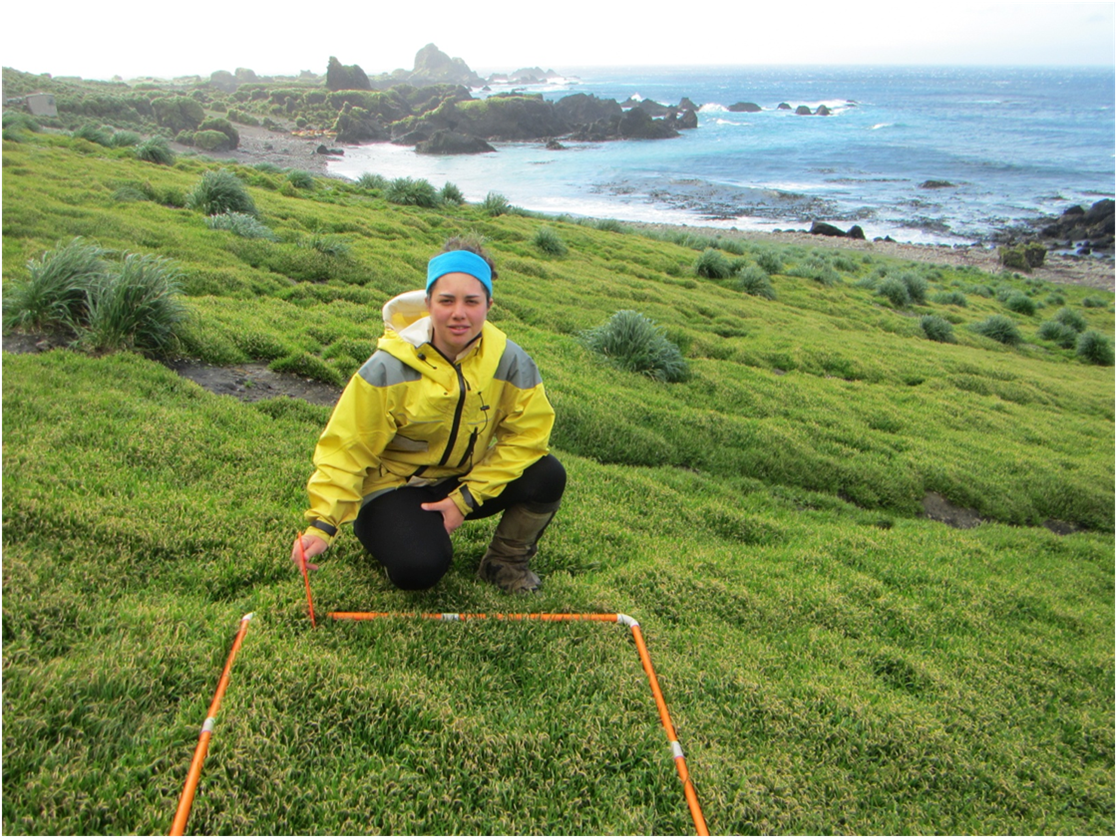
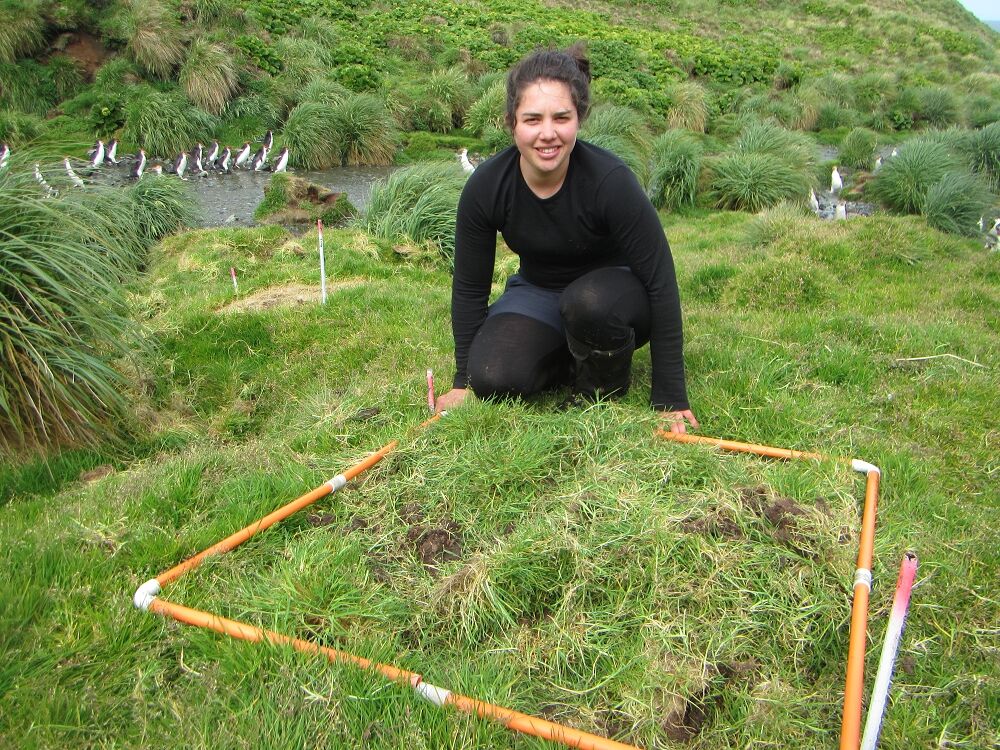
This summer Laura Williams and Luis Pertierra made great progress on Macquarie Island establishing and monitoring a range of experiments investigating the ecology and management of Poa annua. Vegetation surveys were undertaken to quantify community floristics, identifying the native species co-occuring with P. annua. Species abundances were measured to examine the interaction of the invasive species with native species. Seed bags buried last season were exhumed to investigate the seed viability and longevity of P. annua. New bags were buried to assess the effect of depth on seed viability and longevity. Soil cores were collected.to assess the distribution of seed in the seed bank. Management field trials established in 2012/13 to study how P. annua and native species respond to a variety of manual removal techniques were monitored and additional sites and treatments established. Initial data suggests physical management techniques, possibly with the exception of hand pulling at low densities, actually promote the growth of P. annua over native species. Additional soil cores were collected and used to quantify the characteristics of different soil types and will be used to study the persistence and movement of herbicide in MI soils. Bulk soil was collected for use in ex situ experiments. In Armidale the efficacy of a wide range of herbicides against P. annua, and their selectivity against 3 native grasses was tested. Initial results indicate that several herbicides offer good control of P. annua while causing minimal harm to the native grasses. Live plants of P. annua and three native grasses were bought back to Australia and used for a competition experiment, comparing the competitive ability of the plants in in a range of mixed plantings under differing fertility levels in the absence of grazing. Data collected has provided essential information about the underlying biology and ecology of P. annua and has highlighted potential control options for its management.
Summary of the season 2012/13
This summer Laura Williams and Brian Sindel made great progress on Macquarie Island establishing a range of experiments investigating the ecology and management of Poa annua. Vegetation surveys were undertaken to quantify community florisitcs. This will identify the native species co-occuring with Poa annua. Species abundances were measured to examine the interaction of the invasive species with native species. To investigate seed viability and longevity Poa annua seed burial bags were deployed in the field and soil cores were collected to quantify the seed bank. Management trials were established in the field to study how Poa annua and native species respond to a variety of manual removal techniques. Soil was sampled and returned to Australia where the persistence and movement of herbicides through sub-Antarctic soils will be measured. In addition, live plants and seed of Poa annua and 3 native species were bought back to Australia for herbicide screening and competition experiments.