
Project information
Project aim
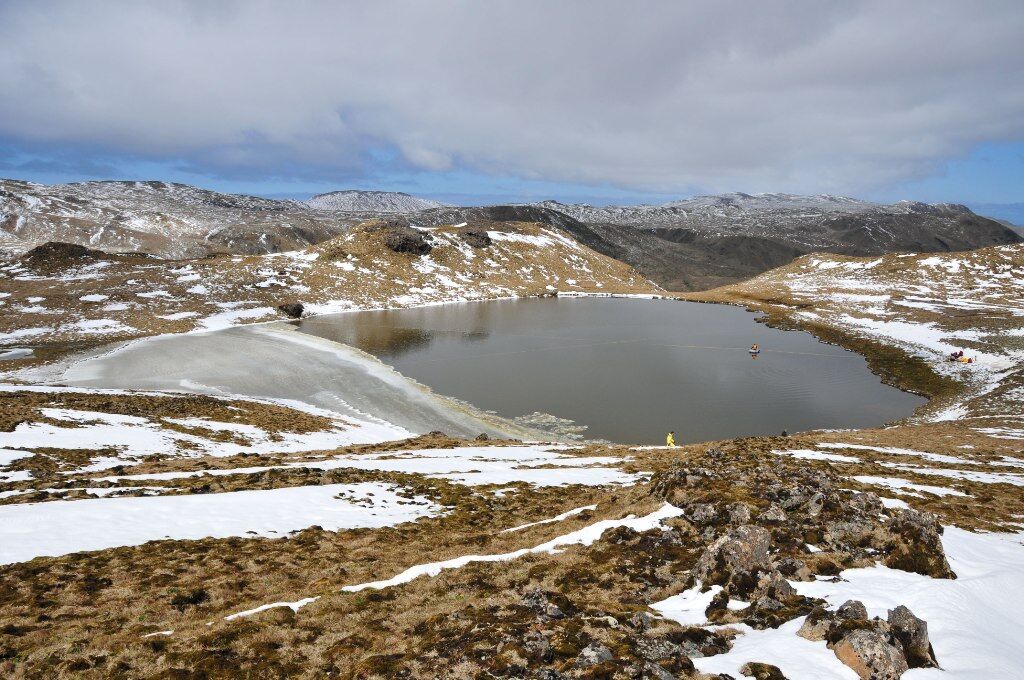
Our understanding of global climate and ability to predict future changes is limited by a lack of long-term (paleoclimate) data from the Southern Hemisphere (SH). Sub-Antarctic islands are the only landmasses between Antarctica and the mid latitudes where terrestrial paleoclimate records exist, making them crucial locations for linking data from the mid and high latitudes. Using lake sediments from sub-Antarctic islands, we will examine how the climate and ecosystems have changed over the last 2000 years. This will contribute vital information to understand SH climate and ecosystem variability
Project milestones
Summary of the project achievements 2018/19
Our understanding of global climate and ability to predict future changes is limited by a lack of long-term (paleoclimate) data from the Southern Hemisphere. Sub-Antarctic islands are the only landmasses between Antarctica and the mid-latitudes where terrestrial paleoclimate records exist, making them crucial locations for linking data from the mid- and high-latitudes. Using lake sediments from sub-Antarctic islands, we examined how the climate and ecosystems have changed over the last 12,000 years. Specifically, we have developed the first Southern Hemisphere westerly wind reconstructions for the sub-Antarctic based on palaeoclimate records from Macquarie Island. Results were consistent with models demonstrating enhanced westerlies contribute to the long-term release of carbon dioxide from the Southern Ocean. Results also demonstrated clear links between changes in the westerlies and mid-latitude rainfall and temperature over time. Given the winds have been strengthening since the mid 20th century, this has important implications for the future, particularly as stronger, southward shifted westerlies are associated with decreased rainfall and higher temperatures in Tasmania, areas of southern mainland Australia, South Island New Zealand and southern South America.
Summary of the season 2015/16
Understanding how the climate has changed over time, together with how ecosystems respond to these changes, is critical in providing a basis for understanding present observations and predicting future scenarios. Importantly, a key feature of the mid- to high-latitudes of the Southern Hemisphere is the westerly winds. These are important because changes in their strength and position determine rainfall and temperature patterns in the region, which in turn affect ecosystems. However, little is known about how they have changed in the past, which is a significant limitation to understanding Southern Hemisphere climate and ecosystem responses, particularly in relation to recently observed strengthening and southward movement of the winds. To address this we are using lake sediment records from sub-Antarctic Macquarie and Campbell Islands to reconstruct what the strength of the westerly winds and ecosystems were like in the past.
We have developed a high-resolution climate reconstruction for Macquarie Island that spans almost 2000 years, while a similar reconstruction is under development for Campbell Island. These are the first of their kind for the sub-Antarctic and are based on two novel and independent methods developed as part of this project. The Macquarie Island record shows multi-decadal variability in wind strength throughout the last ca. 1700 years. Comparisons to archives based on sediment and ice cores from South America, Tasmania, New Zealand and Antarctica, and regional temperature reconstructions from the Past Global Changes 2K network, are being made to explore changes in the winds and how they relate to climate modes, such as the Southern Annular Mode. A close agreement between our record and others exists, providing for the first time direct evidence of how the winds have changed in relation to temperature and precipitation in the mid-high latitudes. Next steps are to integrate results with records being developed from other sub-Antarctic islands.
Summary of the season 2014/15
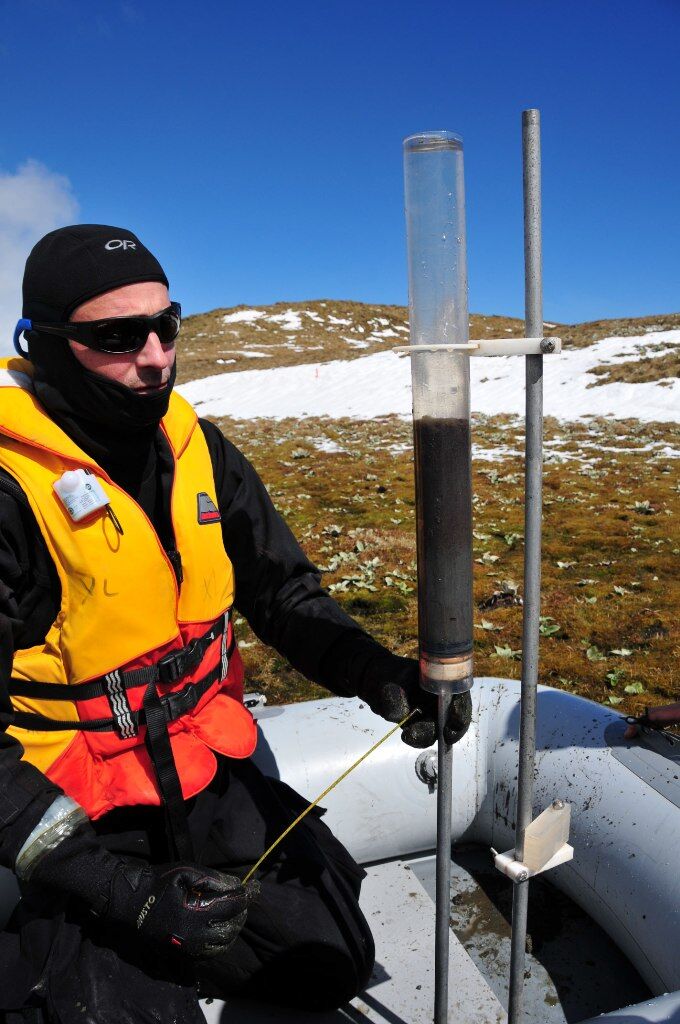
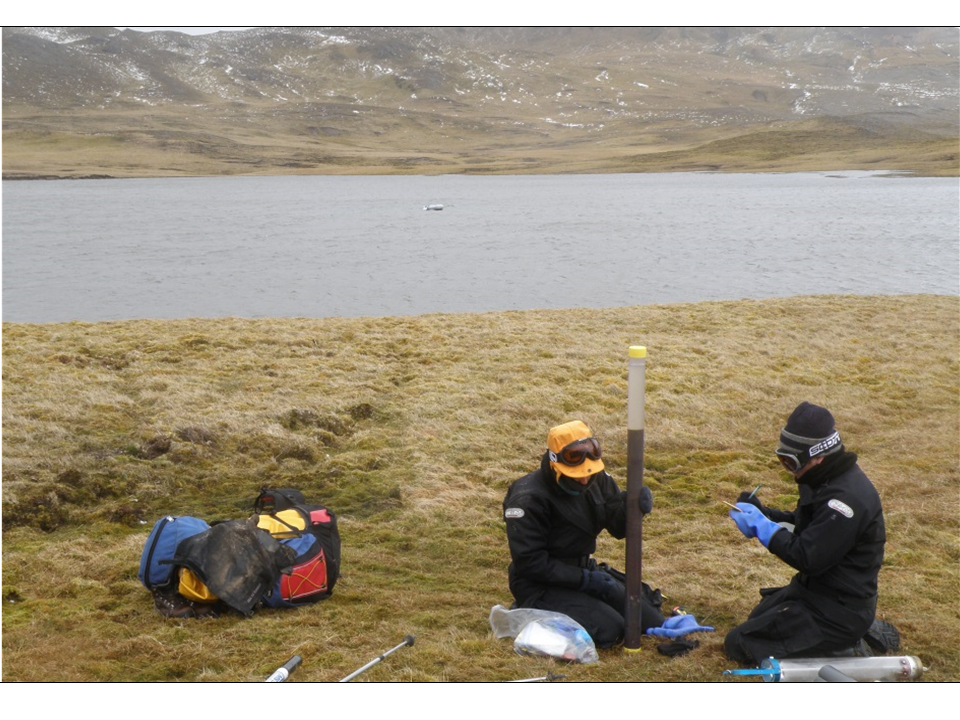
Our understanding of global climate, its impacts on ecosystems and ability to predict future changes is limited by a lack of long-term data about the past. Information about how the climate has changed over time (palaeoclimate), together with how ecosystems vary naturally in response to these changes (palaeoecology), is critical in providing a basis for understanding present observations and predicting future scenarios. Such data are particularly lacking for the Southern Hemisphere. Importantly, a key feature of Southern Hemisphere climate from the mid-latitudes southwards is the westerly winds. These are important because changes in their strength determine rainfall and temperature patterns in the region, which in turn affect ecosystems. However, little is known about how they have changed in the past, which is a significant limitation to understanding Southern Hemisphere climate and ecosystem responses. To address this problem we are using lake sediments from sub-Antarctic Macquarie and Campbell Islands to reconstruct what the climate, in particular the strength of the westerly winds, and ecosystems were like in the past. Similar to ice cores, layers of lake sediments accumulate over time, where each layer represents a particular time period in the past. We are working on lake sediment cores collected in 2009/10 and 2013/14 to examine how climate and ecosystems have changed over the last 2000 years. Our most recent record is the first high-resolution climate reconstruction for Macquarie Island and is based on two novel and independent methods developed as part of this project. It has revealed multi-decadal variability in wind strength throughout the last ca. 1650 years. A comparison to annual sea salt concentrations at Law Dome (66°46'S, 112°48'E), coastal East Antarctica, revealed a similar variability and timing of changes. We are currently exploring the implications of these findings.
Summary of the season 2013/14
Our understanding of global climate, its impacts on ecosystems and ability to predict future changes is limited by a lack of long-term data about the past. Information about how the climate has changed over time (palaeoclimate), together with how ecosystems vary naturally in response to these changes (palaeoecology), is critical in providing a basis for understanding present observations and predicting future scenarios. Such data are particularly lacking for the Southern Hemisphere. Importantly, a key feature of Southern Hemisphere climate from the mid-latitudes southwards is the westerly winds. These are important because changes in their strength determine rainfall and temperature patterns in the region, which in turn affect ecosystems. However, little is known about how they have changed in the past, which is a significant limitation to understanding Southern Hemisphere climate and ecosystem responses. To address this problem we are using lake sediments from sub-Antarctic Macquarie Island to reconstruct what the climate, in particular the strength of the westerly winds, and ecosystems were like in the past. As the only landmasses between the mid-latitudes and Antarctica, sub-Antarctic islands are crucial locations for linking data from each. Similar to ice cores, layers of lake sediments accumulate over time, where each layer represents a particular time period in the past. We are currently working on lake sediments that were collected in 2009/10 and 2013/14 to examine how climate and ecosystems have changed over the last 2000 years. Our records are allowing us to look at changes in detail (on a timescale measured in several decades), which will give us unique data. Overall, our study will contribute vital information to understand past Southern Hemisphere climate and ecosystem variability, which provides a context for understanding current climate and ecosystems, and thus a means of predicting future changes.