
Project information
Project aim
The Southern Ocean sea ice zone supports rich and diverse invertebrate communities. Larval krill depend on the sea ice habitat for refuge and sustenance in late winter/early spring. The sea ice community is particularly vulnerable to impacts of ocean warming and acidification. This project focuses on the structure and biomass of the zooplankton community in the sea ice, directly under the sea ice and in the water column. This research will increase understanding of the contribution of ice associated fauna to the larval krill diet and the vulnerabilities of this ecosystem in a changing ocean.
Project milestones
Summary of the project achievements 2013/14
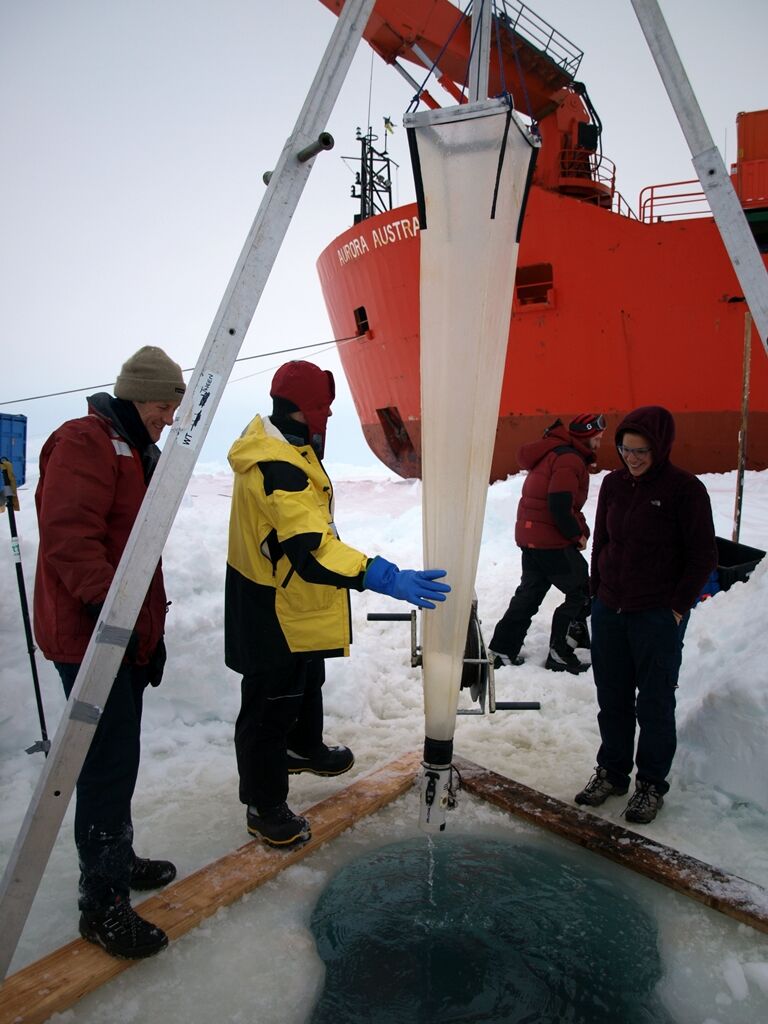
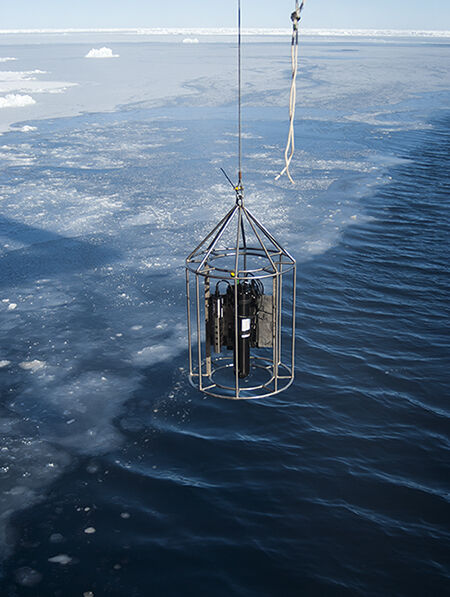
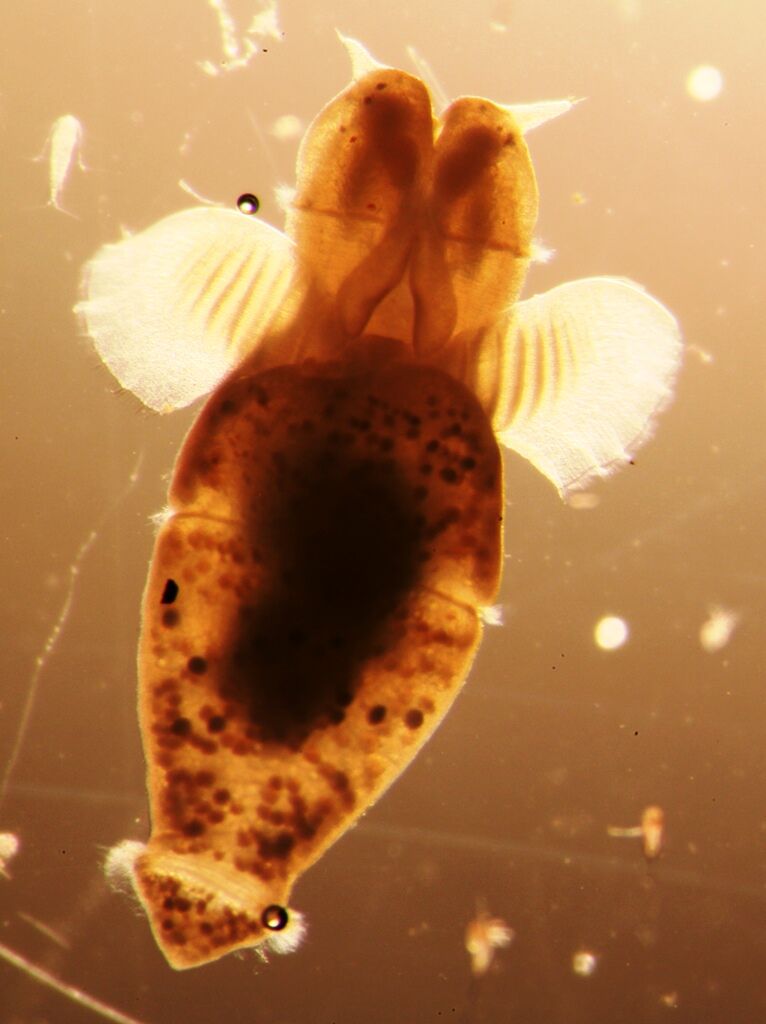
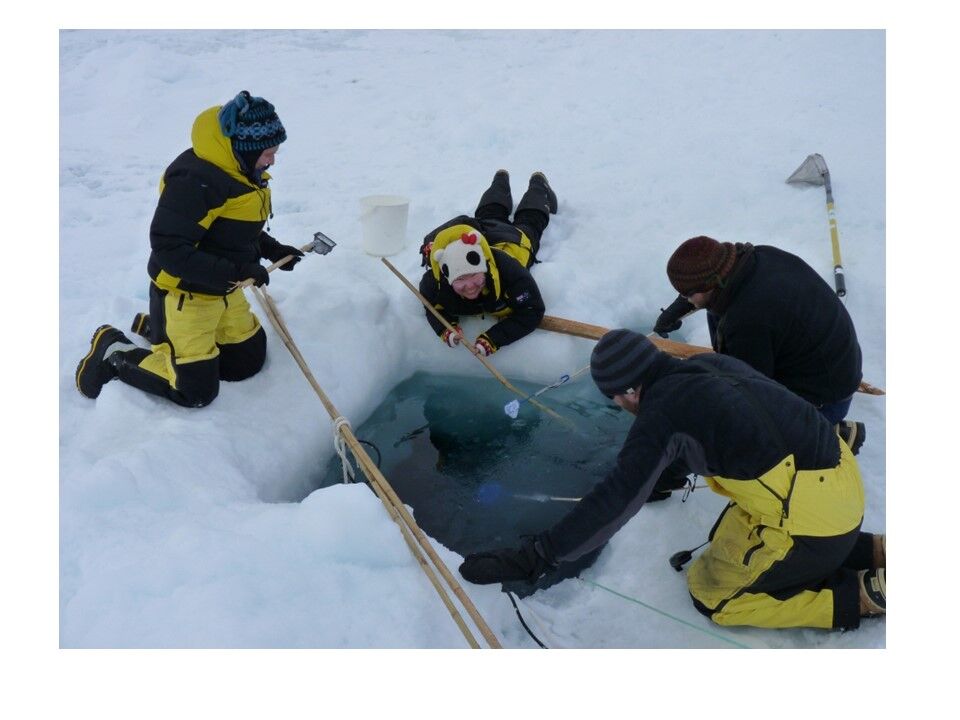
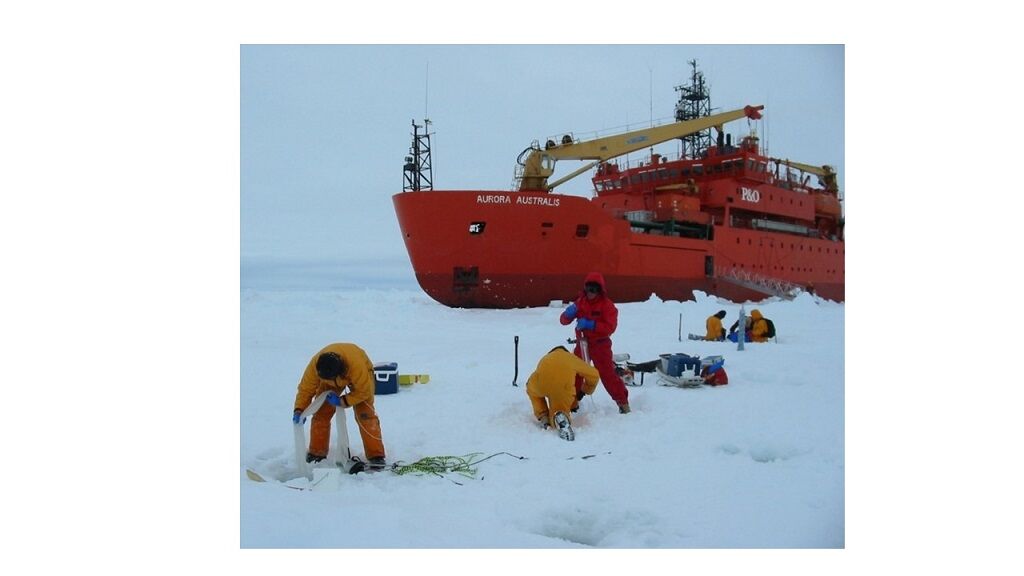
Sea ice is an important feature in the Southern Ocean environment, providing space for small organisms to find food and refuge. Zooplankton form the link that bridges sea ice and the water column underneath, with minute fauna and algal communities within sea ice directly influencing the larger zooplanktonic organisms at the ice-water interface. A combination of methods, including ice coring, net sampling and the use of a Laser Optical Plankton Counter, helped describe the structure of zooplankton and ice-associated communities. Particular focus was placed on how sea ice serves zooplankton during the food-limited winter season. Stable isotopes and fatty acid biomarkers were used to compare the dietary preferences and food web links under pack ice during the winter-spring transitions in 2007 and 2012. One important observation from this project was the dietary flexibility exhibited by early life stages of the Antarctic krill, Euphausia superba. The larvae of krill demonstrated dietary switching, showing strong herbivory when feeding only on sea ice biota, but a more mixed diet when feeding from both the sea ice and water column. Juvenile krill consumed both water and ice biota. Other species, including pteropods (sea butterflies), amphipods and small copepods, also relied heavily on the sea ice, while large copepods and chaetognaths (arrow worms) ingested a water-column based diet. We still know little about how these animals ultimately survive the winter, but they have exhibited greater adaptability in diet than might have been predicted. Our study suggests that warm and permeable sea ice is more likely to provide food for zooplankton and krill than colder, harder ice. This is important when considering how changes to sea ice extent and duration might impact on zooplankton, particularly the young krill.
Summary of the season 2013/14
Knowledge of the distribution and trophic ecology of Antarctic zooplankton is essential for evaluating their functional roles in Southern Ocean food webs, and for estimating their importance in energy flows and carbon flux. In this study we combined samples from SIPEX (2007) and SIPEX II (2012) to describe zooplankton dynamics of the sea ice habitat. Although water environmental parameters were similar, physical conditions of the sea ice were different between years. During 2007, average ice thickness (0.86 m) was considerably less than during 2012 (1.38 m). 21 taxa were identified during 2007 and 38 in 2012, from epipelagic umbrella net samples. Copepods were the most abundant taxonomic group in both years, with other important taxa including foraminiferans, pteropods and krill. d13C signatures confirmed that both the sea ice and the water column served as important dietary sources for the under ice zooplankton community during the winter-spring transition. Sea ice was a major food source for herbivorous pteropods during both 2007 and 2012; as a result, predaceous pteropods, which feed exclusively on herbivorous pteropods, also indirectly rely on sea ice. Lysianassidae amphipods, small copepods, ostracods and E. superba larvae also heavily relied on sea ice biota for food. The comparison between years suggested that E. superba larvae relied more on a heterotrophic diet when they did not feed on sea ice particulates. For the older E. superba, omnivorous krill species (e.g. Thysanoessa macrura), and hyperiid amphipods, both the sea ice and the water column contributed to their diets, though water was a more important grazing habitat. Our results showed that herbivorous copepods tend to obtain food from the water colum, even when they lived under the ice cover. At the top of the food web, the carnivores, including chaetognaths and copepods, derived their carbon from herbivores that were feeding in the water column.
Summary of the season 2012/13
The Southern Ocean sea ice zone supports rich pelagic invertebrate communities, which form the crucial link between algae in the water and sea ice, and higher predators such as penguins, seals and whales. Despite its importance, the characterisation of the ice zone community is not well developed. We are examining the drivers of biodiversity and productivity of this group so that it can be represented realistically in ecosystem and food web models. Net samples are being coupled with a laser optical plankton counter (L-OPC) to provide information on the size and abundance of plankton in the water column, and in the ice. Trophic links are being explored using stable isotopic mixing models and traditional gut content analysis. A particular focus is on the diets of larval Antarctic krill, thereby providing much needed information about how the juvenile stages of this important species survive the dark winter period when food is scarce.