

Project information
Project aim
RMIT University will partner with the Australian Antarctic Division (AAD) to develop strategies, based on life cycle assessment (LCA) investigations, to reduce the environmental impacts of operating Davis base. An environmental impact reduction strategy will be developed with AAD through a participatory design thinking process, informing the creation of a streamlined LCA decision support tool, to quantify and direct future research and operational planning. The findings can be applied to reduce human impacts for all operations across the Antarctic, including other bases and tourism.
Project milestones
Summary of the project achievements 2017/18
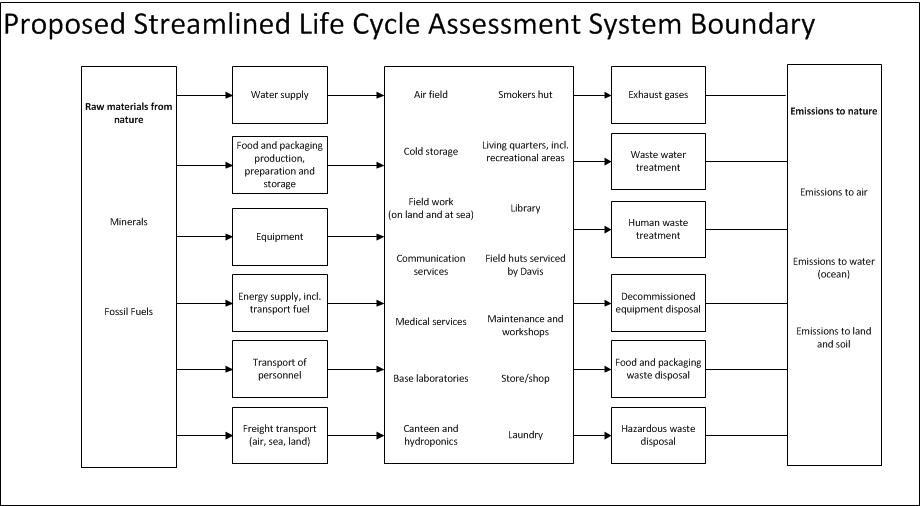
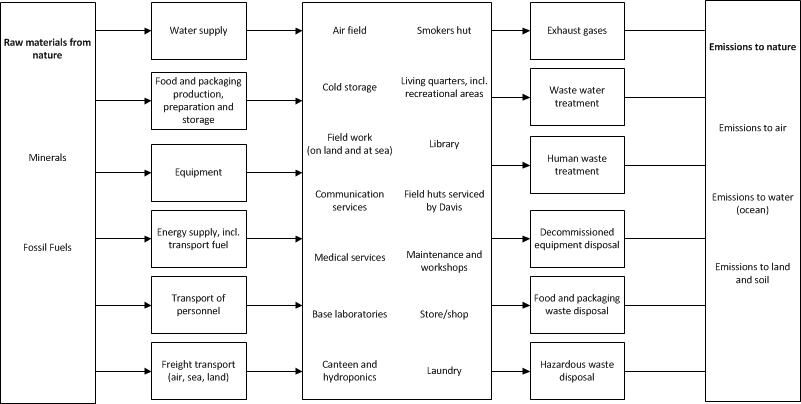
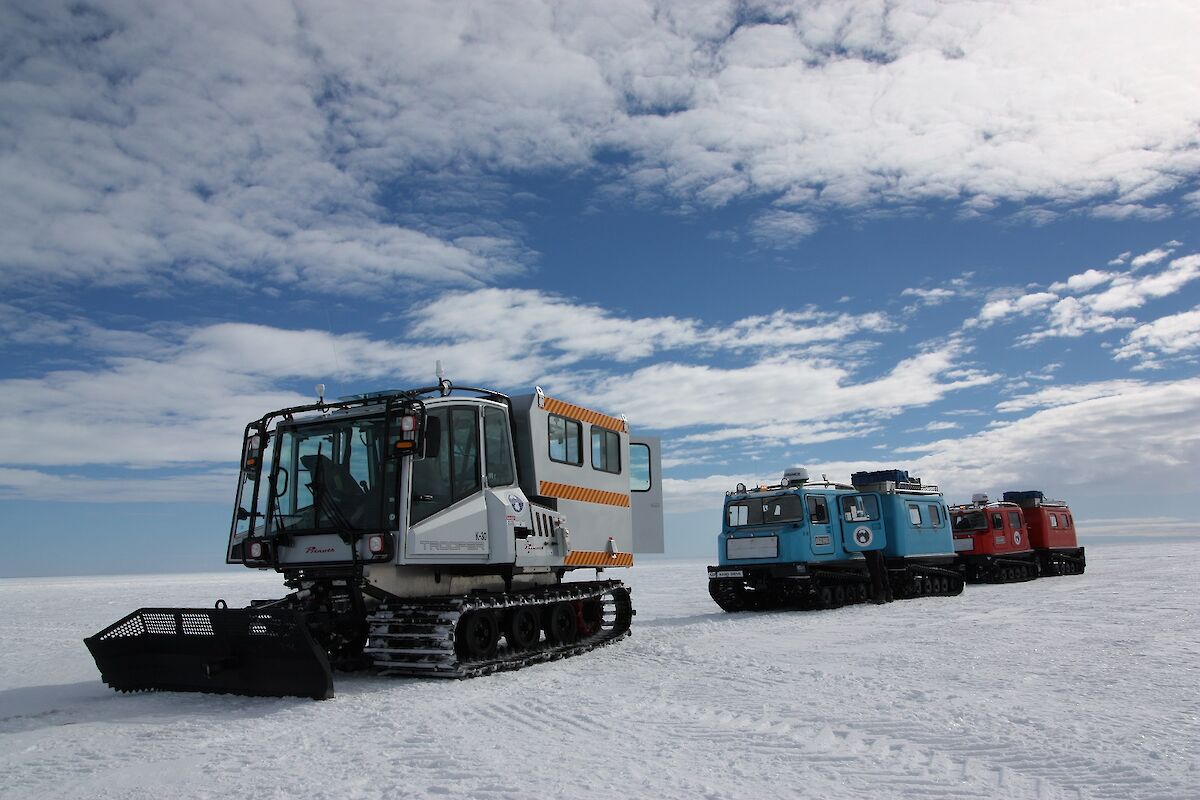
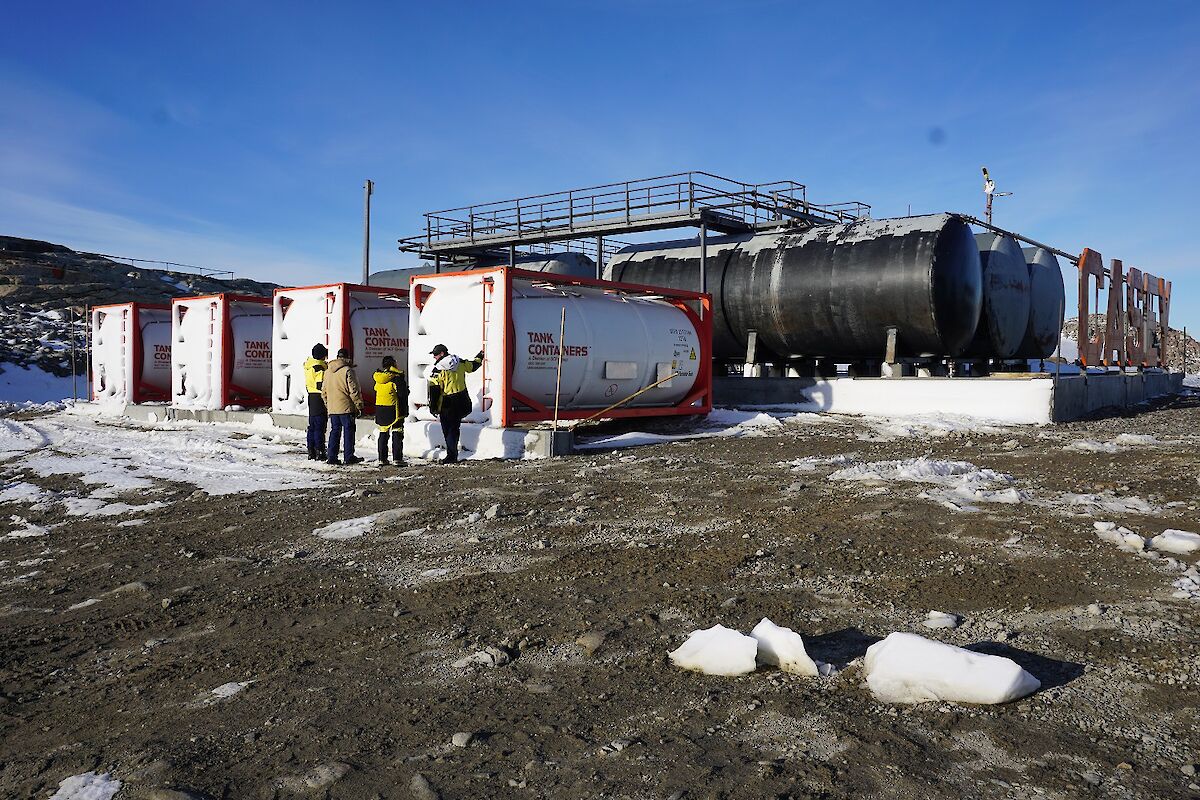
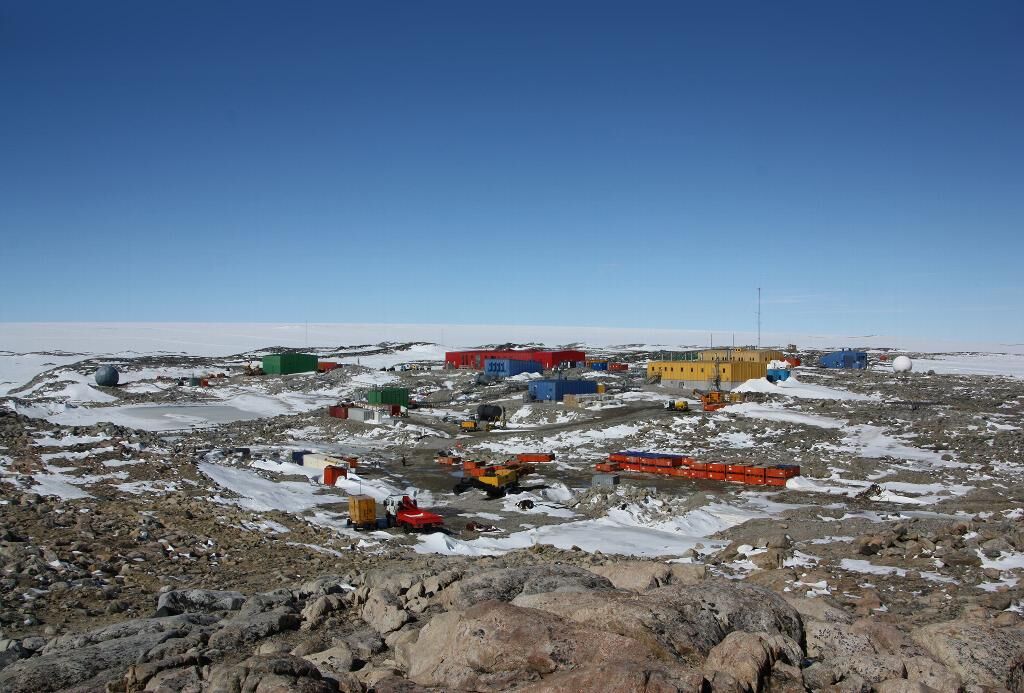
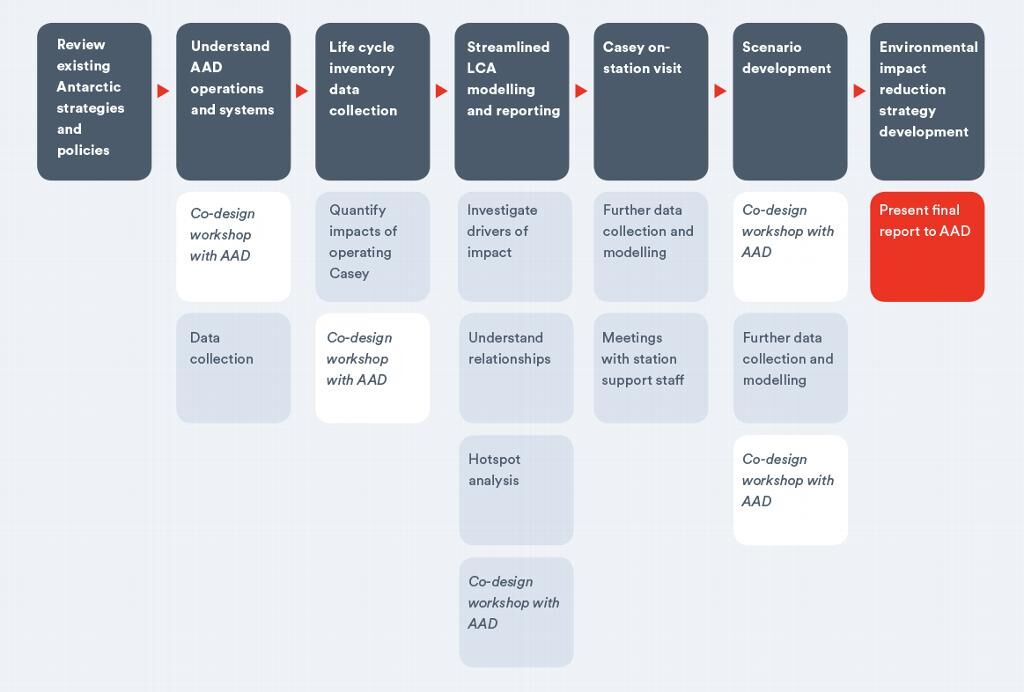
Between 2013-2018, RMIT University and Swinburne University undertook a Streamlined Life Cycle Assessment (LCA) of the impacts from the operations necessary to support human operations on Casey Station (e.g., planning, procurement, logistics and on-station operations). This LCA model quantified uses of fuel, water, energy, together with quantified air, water and soil emissions and waste generation. This data was linked with on-station observations and with the Australian Antarctic Division (AAD) through participatory design thinking processes, to inform the development of an Environmental Impact Reduction Strategy (the Strategy). The findings, modelled scenarios and subsequent recommendations for the optimisation of operations at Casey Station and beyond, detailed in the Strategy, are based upon the observations of the Streamlined Life Cycle Assessment (LCA) Report.
The Strategy provides an overview of the LCA project, including existing AAD strategic and policy imperatives; a series of 11 scenarios for the improvement of operations at Casey Station. These scenarios include freight management options, energy efficiency, generation and storage, and wastewater management. In addition, a series of future research opportunities, and operational planning opportunities to contextualise this Strategy in the AAD's current organisational priorities are identified.
The Strategy also identifies several more opportunities for the improvement of discrete systems at Casey Station, with immediate and ongoing benefits for operations.
The Strategy identifies substantial strategic opportunities to help AAD continue its record for ongoing improvement, through the expansion and refinement of monitoring and evaluation mechanisms, engagement of expedition staff in Station improvement, and several opportunities for further research which will provide the AAD with several new practical improvement options going forward.
Summary of the season 2016/17
We have continued to refine data collection and filling data gaps including on station electricity usage to supplement the inventory modelling. A number of scenarios were identified by the Australian Antarctic Division which we are modelling in the life cycle assessment. These will be presented to an Australian Antarctic Division stakeholder workshop in late May 2017. The workshop will also explore the development of a sustainability strategy informed by the life cycle assessment.
Summary of the season 2015/16
Streamlined LCA results were refined with additional data collected during the field trip to Casey in February 2015. These results were presented to the AAD Environmental Performance Committee (EPC) at their June 2015 meeting (number 12). The data (e.g., water production and expeditioner surveys) that was collected during the field trip was also presented to the EPC showing them how, for instance water production and consumption is being better understood through the application of the LCA. A stakeholder workshop with representatives from the AAD was held in Hobart in September 2015. Building upon the 'hot spots' identified through the streamlined LCA results, discussions were held as to the scenarios to be modelled in the next phase of the project. Outstanding data collection for the scenario modelling is underway.
Summary of the season 2014/15
Key activities undertaken over the past year have included:
- continual data collection from the AAD regarding material, energy, fuel, water and waste flows through the supply and logistic chains and operations at Casey station
- viewing of the loading of cargo and supplies for V1 in October 2014 to observe the process of re-supply of the Aurora Australis
- Karli Verghese and Enda Crossin (RMIT University) spent three weeks at Casey station in February 2015. During their stay they familiarised themselves with the station layout, its operations and identified and collected missing life cycle inventory (e.g., material, energy, fuel, water and waste) data. Time was spent talking with key expeditioners including Station Leaders, Plumbers, Electricians, Diesel Mechanics, Carpenters, Chefs, Operations, Doctors, Field Training Officers, Aviation, Communications and Bureau of Meteorology to better understand daily operations and data recording.
Summary of the season 2013/14
1. The collection of life cycle inventory data (e.g., material, energy, waste, food flows) has been the focus of activities. This has involved meetings and conversations with key AAD personnel including those from Supply Services group, Asset Management, Environmental Management Systems, Strategies Branch, Operations, TNE Change and Protection, Facilities, Mechanical Services, Aviation Operations, and Operational Strategy and Shipping.
2. A draft streamlined life cycle assessment model has been developed with the SimaPro LCA software program used by Centre for Design, RMIT University.
3. Poster presentation: Verghese, K. Crossin, E. Lockrey, S. and Abbott, M. (2013) "Life Cycle Assessment (LCA) in the last frontier: quantifying the environmental impacts and environmental impact reduction strategy for Australia's Antarctic infrastructure", poster at Strategic Science in Antarctica Conference, University of Tasmania, Hobart, June
4. Presentation of the draft model was given to the AAD Environmental Performance Committee meeting #7 in Hobart on Tuesday 25/02/14
5. Refinement of life cycle inventory data and completion of data gaps is ongoing with a focus on compiling a complete data set for one season (or a combination depending upon availability of data).
6. Ongoing discussions about how the LCA can support the AAD EMS system and other programs.
Summary of the season 2012/13
The project only commenced in April 2013, following delays in receiving the contract (Dec 2012) and its signing by both parties (March 2013).
A project kick-off meeting was held on 9th April 2013, Hobart, with RMIT team members (Verghese, Crossin and Lockrey) with AAD personnel (Professor Ian Snape, Tony Foy, Roger Knowles and Dr Dana Bergstrom). It was an opportunity to bring the AAD team up to speed on the project proposed and for RMIT to gather insights into inventory data availability within AAD, along with other key personnel who will need to be engaged.
A second meeting is proposed for late June 2013 to consolidate the scope of the project and continue with inventory data collection.
Related publications
-
Development of an environmental impact reduction strategy for Australia's Antarctic infrastructure Journal of Industrial Ecology, 2020
(Ref: 16316)
Category 1: Peer-reviewed literature
-
The environmental impacts of operating an Antarctic research station Journal of Industrial Ecology, 2020
(Ref: 16315)
Category 1: Peer-reviewed literature
-
The environmental impacts of operating an Antarctic research station Journal of Industrial Ecology, 2020
(Ref: 16186)
Authors:Category 1: Peer-reviewed literature
-
Development of an environmental impact reduction strategy for Australia's Antarctic infrastructure Journal of Industrial Ecology, 2020
(Ref: 16187)
Category 1: Peer-reviewed literature
-
Life Cycle Assessment (LCA) in the last frontier: quantifying the environmental impacts and environmental impact reduction strategy for Australia's Antarctic infrastructure. Strategic Science in Antarctica Conference, Hobart, Australia, 24-26 June 2013, 2013
(Ref: 15279)
Category 3: Poster