
Project information
Project aim
The Southern Ocean helps to slow the rate of climate change by absorbing heat and carbon dioxide. But as the earth warms, the ability of the Southern Ocean to provide this service will likely decrease. This project will use a variety of ocean observations to detect and interpret changes in Southern Ocean circulation as a result of climate change and variability and to assess the impact of these changes on global climate, sea-level rise, the carbon cycle, and biological productivity.

Project milestones
Summary of the project achievements 2016/17
The project has led to substantial advances in understanding the role of the Southern Ocean in the climate system.
Notable achievements have included:
- six expeditions to the Southern Ocean, on three different vessels;
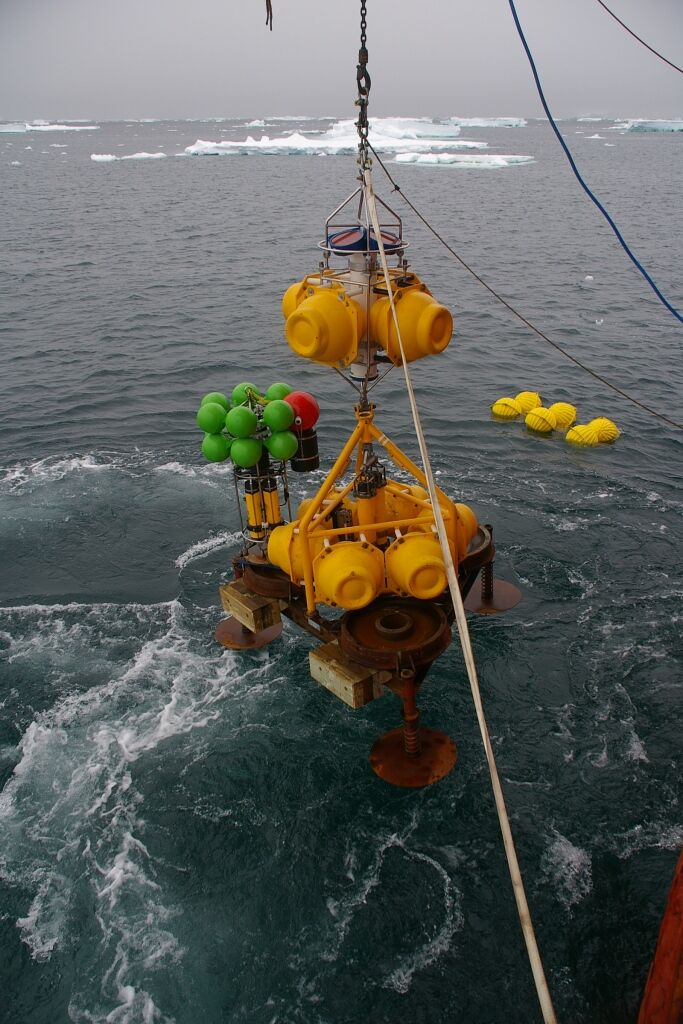
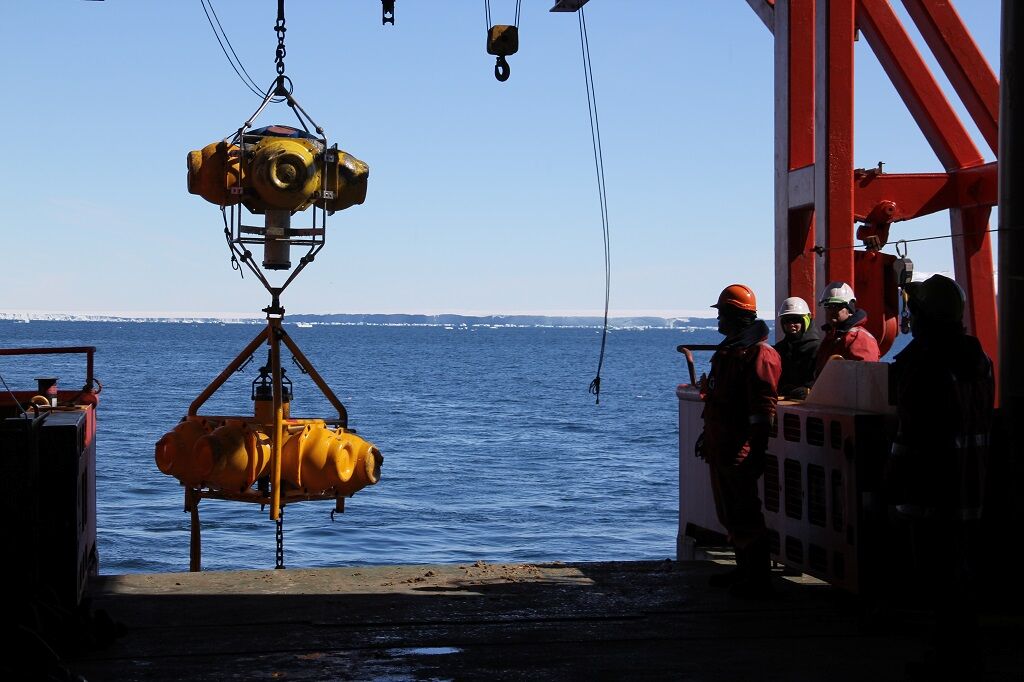
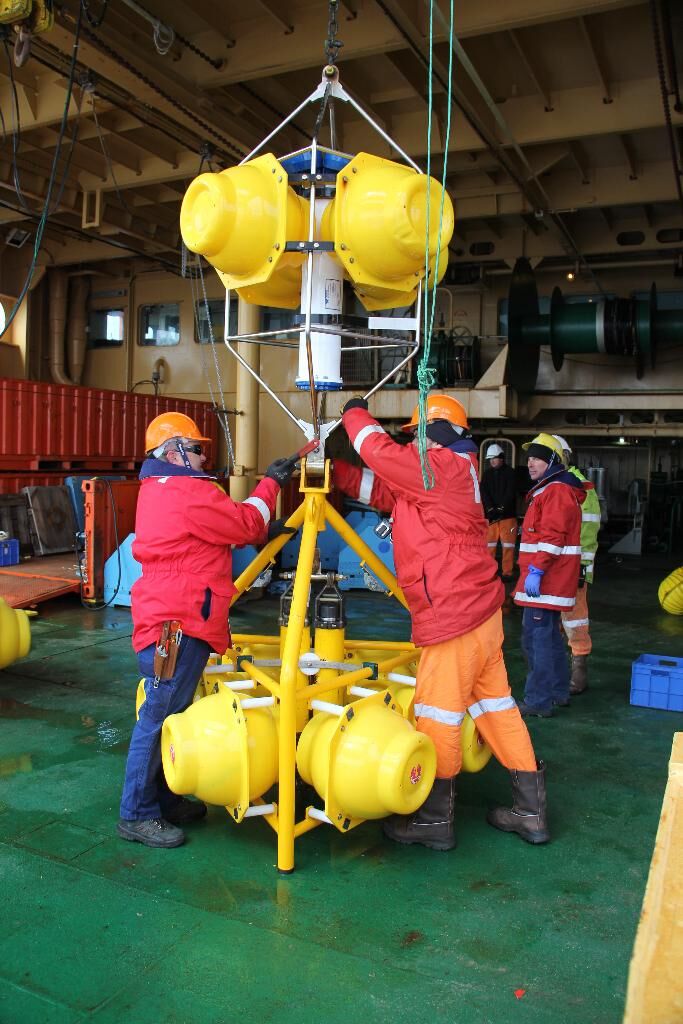
- novel observing programs, including current meter moorings and ice-capable profiling floats deployed for the first time on the continental shelf in this region;
- the first measurements collected near the Totten Glacier, demonstrating that parts of East Antarctica are more vulnerable to ocean heat than previously thought;
- evidence of surprisingly large and rapid changes in the deep ocean around Antarctica;
- new insights into how carbon emitted by human activities is taken up and stored by the Southern Ocean, and its sensitivity to change;
- synthesis of a new conceptual model for the dynamics of the world's largest ocean current, in which local interactions catalysed by topography and mediated by eddies play a central role;
- better understanding of physical and chemical controls on biological productivity and Southern Ocean ecosystems.
The observations and insights delivered by the project have been used in national and international assessments of the environment and climate system, including the Intergovernmental Panel on Climate Change. Results have been communicated to a diverse range of research users in government, industry and the community, through targeted briefings, plain language summaries of the state of the science, and forums for end users.
The project has been a great success and achieved or exceeded all the planned objectives. The project team has published more than 45 articles since the start of the project in 2012. Data sets collected during the project have been made available and used by many researchers in Australia and overseas, including more than 20 early career researchers.
Summary of the season 2015/16
The project has made substantial progress in understanding how and why the Southern Ocean is changing, and how these changes will affect climate and sea level rise.
In the 2014-2015 season, the project collected the first oceanographic measurements near the Totten Glacier. The Totten Glacier is important because it drains more ice than any other glacier in East Antarctica and holds a volume of ice equivalent to almost 4 m of global sea level rise. Satellite measurements showed that the glacier has been thinning in recent decades, contributing to sea level rise, but we didn't know why. Our analysis of data collected near the Totten showed that warm water reaches the cavity below the ice shelf and drives rapid melt. This result means that parts of East Antarctica are more vulnerable to ocean heat flux than previously thought and likely to provide an additional contribution to future sea level rise.
We have documented surprisingly rapid changes underway in the deepest layers of the ocean. Dense water sinks near Antarctica and fills the deep ocean. Our measurements show that this dense "bottom water" has become less salty, warmer, and less dense since the 1970s. These observations show that changes in surface climate can be rapidly transmitted to the deep ocean around the edge of Antarctica.
Project 4131 had responsibility for the physical oceanography work on the Kerguelen Axis voyage completed in the 2015-2016 summer season. The observations collected will be used to (1) quantify how rapidly the deep ocean is changing, and (2) to determine how ocean currents affect the chemistry and biological productivity in the region.
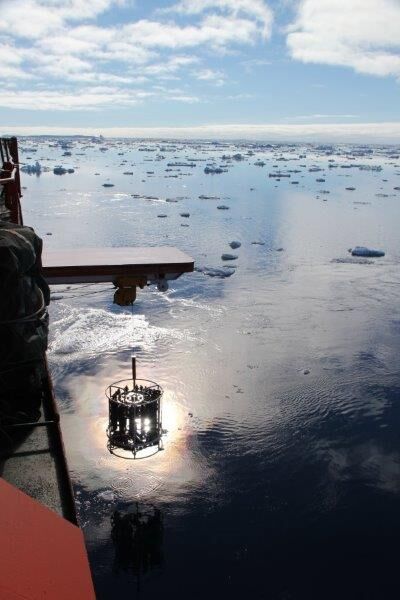
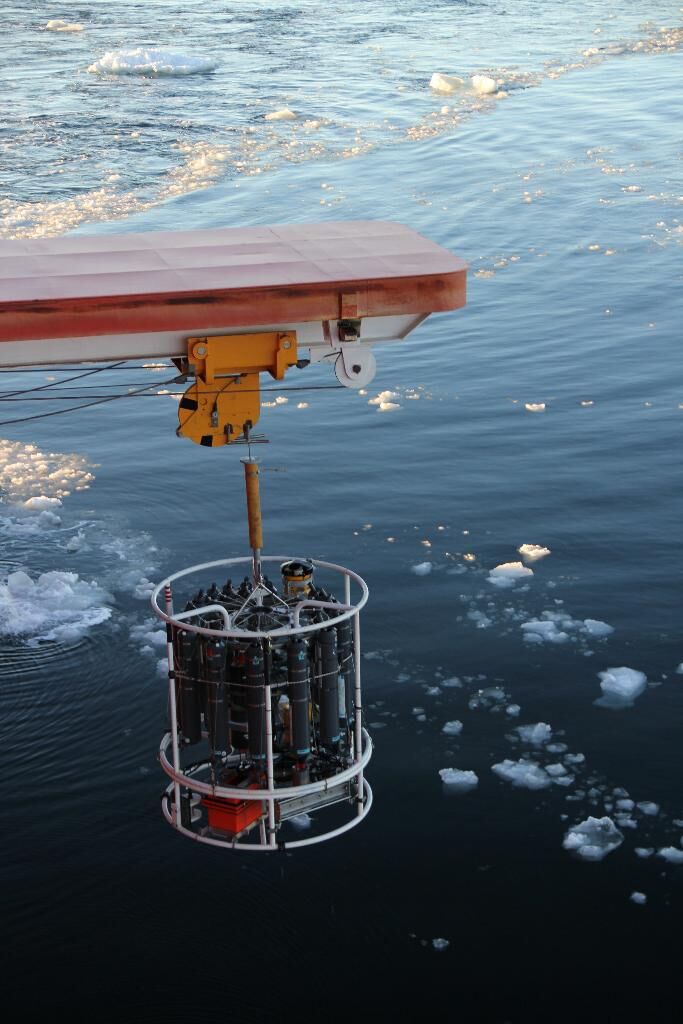
The project also deployed profiling floats to measure temperature and salinity in the upper 2 km of the Southern Ocean. These deployments are part of a global program using autonomous floats to track change in the ocean.
Summary of the season 2014/15
Project 4131 completed the first expedition to reach the front of the Totten Glacier. The seven week voyage was carried out on the RSV Aurora Australis in December 2014 and January 2015. The Totten Glacier is the largest glacier in East Antarctica and drains a basin that contains a volume of ice equivalent to almost 6 m of global sea level rise. Recent satellite measurements have shown the Totten Glacier is thinning. The rapid thinning is a surprise because East Antarctic glaciers have usually been assumed to be very stable. Voyage 2 set out to test the hypothesis that warm ocean waters might be melting the floating tongue of the glacier from below. We found the first direct evidence that warm water does in fact reach the sub-glacial cavity where it could cause melt and thinning of the glacier. The voyage also collected six moorings from the Totten region that had been deployed a year ago by a US vessel. The moorings provide the first year-round measurements of temperature, salinity and current velocity from the region. Robotic floats and gliders were deployed to measure water properties beneath the sea ice. Measurements were also collected at the Mertz glacier, 1500 km east of the Totten. The oceanographic conditions at these two East Antarctic glaciers are very different; comparison of the two regions will provide new insights into how vulnerable the Antarctic Ice Sheet is to changes in ocean temperature and circulation.
Summary of the season 2013/14
Project 4131 has made substantial progress in 2013-14 towards meeting the project goals. Twelve papers have been published or are in press, and another six papers have been submitted. Major achievements include publication of the 5th Assessment Report of the Intergovernmental Panel on Climate Change (IPCC); a paper explaining the causes of rapid changes in the deep ocean around Antarctica; studies showing how ocean currents influence the distribution of marine organisms; and new insights into the dynamics of the world's largest ocean current.
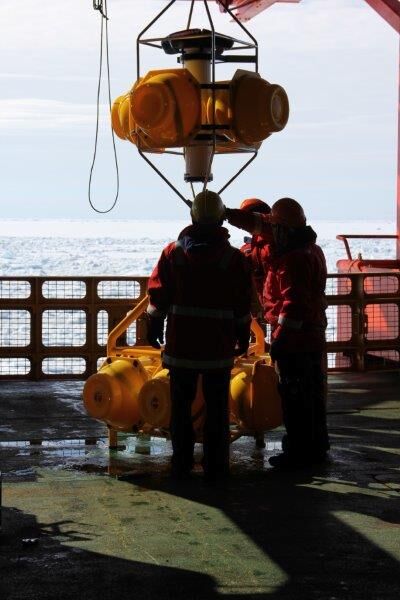
A joint US-Australian expedition to the Totten and Mertz Glaciers was completed on the US icebreaker Nathaniel B. Palmer. Recent studies have revealed that much of the East Antarctic Ice Sheet is grounded below present day sea level and therefore potentially susceptible to an instability process that could cause loss of large amounts of ice and therefore increases in sea level in the future. Studies of past sea level indicate that the East Antarctic Ice Sheet contributed several meters of sea level rise during previous warm periods in earth's climate history. The goal of the joint US-Australian project is to understand the past and present behavior of the East Antarctic Ice Sheet and the role of the ocean in driving melt of floating ice shelves. During the voyage, a wide range of oceanographic and geological measurements were made and 3 Australian moorings and 3 American moorings were deployed. The moorings will be recovered by the Australian icebreaker Aurora Australis in 2014-15. The oceanographic data collected on the US and Australian voyages will provide the first measurements near the Totten Glacier. The moorings are supported by the Antarctic Climate and Ecosystems Cooperative Research Centre and Australia's Integrated Marine Observing System (IMOS).
The project also deployed 22 Argo floats south of 30S in 2013-14. Most of these floats were funded by IMOS.
Summary of the season 2012/13
A voyage to the Adelie Land/George V Land coast of Antarctica was completed on the New Zealand vessel RV Tangaroa. The voyage was jointly sponsored by the ACE CRC in Australia and the National Institute for Water and Atmosphere (NIWA) in New Zealand. Oceanographic profiles of temperature, salinity, oxygen, nutrients and carbon parameters were collected over the Antarctic continental slope. These data will be used to track ongoing changes in the Southern Ocean, including a dramatic freshening and contraction of the dense Antarctic Bottom Water that supplies the deep limb of the global overturning circulation. Planned recovery and deployment of moorings over the continental shelf did not take place because thick sea ice prevented the ship, which is ice-strengthened but not an icebreaker, from reaching most of the continental shelf. Argo profiling floats were deployed on this and other voyages during the season.
Related publications
-
Distribution and export of particulate organic carbon in East Antarctic coastal polynyas Geophysical Research Oceans, 2021
(Ref: 16567)
Category 1: Peer-reviewed literature
-
Sensitivity of Antarctic Circumpolar Current transport and eddy activity to wind patterns in the Southern Ocean Journal of Physical Oceanography, 2015
(Ref: 15672)
Authors:Category 1: Peer-reviewed literature
-
The dynamics of Southern Ocean storm tracks Journal of Physical Oceanography, 2015
(Ref: 15673)
Category 1: Peer-reviewed literature
-
Detecting and characterizing Ekman currents in the Southern Ocean Journal of Physical Oceanography, 2015
(Ref: 15674)
Category 1: Peer-reviewed literature
-
Barotropic and baroclinic contributions to along- and across-stream transport in the Antarctic Circumpolar Current Journal of Geophysical Research, 2014
(Ref: 15676)
Category 1: Peer-reviewed literature