

Project information
Project aim
A long-standing problem is why the mid-latitude ionosphere (eg over Australia) is sometimes enhanced during space weather storms, and sometimes depleted. While storms occur mainly at high latitudes, their effects propagate equatorward via upper atmosphere’s winds, waves, electric fields, and chemical composition but we do not understand why the relative importance of these varies from storm to storm. By measuring these various drivers over Antarctica and their subsequent impacts at mid-latitude during many storms over a 5-year period we will determine the statistical importance of each driver.
Project milestones
Summary of the season 2015/16
Two main activities occurred during the 2015/16 season:
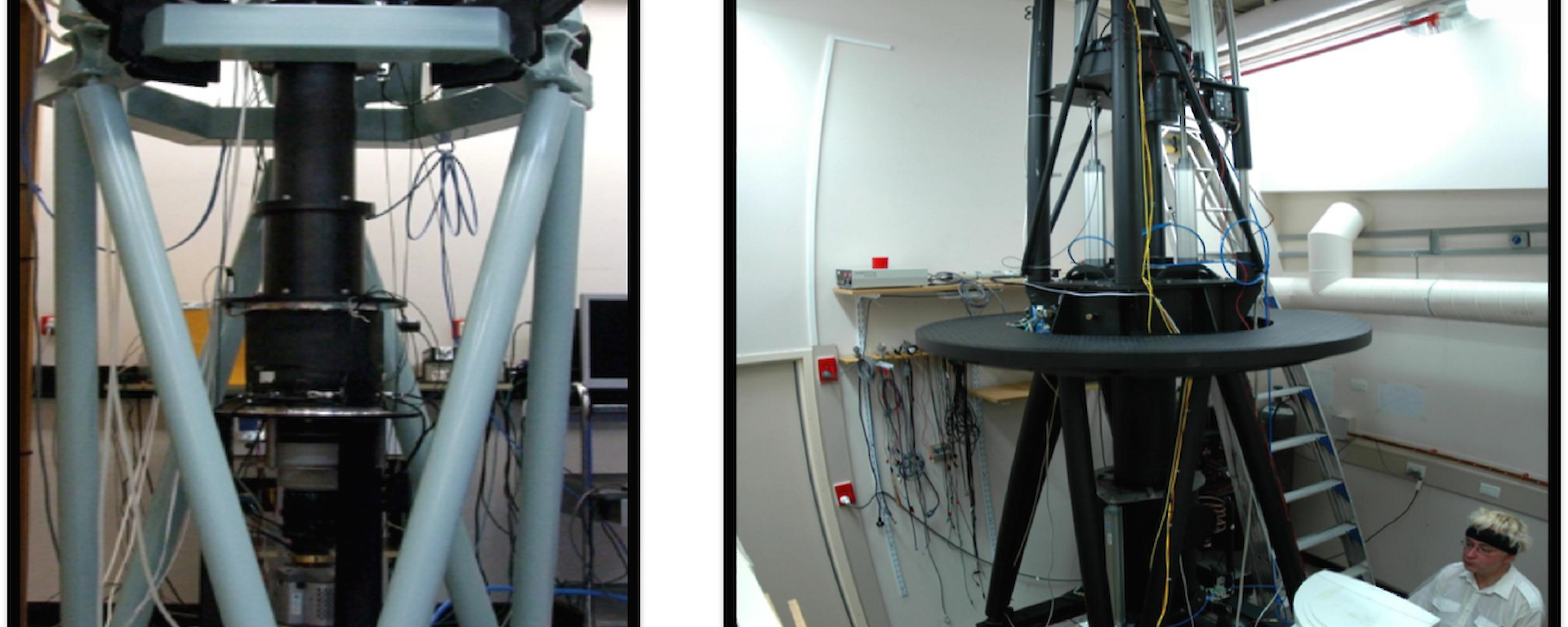
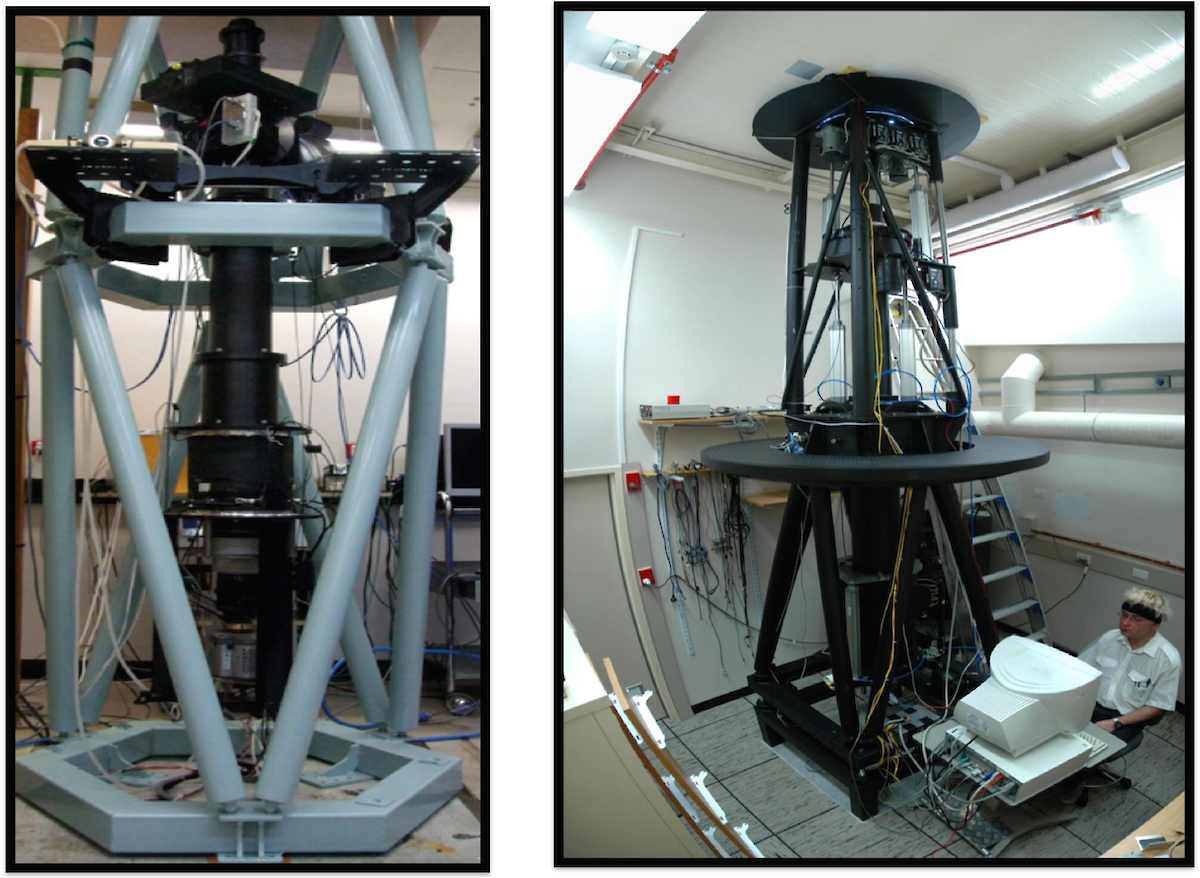
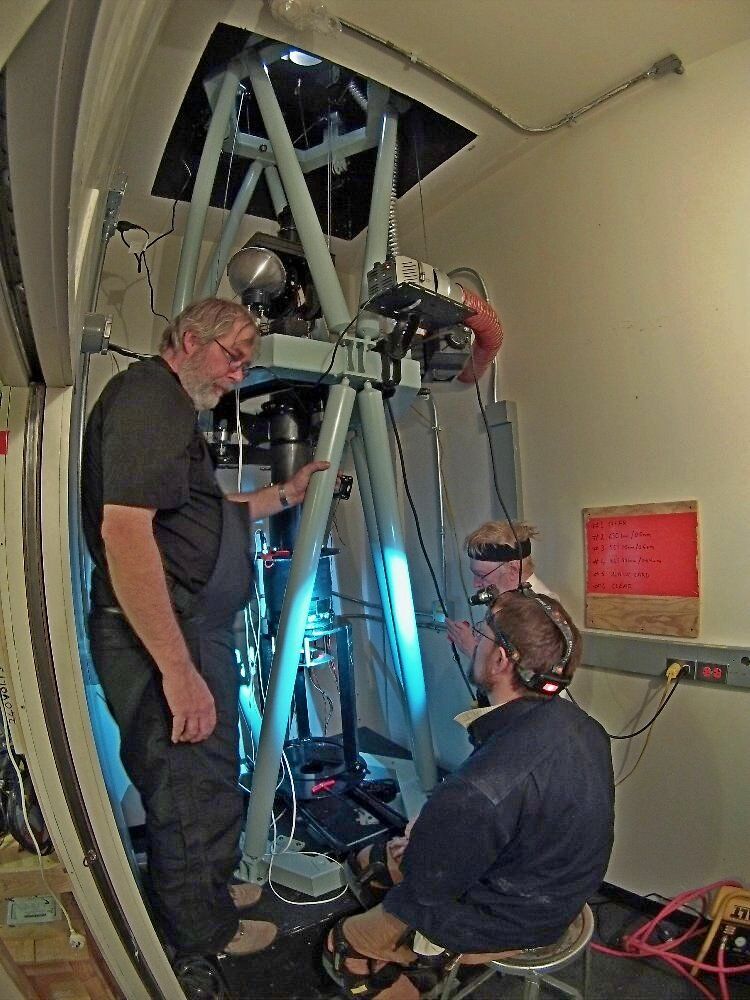
1. The Fabry-Perot instrument (from Mawson) temporarily installed at Kingston was successfully operated for several weeks and useful data obtained on thermospheric winds and temperatures at a sub-auroral location. The instrument was shipped to South Pole and installed by Mr Theo' Davies (La Trobe University), Mr Dale Pomraning (University of Alaska) and Professor Mike Kosch (South African National Space Agency) over the summer. It is now operating as part of the US Polar Program and observations may be viewed at http://sdi_server.gi.alaska.edu/sdiweb/index.asp
2. The instrument at Davis continues to operate. It was not possible to schedule a visit to Davis by Mr Davies following his visit to South Pole because the final voyage to Davis had already left Hobart. Minor problems have occurred with the Davis instrument but these have been addressed by expeditioners at Davis.
The plan for this coming summer season is for Mr Davies to visit Davis to decommission the instrument there and ship it back to Kingston and then to Alaska where it will operate as part of a US program.
Summary of the season 2014/15
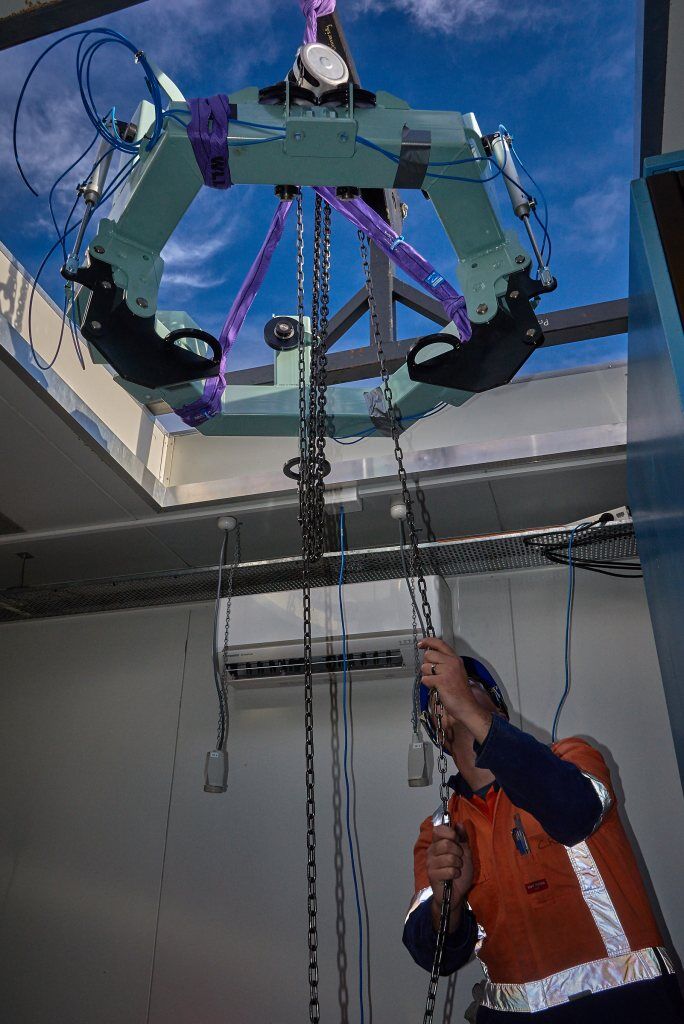
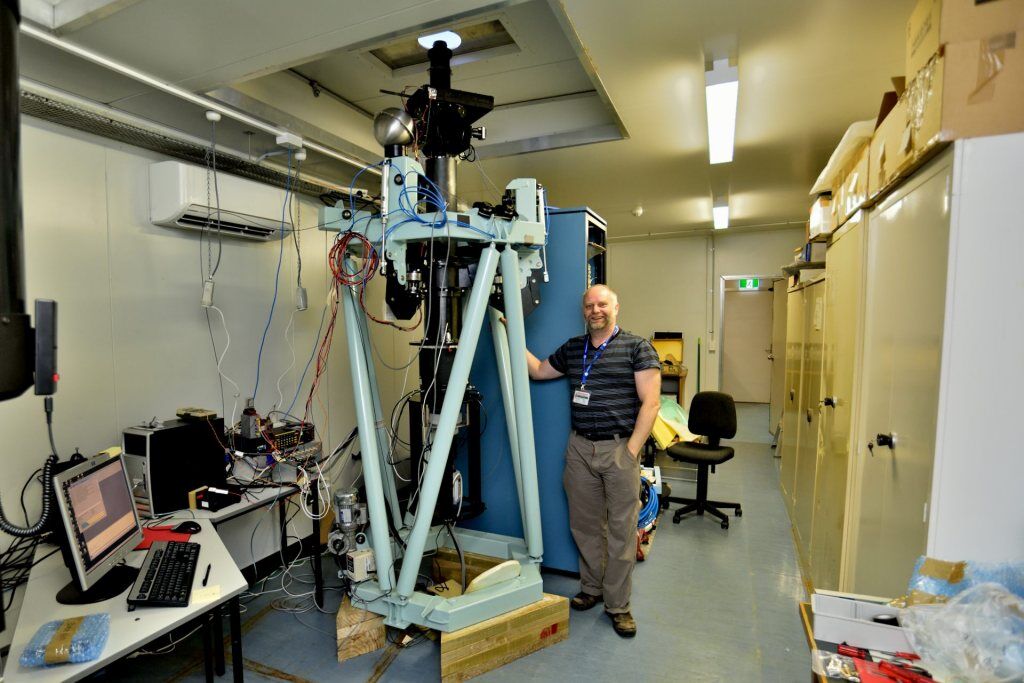
The primary effort undertaken during the 2014/15 field season was to return the all-sky Fabry-Perot instrument from Mawson to Australia. This involved many weeks of dis-assembly and packing, prior to shipping the instrument in crates back to Hobart. The instrument will be refurbished in Hobart during the 2015 winter, and the shipped to the South Pole station during the coming 2015/16 summer season. The instrument is currently setup at the AAD headquarters at Kingston, Tasmania, where the refurbishment work will be done. The reason for moving the instrument to the South Pole is that data collected from Mawson and elsewhere now indicates that the most dynamic space weather disturbance in Earth's thermosphere actually occur at magnetic latitudes slightly poleward of Mawson, at the boundary between the auroral oval and the polar cap. Moving the instrument will allow us to test this hypothesis. Also during 2014/15 we visited our other Fabry-Perot instrument at Davis, to perform routine maintenance and prepare it for the 2015 winter observing season.
Summary of the season 2013/14
This project has continued to gather high quality observations of regional-scale "weather" patterns in Earth's upper atmosphere at 100 to 250 km altitude. Earth is immersed in the outer atmosphere of the Sun, which is also known as the solar corona. Flares, coronal holes, erupting solar prominences produce large disruptions to the corona, that travel outward and often impact Earth. The purpose of this project is to quantify, in fine spatial detail, how these weather events in space drive the weather in Earth's upper atmosphere. Many nations recognize the importance of this weather to their national security, because it directly impacts their communication, navigation, and satellite operations.The latter has become particularly important in the increasingly crowded region of low-Earth-orbit. There are thousands of potentially hazardous close encounters per week between operational satellites and space debris or other spacecraft. Understanding whether avoidance maneuvers are required demands the ability to predict spacecraft positions to an absolute accuracy of a few hundred meters - and one geomagnetic can introduce changes that are many times this large.
The major new scientific result obtained from this project in the last 12 months has been to establish that tehre is a significant hemispheric asymmetry in the way the upper atmosphere above Antarctica responds to these disturbances, in comparison to similar regions in the northern hemisphere. These findings were present at 2013 Fall Meeting of the American Geophysical Union (see http://adsabs.harvard.edu/abs/2013AGUFMSA41C..04C). These results also directly contributed to a successful proposal to the International Space Sciences Institute in Bern, Switzerland, to fund an international study of this asymmetry. The first meeting of the study team is scheduled for December 1-5, 2014,at the ISSI headquarters in Bern - (see https://www.google.com/calendar/render?eid=aHFtcnRvM3FmdHZ2djgxb2luNG8yaDZiNmcgaXNzaWJlcm5AbQ&ct)
Summary of the season 2012/13
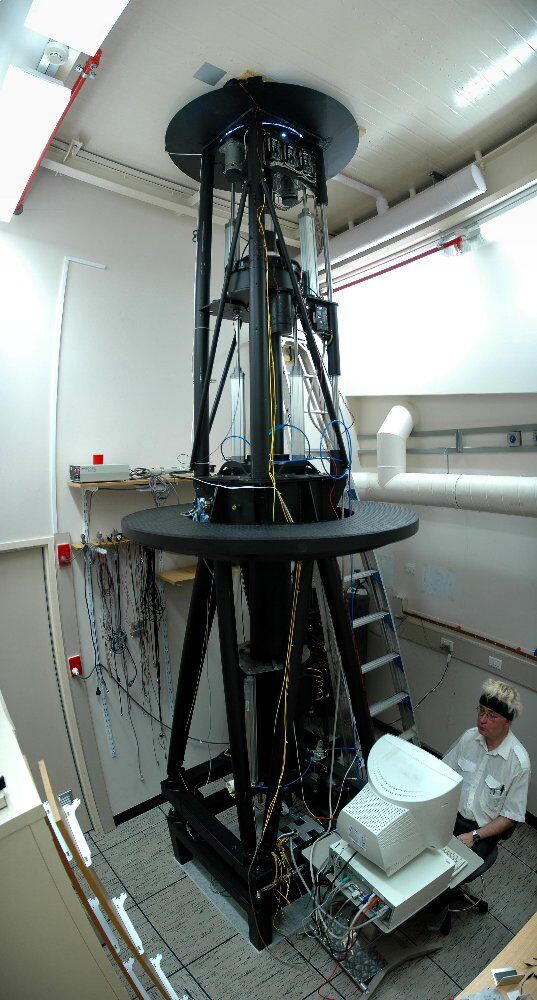
The goal of this project is to assist in prediction of imminent disruptions to mid-latitude radio propagation that occur in the Australian sector. These disturbances begin at high latitudes, but are carried equatorward by winds, buoyancy waves, and acoustic waves in the neutral atmosphere - and these in turn are established by large high-latitude perturbations in the atmospheric wind and temperature fields. Hence, our focus has been to gather a multi-year database of storm-time disruptions to winds and temperatures in the auroral zone, using automated Fabry-Prot spectrometers located at Mawson and Davis stations. Both instruments operated well throughout the winter of 2012, returning good data on every clear night between early March and late October. 2012/13 field work focused on essential maintenance, calibration, data transfers, and minor upgrades. Both instruments are operating well in 2013 and, with rising solar activity, we now typically seeing several storms per month.