

Project information
Project aim
Although the floating sea ice surrounding the Antarctic damps ocean waves, they may still be detected hundreds of kilometres from the ice edge. Over this distance the waves leave an imprint of broken ice, which is susceptible to winds, currents, and lateral melting. The important omission of wave-ice interactions in ice/ocean models is now being addressed, which has prompted campaigns for experimental data. These exciting developments must be matched by innovative modelling techniques to create a true representation of the phenomenon that will enhance forecasting capabilities.
Project milestones
Summary of the project achievements 2015/16
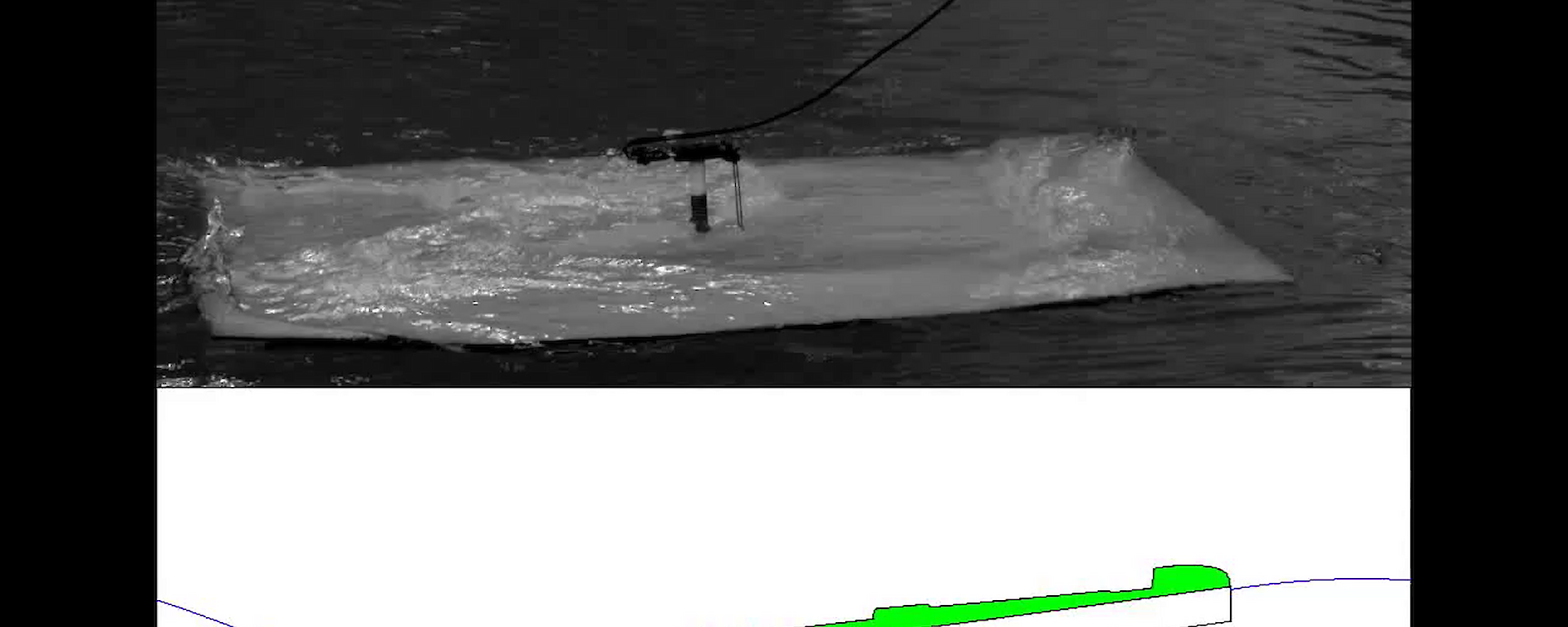
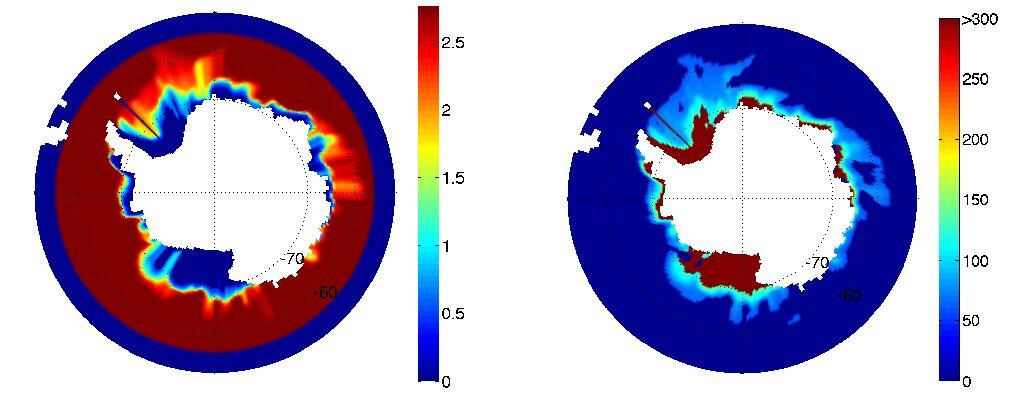
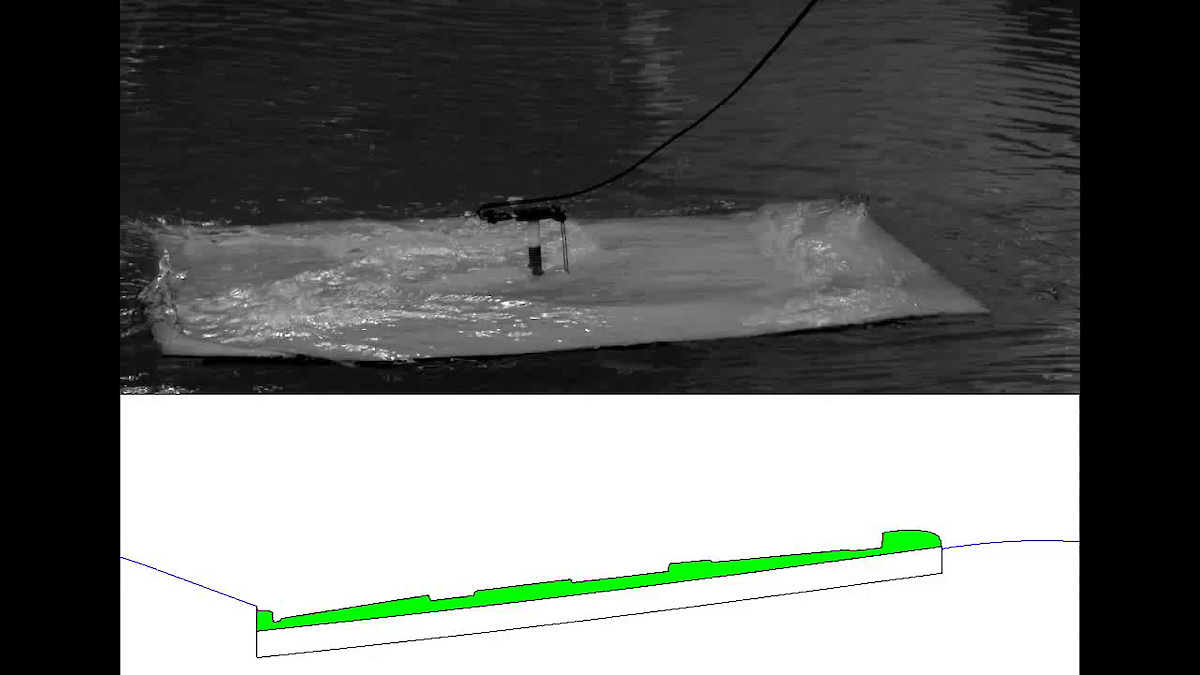
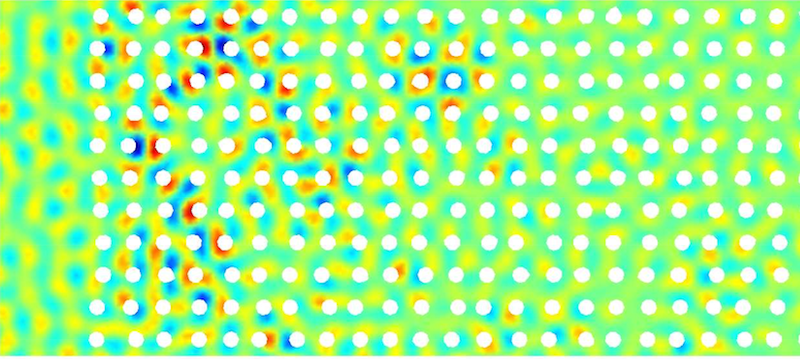
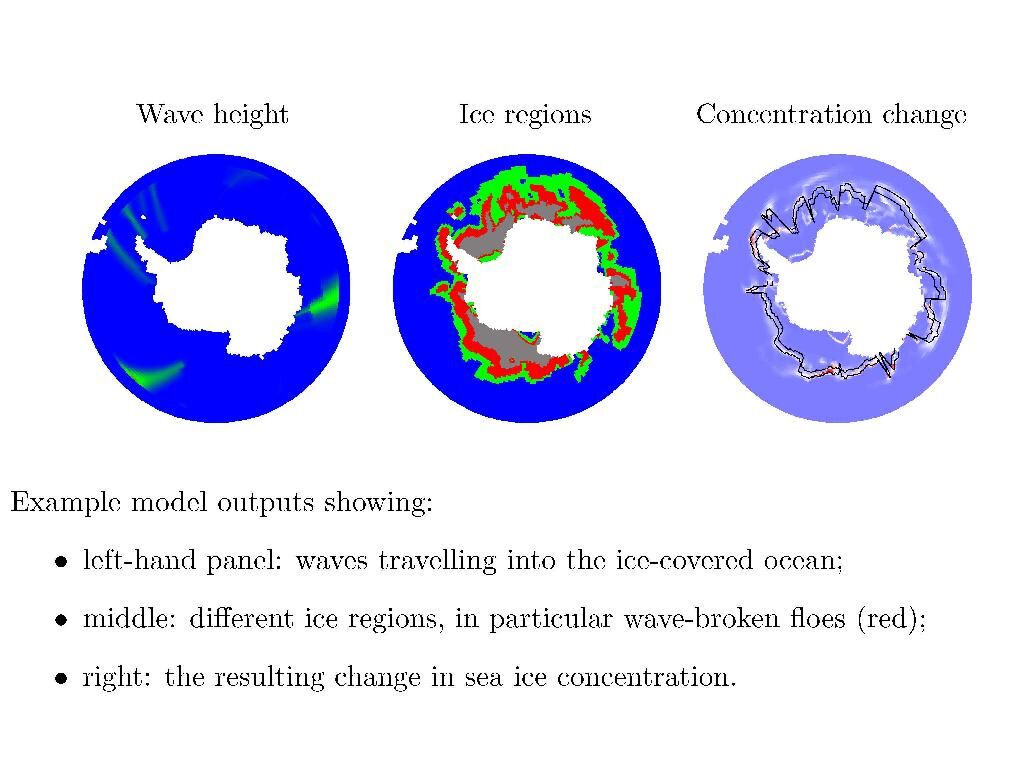
The project developed mathematical models of wave–ice interactions, and combined them with laboratory and field data to gain new and improved understanding of the way in which ocean waves travel through the first 10s to 100s of kilometres of the ice-covered ocean, and subsequent wave-induced breakup of the ice cover. A notable achievement has been to determine validity limits of linear wave–ice models, identifying the onset of nonlinear processes affecting distances waves penetrate the ice cover. Investigation of nonlinear wave–ice processes has uncovered new wave impacts on ice cover, in addition to the well-known breakup phenomenon. The project culminated in development of a pan-Antarctic wave–ice model, including wave–induced breakup, for use in operational forecasting and climate studies, and model predictions of the impacts of breakup on ice concentration and volume.
Summary of the season 2014/15
The project team have advanced predictive capabilities for ocean waves travelling through the sea ice-covered ocean.
They have conducted novel laboratory wave tank experiments and developed new mathematical models, which replicate behaviours measured in the field.
Summary of the season 2013/14
The project team used a unique combination of field measurements, laboratory experimental modelling and mathematical modelling to study wave propagation in the ice-covered ocean.
We have shown that ocean waves are capable of penetrating hundreds of kilometres into the ice-covered ocean, thus reducing the strength of the ice-cover over a large region, leaving it susceptible to winds, currents and melting.
Our research helped validate existing models of wave propagation in the ice-covered ocean, which are based on linear theory, for small-amplitude waves.
However, we also identified that large-amplitude storm waves are affected by nonlinear processes, which have not been modelled previously.
Summary of the season 2012/13
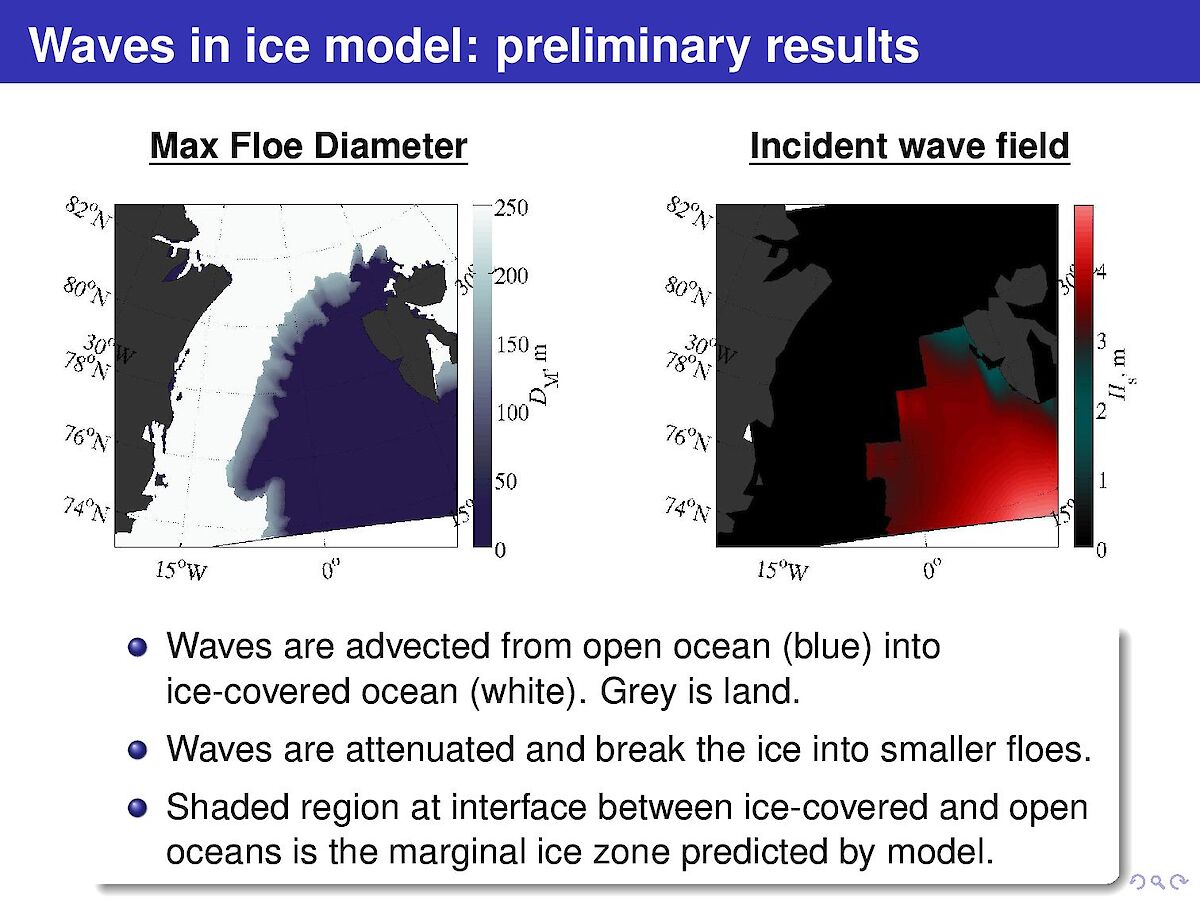
The project team have developed the first waves-in-ice model (WIM), including attenuation of waves due to ice cover, and wave-induced ice breakage. The WIM is being nested in areas of operational interest in a pan-Arctic model. The WIM is now being extended to include interactions between wave directions, so that directional evolution of waves in the marginal ice zone (MIZ) can be modelled.
CI Bennetts is leading a new project to integrate the first MIZ model into the Australian Climate Simulator using the WIM, and in collaboration with members of CSIRO and the Bureau of Meteorology.
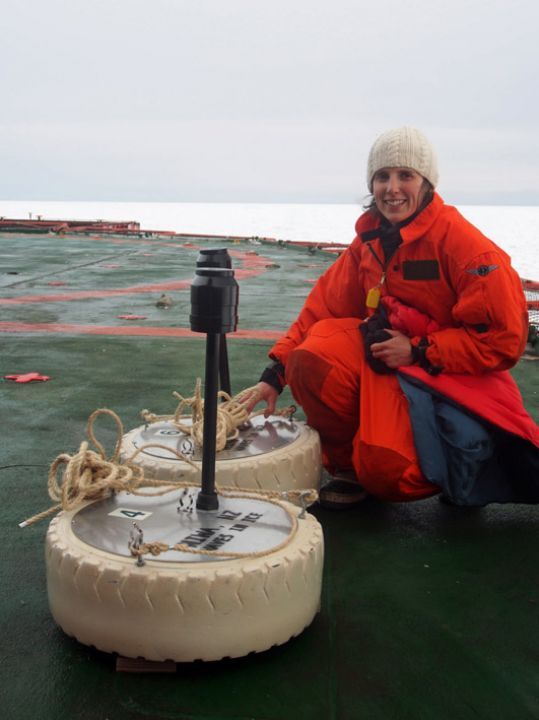
PI Kohout successfully recorded wave activity in the Antarctic MIZ during the SIPEX II voyage. She is now processing the data obtained. The data will help to validate the WIM.
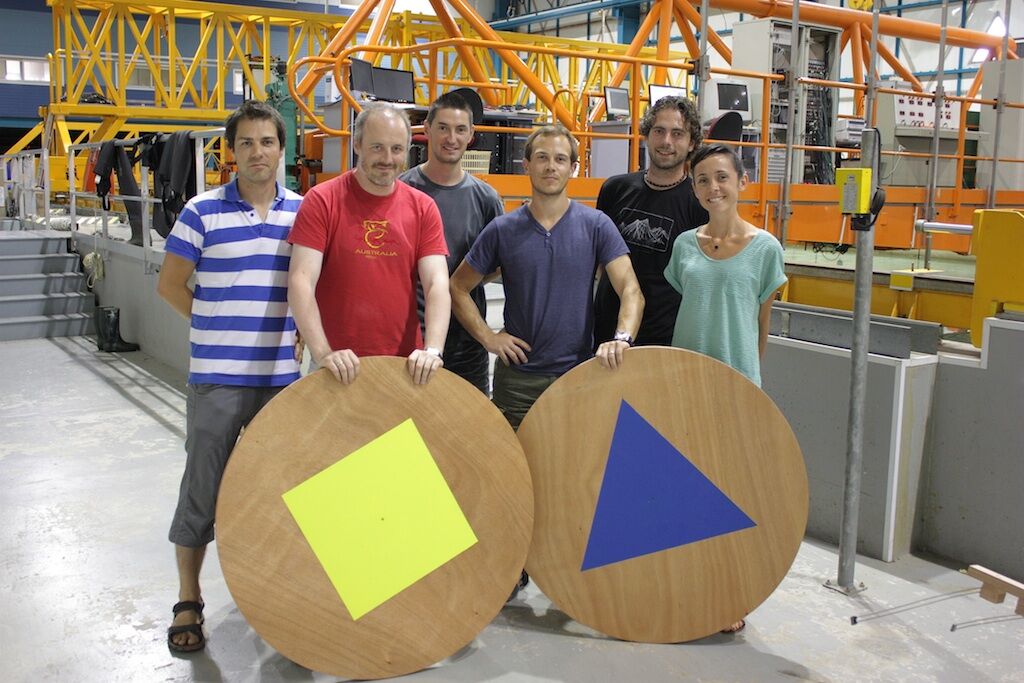
Further experimental data will be obtained from laboratory wave tank experiments to be conducted at a top French offshore engineering facility in July 2013. CI Bennetts and PI Williams are participating in the experiments.
Related publications
-
Water-wave scattering and energy dissipation by a floating porous elastic plate in three dimensions Wave Motion, 2017
(Ref: 15946)
Authors:Category 1: Peer-reviewed literature
-
Reflection and transmission of regular water waves by a thin, floating plate Wave Motion, 2017
(Ref: 15947)
Category 1: Peer-reviewed literature
-
Brief communication: Impacts of ocean-wave-induced breakup of Antarctic sea ice via thermodynamics in a stand-alone version of the CICE sea-ice model The Cryosphere, 2017
(Ref: 15948)
Authors:Category 1: Peer-reviewed literature
-
Water wave overwash of a step Journal of Fluid Mechanics, 2018
(Ref: 15949)
Category 1: Peer-reviewed literature
-
Attenuation and directional spreading of ocean wave spectra in the marginal ice zone Journal of Fluid Mechanics, 2016
(Ref: 15762)
Authors:Category 1: Peer-reviewed literature