

Project information
Project aim
Polar regions can be the ultimate repository for Persistent Organic Pollutants (POPs) but little is known of their behaviour in Antarctica. POPs can biomagnify in food webs and reach toxic concentrations in higher trophic levels where they may present a significant risk to biota.
This research will synthesise existing knowledge to model the processes that determine the distribution of POPs in Antarctic ecosystems and how seasonal cycles and climate change may affect this. It will develop a valuable tool for assessing and managing this environmental impact of Australian bases in Antarctica.
Project milestones
Summary of the project achievements 2015/16
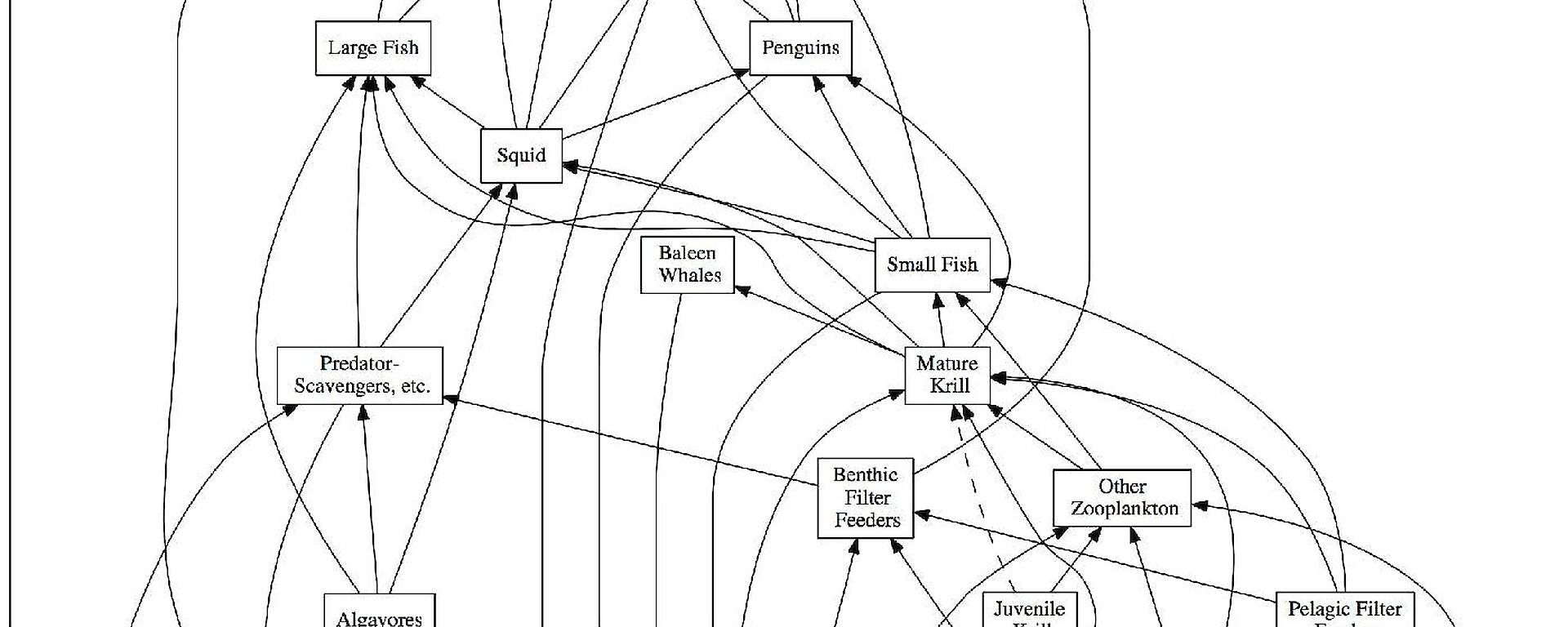
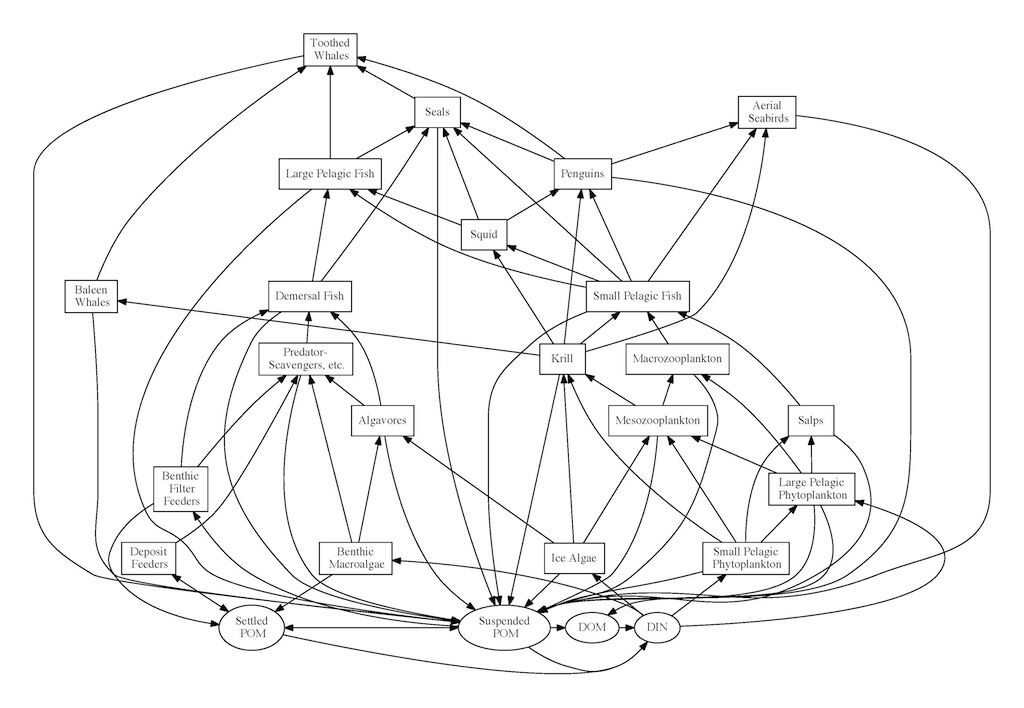
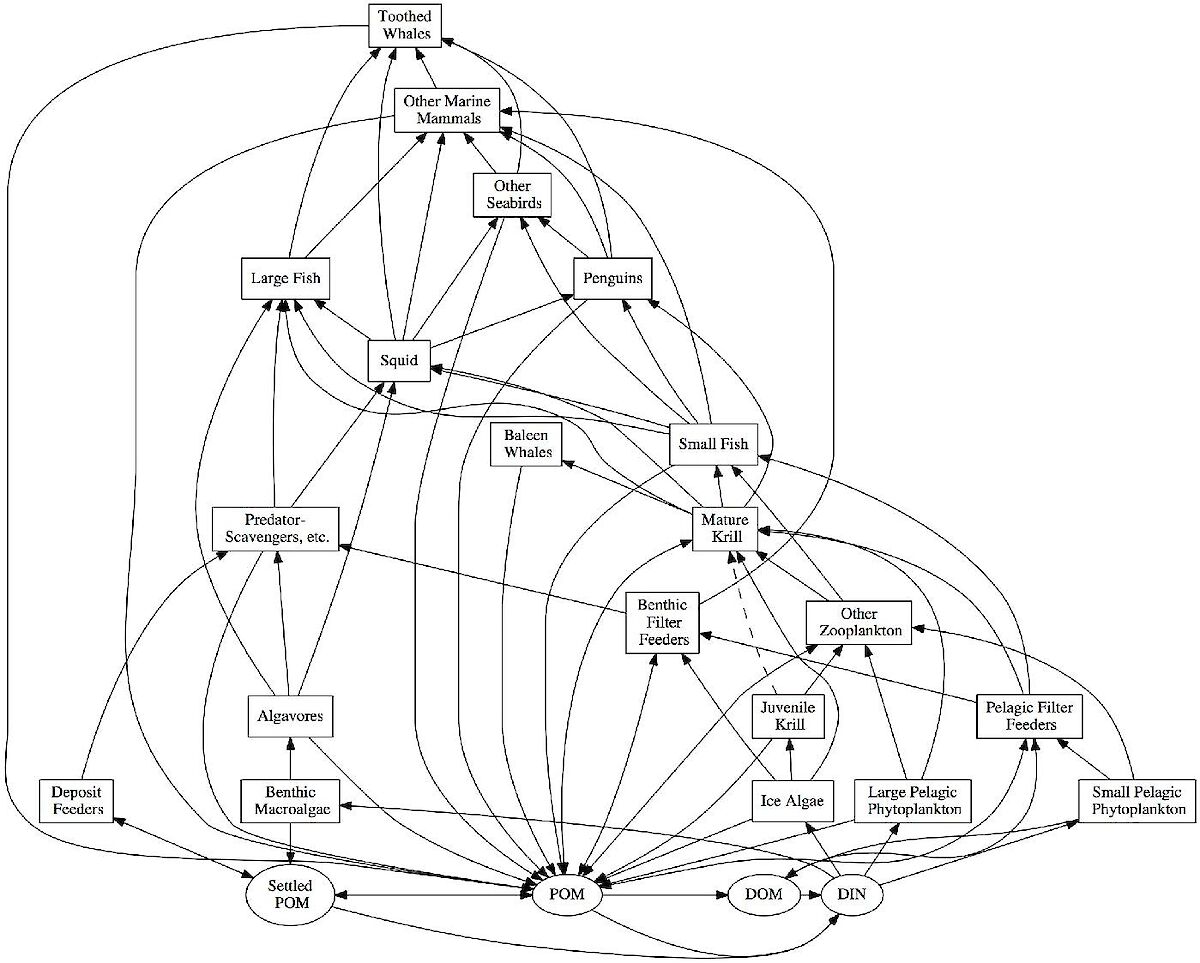
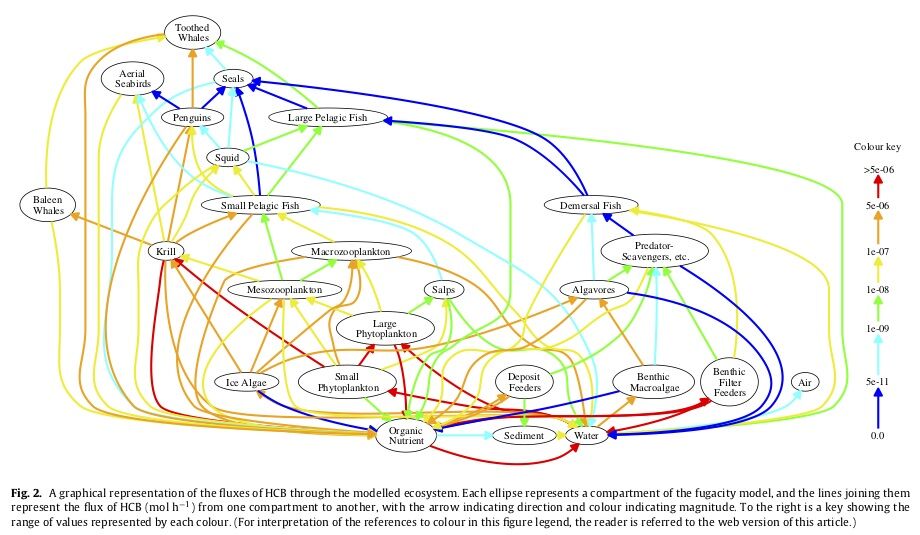
This project developed the most highly resolved model of the partitioning and dynamics of persistent organic pollutants (POPs) in coastal Antarctic marine food webs. The model identified the key pathways by which POPs such as hexachlorobenzene (HCB) move from abiotic reservoirs into marine food webs. The vast phytoplankton blooms that occur each summer in Antarctica take up pollutants from the water and ocean sediments and inject them into the food chain, where krill form a major pathway for pollutants to bioaccumulate in iconic species such as whales, seals and penguins. The dynamics of Antarctic marine food webs are strongly influenced by seasonal variations, and similarly, the partitioning of POPs in the environment changes with the seasons. This research suggests that a complete picture of the impact of POPs in Antarctica can only be obtained form a comprehensive sampling regime that measures pollutant concentrations in all trophic levels across all seasons.
Summary of the season 2014/15
The project has completed the first step in developing a comprehensive mathematical model that describes how Persistent Organic Pollutants (POPs) will behave in coastal Antarctic environments. The model describing how 21 populations from plankton to whales feed and grow has been completed and published. Developing this model was a major challenge due to the paucity of data on Antarctic ecosystems resulting from the difficulty and expense associated with obtaining samples in Antarctic waters. These difficulties were overcome by using a robust theoretical framework to constrain the model equations, which allowed specification of key model properties a priori. These properties facilitated the development of an innovative new method to parameterise the model in the absence of measurements for most processes. The ecosystem model will be coupled to a chemical fugacity model in stage two of the project to enable the movement of POPs in Antarctic ecosystems to be modelled. This model will provide a key resource for understanding and predicting the response of POPs to seasonal and climatic change. The difficulty and expense associated with field sampling in Antarctica requires that field campaigns be very carefully designed for efficacy and efficiency. The model developed in this project will be a key tool in optimising the evaluation of POPs in Antarctic coastal environments. Antarctic phytoplankton blooms are some of the largest on the planet and create lipids that draw POPs out of bottom sediments and into the food chain where they biomagnify in higher predators. The model will predict how POP concentrations in commercial species like krill and iconic species such as Humpback whales change through the year, and predict how climate change will affect POP concentrations in Antarctic food webs.
Summary of the season 2013/14
Dr Michael Bates was recruited from the Ocean Sciences group at MIT to undertake this modelling project and commenced work at Griffith University on 6 January 2014.
Related publications
-
Spatio-temporal variations in hexachlorobenzene partitioning in a near shore Antarctic marine environment from a one-dimensional coupled ecosystem-chemical distribution model Journal of Marine Systems, 2019
(Ref: 16134)
Authors:Category 1: Peer-reviewed literature
-
The distribution of persistent organic pollutants in a trophically complex Antarctic ecosystem model Journal of Marine Systems, 2017
(Ref: 15930)
Category 1: Peer-reviewed literature
-
Construction of a trophically complex near-shore Antarctic food web model using the Conservative Normal framework with
structural coexistence Journal of Marine Systems, 2015
(Ref: 15443)
Category 1: Peer-reviewed literature
-
Formulating chemical fugacity for general circulation models MODSIM2015, Proceedings of the 21st International Congress on Modelling and Simulation: Gold Coast, Australia, 2015
(Ref: 15931)
Authors:Category 3: Conference paper
Fugacity is identical to the partial pressure of an ideal gas in air, however, for real gases fugacity … is much more accurate than partial pressure in chemical equilibrium calculations.
-
Parameter estimation in complex plankton models using the Boundary Eigenvalue Nudging – Genetic Algorithm (BENGA) Method MODSIM2015, Proceedings of the 21st International Congress on Modelling and Simulation: Gold Coast, Australia, 2015
(Ref: 15932)
Category 3: Conference paper
The analysis of trophically complex mathematical ecosystem models is typically carried out … using numerical techniques because it is considered that the number and nonlinear nature of the equations … involved makes the use of analytic techniques virtually impossible. In particular…